Quotes about translation
A collection of quotes on the topic of translation, doing, use, origin.
Quotes about translation


Suman Pokhrel (1967) Nepali poet, lyricist, playwright, translator and artist
<span class="plainlinks"> Foreword, 'Tales of Transformation: English Translation of Tagore's Chitrangada and Chandalika', Lopamudra Banerjee, (2018). https://www.amazon.co.uk/dp/B07DQPD8F4/</span> <br class="br">From Prose


Bertrand Russell book A History of Western Philosophy
Source: 1940s, A History of Western Philosophy (1945)


“Death lurks in the farewell of a true friend.”
Marceline Desbordes-Valmore (1786–1859) French poet
La mort est dans l'adieu d'un ami veritable.
Elégies (1830), Au Sommeil; translation reported in Harbottle's Dictionary of quotations French and Italian (1904), p. 110.

Pierre Joseph Proudhon (1809–1865) French politician, mutualist philosopher, economist, and socialist

“If the dream is a translation of waking life, waking life is also a translation of the dream.”
René Magritte (1898–1967) Belgian surrealist artist


Konrad Zuse (1910–1995) German computer scientist and engineer
Der Glaube an eine bestimmte Idee gibt dem Forscher den Rückhalt für seine Arbeit. Ohne diesen Glauben wäre er verloren in einem Meer von Zweifeln und halbgültigen Beweisen. <br class="br">Attributed in Konrad Zuse http://www.dpma.de/ponline/erfindergalerie/bio_zuse.html on "Die Erfindergalerie", dpma.de, 2008

Ghani Khan (1914–1996) Pakistani poet
na may sta da nari shundi dy pakar
na da zulfi wal pa wal laka khamar
na da bati pashan danga ghari ghwaram
nargasay stargy na daki da khumar
na ghakhuna dy laluna da adan
na nangy dak sara sara laka anar
na pasti da sarindy pa shan khabari
na wajood laka da saar way mazadar
khu bas yow shai rata ra ukhaya dilbara
da lala pashan zargy ghawaram daghdar
yow dawa ukhaqi chi da ghum ao muhabat way
lakuno laluna dy karam zaar
Entreaty (1929)

Loreena McKennitt (1957) Canadian musician and composer
Notes from McKennitt's journals in the CD booklet for The Mask and Mirror '
Context: May, 1993 - Stratford... have been reading through the poetry of 15th century Spain, and I find myself drawn to one by the mystic writer and visionary St. John of the Cross; the untitled work is an exquisite, richly metaphoric love poem between himself and his god. It could pass as a love poem between any two at any time... His approach seems more akin to early Islamic or Judaic works in its more direct route to communication to his god... I have gone over three different translations of the poem, and am struck by how much a translation can alter our interpretation. I am reminded that most holy scriptures come to us in translation, resulting in a diversity of views.

“We are waiting for Christ, and not a better time.”
Nikolaj Velimirović (1880–1956) Serbian bishop and saint
Ми чекамо Христа, а не боље време. <br class="br">Prayerful songs http://www.svetosavlje.org/biblioteka/vlNikolaj/PesmeMolitvene/Nikolaj100219.htm


“Inspiration exists, but it has to find you working.”
Pablo Picasso (1881–1973) Spanish painter, sculptor, printmaker, ceramicist, and stage designer
La inspiración existe, pero tiene que encontrarte trabajando.
Attributed from posthumous publications
Source: Tomás R. Villasante (1994), Las ciudades hablan: identidades y movimientos sociales en seis metrópolis latinoamericanas. p. 264.

Vladimir Lenin (1870–1924) Russian politician, led the October Revolution
Source: Imperialism, the Highest Stage of Capitalism: Full Text of 1916 Edition

“I wish I could not write.”
Vellem nescire literas.
Nero (37–68) Emperor of Ancient Rome, 5th and last of the Julio-Claudian dynasty
Variant translation: I wish I were illiterate.
Quoted in " De Clementia" - Chapter 1, Book 2 by Lucius Annaeus Seneca.
Konrad Zuse (1910–1995) German computer scientist and engineer
Die Gefahr, dass der Computer so wird wie der Mensch, ist nicht so groß wie die Gefahr, dass der Mensch so wird wie der Computer.
Attributed in: Hersfelder Zeitung. Nr. 212, 12. September 2005.

“"I'd rather betray others, than have others betray me."”
Cao Cao (155–220) Chinese warlord during the Eastern Han Dynasty
Statement in 190, after falsely killing Lü Boshe. Source: Sun Sheng Zaji, page 5 of Sanguo Zhi.

“The Revolution is so that people can live, not so that they can die!”
Lu Xun (1881–1936) Chinese novelist and essayist
Source: [citation needed]
Cao Cao (155–220) Chinese warlord during the Eastern Han Dynasty
Statement to Chen Gong after falsely killing Lü Boshe and his household. Source: Romance of the Three Kingdoms. An adaptation of the Sanguo Zhi new 2010.
likely intentional misquote by the novel of the quote「宁我负人,毋人负我」above to add character to the story.
Attributed

“"When I sleep too much I don't score. That's the reason I like to go out a lot."”
Romário (1966) Brazilian association football player
Quando durmo muito, não faço gols, por isso gosto de ficar na noite.
Source: Veja Magazine; 1895 Edition. March 9th, 2005.
Context: Romário was seen in different night clubs during his carreer while being the top scorer in almost every major competition he played in.

“In this world, "who is saying", is more important than "what is being said"!”
P. L. Deshpande (1919–2000) Marathi writer, humourist, actor, dramatist
Alternate translation: In this world, who you are is more important than what you are saying.
From his various literature
Source: Asa mi Asami

James Burke (science historian) (1936) British broadcaster, science historian, author, and television producer
Connections (1979), 10 - Yesterday, Tomorrow and You
Suman Pokhrel (1967) Nepali poet, lyricist, playwright, translator and artist
<span class="plainlinks"> Foreword, 'Tales of Transformation: English Translation of Tagore's Chitrangada and Chandalika', Lopamudra Banerjee, (2018). https://www.amazon.co.uk/dp/B07DQPD8F4/</span> <br class="br">From Prose

“Architecture is the will of an epoch translated into space.”
Ludwig Mies van der Rohe (1886–1969) German architect

Jacques de Molay (1243–1314) Grand Master of the Knights Templar
Quar nous navons volu ne volons le Temple mettre en aucune servitute se non tant come il hy affiert.
In one of his memoranda to Pope Clement V from the summer of 1306.

“Translated: Human stupidity is international.”
Kurt Tucholský (1890–1935) German-Jewish journalist, satirist and writer
Die menschliche Dummheit ist international. <br class="br"> "Hégésippe Simon" http://www.zeno.org/Literatur/M/Tucholsky,+Kurt/Werke/1931/H%C3%A9g%C3%A9sippe+Simon (1931); also in Schnipsel, published 1973, p. 102.

Joseph Louis Lagrange (1736–1813) Italian mathematician and mathematical physicist
Dans Les Leçons Élémentaires sur les Mathématiques (1795) Leçon cinquiéme, Tr. McCormack, cited in Moritz, Memorabilia mathematica or, The philomath's quotation-book (1914) Ch. 15 Arithmetic, p. 261. https://archive.org/stream/memorabiliamathe00moriiala#page/260/mode/2up

John Locke (1632–1704) English philosopher and physician
§ 228
The Reasonableness of Christianity (1695)

“In all chaos there is a cosmos, in all disorder a secret order.”
C.G. Jung (1875–1961) Swiss psychiatrist and psychotherapist who founded analytical psychology
In allem Chaos ist Kosmos und in aller Unordnung geheime Ordnung. <br class="br">http://books.google.com/books?id=hOUkAQAAIAAJ&q=%22in+allem+Chaos+ist+Kosmos+und+in+aller+Unordnung+geheime+Ordnung%22&pg=PA41#v=onepage <br class="br"> p. 32 http://books.google.com/books?id=Yc5PlU9MyDwC&q=%22in+all+chaos+there+is+a+cosmos+in+all+disorder+a+secret+order%22&pg=PA32#v=onepage (1981 edition) <br class="br"> Originally presented http://books.google.com/books?id=-5oJAAAAIAAJ&q=%22in+allem+Chaos+ist+Kosmos+und+in+aller+Unordnung+geheime+Ordnung%22&pg=PA213#v=onepage at an Eranos conference. (1935) <br class="br">The Archetypes and the Collective Unconscious (1934)

“Translated: Whereof one cannot speak, thereof one must be silent.”
Ludwig Wittgenstein book Tractatus Logico-Philosophicus
7
Wovon man nicht sprechen kann, darüber muss man schweigen.
Also: About what one can not speak, one must remain silent. (7)
Source: 1920s, Tractatus Logico-Philosophicus (1922)

C.G. Jung (1875–1961) Swiss psychiatrist and psychotherapist who founded analytical psychology
Wo die Liebe herrscht, da gibt es keinen machtwillen, und wo die macht den vorrang hat, da fehlt die Liebe. Das eine ist der Schatten des andern. <br class="br"> P. 97 http://books.google.com/books?id=iGS8q_odsKAC&q=%22Wo+die+Liebe+herrscht+da+gibt+es+keinen+machtwillen+und+wo+die+macht+den+vorrang+hat+da+fehlt+die+Liebe+Das+eine+ist+der+Schatten+des+andern%22&pg=PA97#v=onepage <br class="br">The Psychology of the Unconscious (1943)

“Don't go on staring at me like that, because you'll wear your eyes out.”
Emile Zola book La Bête humaine
Ne me regardez plus comme ça, parce que vous allez vous user les yeux. <br class="br">La Bête Humaine, Ch. 5 http://books.google.com/books?id=mqRKAQAAIAAJ&q=%22Ne+me+regardez+plus+comme+%C3%A7a+parce+que+vous+allez+vous+user+les+yeux%22&pg=PA158#v=onepage, (1890). <br class="br">Source: La Bête humaine

Friedrich Hölderlin book Hyperion
Hyperion
Original: (de) Immerhin hat das den Staat zur Hölle gemacht, daß ihn der Mensch zu seinem Himmel machen wollte.

“Rose, oh pure contradiction, desire,
To be no one's sleep under so many
Lids.”
Rainer Maria Rilke (1875–1926) Austrian poet and writer
Rose, oh reiner Widerspruch, Lust,
Niemandes Schlaf zu sein unter soviel
Lidern.
Rilke wrote his own epitaph sometime before October 27, 1925. He requested that it be inscribed on his gravestone. This was fifteen months before his death. (Translation: John J.L.Mood)
Source: The Selected Poetry of Rainer Maria Rilke


Shiing-Shen Chern (1911–2004) mathematician (1911–2004), born in China and later acquiring U.S. citizenship; made fundamental contributio…
[1991, Surface Theory with Darboux and Bianchi, Miscellanea Mathematica, 59–69, Springer, https://doi.org/10.1007/978-3-642-76709-8_4]

“God, grant us men to see in a small thing principles which are common things both small and great.”
Deus, dona hominibus videre in parvo communes notitias rerum parvarum atque magnarum.
Aurelius Augustinus book Confessions
Deus, dona hominibus videre in parvo communes notitias rerum parvarum atque magnarum.
http://books.google.com/books?id=lM5PQRHMNFwC&q=%22Deus+dona+hominibus+videre+in+parvo+communes+notitias+rerum+parvarum+atque+magnarum%22&pg=PR19#v=onepage
XI, 23
Confessions (c. 397)

Natsume Soseki (1867–1916) Japanese novelist
Chi ni hatarakeba kado ga tatsu. Jō ni saosaseba nagasareru. Iji o tōseba kyūkutsu da. Tokaku ni hito no yo wa suminikui.
草枕 Kusamakura, 1906.

Adam Mickiewicz book Dziady
Do mamy lecim do mamy! Cóż to, mamo nie znasz Józia? Ja to Józio ja ten samy. A to moja siostra Rózia. My teraz w raju latamy, Tam nam lepiej niż u mamy. Patrz jakie główki w promieniu, Ubiór z jutrzenki światełka, A na oboim ramieniu Jak u motylków skrzydełka, w raju wszystkiego dostatek, Co dzień to inna zabawka, gdzie stąpim wypływa trawka, gdzie dotkniem rozkwita kwiatek. Lecz choć wszystkiego dostatek dręczy nad nuda i trwoga. Ach mamo dla twoich dziatek zamknięta do nieba droga! <br class="br">Part two. <br class="br">Dziady (Forefathers' Eve) http://www.ap.krakow.pl/nkja/literature/polpoet/mic_fore.htm

Jozef Israëls (1824–1911) Dutch painter
version in Dutch (citaat van Israëls, in het Nederlands): Ik geloof niet in joodse kunst. Er zijn joodse kunstenaars, d.w.z. kunstenaars die joods geboren zijn, maar dat wil nog niet zeggen dat hun werk joodse kunst is.
Quote of Jozef Israëls, 9 July 1907, translated from his letter (written in German) to the committee of the Exhibition for Jewish Art in Berlin; as cited in Jozef Israëls, 1824 – 1911, ed. Dieuwertje Dekkers; Waanders, Zwolle 1999, p. 55
Jozef Israëls was Jewish himself, but refused to call his art Jewish as the Zionist movement liked to call it
Quotes of Jozef Israels, after 1900
Kurt Tucholský (1890–1935) German-Jewish journalist, satirist and writer
Da gab es vier Jahre lang ganze Quadratmeilen Landes, auf denen war der Mord obligatorisch, während er eine halbe Stunde davon entfernt ebenso streng verboten war. Sagte ich: Mord? Natürlich Mord. Soldaten sind Mörder. <br class="br">From Der bewachte Kriegsschauplatz, published 1931 under the pseudonym Ignaz Wrobel; compare http://de.wikipedia.org/wiki/Soldaten_sind_M%C3%B6rder.

Erik Satie (1866–1925) French composer and pianist
Étude pour un buste de M. Erik SATIE peint par lui-même, avec une pensée: je suis venu au monde très jeune dans un temps très vieux.
Written to accompany a self-portrait caricature drawn by himself - see image
General quotes

Frank Zappa (1940–1993) American musician, songwriter, composer, and record and film producer
Oui interview (1979)

“He therefore again asked, what was the name of that nation? and was answered, that they were called Angles. "Right", said he, for they have an Angelic face, and it becomes such to be co-heirs with the Angels in heaven. What is the name", proceeded he, "of the province from which they are brought?" It was replied, that the natives of that province were called Deiri. "Truly are they De ira", said he, "withdrawn from wrath, and called to the mercy of Christ. How is the king of that province called?" They told him his name was Ælla: and he, alluding to the name said, "Hallelujah, the praise of God the Creator must be sung in those parts."”
Rursus ergo interrogavit quod esset vocabulum gentis illius. Responsum est quod Angli vocarentur. At ille: "Bene", inquit, "nam et angelicam habent faciem et tales angelorum in caelis decet esse cohaeredes. Quod habet nomen ipsa provincia, de qua isti sunt adlati?" Responsum est quod Deiri vocarentur idem provinciales. At ille: "Bene", inquit, "Deiri; de ira eruti, et ad misericordiam Christi vocati. Rex provinciae illius quomodo apellatur?" Responsum est quod Aelli diceretur. At ille adludens ad nomen ait: "Alleluia, laudem Dei creatoris illis in partibus oportet cantari".
Bede book Ecclesiastical History of the English People
Rursus ergo interrogavit quod esset vocabulum gentis illius. Responsum est quod Angli vocarentur. At ille: "Bene", inquit, "nam et angelicam habent faciem et tales angelorum in caelis decet esse cohaeredes. Quod habet nomen ipsa provincia, de qua isti sunt adlati?" Responsum est quod Deiri vocarentur idem provinciales. At ille: "Bene", inquit, "Deiri; de ira eruti, et ad misericordiam Christi vocati. Rex provinciae illius quomodo apellatur?"
Responsum est quod Aelli diceretur. At ille adludens ad nomen ait: "Alleluia, laudem Dei creatoris illis in partibus oportet cantari".
Book II, chapter 1
Historia Ecclesiastica Gentis Anglorum (Ecclesiastical History of the English People)

“Nothing conveys the feeling of infinity as much as stupidity does.”
Ödön von Horváth (1901–1938) Austro-Hungarian writer
Motto of Geschichten aus dem Wienerwald (Tales from the Vienna Wood) (1931).

Konstantin Tsiolkovsky (1857–1935) Russian and Soviet rocket scientist and pioneer of the astronautic theory
Нет бога-творца, но есть космос, производящий солнца, планеты и живых существ. Hет всемогущего бога, но есть вселенная, которая распоряжается судьбой всех небесных тел и их жителей. Нет сынов божьих, но есть зрелые и потому разумные и совершенные сыны космоса. Нет личных богов, но есть избранные правители: планет, солнечных систем, звёздных групп, млечных путей, эфирных островов и всего космоса. Нет Христа, но есть гениальный человек, великий учитель человечества.
from Нет ничего (Мысли безбожника) [There is nothing (Atheist's thoughts)], quoted in Л.В. Шапошникова, Вестники космической эволюции.

“I'd like that translated, if I may.”
Harold Macmillan (1894–1986) British politician
"Mr Macmillan seeks end to world fear", The Times, 30 September 1960, p. 12.
Macmillan's reaction at the United Nations General Assembly when Nikita Khrushchev started shouting and banging his shoe on the desk in protest at something in Macmillan's speech.
1960s
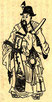
“"Lord Dong is not the only man of power in the empire."”
Yuan Shao (154–202) Han Dynasty warlord
Response in 189 to threats by Dong Zhuo. After this, Yuan Shao left the capital and began organising a coalition against Dong. This confrontation marked the end of the uneasy peace between the two. Source: "Xiandi Chunqiu" (獻帝春秋), page 190 of Sanguo Zhi (三國志).
Bertrand Russell (1872–1970) logician, one of the first analytic philosophers and political activist
Source: 1950s, Portraits from Memory and Other Essays (1956), p. 159

“We cannot learn our lessons at our companion’s expense”
Alessandro Piccolomini (1508–1579) Italian writer and philosopher
Alle spese del compagno non si può imparare.
Act V., Scene I. — (Il Quercivola).
Translation reported in Harbottle's Dictionary of quotations French and Italian (1904), p. 247.
L’Alessandro (1544)

Jung Myung Seok (1945) South Korean Leader of New Religious Movement, Poet, Author, Founder of Wolmyeongdong Center
Extracted from the Wolmyeongdong Website http://wmd.god21.net/WolMyeongDong/Founder

Ninon de L'Enclos (1620–1705) French author, courtesan, freethinker, and patron of the arts
Translation (Anon., 1904). Those who need religion to help them to behave as they should, are much to be pitied. It is a sure sign of a limited intellect or of a corrupt heart.

Mark Twain book Roughing It
On the Book of Mormon, Roughing It (published 1872), pp. 58-59
Roughing It (1872)

Marcel Proust book In Search of Lost Time
Tout ce que nous connaissons de grand nous vient des nerveux. Ce sont eux et non pas d'autres qui ont fondé les religions et composé les chefs-d'œuvre.
http://books.google.com/books?id=qrZEAAAAYAAJ&q=%22Tout+ce+que+nous+connaissons+de+grand+nous+vient+des+nerveux.+Ce+sont+eux+et+non+pas+d'autres+qui+ont+fond%C3%A9+les+religions%22+%22et+compos%C3%A9+les+chefs-d'%C5%93uvre%22&pg=PA272#v=onepage
Volume I
In Search of Lost Time, Remembrance of Things Past (1913-1927), Vol III: The Guermantes Way (1920)
“The present life of man, O king, seems to me, in comparison of that time which is unknown to us, like to the swift flight of a sparrow through the room wherein you sit at supper in winter, with your commanders and ministers, and a good fire in the midst, whilst the storms of rain and snow prevail abroad; the sparrow, I say, flying in at one door, and immediately out at another, whilst he is within, is safe from the wintry storm; but after a short space of fair weather, he immediately vanishes out of your sight, into the dark winter from which he had emerged. So this life of man appears for a short space, but of what went before, or what is to follow, we are utterly ignorant. If, therefore, this new doctrine contains something more certain, it seems justly to deserve to be followed.”
Talis...mihi uidetur, rex, vita hominum praesens in terris, ad conparationem eius, quod nobis incertum est, temporis, quale cum te residente ad caenam cum ducibus ac ministris tuis tempore brumali, accenso quidem foco in medio, et calido effecto caenaculo, furentibus autem foris per omnia turbinibus hiemalium pluviarum vel nivium, adveniens unus passeium domum citissime pervolaverit; qui cum per unum ostium ingrediens, mox per aliud exierit. Ipso quidem tempore, quo intus est, hiemis tempestate non tangitur, sed tamen parvissimo spatio serenitatis ad momentum excurso, mox de hieme in hiemem regrediens, tuis oculis elabitur. Ita haec vita hominum ad modicum apparet; quid autem sequatur, quidue praecesserit, prorsus ignoramus. Unde si haec nova doctrina certius aliquid attulit, merito esse sequenda videtur.
Bede book Ecclesiastical History of the English People
Book II, chapter 13
This, Bede tells us, was the advice given to Edwin, King of Northumbria by one of his chief men, at a meeting where the king proposed that he and his followers should convert to Christianity. It followed a speech by the chief priest Coifi, who also spoke in favor of conversion.
Historia Ecclesiastica Gentis Anglorum (Ecclesiastical History of the English People)

Gustave Courbet (1819–1877) French painter
Courbet wrote this 'Realist manifesto' for the introduction to the catalogue of his independent, personal exhibition at the Pavilion of Realism in Paris, outside the 1855 Universal Exhibition. His text is echoing the tone of the period's political manifestos of those days
1840s - 1850s, Realist Manifesto', 1851/1855
Lu Xun book Call to Arms
Lu Xun studied medicine before he became a writer. Once he saw on a film a Chinese being executed by Japanese while many other Chinese were watching this "spectacular event". This made him feel that saving the "souls" of people is more important than saving their bodies.
Source: From the preface of his work Na Han (Call to Arms) (1922)

“WE ARE COMPELLED, OUR FAITH URGING us, to believe and to hold—and we do firmly believe and simply confess—that there is one holy Catholic and Apostolic Church, outside of which there is neither salvation nor remission of sins”
Unam sanctam ecclesiam catholicam et ipsam apostolicam urgente fide credere cogimur et tenere, nosque hanc frmiter credimus et simpliciter confitemur, extra quam nec salus est, nec remissio peccatorum,
Pope Boniface VIII Unam sanctam
Unam sanctam (1302)

Voltaire (1694–1778) French writer, historian, and philosopher
Questions sur les miracles (1765)
Widely used paraphrase: "Those who can make you believe absurdities, can make you commit atrocities".


“Nor do I hold that every kind of gain is always serviceable. Gain, I know, has render’d many great. But there are times when loss should be preferr’d to gain. (translator Thornton)”
Non ego omnino lucrum omne esse utile homini existimo. Scio ego, multos jam lucrum luculentos homines reddidit. Est etiam, ubi profecto damnum praestet facere, quam lucrum.
Captivi, Act II, scene 2, line 75.
Variant translation: There are occasions when it is undoubtedly better to incur loss than to make gain. (translation by Henry Thomas Riley)
Captivi (The Prisoners)

“The beginning of all wisdom is acknowledgement of facts.”
Juho Kusti Paasikivi (1870–1956) 7th President of Finland
Source: Quoted on the Paasikivi monument in Helsinki, supposedly originating from Thomas Carlyle

“He has joined the great majority.”
Abiit ad plures.
Sec. 42
Variant translations:
He’s gone to join the majority [the dead].
He has gone to the majority.
(i.e. He has died.)
Satyricon
“"A real man should die in front of the ranks, not hide behind a wall!"”
Yuan Shao (154–202) Han Dynasty warlord
Statement in 191 at Battle of Jieqiao. Yuan Shao and his halberdsmen, surrounded by enemy cavalry, refuses to take refuge. He is said to have thrown off his helmet as he said this. Source: "Yingxiong Ji" (英雄記), page 193-194 of Sanguo Zhi.

Mark Driscoll (1970) American pastor
Warnock, Adrian, Interview with Mark Driscoll http://adrianwarnock.com/2006/04/interview-with-mark-driscoll_02.htm, Adrian's Blog, April 2, 2006.

Jack Welch (1935) American executive: General Electric CEO
Cited in: Robert Slater (1998), Jack Welch & The G.E. Way: Management Insights and Leadership. p. 12
“The glories, trumpets, palms… and low reliefs,… all that makes a monument.”
Pablo Picasso (1881–1973) Spanish painter, sculptor, printmaker, ceramicist, and stage designer
Les gloires, les trompettes, les palmes... et les bas-reliefs,... tout cela fait un monument.
Picasso (1952). Quoted in: Michael D. Garval (2004), "A Dream of Stone": Fame, Vision, and Monumentality in Nineteenth-century French Literary Culture. p. 226.
Picasso commented on the matter of the monument destruction in Paris.
Quotes, 1950's
“These things are not for the best, nor as I think they ought to be; but still they are better than that which is downright bad. (translator Henry Thomas Riley)”
Non optuma haec sunt neque ut ego aequom censeo : verum meliora sunt quam quae deterruma.
Trinummus, Act II, sc. 2, line 111; reported in Bartlett's Familiar Quotations, 10th ed. (1919).
Alternate translation : This is not the best thing possible, nor what I consider proper ; but it is better than the worst. (translator A. H. Evans)
Trinummus (The Three Coins)
Suman Pokhrel (1967) Nepali poet, lyricist, playwright, translator and artist
<span class="plainlinks"> Foreword, 'Tales of Transformation: English Translation of Tagore's Chitrangada and Chandalika', Lopamudra Banerjee, (2018). https://www.amazon.co.uk/dp/B07DQPD8F4/</span> <br class="br">From Prose

Omar Bradley (1893–1981) United States Army field commander during World War II
Source: A Soldier's Story (1951), p. ix.
Margaret Barber book The Roadmender
Source: The Roadmender (1902), Chapter II

John Napier (1550–1617) Scottish mathematician
Canon Mirificus, Englsh edition (1616)
Memoirs of John Napier of Merchiston (1834)

Nicholas Negroponte (1943) American computer scientist
Nicholas Negroponte: A 30-year history of the future http://www.ted.com/talks/nicholas_negroponte_a_30_year_history_of_the_future, July 2014, TED Talks (about 13:40 into 19:43 video). <br class="br">A 30-year history of the future, TED Talk (2014)

Angela Merkel (1954) Chancellor of Germany
Nicht die Welt muss dem Iran nachweisen, dass er eine Bombe baut, sondern der Iran muss die Welt überzeugen, dass er die Atombombe nicht will.
At the United Nations General Assembly on September 25, 2007
2007


Kent Hovind (1953) American young Earth creationist
-Edited Version- Pastor Steve Anderson interviews Dr Kent Hovind (Re-upload) https://www.youtube.com/watch?v=4y4J7o62-w8, Youtube (January 22, 2015)
Suman Pokhrel (1967) Nepali poet, lyricist, playwright, translator and artist
<span class="plainlinks"> Foreword, 'Tales of Transformation: English Translation of Tagore's Chitrangada and Chandalika', Lopamudra Banerjee, (2018). https://www.amazon.co.uk/dp/B07DQPD8F4/</span> <br class="br">From Prose

Claude Monet (1840–1926) French impressionist painter
in his letter, 15 February 1889, (L. 911); as cited in Steven Z. Levine, Claude Monet (1994), Monet, Narcissus, and Self-Reflection: The Modernist Myth of the Self. p. 93
1870 - 1890
Jung Myung Seok (1945) South Korean Leader of New Religious Movement, Poet, Author, Founder of Wolmyeongdong Center
Extracted from the Wolmyeongdong Website http://wmd.god21.net/WolMyeongDong/Founder

Saadi book Gulistan of Sa'di
Alternative translation:
The children of Adam are limbs of a whole
Having been created of one essence.
When the calamity of time afflicts one limb
The other limbs cannot remain at rest.
If you have no sympathy for the troubles of others
You are not worthy to be called by the name of "man".
Source: Gulistan (1258), Chapter 1, story 10
Pierre Joseph Proudhon (1809–1865) French politician, mutualist philosopher, economist, and socialist
Source: The Philosophy of Misery (1846), Chapter I


“The clumsiest literal translation is a thousand times more useful than the prettiest paraphrase.”
Vladimir Nabokov (1899–1977) Russian-American novelist, lepidopterist, professor
Problems of translation (1955).

K. R. Narayanan (1920–2005) 9th Vice President and the 10th President of India
Shri K. R. Narayanan President of India in Conversation with N. Ram on Doordarshan and All India Radio

“The main force in man — is the power of the spirit.”
Yuri Gagarin (1934–1968) Soviet pilot and cosmonaut, the first human in space
Ведь главная сила в человеке — это сила духа.
Variant translation: The main human strength is willpower.
As quoted in Essays on Marxist-Leninist Ethics [марксистско-ленинской этике] (1962) by Simon S. Utkin [Семен Семенович Уткин], p. 180


Mortimer J. Adler (1902–2001) American philosopher and educator
Source: Reforming Education: The Opening of the American Mind (1990), p. 316

Napoleon I of France (1769–1821) French general, First Consul and later Emperor of the French
Depuis le premier jour jusqu'au dernier, il est le même, toujours le même, majestueux et simple , infiniment sévère et infiniment doux ; dans un commerce de vie pour ainsi dire public, Jésus ne donne jamais de prise à la moindre critique; sa conduite si prudente ravit l'admiration par un mélange de force et de douceur.

Thomas Mann book The Magic Mountain
Was wir Trauer nennen, ist vielleicht nicht sowohl der Schmerz über die Unmöglichkeit, unsere Toten ins Leben kehren zu sehen, als darüber, dies gar nicht wünschen zu können.
http://books.google.com/books?id=q4UdAAAAMAAJ&q=%22was+wir+Trauer+nennen+ist+vielleicht+nicht+sowohl+der+Schmerz+%C3%BCber+die+Unm%C3%B6glichkeit+unsere+Toten+ins+Leben+kehren+zu+sehen+als+dar%C3%BCber+dies+gar+nicht+w%C3%BCnschen+zu+k%C3%B6nnen%22&pg=PA562#v=onepage
Source: The Magic Mountain (1924), Ch. 7

Friedrich Nietzsche (1844–1900) German philosopher, poet, composer, cultural critic, and classical philologist
Disputed
“It is reported, that some merchants, having just arrived at Rome on a certain day, exposed many things for sale in the marketplace, and abundance of people resorted thither to buy: Gregory himself went with the rest, and, among other things, some boys were set to sale, their bodies white, their countenances beautiful, and their hair very fine. Having viewed them, he asked, as is said, from what country or nation they were brought? and was told, from the island of Britain, whose inhabitants were of such personal appearance.”
Dicunt quia die quadam cum, advenientibus nuper mercatoribus, multa venalia in forum fuissent conlata, multi ad emendum confluixissent, et ipsum Gregorium inter alios advenisse, ad vidisse inter alia pueros venales positos candidi corporis ac venusti vultus, capillorum quoque forma egregia. Quos cum adspiceret interrogavit, ut aiunt, de qua regione vel terra essent adlati. Dictumque est quia de Britannia insula, cuius incolae talis essent aspectus.
Bede book Ecclesiastical History of the English People
Book II, chapter 1
Bede's source for this story is an anonymous Life of Gregory the Great, written by a monk of Whitby Abbey.
Historia Ecclesiastica Gentis Anglorum (Ecclesiastical History of the English People)

Jane Roberts (1929–1984) American Writer
Session 884, Page 138
Dreams, Evolution and Value Fulfillment, Volume One (1986)
Context: Value fulfillment itself is most difficult to describe, for it combines the nature of a loving presence - a presence with the innate knowledge of its own divine complexity - with a creative ability of infinite proportions that seeks to bring to fulfillment even the slightest, most distant portion of its own inverted complexity. Translated into simpler terms, each portion of energy is endowed with an inbuilt reach of creativity that seeks to fulfill its own potentials in all possible variations - and in such a way that such a development also furthers the creative potentials of each other portion of reality.

Karl Marx (1818–1883) German philosopher, economist, sociologist, journalist and revolutionary socialist
The Eighteenth Brumaire of Louis Bonaparte (1852)
Context: Men make their own history, but they do not make it as they please; they do not make it under self-selected circumstances, but under circumstances existing already, given and transmitted from the past. The tradition of all dead generations weighs like a nightmare on the brains of the living. And just as they seem to be occupied with revolutionizing themselves and things, creating something that did not exist before, precisely in such epochs of revolutionary crisis they anxiously conjure up the spirits of the past to their service, borrowing from them names, battle slogans, and costumes in order to present this new scene in world history in time-honored disguise and borrowed language. Thus Luther put on the mask of the Apostle Paul, the Revolution of 1789-1814 draped itself alternately in the guise of the Roman Republic and the Roman Empire, and the Revolution of 1848 knew nothing better to do than to parody, now 1789, now the revolutionary tradition of 1793-95. In like manner, the beginner who has learned a new language always translates it back into his mother tongue, but he assimilates the spirit of the new language and expresses himself freely in it only when he moves in it without recalling the old and when he forgets his native tongue.
When we think about this conjuring up of the dead of world history, a salient difference reveals itself. Camille Desmoulins, Danton, Robespierre, St. Just, Napoleon, the heroes as well as the parties and the masses of the old French Revolution, performed the task of their time – that of unchaining and establishing modern bourgeois society – in Roman costumes and with Roman phrases.