
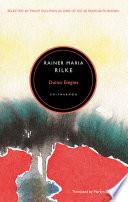

Rainer Maria Rilke book Letters to a Young Poet
Source: Letters to a Young Poet
Explore Rainer Maria Rilke’s profound wisdom through thought-provoking quotes, discovering life’s complexities. From embracing existence's beauty to finding solace in unanswered questions, his words inspire courage, love, and an open heart for life's journey.
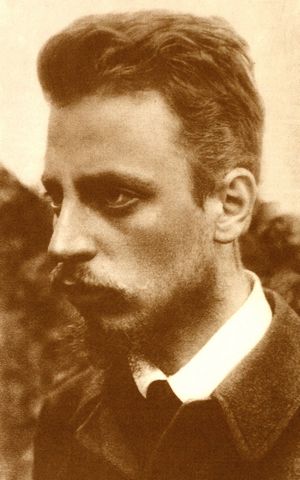
Rainer Maria Rilke was an acclaimed Austrian poet and novelist known for his unique and expressive writing style. He explored themes of mysticism and subjective experience, captivating critics and scholars alike with his work. While he is best known for his contributions to German literature, he also wrote in French. Some of his most famous works include the poetry collections "Duino Elegies" and "Sonnets to Orpheus," as well as the novel "The Notebooks of Malte Laurids Brigge." In addition to being influential in literature, Rilke's writings have been widely cited by self-help authors and referenced in various forms of media.
Born René Karl Wilhelm Johann Josef Maria Rilke in Prague, Rilke had a challenging childhood marked by an unhappy family life. His parents enrolled him in a military academy at a young age, but he left due to illness. Despite these setbacks, he pursued his education in Prague before moving to Munich. Rilke's literary career took off when he met Lou Andreas-Salomé, an intellectual woman with whom he fell in love. Their relationship influenced his writing and led him on extensive journeys to Russia. Throughout his life, Rilke faced personal turmoil associated with relationships and health issues but continued to produce significant literary works until his death from leukemia in 1926.
Overall, Rainer Maria Rilke made significant contributions to German literature through poetry, novels, and correspondence. His writing style captivated readers with its expressive nature and exploration of mystical themes. Despite facing personal challenges throughout his life, Rilke's influence on literature continues to resonate today.
Rainer Maria Rilke book Letters to a Young Poet
Source: Letters to a Young Poet
Rainer Maria Rilke book Letters to a Young Poet
Letter One (17 February 1903)
Letters to a Young Poet (1934)
Context: No one can advise or help you — no one. There is only one thing you should do. Go into yourself. Find out the reason that commands you to write; see whether it has spread its roots into the very depths of your heart; confess to yourself whether you would have to die if you were forbidden to write.
Source: Translations from the Poetry of Rainer Maria Rilke
Letter Seven (14 May 1904)
Letters to a Young Poet (1934)
Variant: For one human being to love another human being: that is perhaps the most difficult task that has been given to us, the ultimate, the final problem and proof, the work for which all other work is merely preparation.
Source: The Selected Poetry of Rainer Maria Rilke
Context: People have (with the help of conventions) oriented all their solutions toward the easy and toward the easiest side of the easy; but it is clear that we must hold to what is difficult; everything alive holds to it, everything in Nature grows and defends itself in its own way and is characteristically and spontaneously itself, seeks at all costs to be so and against all opposition. We know little, but that we must hold to what is difficult is a certainty that will not forsake us; it is good to be solitary, for solitude is difficult; that something is difficult must be a reason the more for us to do it.
To love is good, too: love being difficult. For one human being to love another: that is perhaps the most difficult of all our tasks, the ultimate, the last test and proof, the work for which all other work is but preparation.
Rainer Maria Rilke book Letters to a Young Poet
Source: Letters to a Young Poet
“I live my life in widening circles that reach out across the world.”
Source: Rilke's Book of Hours: Love Poems to God
Rainer Maria Rilke book Letters to a Young Poet
Letter Seven (14 May 1904)
Source: Letters to a Young Poet (1934)
“And as for the rest, let life happen to you. Believe me: life is in the right, always.”
Rainer Maria Rilke book Letters to a Young Poet
Variant: Let life happen to you. Believe me: life is in the right, always.
Source: Letters to a Young Poet
“Let everything happen to you: beauty and terror. Just keep going. No feeling is final.”
from poem Go to the Limits of Your Longing.
Appears in movie Jojo Rabbit.
Variant: Let everything happen to you
Beauty and terror
Just keep going
No feeling is final
“You, Beloved, who are all
the gardens I have ever gazed at,
longing.”
You Who Never Arrived, as translated by Stephen Mitchell
Context: You, Beloved, who are all
the gardens I have ever gazed at,
longing. An open window
in a country house —, and you almost
stepped out, pensive, to meet me.
Streets that I chanced upon,—
you had just walked down them and vanished.
And sometimes, in a shop, the mirrors
were still dizzy with your presence and, startled,
gave back my too-sudden image. Who knows?
perhaps the same bird echoed through both of us
yesterday, separate, in the evening...
Rainer Maria Rilke book Letters to a Young Poet
Source: Letters to a Young Poet
“Have patience with everything that remains unsolved in your heart.
… live in the question.”
Rainer Maria Rilke book Letters to a Young Poet
Source: Letters to a Young Poet
Rainer Maria Rilke book Letters to a Young Poet
Source: Letters to a Young Poet
Rainer Maria Rilke book Letters to a Young Poet
Letter Three (23 April 1903)
Letters to a Young Poet (1934)
Rainer Maria Rilke book Duino Elegies
First Elegy (as translated by Stephen Mitchell)
Source: Duino Elegies (1922)
Context: Who, if I cried out, would hear me among the angels'
hierarchies? and even if one of them
pressed me against his heart: I would be consumed
in that overwhelming existence. For beauty is nothing
but the beginning of terror, which we still are just able to endure,
and we are so awed because it serenely disdains
to annihilate us. Every angel is terrifying.
Rainer Maria Rilke book Letters to a Young Poet
Letter Seven (14 May 1904)
Letters to a Young Poet (1934)
Context: People have (with the help of conventions) oriented all their solutions toward the easy and toward the easiest side of the easy; but it is clear that we must hold to what is difficult; everything alive holds to it, everything in Nature grows and defends itself in its own way and is characteristically and spontaneously itself, seeks at all costs to be so and against all opposition. We know little, but that we must hold to what is difficult is a certainty that will not forsake us; it is good to be solitary, for solitude is difficult; that something is difficult must be a reason the more for us to do it.
To love is good, too: love being difficult. For one human being to love another: that is perhaps the most difficult of all our tasks, the ultimate, the last test and proof, the work for which all other work is but preparation.
“When you go to bed, don't leave bread or milk
on the table: it attracts the dead.”
Rainer Maria Rilke book Sonnets to Orpheus
Sonnet 6 (as translated by Edward Snow)
Sonnets to Orpheus (1922)
“The work of the eyes is done. Go now and do the heart-work on the images imprisoned within you.”
Wendung (Turning Point), as translated by Stephen Mitchell
Rainer Maria Rilke book Letters to a Young Poet
Source: Letters to a Young Poet
As quoted in Sunbeams : A Book of Quotations (1990) by Sy Safransky, p. 42
“Ah, how good it is to be among people who are reading.”
Rainer Maria Rilke book The Notebooks of Malte Laurids Brigge
Source: The Notebooks of Malte Laurids Brigge
Rainer Maria Rilke book Letters to a Young Poet
Letter One (17 February 1903) as translated by M. D. Herter Norton (1993)
Source: Letters to a Young Poet (1934)
Rainer Maria Rilke book Letters to a Young Poet
Letter Seven (14 May 1904)
Letters to a Young Poet (1934)
Context: The demands which the difficult work of love makes upon our development are more than life-size, and as beginners we are not up to them. But if we nevertheless hold out and take this love upon us as burden and apprenticeship, instead of losing ourselves in all the light and frivolous play, behind which people have hidden from the most earnest earnestness of their existence — then a little progress and alleviation will perhaps be perceptible to those who come long after us; that would be much.
You Who Never Arrived (as translated by Stephen Mitchell) (1913-1914)
Context: You who never arrived
in my arms, Beloved, who were lost
from the start,
I don't even know what songs
would please you. I have given up trying
to recognize you in the surging wave of the next
moment.
Rainer Maria Rilke book Letters to a Young Poet
Variant: What is necessary, after all, is only this: solitude, vast inner solitude. To walk inside yourself and meet no one for hours—that is what you must be able to attain.
Source: Letters to a Young Poet
Source: The Selected Poetry of Rainer Maria Rilke
“If we surrendered
to earth's intelligence
we could rise up rooted, like trees.”
Source: Rilke's Book of Hours: Love Poems to God
Source: Rainer Maria Rilke's the Book of Hours: A New Translation with Commentary
Source: Rilke's Book of Hours: Love Poems to God
Source: The Selected Poetry of Rainer Maria Rilke
Rainer Maria Rilke book Letters to a Young Poet
Source: Letters to a Young Poet
Source: The Selected Poetry of Rainer Maria Rilke
Rainer Maria Rilke book Letters to a Young Poet
Letter Four (16 July 1903)
Variant: Have patience with everything unresolved in your heart and to try to love the questions themselves as if they were locked rooms or books written in a very foreign language. Don't search for the answers, which could not be given to you now, because you would not be able to live them. And the point is, to live everything. Live the questions now. Perhaps then, someday far in the future, you will gradually, without even noticing it, live your way into the answer. (Translation by Stephen Mitchell)
Letters to a Young Poet (1934)
Context: Be patient toward all that is unsolved in your heart and try to love the questions themselves, like locked rooms and like books that are now written in a very foreign tongue. Do not now seek the answers, which cannot be given you because you would not be able to live them. And the point is, to live everything. Live the questions now. Perhaps you will then gradually, without noticing it, live along some distant day into the answer.


