Quotes from book
Ecclesiastical History of the English People

Ecclesiastical History of the English People
BedeOriginal title Historia ecclesiastica gentis Anglorum (Latin)

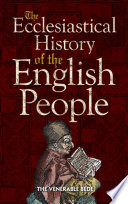
The Ecclesiastical History of the English People , written by the Venerable Bede in about AD 731, is a history of the Christian Churches in England, and of England generally; its main focus is on the conflict between the pre-Schism Roman Rite and Celtic Christianity. It was originally composed in Latin, and is considered one of the most important original references on Anglo-Saxon history and has played a key role in the development of an English national identity. It is believed to have been completed in 731 when Bede was approximately 59 years old.


Bede photo

“It is reported, that some merchants, having just arrived at Rome on a certain day, exposed many things for sale in the marketplace, and abundance of people resorted thither to buy: Gregory himself went with the rest, and, among other things, some boys were set to sale, their bodies white, their countenances beautiful, and their hair very fine. Having viewed them, he asked, as is said, from what country or nation they were brought? and was told, from the island of Britain, whose inhabitants were of such personal appearance.”
Dicunt quia die quadam cum, advenientibus nuper mercatoribus, multa venalia in forum fuissent conlata, multi ad emendum confluixissent, et ipsum Gregorium inter alios advenisse, ad vidisse inter alia pueros venales positos candidi corporis ac venusti vultus, capillorum quoque forma egregia. Quos cum adspiceret interrogavit, ut aiunt, de qua regione vel terra essent adlati. Dictumque est quia de Britannia insula, cuius incolae talis essent aspectus.

Bede book Ecclesiastical History of the English People

Book II, chapter 1
Bede's source for this story is an anonymous Life of Gregory the Great, written by a monk of Whitby Abbey.
Historia Ecclesiastica Gentis Anglorum (Ecclesiastical History of the English People)

Bede photo

“The present life of man, O king, seems to me, in comparison of that time which is unknown to us, like to the swift flight of a sparrow through the room wherein you sit at supper in winter, with your commanders and ministers, and a good fire in the midst, whilst the storms of rain and snow prevail abroad; the sparrow, I say, flying in at one door, and immediately out at another, whilst he is within, is safe from the wintry storm; but after a short space of fair weather, he immediately vanishes out of your sight, into the dark winter from which he had emerged. So this life of man appears for a short space, but of what went before, or what is to follow, we are utterly ignorant. If, therefore, this new doctrine contains something more certain, it seems justly to deserve to be followed.”
Talis...mihi uidetur, rex, vita hominum praesens in terris, ad conparationem eius, quod nobis incertum est, temporis, quale cum te residente ad caenam cum ducibus ac ministris tuis tempore brumali, accenso quidem foco in medio, et calido effecto caenaculo, furentibus autem foris per omnia turbinibus hiemalium pluviarum vel nivium, adveniens unus passeium domum citissime pervolaverit; qui cum per unum ostium ingrediens, mox per aliud exierit. Ipso quidem tempore, quo intus est, hiemis tempestate non tangitur, sed tamen parvissimo spatio serenitatis ad momentum excurso, mox de hieme in hiemem regrediens, tuis oculis elabitur. Ita haec vita hominum ad modicum apparet; quid autem sequatur, quidue praecesserit, prorsus ignoramus. Unde si haec nova doctrina certius aliquid attulit, merito esse sequenda videtur.

Bede book Ecclesiastical History of the English People

Book II, chapter 13
This, Bede tells us, was the advice given to Edwin, King of Northumbria by one of his chief men, at a meeting where the king proposed that he and his followers should convert to Christianity. It followed a speech by the chief priest Coifi, who also spoke in favor of conversion.
Historia Ecclesiastica Gentis Anglorum (Ecclesiastical History of the English People)

Bede photo

“It is reported that there was then such perfect peace in Britain, wheresoever the dominion of King Edwin extended, that, as is still proverbially said, a woman with her newborn babe might walk throughout the island, from sea to sea, without receiving any harm.”
Tanta eo tempore pax in Britannia fuisse perhibetur, ut, sicut usque hodie in proverbio dicitur, etiamsi mulier una cum recens nato parvulo vellet totam perambulare insulam a mari ad mare, nullo se laedente valeret.

Bede book Ecclesiastical History of the English People

Book II, chapter 16
Historia Ecclesiastica Gentis Anglorum (Ecclesiastical History of the English People)

Bede photo

“He therefore again asked, what was the name of that nation? and was answered, that they were called Angles. "Right", said he, for they have an Angelic face, and it becomes such to be co-heirs with the Angels in heaven. What is the name", proceeded he, "of the province from which they are brought?" It was replied, that the natives of that province were called Deiri. "Truly are they De ira", said he, "withdrawn from wrath, and called to the mercy of Christ. How is the king of that province called?" They told him his name was Ælla: and he, alluding to the name said, "Hallelujah, the praise of God the Creator must be sung in those parts."”
Rursus ergo interrogavit quod esset vocabulum gentis illius. Responsum est quod Angli vocarentur. At ille: "Bene", inquit, "nam et angelicam habent faciem et tales angelorum in caelis decet esse cohaeredes. Quod habet nomen ipsa provincia, de qua isti sunt adlati?" Responsum est quod Deiri vocarentur idem provinciales. At ille: "Bene", inquit, "Deiri; de ira eruti, et ad misericordiam Christi vocati. Rex provinciae illius quomodo apellatur?" Responsum est quod Aelli diceretur. At ille adludens ad nomen ait: "Alleluia, laudem Dei creatoris illis in partibus oportet cantari".

Bede book Ecclesiastical History of the English People

Rursus ergo interrogavit quod esset vocabulum gentis illius. Responsum est quod Angli vocarentur. At ille: "Bene", inquit, "nam et angelicam habent faciem et tales angelorum in caelis decet esse cohaeredes. Quod habet nomen ipsa provincia, de qua isti sunt adlati?" Responsum est quod Deiri vocarentur idem provinciales. At ille: "Bene", inquit, "Deiri; de ira eruti, et ad misericordiam Christi vocati. Rex provinciae illius quomodo apellatur?"
Responsum est quod Aelli diceretur. At ille adludens ad nomen ait: "Alleluia, laudem Dei creatoris illis in partibus oportet cantari".
Book II, chapter 1
Historia Ecclesiastica Gentis Anglorum (Ecclesiastical History of the English People)

Similar authors

Bede photo
Bede4
English monk and saint 672–735
Benedict of Nursia photo
Benedict of Nursia3
Christian saint and monk None
Richard of Chichester photo
Richard of Chichester1
Bishop of Chichester, Saint None
Angela of Foligno photo
Angela of Foligno13
Italian saint None
Isaac of Nineveh photo
Isaac of Nineveh9
Eastern Orthodox saint None
John of Damascus photo
John of Damascus3
hymnodist at Mar Saba, Greek Church father, Eastern Orthodo… None
Francis of Assisi photo
Francis of Assisi49
Catholic saint and founder of the Franciscan Order None
Julian of Norwich photo
Julian of Norwich372
English theologian and anchoress None
Cædmon photo
Cædmon3
Ancient English poet None
Hildegard of Bingen photo
Hildegard of Bingen8
Medieval saint, prophetise, mystic and Doctor of Church None