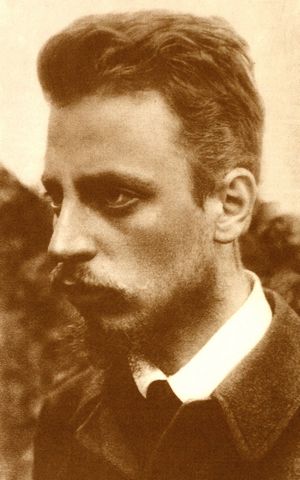
Rainer Maria Rilke słynne cytaty
Źródło: Już wszystkie rzeczy…, w: Wiersze rozproszone i pośmiertne z lat 1906–1926, wybrał i przełożył Bernard Antochewicz, Wrocław 1991.
Rainer Maria Rilke Cytaty o ludziach
Denn Verse sind nicht, wie die Leute meinen, Gefühle (die hat man früh genug), – es sind Erfahrungen. (niem.)
Źródło: Zapiski Maltego Lauridsa Brigge
Rainer Maria Rilke książka Malte
Źródło: Malte. Pamiętniki Malte-Lauridsa Brigge, tłum. Witold Hulewicz.
Rainer Maria Rilke Cytaty o miłości
O Herr, gib jedem seinen eignen Tod,
das Sterben, das aus jenem Leben geht,
darin er Liebe hatte, Sinn und Not.
Denn wir sind nur die Schale und das Blatt.
Der große Tod, den jeder in sich hat,
das ist die Frucht, um die sich alles dreht. (niem.)
Źródło: Księga godzin, O ubóstwie i śmierci, wyd. L. Chomińskiego, Wilno 1935, s. 140–141, tłum. Witold Hulewicz.
Rainer Maria Rilke cytaty
Źródło: List do młodego poety
„Zgaś moje oczy: ja Cię widzieć mogę,
uszy zatrzaśnij: ja Ciebie usłyszę…”
Lösch mir die Augen aus: ich kann dich sehn,
wirf mir die Ohren zu: ich kann dich hören… (niem.)
Źródło: Księga godzin, O pielgrzymstwie, wyd. L. Chomińskiego, Wilno 1935, s. 90, tłum. Witold Hulewicz.
Rainer Maria Rilke książka Malte
Źródło: Malte. Pamiętniki Malte-Lauridsa Brigge, tłum. Witold Hulewicz.
Źródło: Przypomnienie, tłum. Mieczysław Jastrun
Źródło: Pieśń miłosna, tłumaczenie Adam Pomorski
„Kto teraz płacze gdziekolwiek na świecie,
bez powodu płacze na świecie,
płacze nade mną.”
Źródło: tom Godzina powagi, tłum. Janina Brzostowska
Rainer Maria Rilke: Cytaty po angielsku
Rainer Maria Rilke książka Letters to a Young Poet
Letter One (17 February 1903) as translated by M. D. Herter Norton (1993)
Źródło: Letters to a Young Poet (1934)
Rainer Maria Rilke książka Letters to a Young Poet
Źródło: Letters to a Young Poet
Rainer Maria Rilke książka Letters to a Young Poet
Letter Seven (14 May 1904)
Letters to a Young Poet (1934)
Kontekst: The demands which the difficult work of love makes upon our development are more than life-size, and as beginners we are not up to them. But if we nevertheless hold out and take this love upon us as burden and apprenticeship, instead of losing ourselves in all the light and frivolous play, behind which people have hidden from the most earnest earnestness of their existence — then a little progress and alleviation will perhaps be perceptible to those who come long after us; that would be much.
You Who Never Arrived (as translated by Stephen Mitchell) (1913-1914)
Kontekst: You who never arrived
in my arms, Beloved, who were lost
from the start,
I don't even know what songs
would please you. I have given up trying
to recognize you in the surging wave of the next
moment.
Rainer Maria Rilke książka Letters to a Young Poet
Wariant: What is necessary, after all, is only this: solitude, vast inner solitude. To walk inside yourself and meet no one for hours—that is what you must be able to attain.
Źródło: Letters to a Young Poet
Źródło: The Selected Poetry of Rainer Maria Rilke
“If we surrendered
to earth's intelligence
we could rise up rooted, like trees.”
Źródło: Rilke's Book of Hours: Love Poems to God
Rainer Maria Rilke książka Letters to a Young Poet
Źródło: Letters to a Young Poet
Źródło: Rainer Maria Rilke's the Book of Hours: A New Translation with Commentary
Rainer Maria Rilke książka Duino Elegies
Źródło: Duino Elegies
Rainer Maria Rilke książka Letters to a Young Poet
Źródło: Letters to a Young Poet
Źródło: The Selected Poetry of Rainer Maria Rilke
Rainer Maria Rilke książka Letters to a Young Poet
Źródło: Letters to a Young Poet
Rainer Maria Rilke książka Letters to a Young Poet
Źródło: Letters to a Young Poet
Rainer Maria Rilke książka Letters to a Young Poet
Źródło: Letters to a Young Poet
Rainer Maria Rilke książka Letters to a Young Poet
Źródło: Letters to a Young Poet


