Ursula K. Le Guin book Dancing at the Edge of the World
Bryn Mawr Commencement Address https://books.google.com/books?id=QK6TYg32CocC&pg=PA160 (1986), in Dancing at the Edge of the World (1997), p. 160
Ursula Kroeber Le Guin was an American novelist. She worked mainly in the genres of fantasy and science fiction, and authored children's books, short stories, poetry, and essays. Her writing was first published in the 1960s and often depicted futuristic or imaginary alternative worlds in politics, the natural environment, gender, religion, sexuality, and ethnography. In 2016, The New York Times described her as "America's greatest living science fiction writer", although she said that she would prefer to be known as an "American novelist".She influenced Booker Prize winners and other writers, such as Salman Rushdie and David Mitchell, and science fiction and fantasy writers including Neil Gaiman and Iain Banks. She won the Hugo Award, Nebula Award, Locus Award, and World Fantasy Award, each more than once. In 2014, she was awarded the National Book Foundation Medal for Distinguished Contribution to American Letters. In 2003, she was made a Grandmaster of Science Fiction, one of a few women writers to take the top honor in the genre.

Ursula K. Le Guin book Dancing at the Edge of the World
Bryn Mawr Commencement Address https://books.google.com/books?id=QK6TYg32CocC&pg=PA160 (1986), in Dancing at the Edge of the World (1997), p. 160
Ursula K. Le Guin book Four Ways to Forgiveness
"A Woman's Liberation", p. 158; first published in Asimov's (1995)
Four Ways to Forgiveness (1995)
“We don’t live in order to die, we live in order to live.”
in an interview http://www.viceland.com/int/v15n12/htdocs/ursula-k-le-guin-440.php?country=uk in Vice Magazine. <br class="br">Context: Belief in heaven and hell is a big deal in Judaism, Christianity, and Islam, and some forms of doctrinaire Buddhism. For the rest of us it’s simply meaningless. We don’t live in order to die, we live in order to live.
"The Creatures on My Mind" in Unlocking the Air and Other Stories (1996), p. 65
“Highdrake said that to make love is to unmake power.”
“The Finder” (p. 59)
Earthsea Books, Tales from Earthsea (2001)
Ursula K. Le Guin Hainish Cycle
Source: Hainish Cycle, The Left Hand of Darkness (1969), Chapter 18 “On the Ice” (p. 249)
“Dragonfly” (p. 199)
Earthsea Books, Tales from Earthsea (2001)
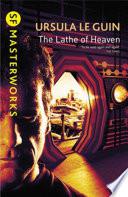
Ursula K. Le Guin book The Lathe of Heaven
Source: The Lathe of Heaven (1971), Chapter 6 (Orr)
Ursula K. Le Guin Hainish Cycle
Source: Hainish Cycle, (1974), Chapter 10 (p. 333)
Source: Earthsea Books, The Other Wind (2001), Chapter 5, “Rejoining” (p. 286)
Afterword to the 2012 edition.
Earthsea Books, A Wizard of Earthsea (1968)
Ursula K. Le Guin book Four Ways to Forgiveness
"Betrayals", p. 1; first published in Blue Motel (1994)
Four Ways to Forgiveness (1995)
Ursula K. Le Guin Hainish Cycle
Source: Hainish Cycle, The Telling (2000), Ch. 5 (p. 133)
Ursula K. Le Guin book The Lathe of Heaven
Source: The Lathe of Heaven (1971), Chapter 6 (Orr)
Ursula K. Le Guin Hainish Cycle
Section 8
Hainish Cycle, The Word for World Is Forest (1972)
Source: Earthsea Books, The Farthest Shore (1972), Chapter 9, "Orm Embar" (Arren and Ged)
“The First Envoy to a world always comes alone. One alien is a curiosity, two are an invasion.”
Ursula K. Le Guin Hainish Cycle
Source: Hainish Cycle, The Left Hand of Darkness (1969), Chapter 15 “To the Ice” (p. 209)
Ursula K. Le Guin Hainish Cycle
Source: Hainish Cycle, The Telling (2000), Ch. 4, §3 (p. 91)
"The magician" by Maya Jaggi in The Guardian (17 December 2005) http://books.guardian.co.uk/departments/childrenandteens/story/0,,1669112,00.html <br class="br">Context: Sometimes one’s very angry and preaches, but I know that to clinch a point is to close it. To leave the reader free to decide what your work means, that’s the real art; it makes the work inexhaustible.
Ursula K. Le Guin book The Lathe of Heaven
Source: The Lathe of Heaven (1971), Chapter 10 (Heather)
Ursula K. Le Guin Hainish Cycle
Source: Hainish Cycle, (1974), Chapter 8 (p. 247)
“No truth can make another truth untrue. All knowledge is a part of the whole knowledge”
Ursula K. Le Guin book Four Ways to Forgiveness
"A Man of the People", p. 140
Four Ways to Forgiveness (1995)
Context: “Lines and colors made with earth on earth may hold knowledge in them. All knowledge is local, all truth is partial,” Havzhiva said with an easy, colloquial dignity that he knew was an imitation of his mother, the Heir of the Sun, talking to foreign merchants. “No truth can make another truth untrue. All knowledge is a part of the whole knowledge. A true line, a true color. Once you have seen the larger patttern, you cannot go back to seeing the part as the whole."
“We live in capitalism. Its power seems inescapable; so did the divine right of kings.”
National Book Awards, November 2014 https://www.newyorker.com/books/page-turner/national-book-awards-ursula-le-guin <br class="br">Context: I think hard times are coming, when we will be wanting the voices of writers who can see alternatives to how we live now, and can see through our fear-stricken society and its obsessive technologies, to other ways of being. And even imagine some real grounds for hope. We will need writers who can remember freedom: poets, visionaries—the realists of a larger reality. Right now, I think we need writers who know the difference between production of a market commodity and the practice of an art. The profit motive is often in conflict with the aims of art. We live in capitalism. Its power seems inescapable; so did the divine right of kings. … Power can be resisted and changed by human beings; resistance and change often begin in art, and very often in our art—the art of words. I’ve had a long career and a good one, in good company, and here, at the end of it, I really don’t want to watch American literature get sold down the river.... The name of our beautiful reward is not profit. Its name is freedom.
Introduction to The Left Hand of Darkness (1976)
Source: Earthsea Books, A Wizard of Earthsea (1968), Chapter 5
Source: Earthsea Books, The Farthest Shore (1972), Chapter 8, "The Children of the Open Sea"
Ursula K. Le Guin Hainish Cycle
Source: Hainish Cycle, (1974), Chapter 2 (p. 55)
“To hear, one must be silent.”
Source: Earthsea Books, A Wizard of Earthsea (1968), Chapter 2 (Ogion)
Ursula K. Le Guin Hainish Cycle
Hainish Cycle, (1974)
Ursula K. Le Guin book The Language of the Night
And never under any circumstances, to squelch it, or sneer at it, or imply that it is childish, or unmanly, or untrue. <br class="br"> "Why Are Americans Afraid of Dragons?" https://books.google.com/books?id=ksOjjuy3issC&pg=PA44, in The Language of the Night (1979), p. 44
Ursula K. Le Guin book The Lathe of Heaven
Source: The Lathe of Heaven (Smrtonosné sny)
Ursula K. Le Guin book The Language of the Night
The Language of the Night (1979)
Context: I have never found anywhere, in the domain of art, that you don't have to walk to. (There is quite an array of jets, buses and hacks which you can ride to Success; but that is a different destination.) It is a pretty wild country. There are, of course, roads. Great artists make the roads; good teachers and good companions can point them out. But there ain't no free rides, baby. No hitchhiking. And if you want to strike out in any new direction — you go alone. With a machete in your hand and the fear of God in your heart.
“I have never found anywhere, in the domain of art, that you don't have to walk to.”
Ursula K. Le Guin book The Language of the Night
The Language of the Night (1979)
Context: I have never found anywhere, in the domain of art, that you don't have to walk to. (There is quite an array of jets, buses and hacks which you can ride to Success; but that is a different destination.) It is a pretty wild country. There are, of course, roads. Great artists make the roads; good teachers and good companions can point them out. But there ain't no free rides, baby. No hitchhiking. And if you want to strike out in any new direction — you go alone. With a machete in your hand and the fear of God in your heart.
Source: Earthsea Books, The Farthest Shore (1972), Chapter 8, "The Children of the Open Sea" (Ged)
"Myth and Archetype in Science Fiction" (1976)
Context: True myth may serve for thousands of years as an inexhaustible source of intellectual speculation, religious joy, ethical inquiry, and artistic renewal. The real mystery is not destroyed by reason. The fake one is. You look at it and it vanishes. You look at the Blond Hero — really look — and he turns into a gerbil. But you look at Apollo, and he looks back at you. The poet Rilke looked at a statue of Apollo about fifty years ago, and Apollo spoke to him. “You must change your life,” he said. When true myth rises into consciousness, that is always its message. You must change your life.
“All knowledge is local, all truth is partial”
Ursula K. Le Guin book Four Ways to Forgiveness
"A Man of the People", p. 140
Four Ways to Forgiveness (1995)
Context: “Lines and colors made with earth on earth may hold knowledge in them. All knowledge is local, all truth is partial,” Havzhiva said with an easy, colloquial dignity that he knew was an imitation of his mother, the Heir of the Sun, talking to foreign merchants. “No truth can make another truth untrue. All knowledge is a part of the whole knowledge. A true line, a true color. Once you have seen the larger patttern, you cannot go back to seeing the part as the whole."
“It is a position, a posture in the dance.”
Ursula K. Le Guin Hainish Cycle
Source: Hainish Cycle, The Telling (2000), Ch. 4, §3 (pp. 90–91)
Context: One of the historians of Darranda said: To learn a belief without belief is to sing a song without the tune.
A yielding, an obedience, a willingness to accept these notes as the right notes, this pattern as the true pattern, is the essential gesture of performance, translation, and understanding. The gesture need not be permanent, a lasting posture of the mind or heart, yet it is not false. It is more than the suspension of disbelief needed to watch a play, yet less than the conversion. It is a position, a posture in the dance.
Introduction to The Left Hand of Darkness (1976)
Context: The artist deals in what cannot be said in words. The artist whose medium is fiction does this in words. The novelist says in words what cannot be said in words.
“Once you have seen the larger patttern, you cannot go back to seeing the part as the whole.”
Ursula K. Le Guin book Four Ways to Forgiveness
"A Man of the People", p. 140
Four Ways to Forgiveness (1995)
Context: “Lines and colors made with earth on earth may hold knowledge in them. All knowledge is local, all truth is partial,” Havzhiva said with an easy, colloquial dignity that he knew was an imitation of his mother, the Heir of the Sun, talking to foreign merchants. “No truth can make another truth untrue. All knowledge is a part of the whole knowledge. A true line, a true color. Once you have seen the larger patttern, you cannot go back to seeing the part as the whole."
“The name of our beautiful reward is not profit. Its name is freedom.”
National Book Awards, November 2014 https://www.newyorker.com/books/page-turner/national-book-awards-ursula-le-guin <br class="br">Context: I think hard times are coming, when we will be wanting the voices of writers who can see alternatives to how we live now, and can see through our fear-stricken society and its obsessive technologies, to other ways of being. And even imagine some real grounds for hope. We will need writers who can remember freedom: poets, visionaries—the realists of a larger reality. Right now, I think we need writers who know the difference between production of a market commodity and the practice of an art. The profit motive is often in conflict with the aims of art. We live in capitalism. Its power seems inescapable; so did the divine right of kings. … Power can be resisted and changed by human beings; resistance and change often begin in art, and very often in our art—the art of words. I’ve had a long career and a good one, in good company, and here, at the end of it, I really don’t want to watch American literature get sold down the river.... The name of our beautiful reward is not profit. Its name is freedom.
Ursula K. Le Guin Hainish Cycle
Source: Hainish Cycle, The Telling (2000), Ch. 4, §3 (pp. 90–91)
Context: One of the historians of Darranda said: To learn a belief without belief is to sing a song without the tune.
A yielding, an obedience, a willingness to accept these notes as the right notes, this pattern as the true pattern, is the essential gesture of performance, translation, and understanding. The gesture need not be permanent, a lasting posture of the mind or heart, yet it is not false. It is more than the suspension of disbelief needed to watch a play, yet less than the conversion. It is a position, a posture in the dance.
Source: Earthsea Books, The Farthest Shore (1972), Chapter 8, "The Children of the Open Sea" (Ged)
Context: What you love, you will love. What you undertake you will complete. You are a fulfiller of hope; you are to be relied on. But seventeen years give little armor against despair... Consider, Arren. To refuse death is to refuse life.
“When true myth rises into consciousness, that is always its message. You must change your life.”
"Myth and Archetype in Science Fiction" (1976)
Context: True myth may serve for thousands of years as an inexhaustible source of intellectual speculation, religious joy, ethical inquiry, and artistic renewal. The real mystery is not destroyed by reason. The fake one is. You look at it and it vanishes. You look at the Blond Hero — really look — and he turns into a gerbil. But you look at Apollo, and he looks back at you. The poet Rilke looked at a statue of Apollo about fifty years ago, and Apollo spoke to him. “You must change your life,” he said. When true myth rises into consciousness, that is always its message. You must change your life.
“If civilization has an opposite, it is war.”
Ursula K. Le Guin Hainish Cycle
Source: Hainish Cycle, The Left Hand of Darkness (1969), Chapter 8 “Another Way into Orgoreyn” (p. 101)
Ursula K. Le Guin Hainish Cycle
Introduction (p. xii)
Hainish Cycle, The Left Hand of Darkness (1969)
Introduction to the story “Vaster Than Empires and More Slow” p. 166
Short fiction, The Wind’s Twelve Quarters (1975)
Source: Earthsea Books, Tehanu (1990), Chapter 5, "Bettering"
“To see a candle’s light, one must take it into a dark place.”
Source: Earthsea Books, The Farthest Shore (1972), Chapter 9, "Orm Embar" (Sparrowhawk)
Ursula K. Le Guin Hainish Cycle
Source: Hainish Cycle, (1974), Chapter 3 (p. 82)
“The Finder” (p. 85)
Earthsea Books, Tales from Earthsea (2001)
Ursula K. Le Guin book The Lathe of Heaven
Source: The Lathe of Heaven (1971), Chapter 10 (Orr)
Ursula K. Le Guin Hainish Cycle
and then, “What must I do?”
Section 5
Hainish Cycle, The Word for World Is Forest (1972)
Social Dreaming of the Frin in David G. Hartwell (ed.) Year's Best Fantasy 3, p. 172 (Originally published at The Magazine of Fantasy & Science Fiction https://en.wikipedia.org/wiki/The_Magazine_of_Fantasy_%26_Science_Fiction October/November 2002)
Ursula K. Le Guin book The Lathe of Heaven
Source: The Lathe of Heaven (1971), Chapter 7 (Heather)
Ursula K. Le Guin Hainish Cycle
Source: Hainish Cycle, (1974), Chapter 7 (p. 207)
“The Field of Vision” pp. 228-229 (originally published in Galaxy, October 1973)
Short fiction, The Wind’s Twelve Quarters (1975)
“Great self-destruction follows upon unfounded fear.”
Ursula K. Le Guin book The Lathe of Heaven
Source: The Lathe of Heaven (1971), Chapter 8 (alien)
“Living, being in the world, was a much greater and stranger thing than she had ever dreamed.”
Source: Earthsea Books, The Tombs of Atuan (1971), Chapter 11, "The Western Mountains"
Ursula K. Le Guin Hainish Cycle
Source: Hainish Cycle, City of Illusions (1967), Chapter 7
“It’s not a weapon or a woman can make a man, or magery either, or any power, anything but himself.”
Source: Earthsea Books, Tehanu (1990), Chapter 12, "Winter"
Ursula K. Le Guin Hainish Cycle
Source: Hainish Cycle, (1974), Chapter 10 (p. 331)
“If they come prying they can leave curious.”
Source: Earthsea Books, Tehanu (1990), Chapter 7, "Mice"
“To know there is a choice is to have to make the choice: change or stay: river or rock.”
Ursula K. Le Guin book Four Ways to Forgiveness
"A Man of the People", p. 104; first published in Asimov's (1995)
Four Ways to Forgiveness (1995)
Source: Earthsea Books, The Tombs of Atuan (1971), Chapter 7, "The Great Treasure" (Arha)
Ursula K. Le Guin book The Lathe of Heaven
Source: The Lathe of Heaven (1971), Chapter 10 (Orr)
Foreward (p. xv)
Earthsea Books, Tales from Earthsea (2001)
Ursula K. Le Guin Hainish Cycle
Source: Hainish Cycle, The Left Hand of Darkness (1969), Chapter 8 “Another Way into Orgoreyn” (p. 98)
“Wrongs done could not be righted, but at least they were not still being done.”
Ursula K. Le Guin Hainish Cycle
Section 5
Hainish Cycle, The Word for World Is Forest (1972)
“I’d rather get bad news from an honest man than lies from a flatterer.”
Source: Earthsea Books, The Other Wind (2001), Chapter 2 “Palaces” (p. 79)
“The Bones of the Earth” (p. 139)
Earthsea Books, Tales from Earthsea (2001)


