Works
Famous William Faulkner Quotes
“We must be free not because we claim freedom, but because we practice it.”
Source: Essays, Speeches & Public Letters
Paris Review interview (1958)
Context: Always dream and shoot higher than you know you can do. Don't bother just to be better than your contemporaries or predecessors. Try to be better than yourself. An artist is a creature driven by demons. He don’t know why they choose him and he’s usually too busy to wonder why. He is completely amoral in that he will rob, borrow, beg, or steal from anybody and everybody to get the work done.
William Faulkner Quotes about time
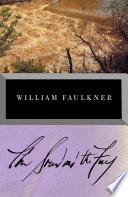
William Faulkner book The Sound and the Fury
Variant: Clocks slay time... time is dead as long as it is being clicked off by little wheels; only when the clock stops does time come to life.
Source: The Sound and the Fury (1929)
William Faulkner: Trending quotes
William Faulkner Quotes
“The past is never dead. It's not even past.”
William Faulkner book Requiem for a Nun
Act 1, sc. 3; this has sometimes been paraphrased or misquoted as "The past isn't over. It isn't even past."
Source: Requiem for a Nun (1951)
William Faulkner book The Sound and the Fury
Source: The Sound and the Fury
“People to whom sin is just a matter of words, to them salvation is just words too.”
William Faulkner book As I Lay Dying
Source: As I Lay Dying (1930)
“That's a very good way to learn the craft of writing — from reading.”
Faulkner in the University, p. 117
Faulkner in the University (1959)
“Talk, talk, talk: the utter and heartbreaking stupidity of words.”
William Faulkner book Mosquitoes
Source: Mosquitoes
“I feel like a wet seed wild in the hot blind earth.”
William Faulkner book As I Lay Dying
Source: As I Lay Dying
Paris Review interview (1958)
Context: No one is without Christianity, if we agree on what we mean by that word. It is every individual’s individual code of behavior by means of which he makes himself a better human being than his nature wants to be, if he followed his nature only. Whatever its symbol — cross or crescent or whatever — that symbol is man’s reminder of his duty inside the human race. Its various allegories are the charts against which he measures himself and learns to know what he is. It cannot teach a man to be good as the textbook teaches him mathematics. It shows him how to discover himself, evolve for himself a moral codes and standard within his capacities and aspirations, by giving him a matchless example of suffering and sacrifice and the promise of hope.
A statement regarding the Emmett Till murder.
Paris Review interview (1958)
Context: If we Americans are to survive it will have to be because we choose and elect and defend to be first of all Americans; to present to the world one homogeneous and unbroken front, whether of white Americans or black ones or purple or blue or green. Maybe the purpose of this sorry and tragic error committed in my native Mississippi by two white adults on an afflicted Negro child is to prove to us whether or not we deserve to survive. Because if we in America have reached that point in our desperate culture when we must murder children, no matter for what reason or what color, we don’t deserve to survive, and probably won’t.
Paris Review interview (1958)
Context: There were many things I could do for two or three days and earn enough money to live on for the rest of the month. By temperament I’m a vagabond and a tramp. I don’t want money badly enough to work for it. In my opinion it’s a shame that there is so much work in the world. One of the saddest things is that the only thing that a man can do for eight hours a day, day after day, is work. You can’t eat eight hours a day nor drink for eight hours a day nor make love for eight hours — all you can do for eight hours is work. Which is the reason why man makes himself and everybody else so miserable and unhappy.
“When grown people speak of the innocence of children, they dont really know what they mean.”
William Faulkner book The Reivers
The Reivers (1962)
Context: When grown people speak of the innocence of children, they dont really know what they mean. Pressed, they will go a step further and say, Well, ignorance then. The child is neither. There is no crime which a boy of eleven had not envisaged long ago. His only innocence is, he may not be old enough to desire the fruits of it, which is not innocence but appetite; his ignorance is, he does not know how to commit it, which is not ignorance but size. But Boon didn't know this. He must seduce me. And he had so little time: only from the time the train left until dark.
Paris Review interview (1958)
Context: Let the writer take up surgery or bricklaying if he is interested in technique. There is no mechanical way to get the writing done, no shortcut. The young writer would be a fool to follow a theory. Teach yourself by your own mistakes; people learn only by error. The good artist believes that nobody is good enough to give him advice. He has supreme vanity. No matter how much he admires the old writer, he wants to beat him.
“If I had not existed, someone else would have written me, Hemingway, Dostoevsky, all of us.”
Paris Review interview (1958)
Context: If I had not existed, someone else would have written me, Hemingway, Dostoevsky, all of us. Proof of that is that there are about three candidates for the authorship of Shakespeare's plays. But what is important is Hamlet and A Midsummer Night's Dream, not who wrote them, but that somebody did. The artist is of no importance. Only what he creates is important, since there is nothing new to be said. Shakespeare, Balzac, Homer have all written about the same things, and if they had lived one thousand or two thousand years longer, the publishers wouldn’t have needed anyone since.
Paris Review interview (1958)
Context: The aim of every artist is to arrest motion, which is life, by artificial means and hold it fixed so that a hundred years later, when a stranger looks at it, it moves again since it is life. Since man is mortal, the only immortality possible for him is to leave something behind him that is immortal since it will always move. This is the artist's way of scribbling "Kilroy was here" on the wall of the final and irrevocable oblivion through which he must someday pass.
only is. If was existed, there would be no grief or sorrow. I like to think of the world I created as being a kind of keystone in the universe; that, small as that keystone is, if it were ever taken away the universe itself would collapse.
Paris Review interview (1958)
William Faulkner book The Sound and the Fury
Source: The Sound and the Fury (1929)
“It takes two people to make you, and one people to die. That's how the world is going to end.”
William Faulkner book As I Lay Dying
Source: As I Lay Dying (1930)
“If happy I can be I will, if suffer I must I can.”
William Faulkner book Absalom, Absalom!
Source: Absalom, Absalom!
“She loved him not only in spite of but because he himself was incapable of love.”
William Faulkner book The Sound and the Fury
Source: The Sound and the Fury


