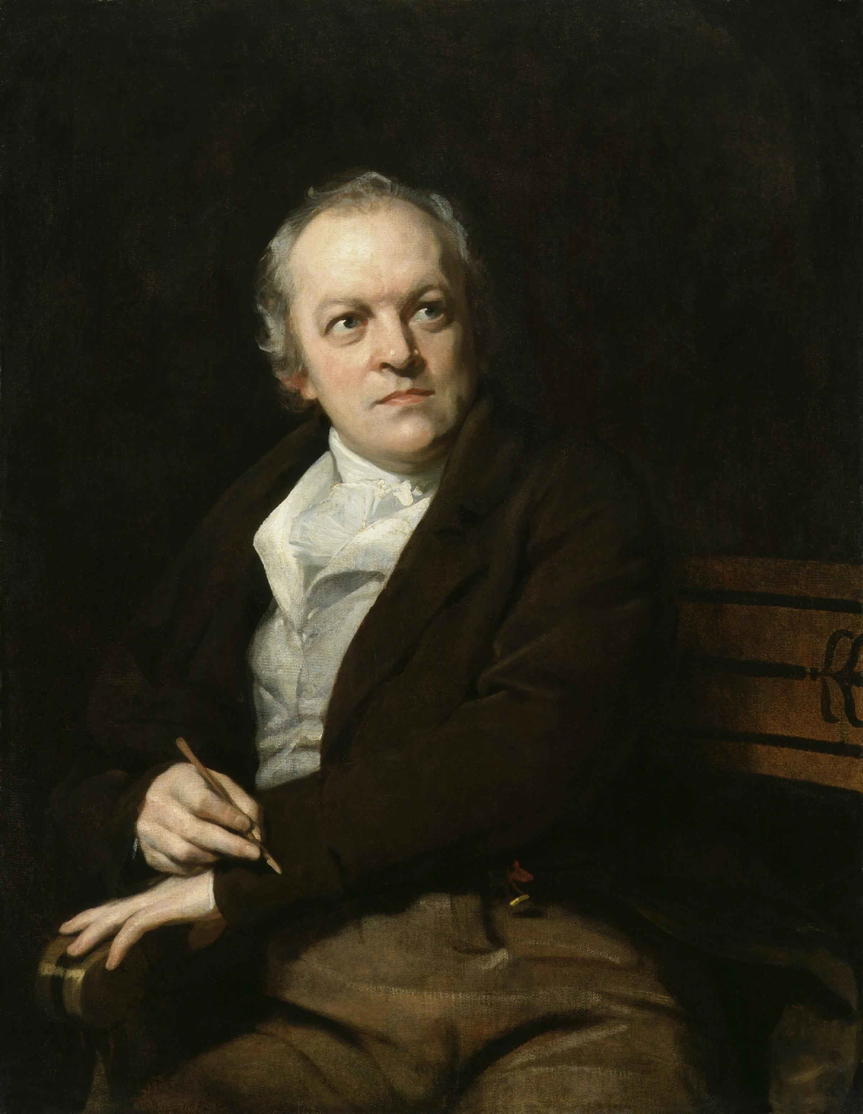
William Blake słynne cytaty
Źródło: Boski wizerunek, przeł. Jerzy Pietrkiewicz
„Zegar odmierza godziny głupstwa, ale mądrości nie mierzą zegary.”
Zaślubiny Nieba i Piekła
Źródło: Nie próbuj mówić o miłości
Tiger, tiger, burning bright
In the forests of the night,
What immortal hand or eye
Could frame thy fearful symmetry? (ang.)
Inna wersja:
Tygrysie, błysku w gąszczach mroku,
Jakiemuż nieziemskiemu oku
Przyśniło się, że noc rozświetli
Skupiona groza twej symetrii? (tłum. Stanisław Barańczak)
Źródło: Tygrys, przeł. Jerzy Pietrkiewicz
William Blake Cytaty o myślach
I will not cease from mental fight,
Nor shall my sword sleep in my hand,
Till we have built Jerusalem
In England’s green and pleasant land. (ang.)
Przekład Macieja Frońskiego:
W bitewnym niech nie padnę szale
I niech w mym ręku miecz nie zaśnie,
Aż zbudujemy Jeruzalem
Tu, na angielskiej ziemi właśnie.
Źródło: hymn Jerusalem ze wstępu poematu Milton: A Poem (1804), tłum. Jerzy Pietrkiewicz.
William Blake cytaty
od tego fragmentu została zaczerpnięta nazwa zespołu The Doors.
Źródło: Marek Gaszyński, Czy wiesz? Zagadki. Muzyka rozrywkowa, Warszawa 1996, wyd. Alfa, s. 20.
To see a World in a Grain of Sand
And A Heaven in a Wild Flower,
Hold Infinity in the palm of your hand
And Eternity in an Hour. (ang.)
Wróżby niewinności
Every morn and every night
Some are born to sweet delight.
Some are born to sweet delight,
Some are born to endless night. (ang.)
Wróżby niewinności
William Blake: Cytaty po angielsku
Annotations to Sir Joshua Reynolds's Discourses
1790s
“The Goddess Fortune is the devils servant ready to Kiss any ones Arse.”
Inscription on Illustrations to Dante "No. 16: HELL Canto 7"
1810s
The Crystal Cabinet, st. 2
1800s, Poems from the Pickering Manuscript (c. 1805)
Źródło: 1800s, Jerusalem The Emanation of The Giant Albion (c. 1803–1820), Ch. 1, plate 27, "To the Jews" 1) lines 1-4
William Blake Songs of Innocence
So I piped; he wept to hear.
Introduction, st. 1–2
Songs of Innocence (1789–1790)
“The harlot's cry from street to street
Shall weave old England's winding sheet.”
Źródło: 1800s, Auguries of Innocence (1803), Line 115
“One thought fills immensity.”
Źródło: 1790s, The Marriage of Heaven and Hell (1790–1793), Proverbs of Hell, Line 36
“In the morning glad I see
My foe outstretch'd beneath the tree.”
Ibid., st. 4
1790s, Songs of Experience (1794)
“Half Friendship is the bitterest Enmity…”
Frontiespiece, plate 1, line 8 (as it seen on the additional plate, Fitzwilliam Museum).
1800s, Jerusalem The Emanation of The Giant Albion (c. 1803–1820)
Public Address, Blake's Notebook c. 1810
1810s
“He who shall hurt the little wren
Shall never be beloved by men.”
Źródło: 1800s, Auguries of Innocence (1803), Line 29
“Always be ready to speak your mind, and a base man will avoid you.”
Źródło: 1790s, The Marriage of Heaven and Hell (1790–1793), Proverbs of Hell, Line 37
“When thou seest an Eagle, thou seest a portion of Genius; lift up thy head!”
Źródło: 1790s, The Marriage of Heaven and Hell (1790–1793), Proverbs of Hell, Line 54
“Rintrah roars and shakes his fires in the burden'd air;
Hungry clouds swag on the deep.”
The Argument
1790s, The Marriage of Heaven and Hell (1790–1793)
“The cistern contains: the fountain overflows.”
Źródło: 1790s, The Marriage of Heaven and Hell (1790–1793), Proverbs of Hell, Line 35
Źródło: 1800s, Jerusalem The Emanation of The Giant Albion (c. 1803–1820), Ch. 1, plate 5, lines 16-20 The Words of Blake
“"I die, I die!" the Mother said,
"My children die for lack of Bread."”
The Grey Monk, stanza 1
1810s, Miscellaneous poems and fragments from the Nonesuch edition
“Active Evil is better than Passive Good.”
1780s, Annotations to Lavater (1788)
Song (How Sweet I Roamed), st. 4
1780s, Poetical Sketches (1783)
“You'll quite remove the ancient curse.”
No. 5, An Ancient Proverb
Poems from Blake's Notebook (c. 1791-1792), Several Questions Answered
Źródło: 1790s, The Marriage of Heaven and Hell (1790–1793), Proverbs of Hell, Line 70
Źródło: 1800s, Jerusalem The Emanation of The Giant Albion (c. 1803–1820), Ch. 1, plate 12, line 28
1790s, Letter to Revd. Dr. Trusler (1799)
1790s, Letter to Revd. Dr. Trusler (1799)
the Mother said,
"My children die for lack of Bread."
The Grey Monk, stanza 1
1810s, Miscellaneous poems and fragments from the Nonesuch edition
First God Almighty comes with a Thump on the Head. Then Jesus Christ comes with a balm to heal it.
A Vision of the Last Judgment
1810s


