
“Wisdom is oft-times nearer when we stoop
Than when we soar.”
Source: The Excursion 1814
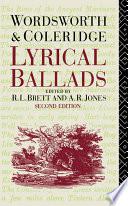
William Wordsworth was an English Romantic poet who, with Samuel Taylor Coleridge, helped to launch the Romantic Age in English literature with their joint publication Lyrical Ballads .
Wordsworth's magnum opus is generally considered to be The Prelude, a semi-autobiographical poem of his early years that he revised and expanded a number of times. It was posthumously titled and published by his wife in the year of his death, before which it was generally known as "the poem to Coleridge". Wordsworth was Britain's poet laureate from 1843 until his death from pleurisy on 23 April 1850. Wikipedia

“Wisdom is oft-times nearer when we stoop
Than when we soar.”
Source: The Excursion 1814
William Wordsworth book Lyrical Ballads
Stanza 2.
Source: Lyrical Ballads (1798–1800), Lines written a few miles above Tintern Abbey (1798)
Context: These beauteous forms,
Through a long absence, have not been to me
As is a landscape to a blind man's eye:
But oft, in lonely rooms, and 'mid the din
Of towns and cities, I have owed to them,
In hours of weariness, sensations sweet,
Felt in the blood, and felt along the heart;
And passing even into my purer mind,
With tranquil restoration:—feelings too
Of unremembered pleasure: such, perhaps,
As have no slight or trivial influence
On that best portion of a good man's life,
His little, nameless, unremembered acts
Of kindness and of love. Nor less, I trust,
To them I may have owed another gift,
Of aspect more sublime; that blessed mood,
In which the burthen of the mystery,
In which the heavy and the weary weight
Of all this unintelligible world
Is lighten'd:—that serene and blessed mood,
In which the affections gently lead us on,—
Until, the breath of this corporeal frame
And even the motion of our human blood
Almost suspended, we are laid asleep
In body, and become a living soul:
While with an eye made quiet by the power
Of harmony, and the deep power of joy,
We see into the life of things.
“Some natural sorrow, loss, or pain
That has been, and may be again.”
William Wordsworth The Solitary Reaper
The Solitary Reaper.
Bartlett's Familiar Quotations, 10th ed. (1919)
“Come forth into the light of things,
Let Nature be your teacher.”
William Wordsworth book Lyrical Ballads
The Tables Turned, st. 4 (1798).
Lyrical Ballads (1798–1800)
Lines (1795)
Context: If Thou be one whose heart the holy forms
Of young imagination have kept pure
Stranger! henceforth be warned; and know that pride,
Howe'er disguised in its own majesty,
Is littleness; that he who feels contempt
For any living thing, hath faculties
Which he has never used; that thought with him
Is in its infancy. The man whose eye
Is ever on himself doth look on one,
The least of Nature's works, one who might move
The wise man to that scorn which wisdom holds
Unlawful, ever. O be wiser, thou!
Instructed that true knowledge leads to love;
True dignity abides with him alone
Who, in the silent hour of inward thought,
Can still suspect, and still revere himself,
In lowliness of heart.
William Wordsworth The Solitary Reaper
The Solitary Reaper, st. 4.
Memorials of a Tour in Scotland (1803)
Source: Ode: Intimations Of Immortality From Recollections Of Early Childhood
“The music in my heart I bore
Long after it was heard no more.”
Source: Great Narrative Poems Of The Romantic Age
“From the sweet thoughts of home
And from all hope I was forever hurled.”
Guilt and Sorrow, st. 41 (1791-1794) Section XL
Context: From the sweet thoughts of home
And from all hope I was forever hurled.
For me—farthest from earthly port to roam
Was best, could I but shun the spot where man might come.
“Free as a bird to settle where I will.”
William Wordsworth book The Prelude
Bk. I, l. 1.
The Prelude (1799-1805)
Context: Oh there is blessing in this gentle breeze,
A visitant that while it fans my cheek
Doth seem half-conscious of the joy it brings
From the green fields, and from yon azure sky.
Whate'er its mission, the soft breeze can come
To none more grateful than to me; escaped
From the vast city, where I long had pined
A discontented sojourner: now free,
Free as a bird to settle where I will.
“Bliss was it in that dawn to be alive,
But to be young was very heaven!”
William Wordsworth book The Prelude
Bk. XI, l. 108.
Source: The Prelude (1799-1805)
Part III, No. 5 - Walton's Book of Lives. Compare: "The pen wherewith thou dost so heavenly sing / Made of a quill from an angel's wing", Henry Constable, Sonnet; "Whose noble praise / Deserves a quill pluckt from an angel's wing", Dorothy Berry, Sonnet.
Ecclesiastical Sonnets (1821)
“To me the meanest flower that blows can give
Thoughts that do often lie too deep for tears.”
Intimations of Immortality Stanza 11.
Bartlett's Familiar Quotations, 10th ed. (1919)
Actually Henry Wadsworth Longfellow, Driftwood (1857)
Misattributed
“For old, unhappy, far-off things,
And battles long ago.”
William Wordsworth The Solitary Reaper
The Solitary Reaper.
Bartlett's Familiar Quotations, 10th ed. (1919)
“Another morn
Risen on mid-noon.”
William Wordsworth book The Prelude
Bk. VI, l. 197.
The Prelude (1799-1805)
“There is
One great society alone on earth:
The noble Living and the noble Dead.”
William Wordsworth book The Prelude
Bk. XI, l. 393.
The Prelude (1799-1805)
“Fill your paper with the breathings of your heart.”
Letter to his Wife (April 29 1812).
Rob Roy's Grave, st. 3.
Memorials of a Tour in Scotland (1803)
William Wordsworth book Lyrical Ballads
Stanza 3.
Lyrical Ballads (1798–1800), Lines written a few miles above Tintern Abbey (1798)
Context: And now, with gleams of half-extinguished thought,
With many recognitions dim and faint,
And somewhat of a sad perplexity,
The picture of the mind revives again:
While here I stand, not only with the sense
Of present pleasure, but with pleasing thoughts
That in this moment there is life and food
For future years. And so I dare to hope,
Though changed, no doubt, from what I was when first
I came among these hills;
“A living thing
Produced too slowly ever to decay;
Of form and aspect too magnificent
To be destroyed.”
Yew-Trees, l. 9 (1803).
Context: Of vast circumference and gloom profound,
This solitary Tree! A living thing
Produced too slowly ever to decay;
Of form and aspect too magnificent
To be destroyed.
The River Duddon, sonnet 34 - Afterthought, l. 13 (1820).
William Wordsworth book Lyrical Ballads
Stanza 4.
Lyrical Ballads (1798–1800), Lines written a few miles above Tintern Abbey (1798)
Context: If I should be, where I no more can hear
Thy voice, nor catch from thy wild eyes these gleams
Of past existence, wilt thou then forget
That on the banks of this delightful stream
We stood together; And that I, so long
A worshipper of Nature, hither came,
Unwearied in that service: rather say
With warmer love, oh! with far deeper zeal
Of holier love. Now wilt thou then forget,
That after many wanderings, many years
Of absence, these steep woods and lofty cliffs,
And this green pastoral landscape, were to me
More dear, both for themselves, and for thy sake.
William Wordsworth book Lyrical Ballads
Preface.
Source: Lyrical Ballads (1798–1800)
Variant: Though nothing can bring back the hour
Of splendor in the grass, of glory in the flower;
We will grieve not, rather find
Strength in what remains behind;
In the primal sympathy
Which having been must ever be...
Source: Ode: Intimations Of Immortality From Recollections Of Early Childhood
William Wordsworth book Lyrical Ballads
Expostulation and Reply, st. 5 (1798).
Source: Lyrical Ballads (1798–1800)
“My heart leaps up when I behold
A rainbow in the sky”
My Heart Leaps Up When I Behold, (1802)
The last three lines of this form the introductory lines of the long Ode: Intimations of Immortality from Recollections of Early Childhood begun the next day.
Context: My heart leaps up when I behold
A rainbow in the sky:
So was it when my life began;
So is it now I am a man;
So be it when I shall grow old,
Or let me die!
The Child is father of the Man;
And I could wish my days to be
Bound each to each by natural piety.
“Habit rules the unreflecting herd.”
Part II, No. 28 - Reflections.
Ecclesiastical Sonnets (1821)
William Wordsworth book Lyrical Ballads
Stanza 3.
Source: Lyrical Ballads (1798–1800), Lines written a few miles above Tintern Abbey (1798), Lines Composed a Few Miles Above Tintern Abbey
Context: That time is past,
And all its aching joys are now no more,
And all its dizzy raptures. Not for this
Faint I, nor mourn nor murmur, other gifts
Have followed; for such loss, I would believe,
Abundant recompence. For I have learned
To look on nature, not as in the hour
Of thoughtless youth; but hearing oftentimes
The still, sad music of humanity,
Nor harsh nor grating, though of ample power
To chasten and subdue. And I have felt
A presence that disturbs me with the joy
Of elevated thoughts; a sense sublime
Of something far more deeply interfused,
Whose dwelling is the light of setting suns,
And the round ocean and the living air,
And the blue sky, and in the mind of man;
A motion and a spirit, that impels
All thinking things, all objects of all thought,
And rolls through all things. Therefore am I still
A lover of the meadows and the woods,
And mountains; and of all that we behold
From this green earth; of all the mighty world
Of eye, and ear,—both what they half create,
And what perceive; well pleased to recognise
In nature and the language of the sense,
The anchor of my purest thoughts, the nurse,
The guide, the guardian of my heart, and soul
Of all my moral being.
William Wordsworth The World Is Too Much with Us
The World Is Too Much with Us, l. 9 (1806).
Stanza 1. <br class="br"> I Wandered Lonely as a Cloud http://www.bartleby.com/145/ww260.html (1804) <br class="br">Source: I Wander'd Lonely as a Cloud
“poetry is the breath and finer spirit of knowledge”
William Wordsworth book Lyrical Ballads
Source: Lyrical Ballads
“… and we shall find
A pleasure in the dimness of the stars.”
William Wordsworth book Lyrical Ballads
Source: Lyrical Ballads
William Wordsworth book Lyrical Ballads
The Tables Turned, st. 6 (1798).
Lyrical Ballads (1798–1800)
“The Child is father of the Man;
And I could wish my days to be
Bound each to each by natural piety.”
My Heart Leaps Up When I Behold, (1802)
The last three lines of this form the introductory lines of the long Ode: Intimations of Immortality from Recollections of Early Childhood begun the next day.
Context: My heart leaps up when I behold
A rainbow in the sky:
So was it when my life began;
So is it now I am a man;
So be it when I shall grow old,
Or let me die!
The Child is father of the Man;
And I could wish my days to be
Bound each to each by natural piety.
William Wordsworth book Lyrical Ballads
We Are Seven, st. 1 (1798).
Lyrical Ballads (1798–1800)
“And homeless near a thousand homes I stood,
And near a thousand tables pined and wanted food.”
Guilt and Sorrow, st. 41 (1791-1794) Section XLI.
Context: And oft I thought (my fancy was-so strong)
That I, at last, a resting-place had found:
'Here: will I dwell,' said I,' my whole life long,
Roaming the illimitable waters round;
Here will I live, of all but heaven disowned.
And end my days upon the peaceful flood—
To break my dream the vessel reached its bound;
And homeless near a thousand homes I stood,
And near a thousand tables pined and wanted food.
“Faith is a passionate intuition.”
Source: Garbled version of c. l 1295 of Despondency Corrected (Vol. 5 of W's Poetical Works on Gurenberg)
“Pictures deface walls more often than they decorate them.”
This is only a slightly misquoted version of "Pictures deface walls oftener than they decorate them", written by Frank Lloyd Wright in the magazine Architectural Record in March 1908.
Misattributed
“O for a single hour of that Dundee,
Who on that day the word of onset gave!”
Sonnet. In the Pass of Killicranky, l. 11 (1803).
Variant: O for a single hour of that Dundee,
Who on that day the word of onset gave!
“We take no note of time but from its loss.”
Actually Night I, lines 55-56 of Young's Night Thoughts.
Misattributed
Stanza 5. <br class="br"> Ode to Duty http://www.bartleby.com/145/ww271.html (1805)


