Quotes from book
Lyrical Ballads

Lyrical Ballads

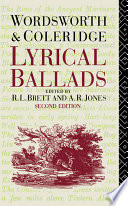
Lyrical Ballads, with a Few Other Poems is a collection of poems by William Wordsworth and Samuel Taylor Coleridge, first published in 1798 and generally considered to have marked the beginning of the English Romantic movement in literature. The immediate effect on critics was modest, but it became and remains a landmark, changing the course of English literature and poetry.


William Wordsworth photo

“The best portion of a good man's life: his little, nameless unremembered acts of kindness and love.”

William Wordsworth book Lyrical Ballads

Stanza 2.
Source: Lyrical Ballads (1798–1800), Lines written a few miles above Tintern Abbey (1798)
Context: These beauteous forms,
Through a long absence, have not been to me
As is a landscape to a blind man's eye:
But oft, in lonely rooms, and 'mid the din
Of towns and cities, I have owed to them,
In hours of weariness, sensations sweet,
Felt in the blood, and felt along the heart;
And passing even into my purer mind,
With tranquil restoration:—feelings too
Of unremembered pleasure: such, perhaps,
As have no slight or trivial influence
On that best portion of a good man's life,
His little, nameless, unremembered acts
Of kindness and of love. Nor less, I trust,
To them I may have owed another gift,
Of aspect more sublime; that blessed mood,
In which the burthen of the mystery,
In which the heavy and the weary weight
Of all this unintelligible world
Is lighten'd:—that serene and blessed mood,
In which the affections gently lead us on,—
Until, the breath of this corporeal frame
And even the motion of our human blood
Almost suspended, we are laid asleep
In body, and become a living soul:
While with an eye made quiet by the power
Of harmony, and the deep power of joy,
We see into the life of things.

William Wordsworth photo

“Come forth into the light of things,
Let Nature be your teacher.”

William Wordsworth book Lyrical Ballads

The Tables Turned, st. 4 (1798).
Lyrical Ballads (1798–1800)

William Wordsworth photo

“poetry is the breath and finer spirit of knowledge”

William Wordsworth book Lyrical Ballads

Source: Lyrical Ballads

William Wordsworth photo

“A simple child,
That lightly draws its breath,
And feels its life in every limb,
What should it know of death?”

William Wordsworth book Lyrical Ballads

We Are Seven, st. 1 (1798).
Lyrical Ballads (1798–1800)

William Wordsworth photo

“The eye—it cannot choose but see;
we cannot bid the ear be still;
our bodies feel, where'er they be,
against or with our will.”

William Wordsworth book Lyrical Ballads

Expostulation and Reply, st. 5 (1798).
Source: Lyrical Ballads (1798–1800)

William Wordsworth photo

“One impulse from a vernal wood
May teach you more of man,
Of moral evil and of good,
Than all the sages can.”

William Wordsworth book Lyrical Ballads

The Tables Turned, st. 6 (1798).
Lyrical Ballads (1798–1800)

William Wordsworth photo

“For I have learned
To look on nature, not as in the hour
Of thoughtless youth; but hearing oftentimes
The still, sad music of humanity,
Nor harsh nor grating, though of ample power
To chasten and subdue.”

William Wordsworth book Lyrical Ballads

Stanza 3.
Source: Lyrical Ballads (1798–1800), Lines written a few miles above Tintern Abbey (1798), Lines Composed a Few Miles Above Tintern Abbey
Context: That time is past,
And all its aching joys are now no more,
And all its dizzy raptures. Not for this
Faint I, nor mourn nor murmur, other gifts
Have followed; for such loss, I would believe,
Abundant recompence. For I have learned
To look on nature, not as in the hour
Of thoughtless youth; but hearing oftentimes
The still, sad music of humanity,
Nor harsh nor grating, though of ample power
To chasten and subdue. And I have felt
A presence that disturbs me with the joy
Of elevated thoughts; a sense sublime
Of something far more deeply interfused,
Whose dwelling is the light of setting suns,
And the round ocean and the living air,
And the blue sky, and in the mind of man;
A motion and a spirit, that impels
All thinking things, all objects of all thought,
And rolls through all things. Therefore am I still
A lover of the meadows and the woods,
And mountains; and of all that we behold
From this green earth; of all the mighty world
Of eye, and ear,—both what they half create,
And what perceive; well pleased to recognise
In nature and the language of the sense,
The anchor of my purest thoughts, the nurse,
The guide, the guardian of my heart, and soul
Of all my moral being.

William Wordsworth photo

“A youth to whom was given
So much of earth—so much of heaven,
And such impetuous blood.”

William Wordsworth book Lyrical Ballads

Ruth, st. 21 (1799).
Lyrical Ballads (1798–1800)

William Wordsworth photo

“O sylvan Wye! thou wanderer thro' the woods,
How often has my spirit turned to thee!”

William Wordsworth book Lyrical Ballads

Stanza 3.
Lyrical Ballads (1798–1800), Lines written a few miles above Tintern Abbey (1798)

William Wordsworth photo

“May no rude hand deface it,
And its forlorn Hic jacet!”

William Wordsworth book Lyrical Ballads

Ellen Irwin, or the Braes of Kirtle, st. 7 (1800).
Lyrical Ballads (1798–1800)

William Wordsworth photo

“And sings a solitary song
That whistles in the wind.”

William Wordsworth book Lyrical Ballads

Lucy Gray, or Solitude, st. 16 (1799).
Lyrical Ballads (1798–1800)

William Wordsworth photo

“In that sweet mood when pleasant thoughts
Bring sad thoughts to the mind.”

William Wordsworth book Lyrical Ballads

Source: Lyrical Ballads (1798–1800), Lines Written in Early Spring, st. 1 (1798).

William Wordsworth photo

Similar authors

William Wordsworth photo
William Wordsworth306
English Romantic poet 1770–1850
William Blake photo
William Blake249
English Romantic poet and artist None
Percy Bysshe Shelley photo
Percy Bysshe Shelley246
English Romantic poet None
George Gordon Byron photo
George Gordon Byron227
English poet and a leading figure in the Romantic movement None
Samuel Taylor Coleridge photo
Samuel Taylor Coleridge220
English poet, literary critic and philosopher None
Robert Southey photo
Robert Southey51
British poet None
Emily Brontë photo
Emily Brontë151
English novelist and poet None
Mikhail Lermontov photo
Mikhail Lermontov34
Russian writer, poet and painter None
Hector Berlioz photo
Hector Berlioz9
French Romantic composer None
Elizabeth Barrett Browning photo
Elizabeth Barrett Browning88
English poet, author None