Works
Lady Clara Vere de Vere
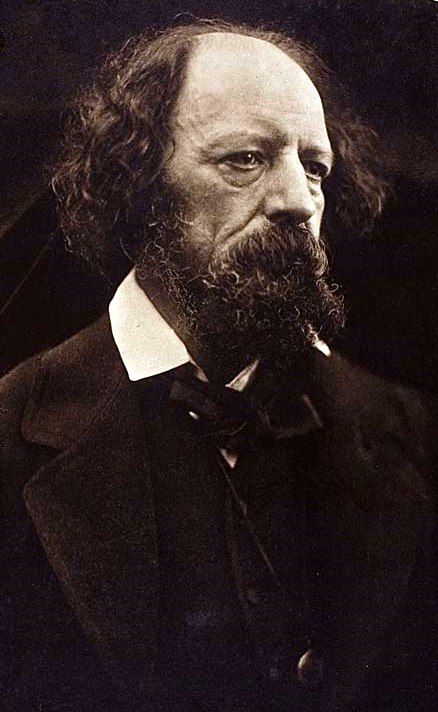
Alfred, Lord Tennyson
The Lady of Shalott
Alfred, Lord TennysonUlysses
Alfred, Lord TennysonLady Clara Vere de Vere
Alfred, Lord TennysonThe Lady of Shalott
Alfred, Lord TennysonUlysses
Alfred, Lord TennysonFamous Alfred, Lord Tennyson Quotes
Quoted in A Dictionary of Quotations, in Most Frequent Use by D.E. Macdonnel (1809) translated from French: Le bonheur de l'homme en cette vi ne consiste pas á être sans passions: il consiste à en être le maître.
Misattributed
“Death is the end of life; ah, why
Should life all labour be?”
Alfred, Lord Tennyson The Lotos-Eaters
Choric Song, st. 4
The Lotos-Eaters (1832)
Context: Death is the end of life; ah, why
Should life all labour be?
Let us alone. Time driveth onward fast,
And in a little while our lips are dumb.
Let us alone. What is it that will last?
All things are taken from us, and become
Portions and parcels of the dreadful past.
Let us alone. What pleasure can we have
To war with evil? Is there any peace
In ever climbing up the climbing wave?
All things have rest, and ripen toward the grave
In silence; ripen, fall and cease:
Give us long rest or death, dark death, or dreamful ease.
“In the afternoon they came unto a land
In which it seemed always afternoon.”
Alfred, Lord Tennyson The Lotos-Eaters
St. 1
The Lotos-Eaters (1832)
Alfred, Lord Tennyson book Ulysses
Source: Ulysses (1842), l. 54-62
Context: The lights begin to twinkle from the rocks;
The long day wanes; the slow moon climbs; the deep
Moans round with many voices.
Come, my friends.
'Tis not too late to seek a newer world.
Push off, and sitting well in order smite
The sounding furrows; for my purpose holds
To sail beyond the sunset, and the baths
Of all the western stars, until I die.
Alfred, Lord Tennyson Quotes about love
Alfred, Lord Tennyson The Foresters
Act II, Scene i
The Foresters, Robin Hood and Maid Marion (1892)
Source: Locksley Hall Sixty Years After (1886), Line 85
“Love lieth deep; Love dwells not in lip-depths.”
The Lover's Tale (1879), line 466
“Love will conquer at the last.”
Source: Locksley Hall Sixty Years After (1886), Line 280
The Lover's Tale (1879), line 815
Alfred, Lord Tennyson Quotes about heart
Alfred, Lord Tennyson Lady Clara Vere de Vere
Stanza 1
Lady Clara Vere de Vere (1832)
Alfred, Lord Tennyson Lady Clara Vere de Vere
Stanza 7
Lady Clara Vere de Vere (1832)
Letter to Emily Sellwood, quoted in Alfred Lord Tennyson: A Memoir by His Son, by Hallam T. Tennyson (1897)
" Sir Galahad http://home.att.net/%7ETennysonPoetry/sg.htm", st. 1 (1842)
"Come not, when I am dead" (1850)
Alfred, Lord Tennyson: Trending quotes
Alfred, Lord Tennyson The Lotos-Eaters
Choric Song, st. 2
The Lotos-Eaters (1832)
“The many fail: the one succeeds.”
Alfred, Lord Tennyson The Day-Dream
The Arrival, st. 2
The Day-Dream (1842)
Context: The bodies and the bones of those
That strove in other days to pass,
Are wither'd in the thorny close,
Or scatter'd blanching on the grass.
He gazes on the silent dead:
"They perish'd in their daring deeds."
This proverb flashes thro' his head,
"The many fail: the one succeeds."
Alfred, Lord Tennyson Quotes
Alfred, Lord Tennyson book Ulysses
Source: Ulysses (1842), l. 46-53
Context: Souls that have toil'd, and wrought, and thought with me —
That ever with a frolic welcome took
The thunder and the sunshine, and opposed
Free hearts, free foreheads — you and I are old;
Old age hath yet his honor and his toil.
Death closes all; but something ere the end,
Some work of noble note, may yet be done,
Not unbecoming men that strove with gods.
" Will Waterproof's Lyrical Monologue http://whitewolf.newcastle.edu.au/words/authors/T/TennysonAlfred/verse/englishidyls/willwaterproof.html", st. 6 (1842) <br class="br">Context: I grow in worth, and wit, and sense,<br>Unboding critic-pen,<br>Or that eternal want of pence,<br>Which vexes public men,<br>Who hold their hands to all, and cry<br>For that which all deny them —<br>Who sweep the crossings, wet or dry,<br>And all the world go by them.
“Self-reverence, self-knowledge, self-control,
These three alone lead life to sovereign power.”
"Oenone", st. 14
Context: Self-reverence, self-knowledge, self-control,
These three alone lead life to sovereign power.
Yet not for power (power of herself
Would come uncall'd for) but to live by law,
Acting the law we live by without fear;
And, because right is right, to follow right
Were wisdom in the scorn of consequence.
The Cup, Act i, Scene 3, reported in Bartlett's Familiar Quotations, 10th ed. (1919)
“Thus truth was multiplied on truth”
Alfred, Lord Tennyson Lady Clara Vere de Vere
The Poet (1830)
Context: p>Thus truth was multiplied on truth, the world
Like one great garden show'd,
And thro' the wreaths of floating dark up-curl'd,
Rare sunrise flow'dAnd Freedom rear'd in that august sunrise
Her beautiful bold brow,
When rites and forms before his burning eyes
Melted like snow.</p
" Love and Duty http://www.readbookonline.net/read/4310/14259/", l. 1- 21 (1842) <br class="br">Context: Of love that never found his earthly close,<br>What sequel? Streaming eyes and breaking hearts?<br>Or all the same as if he had not been?<br>Not so. Shall Error in the round of time<br>Still father Truth? O shall the braggart shout<br>For some blind glimpse of freedom work itself<br>Thro' madness, hated by the wise, to law<br>System and empire? Sin itself be found<br>The cloudy porch oft opening on the Sun?<br>And only he, this wonder, dead, become<br>Mere highway dust? or year by year alone<br>Sit brooding in the ruins of a life,<br>Nightmare of youth, the spectre of himself!<br>If this were thus, if this, indeed, were all,<br>Better the narrow brain, the stony heart,<br>The staring eye glazed o'er with sapless days,<br>The long mechanic pacings to and fro,<br>The set gray life, and apathetic end.<br>But am I not the nobler thro' thy love?<br>O three times less unworthy! likewise thou<br>Art more thro' Love, and greater than thy years.
“Man comes and tills the field and lies beneath,
And after many a summer dies the swan.”
" Tithonus http://home.att.net/%7ETennysonPoetry/tith.htm", st. 1 (1860) <br class="br">Context: The woods decay, the woods decay and fall,<br>The vapours weep their burthen to the ground,<br>Man comes and tills the field and lies beneath,<br>And after many a summer dies the swan.<br>Me only cruel immortality<br>Consumes: I wither slowly in thine arms,<br>Here at the quiet limit of the world,<br>A white-hair'd shadow roaming like a dream<br>The ever-silent spaces of the East,<br>Far-folded mists, and gleaming halls of morn.
“Of love that never found his earthly close,
What sequel?”
" Love and Duty http://www.readbookonline.net/read/4310/14259/", l. 1- 21 (1842) <br class="br">Context: Of love that never found his earthly close,<br>What sequel? Streaming eyes and breaking hearts?<br>Or all the same as if he had not been?<br>Not so. Shall Error in the round of time<br>Still father Truth? O shall the braggart shout<br>For some blind glimpse of freedom work itself<br>Thro' madness, hated by the wise, to law<br>System and empire? Sin itself be found<br>The cloudy porch oft opening on the Sun?<br>And only he, this wonder, dead, become<br>Mere highway dust? or year by year alone<br>Sit brooding in the ruins of a life,<br>Nightmare of youth, the spectre of himself!<br>If this were thus, if this, indeed, were all,<br>Better the narrow brain, the stony heart,<br>The staring eye glazed o'er with sapless days,<br>The long mechanic pacings to and fro,<br>The set gray life, and apathetic end.<br>But am I not the nobler thro' thy love?<br>O three times less unworthy! likewise thou<br>Art more thro' Love, and greater than thy years.
" Merlin and the Gleam http://whitewolf.newcastle.edu.au/words/authors/T/TennysonAlfred/verse/demeter/merlingleam.html", st. 1 (1889)
Alfred, Lord Tennyson Lady Clara Vere de Vere
The Poet (1830)
Context: There was no blood upon her maiden robes
Sunn'd by those orient skies;
But round about the circles of the globes
Of her keen
And in her raiment's hem was traced in flame
WISDOM, a name to shake
All evil dreams of power — a sacred name.
And when she spake,
Her words did gather thunder as they ran,
And as the lightning to the thunder
Which follows it, riving the spirit of man,
Making earth wonder,
So was their meaning to her words. No sword
Of wrath her right arm whirl'd,
But one poor poet's scroll, and with his word
She shook the world.
"Flower in the Crannied Wall" (1869)
Context: Flower in the crannied wall,
I pluck you out of the crannies,
I hold you here, root and all, in my hand,
Little flower — but if I could understand
What you are, root and all, and all in all,
I should know what God and man is.
Alfred, Lord Tennyson The Charge of the Light Brigade
St. 2
The Charge of the Light Brigade (1854)
Context: "Forward, the Light Brigade!"
Was there a man dismay'd?
Not tho' the soldier knew
Some one had blunder'd:
Theirs not to make reply,
Theirs not to reason why,
Theirs but to do and die:
Into the valley of death
Rode the six hundred.
“To follow knowledge like a sinking star,
Beyond the utmost bound of human thought.”
Alfred, Lord Tennyson book Ulysses
Source: Ulysses (1842), l. 22-32
Context: How dull it is to pause, to make an end,
To rust unburnish'd, not to shine in use!
As tho' to breath were life. Life piled on life
Were all too little, and of one to me
Little remains: but every hour is saved
From that eternal silence, something more,
A bringer of new things; and vile it were
For some three suns to store and hoard myself,
And this gray spirit yearning in desire
To follow knowledge like a sinking star,
Beyond the utmost bound of human thought.
“We dare not even by silence sanction lies.”
" The Third of February, 1852 http://home.att.net/%7ETennysonPoetry/tfe.htm", st. 2 (1852) <br class="br">Context: We love not this French God, the child of hell,<br>Wild War, who breaks the converse of the wise;<br>But though we love kind Peace so well,<br>We dare not even by silence sanction lies.<br>It might be safe our censures to withdraw,<br>And yet, my Lords, not well; there is a higher law.
“The great brand
Made lightnings in the splendour of the moon”
Source: Morte D'Arthur (1842), Lines 136-142
Context: The great brand
Made lightnings in the splendour of the moon,
And flashing round and round, and whirl'd in an arch,
Shot like a streamer of the northern morn,
Seen where the moving isles of winter shock
By night, with noises of the northern sea.
So flash'd and fell the brand Excalibur.
Nothing Will Die (1830)
Context: Nothing will die;
All things will change
Thro’ eternity.
‘Tis the world’s winter;
Autumn and summer
Are gone long ago;
Earth is dry to the centre,
But spring, a new comer,
A spring rich and strange,
Shall make the winds blow
Round and round,
Thro’ and thro’,
Here and there,
Till the air
And the ground
Shall be fill’d with life anew.
"Mariana" (1830)
Context: With blackest moss the flower plots
Were thickly crusted, one and all;
The rusted nails fell from the knots
That held the pear to the gable wall.
The broken sheds looked sad and strange:
Unlifted was the clinking latch;
Weeded and worn the ancient thatch
Upon the lonely moated grange.
She only said, "My life is dreary,
He cometh not," she said;
She said, "I am aweary, aweary,
I would that I were dead!'
Alfred, Lord Tennyson The Lady of Shalott
Pt. III, st. 5
The Lady of Shalott (1832)
Context: She left the web, she left the loom,
She made three paces through the room,
She saw the water-lily bloom,
She saw the helmet and the plume,
She looked down to Camelot.
Out flew the web and floated wide;
The mirror cracked from side to side;
"The curse is come upon me," cried
The Lady of Shalott.
Alfred, Lord Tennyson The Day-Dream
The Departure, st. 1
The Day-Dream (1842)
Context: And on her lover's arm she leant,
And round her waist she felt it fold,
And far across the hills they went
In that new world which is the old:
Across the hills, and far away
Beyond their utmost purple rim,
And deep into the dying day
The happy princess follow'd him.
Alfred, Lord Tennyson book Ulysses
Source: Ulysses (1842), l. 63-70
Context: It may be that the gulfs will wash us down;
It may be that we shall touch the Happy Isles,
And see the great Achilles, whom we knew.
Though much is taken, much abides; and though
We are not now that strength which in old days
Moved earth and heaven, that which we are, we are —
One equal temper of heroic hearts,
Made weak by time and fate, but strong in will
To strive, to seek, to find, and not to yield.
"Love and Duty" l. 57 - 67 (1842).
Context: The slow sweet hours that bring us all things good,
The slow sad hours that bring us all things ill,
And all good things from evil, brought the night
In which we sat together and alone,
And to the want, that hollow'd all the heart,
Gave utterance by the yearning of an eye,
That burn'd upon its object thro' such tears
As flow but once a life. The trance gave way
To those caresses, when a hundred times
In that last kiss, which never was the last,
Farewell, like endless welcome, lived and died.
“The stream flows,
The wind blows,
The cloud fleets,
The heart beats,
Nothing will die.”
Nothing Will Die (1830)
Context: When will the stream be aweary of flowing
Under my eye?
When will the wind be aweary of blowing
Over the sky?
When will the clouds be aweary of fleeting?
When will the heart be aweary of beating?
And nature die?
Never, oh! never, nothing will die;
The stream flows,
The wind blows,
The cloud fleets,
The heart beats,
Nothing will die.
Source: Ode on the Death of the Duke of Wellington (1852), St. VIII
Context: Yea, let all good things await
Him who cares not to be great
But as he saves or serves the state.
Not once or twice in our rough island-story
The path of duty was the way to glory.
He that walks it, only thirsting
For the right, and learns to deaden
Love of self, before his journey closes,
He shall find the stubborn thistle bursting
Into glossy purples, which outredden
All voluptuous garden-roses.
“Come forth I charge thee, arise,
Thou of the many tongues, the myriad eyes!”
Ode to Memory (1830)
Context: Come forth I charge thee, arise,
Thou of the many tongues, the myriad eyes!
Thou comest not with shows of flaunting vines
Unto mine inner eye,
Divinest Memory!
Ode to Memory (1830)
Context: Thou who stealest fire,
From the fountains of the past,
To glorify the present; oh, haste,
Visit my low desire!
Strengthen me, enlighten me!
I faint in this obscurity,
Thou dewy dawn of memory.
Alfred, Lord Tennyson book Ulysses
Source: Ulysses (1842), l. 22-32
Context: How dull it is to pause, to make an end,
To rust unburnish'd, not to shine in use!
As tho' to breath were life. Life piled on life
Were all too little, and of one to me
Little remains: but every hour is saved
From that eternal silence, something more,
A bringer of new things; and vile it were
For some three suns to store and hoard myself,
And this gray spirit yearning in desire
To follow knowledge like a sinking star,
Beyond the utmost bound of human thought.
“The mirror cracked from side to side;
"The curse is come upon me," cried
The Lady of Shalott.”
Alfred, Lord Tennyson The Lady of Shalott
Pt. III, st. 5
The Lady of Shalott (1832)
Context: She left the web, she left the loom,
She made three paces through the room,
She saw the water-lily bloom,
She saw the helmet and the plume,
She looked down to Camelot.
Out flew the web and floated wide;
The mirror cracked from side to side;
"The curse is come upon me," cried
The Lady of Shalott.
Alfred, Lord Tennyson The Lotos-Eaters
Choric Song, st. 4
The Lotos-Eaters (1832)
Context: Death is the end of life; ah, why
Should life all labour be?
Let us alone. Time driveth onward fast,
And in a little while our lips are dumb.
Let us alone. What is it that will last?
All things are taken from us, and become
Portions and parcels of the dreadful past.
Let us alone. What pleasure can we have
To war with evil? Is there any peace
In ever climbing up the climbing wave?
All things have rest, and ripen toward the grave
In silence; ripen, fall and cease:
Give us long rest or death, dark death, or dreamful ease.
" The Eagle http://home.att.net/%7ETennysonPoetry/eagle.htm" (1851) <br class="br">Context: p>He clasps the crag with crooked hands;<br>Close to the sun in lonely lands,<br>Ring'd with the azure world, he stands.The wrinkled sea beneath him crawls;<br>He watches from his mountain walls,<br>And like a thunderbolt he falls.</p
“Half a league half a league
Half a league onward
All in the valley of Death
Rode the six hundred:”
Alfred, Lord Tennyson The Charge of the Light Brigade
St. 1
The Charge of the Light Brigade (1854)
Context: Half a league half a league
Half a league onward
All in the valley of Death
Rode the six hundred:
'Forward the Light Brigade
Charge for the guns' he said
Into the valley of Death
Rode the six hundred.
Alfred, Lord Tennyson The Day-Dream
Moral, st. 1
The Day-Dream (1842)
Context: So, Lady Flora, take my lay,
And if you find no moral there,
Go, look in any glass and say,
What moral is in being fair.
Oh, to what uses shall we put
The wildweed-flower that simply blows?
And is there any moral shut
Within the bosom of the rose?
“My end draws nigh; 't is time that I were gone.
Make broad thy shoulders to receive my weight”
Source: Morte D'Arthur (1842), Lines 163-164
“Strike up a song, my friends, and then to bed.”
Alfred, Lord Tennyson The Foresters
Act I, Scene III
The Foresters, Robin Hood and Maid Marion (1892)
Context: Friends,
I am only merry for an hour or two
Upon a birthday: if this life of ours
Be a good glad thing, why should we make us merry
Because a year of it is gone? but Hope
Smiles from the threshold of the year to come
Whispering 'It will be happier;' and old faces
Press round us, and warm hands close with warm hands,
And thro' the blood the wine leaps to the brain
Like April sap to the topmost tree, that shoots
New buds to heaven, whereon the throstle rock'd
Sings a new song to the new year — and you,
Strike up a song, my friends, and then to bed.
“All the charm of all the Muses often flowering in a lonely word.”
" To Virgil http://home.att.net/%7ETennysonPoetry/virg.htm", st. 3 (1882) <br class="br">Context: Thou that singest wheat and woodland, tilth and vineyard, hive and horse and herd;<br>All the charm of all the Muses often flowering in a lonely word.
“So flash'd and fell the brand Excalibur.”
Source: Morte D'Arthur (1842), Lines 136-142
Context: The great brand
Made lightnings in the splendour of the moon,
And flashing round and round, and whirl'd in an arch,
Shot like a streamer of the northern morn,
Seen where the moving isles of winter shock
By night, with noises of the northern sea.
So flash'd and fell the brand Excalibur.
“In sweet dreams softer than unbroken rest
Thou leddest by the hand thine infant Hope.”
Ode to Memory (1830)
Context: In sweet dreams softer than unbroken rest
Thou leddest by the hand thine infant Hope.
The eddying of her garments caught from thee
The light of thy great presence; and the cope
Of the half-attain'd futurity,
Though deep not fathomless,
Was cloven with the million stars which tremble
O'er the deep mind of dauntless infancy.
Alfred, Lord Tennyson Lady Clara Vere de Vere
The Poet (1830)
Context: p>Thus truth was multiplied on truth, the world
Like one great garden show'd,
And thro' the wreaths of floating dark up-curl'd,
Rare sunrise flow'dAnd Freedom rear'd in that august sunrise
Her beautiful bold brow,
When rites and forms before his burning eyes
Melted like snow.</p
Alfred, Lord Tennyson The Lady of Shalott
The Lady of Shalott (1832)
Context: p>Lying, robed in snowy white
That loosely flew to left and right —
The leaves upon her falling light —
Thro' the noises of the night,
She floated down to Camelot:
And as the boat-head wound along
The willowy hills and fields among,
They heard her singing her last song,
The Lady of Shalott.Heard a carol, mournful, holy,
Chanted loudly, chanted lowly,
Till her blood was frozen slowly,
And her eyes were darkened wholly,
Turn'd to tower'd Camelot.
For ere she reach'd upon the tide
The first house by the water-side,
Singing in her song she died,
The Lady of Shalott.</p
"The Miller's Daughter" (1832)
Context: Yet fill my glass: give me one kiss:
My own sweet Alice, we must die.
There's somewhat in this world amiss
Shall be unriddled by and by.
There's somewhat flows to us in life,
But more is taken quite away.
Pray, Alice, pray, my darling wife,
That we may die the self-same day.
“Meet is it changes should control
Our being, lest we rust in ease.”
" Love Thou Thy Land http://home.att.net/%7ETennysonPoetry/lttl.htm", st. 11 (1842) <br class="br">Context: Meet is it changes should control<br>Our being, lest we rust in ease.<br>We all are changed by still degrees,<br>All but the basis of the soul.
Alfred, Lord Tennyson Lady Clara Vere de Vere
The Poet (1830)
Context: The poet in a golden clime was born,
With golden stars above;
Dower'd with the hate of hate, the scorn of scorn,
The love of love.
He saw thro' life and death, thro' good and ill,
He saw thro' his own soul.
The marvel of the everlasting will,
An open scroll,
Before him lay; with echoing feet he threaded
The secretest walks of fame:
The viewless arrows of his thoughts were headed
And wing'd with flame,
Like Indian reeds blown from his silver tongue...
“I cannot rest from travel: I will drink
Life to the lees”
Alfred, Lord Tennyson book Ulysses
13 -17
Ulysses (1842)
Context: I cannot rest from travel: I will drink
Life to the lees: all times I have enjoy'd
Greatly, have suffer'd greatly, both with those
That loved me, and alone, on shore, and when
Thro' scudding drifts the rainy Hyades
Vext the dim sea: I am become a name;
For always roaming with a hungry heart
Much have I seen and known; cities of men
And manners, climates, councils, governments,
Myself not least, but honour'd of them all;
And drunk delight of battle with my peers,
Far on the ringing plains of windy Troy.
"Oenone", st. 14
Context: Self-reverence, self-knowledge, self-control,
These three alone lead life to sovereign power.
Yet not for power (power of herself
Would come uncall'd for) but to live by law,
Acting the law we live by without fear;
And, because right is right, to follow right
Were wisdom in the scorn of consequence.
“Rich in saving common-sense,
And, as the greatest only are,
In his simplicity sublime.”
St. IV
Ode on the Death of the Duke of Wellington (1852)
Context: Rich in saving common-sense,
And, as the greatest only are,
In his simplicity sublime.
O good gray head which all men knew,
O voice from which their omens all men drew,
O iron nerve to true occasion true,
O fallen at length that tower of strength
Which stood four-square to all the winds that blew!
Ode to Memory (1830)
Context: Whither in after life retired
From brawling storms,
From weary wind,
With youthful fancy reinspired,
We may hold converse with all forms
Of the many-sided mind,
And those whom passion hath not blinded,
Subtle-thoughted, myriad-minded.
“Where Claribel low-lieth
The breezes pause and die,
Letting the rose-leaves fall”
Alfred, Lord Tennyson Claribel
"Claribel" (1830)
Context: Where Claribel low-lieth
The breezes pause and die,
Letting the rose-leaves fall:
But the solemn oak-tree sigheth,
Thick-leaved, ambrosial,
With an ancient melody
Of an inward agony,
Where Claribel low-lieth.
Alfred, Lord Tennyson book Ulysses
13 -17
Ulysses (1842)
Context: I cannot rest from travel: I will drink
Life to the lees: all times I have enjoy'd
Greatly, have suffer'd greatly, both with those
That loved me, and alone, on shore, and when
Thro' scudding drifts the rainy Hyades
Vext the dim sea: I am become a name;
For always roaming with a hungry heart
Much have I seen and known; cities of men
And manners, climates, councils, governments,
Myself not least, but honour'd of them all;
And drunk delight of battle with my peers,
Far on the ringing plains of windy Troy.
Alfred, Lord Tennyson Lady Clara Vere de Vere
The Poet (1830)
Context: There was no blood upon her maiden robes
Sunn'd by those orient skies;
But round about the circles of the globes
Of her keen
And in her raiment's hem was traced in flame
WISDOM, a name to shake
All evil dreams of power — a sacred name.
And when she spake,
Her words did gather thunder as they ran,
And as the lightning to the thunder
Which follows it, riving the spirit of man,
Making earth wonder,
So was their meaning to her words. No sword
Of wrath her right arm whirl'd,
But one poor poet's scroll, and with his word
She shook the world.
“But oh for the touch of a vanished hand,
And the sound of a voice that is still!”
"Break, Break, Break" (1842)


