Karl Wilhelm Friedrich Schlegel
Was sich thun lässt, so lange Philosophie und Poesie getrennt sind, ist gethan und vollendet. Also ist die Zeit nun da, beyde zu vereinigen.
“Ideas,” Lucinde and the Fragments, P. Firchow, trans. (1991), § 108
Karl Wilhelm Friedrich Schlegel , usually cited as Friedrich Schlegel, was a German poet, literary critic, philosopher, philologist and Indologist. With his older brother, August Wilhelm Schlegel, he was one of the main figures of the Jena romantics. He was a zealous promoter of the Romantic movement and inspired Samuel Taylor Coleridge, Adam Mickiewicz and Kazimierz Brodziński. The first to notice what became known as Grimm's law, Schlegel was a pioneer in Indo-European studies, comparative linguistics, and morphological typology.
As a young man he was an atheist, a radical, and an individualist. In 1808, the same Schlegel converted to Catholicism. Two years later he was a diplomat and journalist in the service of the reactionary Clemens von Metternich, surrounded by monks and pious men of society.
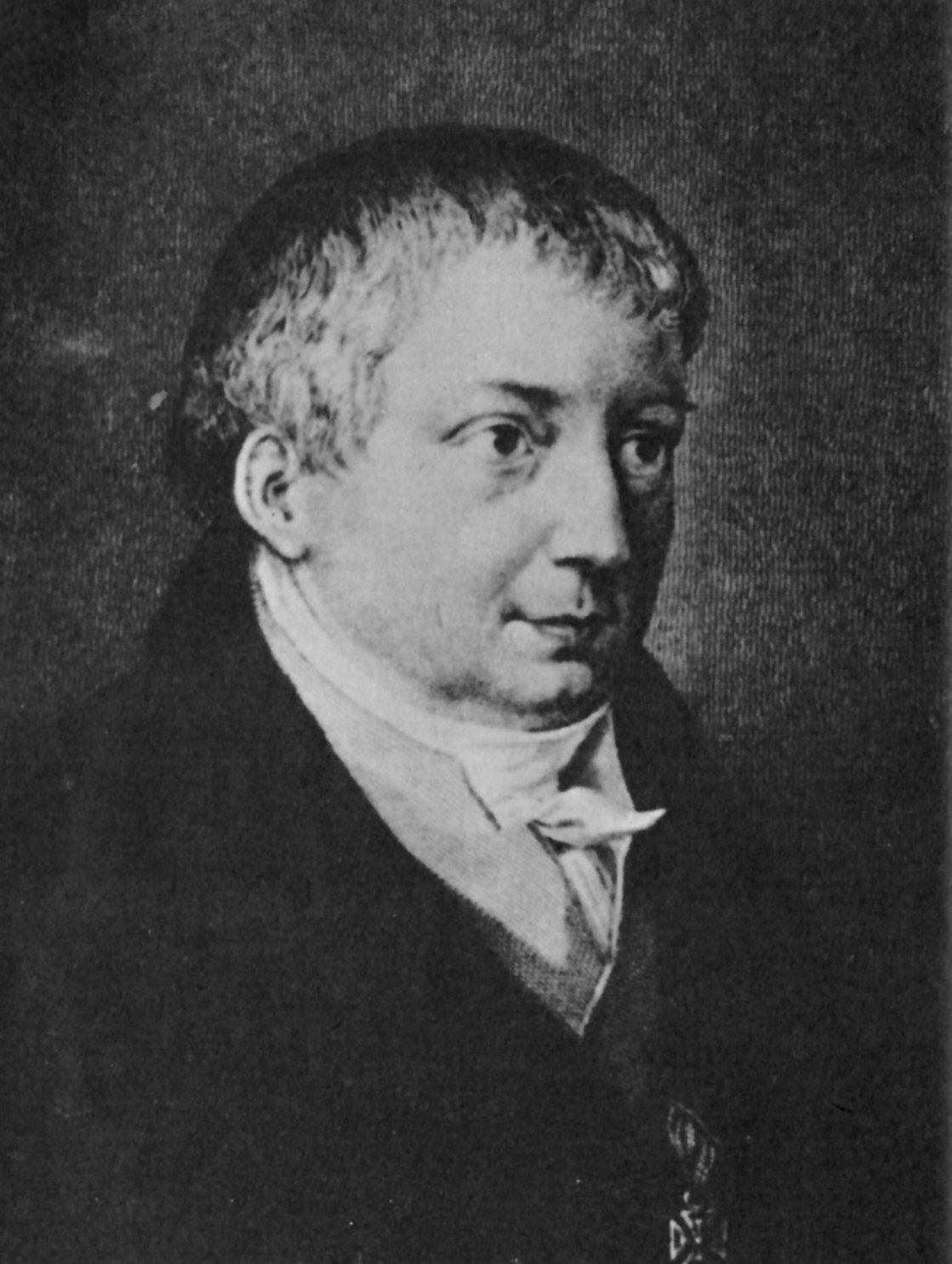
Karl Wilhelm Friedrich Schlegel
Was sich thun lässt, so lange Philosophie und Poesie getrennt sind, ist gethan und vollendet. Also ist die Zeit nun da, beyde zu vereinigen.
“Ideas,” Lucinde and the Fragments, P. Firchow, trans. (1991), § 108
Karl Wilhelm Friedrich Schlegel
“Selected Aphorisms from the Athenaeum (1798)”, Dialogue on Poetry and Literary Aphorisms, Ernst Behler and Roman Struc, trans. (Pennsylvania University Press:1968) #96
Athenäum (1798 - 1800)
“Think of something finite molded into the infinite, and you think of man.”
Karl Wilhelm Friedrich Schlegel
Denke dir ein Endliches ins Unendliche gebildet, so denkst du einen Menschen.
“Selected Ideas (1799-1800)”, Dialogue on Poetry and Literary Aphorisms, Ernst Behler and Roman Struc, trans. (1968) #98
Karl Wilhelm Friedrich Schlegel
Es giebt keine Selbstkenntniss als die historische. Niemand weiss was er ist, wer nicht weiss was seine Genossen sind.
“Ideas,” Lucinde and the Fragments, P. Firchow, trans. (1991), § 139
Karl Wilhelm Friedrich Schlegel
Grade die Individualität ist das Ursprüngliche und Ewige im Menschen; an der Personalität ist so viel nicht gelegen. Die Bildung und Entwicklung dieser Individualität als höchsten Beruf zu treiben, wäre ein göttlicher Egoismus.
“Selected Ideas (1799-1800)”, Dialogue on Poetry and Literary Aphorisms, Ernst Behler and Roman Struc, trans. (Pennsylvania University Press:1968) # 60
Karl Wilhelm Friedrich Schlegel
Nicht in die politische Welt verschleudere du Glauben und Liebe, aber in der göttlichen Welt der Wissenschaft und der Kunst opfre dein Innerstes in den heiligen Feuerstrom ewiger Bildung.
“Ideas,” Lucinde and the Fragments, P. Firchow, trans. (1991), § 106
Karl Wilhelm Friedrich Schlegel
Athenäumsfragmente 414
Variant translations:
People who are eccentric enough to be quite seriously virtuous understand each other everywhere, discover each other easily, and form a silent opposition to the ruling immorality that happens to pass for morality.
Philosophical Fragments, P. Firchow, trans. (1991) § 414
Athenäum (1798 - 1800)
Context: If there is an invisible church, then it is of the great paradox, which is inseparable from morality, and which must be distinguished from the merely philosophical. People who are so eccentric that they are completely serious in being and becoming virtuous understand one another in everything, find one another easily, and form a silent opposition against the prevailing immorality that pretends to be morality. A certain mysticism of expression, which joined with romantic fantasy and grammatical understanding, can be something charming and good, often serves as a symbol of their beautiful secrets.
“Prudishness is pretense of innocence without innocence.”
Karl Wilhelm Friedrich Schlegel
“Selected Aphorisms from the Athenaeum (1798)”, Dialogue on Poetry and Literary Aphorisms, Ernst Behler and Roman Struc, trans. (Pennsylvania University Press:1968) #31
Athenäum (1798 - 1800)
Context: Prudishness is pretense of innocence without innocence. Women have to remain prudish as long as men are sentimental, dense, and evil enough to demand of them eternal innocence and lack of education. For innocence is the only thing which can ennoble lack of education.
“Poetry can be criticized only through poetry.”
Karl Wilhelm Friedrich Schlegel
“Selected Aphorisms from the Lyceum (1797)”, Dialogue on Poetry and Literary Aphorisms, Ernst Behler and Roman Struc, trans. (Pennsylvania University Press:1968) #117
Context: Poetry can be criticized only through poetry. A critique which itself is not a work of art, either in content as representation of the necessary impression in the process of creation, or through its beautiful form and in its liberal tone in the spirit of the old Roman satire, has no right of citizenship in the realm of art.
“In England … everything becomes professional … even the rogues of that island are pedants.”
Karl Wilhelm Friedrich Schlegel
“Selected Aphorisms from the Lyceum (1797)”, Dialogue on Poetry and Literary Aphorisms, Ernst Behler and Roman Struc, trans. (Pennsylvania University Press:1968) #67
“Moderation is the spirit of castrated narrow-mindedness.”
Karl Wilhelm Friedrich Schlegel
“Selected Aphorisms from the Athenaeum (1798)”, Dialogue on Poetry and Literary Aphorisms, Ernst Behler and Roman Struc, trans. (Pennsylvania University Press:1968) #64
Athenäum (1798 - 1800)
Karl Wilhelm Friedrich Schlegel
Bei den Ausdrücken, „Seine Philosophie”, „Meine Philosophie”, erinnert man sich immer an die Worte im Nathan: „Wem eignet Gott? Was ist das für ein Gott, der einem Menschen eignet?”
Lucinde and the Fragments, P. Firchow, trans. (1991) § 99, reference is to Lessing, Nathan der Weise
“You live only insofar as you live according to your own ideas.”
Karl Wilhelm Friedrich Schlegel
Man lebt nur insofern man nach seinen eignen Ideen lebt. Die Grundsätze sind nur Mittel, der Beruf ist Zweck an sich.
“Ideas,” Lucinde and the Fragments, P. Firchow, trans. (1991), § 82
“To disrespect the masses is moral; to honor them, lawful.”
Karl Wilhelm Friedrich Schlegel
Die Menge nicht zu achten, ist sittlich; sie zu ehren, ist rechtlich.
Lucinde and the Fragments, P. Firchow, trans. (1991), “Athenaeum Fragments” § 211
“Every uneducated person is a caricature of himself.”
Karl Wilhelm Friedrich Schlegel
Jeder ungebildete Mensch ist die Karikatur von sich selbst.
“Selected Aphorisms from the Athenaeum (1798)”, Dialogue on Poetry and Literary Aphorisms, Ernst Behler and Roman Struc, trans. (Pennsylvania University Press:1968) #63
Athenäum (1798 - 1800)
“What men are among the other formations of the earth, artists are among men.”
Karl Wilhelm Friedrich Schlegel
Was die Menschen unter den andern Bildungen der Erde, das sind die Künstler unter den Menschen.
“Selected Ideas (1799-1800)”, Dialogue on Poetry and Literary Aphorisms, Ernst Behler and Roman Struc, trans. (Pennsylvania University Press:1968) # 43
Karl Wilhelm Friedrich Schlegel
Auf eine ähnliche Weise sollen in der vollkommnen Litteratur alle Bücher nur Ein Buch seyn, und in einem solchen ewig werdenden Buche wird das Evangelium der Menschheit und der Bildung offenbart werden.
“Ideas,” Lucinde and the Fragments, P. Firchow, trans. (1991), § 95
Karl Wilhelm Friedrich Schlegel
Aphorism 26, as translated in Dialogue on Poetry and Literary Aphorisms (1968), p. 151
Variant translation:
Wit is the appearance, the external flash, of fantasy. Hence its divinity and the similarity to the wit of mysticism.
As translated in The Early Political Writings of the German Romantics (1996) edited by Frederick C. Beiser, p. 131
Karl Wilhelm Friedrich Schlegel
Du sollst dir kein Ideal machen, weder eines Engels im Himmel, noch eines Helden aus einem Gedicht oder Roman, noch eines selbstgeträumten oder fantasirten; sondern du sollst einen Mann lieben, wie er ist.
Philosophical Fragments, P. Firchow, trans. (1991), “Athenaeum Fragments,” § 364
“Honour is the mysticism of legality.”
Karl Wilhelm Friedrich Schlegel
Aphorism 77, of Ideas as translated in The Early Political Writings of the German Romantics (1996) edited by Frederick C. Beiser, p. 131
“The romantic poetry is a progressive universal poetry.”
Karl Wilhelm Friedrich Schlegel
Die romantische Poesie ist eine progressive Universalpoesie.
Progressive Universalpoesie (1798); in the German language, particularly in the Romantic schools, "Poesie" means both poetry as genre and faculty and the source of creativity to form poetry.
Karl Wilhelm Friedrich Schlegel
Ein Mittler ist derjenige, der Göttliches in sich wahrnimmt, und sich selbst vernichtend Preis giebt, um dieses Göttliche zu verkündigen, mitzutheilen, und darzustellen allen Menschen in Sitten und Thaten, in Worten und Werken.
“Ideas,” Lucinde and the Fragments, P. Firchow, trans. (1991), § 44
Karl Wilhelm Friedrich Schlegel
Worauf bin ich stolz und darf ich stolz seyn als Künstler?Auf den Entschluss, der mich auf ewig von (29) allem Gemeinen absonderte und isolirte.
“Ideas,” Lucinde and the Fragments, P. Firchow, trans. (1991), § 136
“The historian is a reversed prophet.”
Karl Wilhelm Friedrich Schlegel
Der Historiker ist ein rückwärtsgekehrter Prophet.
Athenäum, I, 2, 20: Fragmente
Athenäum (1798 - 1800)
Karl Wilhelm Friedrich Schlegel
Philosophical Fragments, P. Firchow, trans. (1991) § 147
Karl Wilhelm Friedrich Schlegel
Ein Künstler ist, wer sein Centrum in sich selbst hat. Wem es da fehlt, der muss einen bestimmten Führer und Mittler ausser sich wählen.
“Ideas,” Lucinde and the Fragments, P. Firchow, trans. (1991), § 45
Karl Wilhelm Friedrich Schlegel
Als vorübergehender Zustand ist der Skeptizismus logische Insurrektion; als System ist er Anarchie. Skeptische Methode wäre also ungefähr wie insurgente Regierung.
#97, as translated in Walter Benjamin: Selected Writings (1996), vol. 1, p. 136
Athenäum (1798 - 1800)
“You wanted to destroy philosophy and poetry in order to make room for religion and morality”
Karl Wilhelm Friedrich Schlegel
Du wolltest die Philosophie zerstören, und die Poesie, um Raum zu gewinnen für die Religion und Moral, die du verkanntest: aber du hast nichts zerstören können als dich selber.
“Selected Ideas (1799-1800)”, Dialogue on Poetry and Literary Aphorisms, Ernst Behler and Roman Struc, trans. (1968) #90
Karl Wilhelm Friedrich Schlegel
Der Satan der italienischen und englischen Dichter mag poetischer sein; aber der deutsche Satan ist satanischer; und insofern könnte man sagen, der Satan sei eine deutsche Erfindung.
Athenäumsfragmente 379; the Italian and English poets referred to are Dante, and John Milton.
Athenäum (1798 - 1800)
Karl Wilhelm Friedrich Schlegel
Die Pflicht der Kantianer verhält sich zu dem Gebot der Ehre, der Stimme des Berufs und der Gottheit in uns, wie die getrocknete Pflanze zur frischen Blume am lebenden Stamme.
“Ideas,” Lucinde and the Fragments, P. Firchow, trans. (1991), § 39
Karl Wilhelm Friedrich Schlegel
“Selected Aphorisms from the Athenaeum (1798)”, Dialogue on Poetry and Literary Aphorisms, Ernst Behler and Roman Struc, trans. (Pennsylvania University Press:1968) #233
Athenäum (1798 - 1800)
Karl Wilhelm Friedrich Schlegel
Dem Bunde der Künstler einen bestimmten Zweck geben, das heisst ein dürftiges Institut an die Stelle des ewigen Vereins setzen; das heisst die Gemeinde der Heiligen zum Staat erniedrigen.
“Ideas,” Lucinde and the Fragments, P. Firchow, trans. (1991), § 49
“Irony is a form of paradox. Paradox is what is good and great at the same time.”
Karl Wilhelm Friedrich Schlegel
Aphorism 48, as translated in Dialogue on Poetry and Literary Aphorisms (1968), p. 151
Karl Wilhelm Friedrich Schlegel
“Ideas,” Lucinde and the Fragments, P. Firchow, trans. (1991), § 5
Karl Wilhelm Friedrich Schlegel
Lucinde and the Fragments, P. Firchow, trans. (1991), “Critical Fragments,” § 36
“Only a man who is at one with the world can be at one with himself.”
Karl Wilhelm Friedrich Schlegel
Nur wer einig ist mit der Welt kann einig seyn mit sich selbst.
“Ideas,” Lucinde and the Fragments, P. Firchow, trans. (1991), § 130
“Aphorisms are the true form of the universal philosophy.”
Karl Wilhelm Friedrich Schlegel
Fragmente, sagen Sie, wären die eigentliche Form der Universalphilosophie.
“A” in “Selected Aphorisms from the Athenaeum (1798)”, Dialogue on Poetry and Literary Aphorisms, Ernst Behler and Roman Struc, trans. (Pennsylvania University Press:1968) #259
Athenäum (1798 - 1800)
Karl Wilhelm Friedrich Schlegel
“Selected Aphorisms from the Athenaeum (1798)”, Dialogue on Poetry and Literary Aphorisms, Ernst Behler and Roman Struc, trans. (Pennsylvania University Press:1968) #54
Athenäum (1798 - 1800)
“Virtue is reason which has become energy.”
Karl Wilhelm Friedrich Schlegel
Tugend ist zur Energie gewordne Vernunft.
“Selected Ideas (1799-1800)”, Dialogue on Poetry and Literary Aphorisms, Ernst Behler and Roman Struc, trans. (Pennsylvania University Press:1968) #23
“Only he who possesses a personal religion, an original view of infinity, can be an artist.”
Karl Wilhelm Friedrich Schlegel
Nur derjenige kann ein Künstler seyn, welcher eine eigne Religion, eine originelle Ansicht des Unendlichen hat.
“Selected Ideas (1799-1800)”, Dialogue on Poetry and Literary Aphorisms, Ernst Behler and Roman Struc, trans. (Pennsylvania University Press:1968) #13
Karl Wilhelm Friedrich Schlegel
“On Philosophy: To Dorothea,” in Theory as Practice (1997), p. 420
Karl Wilhelm Friedrich Schlegel
Durch die Künstler wird die Menschheit ein Individuum, indem sie Vor welt und Nachwelt in der Gegenwart verknüpfen. Sie sind das höhere Seelenorgan, wo die Lebensgeister der ganzen 15 äussern Menschheit zusammentreffen und in welchem die innere zunächst wirkt.
“Selected Ideas (1799-1800)”, Dialogue on Poetry and Literary Aphorisms, Ernst Behler and Roman Struc, trans. (Pennsylvania University Press:1968) #64 [cf. Heidegger]
Karl Wilhelm Friedrich Schlegel
Philosophy of Life, Lecture 1
“There are people with whom everything they consider a means turns mysteriously into an end.”
Karl Wilhelm Friedrich Schlegel
Philosophical Fragments, P. Firchow, trans. (1991) § 428
Karl Wilhelm Friedrich Schlegel
As quoted in Divine Madness : On Interpreting Literature, Music, and The Visual Arts Ironically (2002) by Lars Elleström, p. 50
Variant translations, of the paradoxical statement which begins in German with Es ist gleich tödlich für den Geist, ein System zu haben, und keins zu haben.:
It is equally fatal for the spirit, to have a system and not to have.
The Innovations of Idealism (2003) by Rüdiger Bubner, p. 193
It is equally fatal for the spirit to have a system and to have none. It will simply have to decide to combine the two.
As quoted in Friedrich Schlegel and the Emergence of Romantic Philosophy (2007) by Elizabeth Millán-Zaibert, p. 203
It is equally fatal for the spirit to have a system, and to have none. So the spirit must indeed resolve to combine the two.
As quoted in Hegel : Lectures on the History of Philosophy 1825-6 : Volume I, (2009) by Robert F. Brown, footnote, p. 59
Karl Wilhelm Friedrich Schlegel
Der Künstler darf eben so wenig herrschen als dienen wollen. 15 Er kann nur bilden, nichts als bilden, für den Staat also nur das thun, dass er Herrscher und Diener bilde, dass er Politiker und Oekonomen zu Künstlern erhebe.
“Ideas,” Lucinde and the Fragments, P. Firchow, trans. (1991), § 54
Karl Wilhelm Friedrich Schlegel
Philosophical Fragments, P. Firchow, trans. (1991) § 116
“The need to raise itself above humanity is humanity’s prime characteristic.”
Karl Wilhelm Friedrich Schlegel
Es ist der Menschheit eigen, dass sie sich über die Menschheit erheben muss.
“Ideas,” Lucinde and the Fragments, P. Firchow, trans. (1991) § 21
“An artist is he for whom the goal and center of life is to form his mind.”
Karl Wilhelm Friedrich Schlegel
Künstler ist ein jeder, dem es Ziel und Mitte des Daseyns ist, seinen Sinn zu bilden.
“Selected Ideas (1799-1800)”, Dialogue on Poetry and Literary Aphorisms, Ernst Behler and Roman Struc, trans. (Pennsylvania University Press:1968) # 20
“One has only as much morality as one has philosophy and poetry.”
Karl Wilhelm Friedrich Schlegel
Man hat nur so viel Moral, als man Philosophie und Poesie hat.
“Selected Ideas (1799-1800)”, Dialogue on Poetry and Literary Aphorisms, Ernst Behler and Roman Struc, trans. (Pennsylvania University Press:1968) #62
“Where there is politics or economics, there is no morality.”
Karl Wilhelm Friedrich Schlegel
Wo Politik ist oder Oekonomie, da ist keine Moral.
“Selected Ideas (1799-1800)”, Dialogue on Poetry and Literary Aphorisms, Ernst Behler and Roman Struc, trans. (1968) #101
“Morality without sense for paradox is vulgar.”
Karl Wilhelm Friedrich Schlegel
Moralität ohne Sinn für Paradoxie ist gemein.
“Ideas,” Lucinde and the Fragments, P. Firchow, trans. (1991), § 76
“Only by being cultivated does a human being … become altogether human and permeated by humanity.”
Karl Wilhelm Friedrich Schlegel
Nur durch die Bildung wird der Mensch, der es ganz ist überall menschlich und von Menschheit durchdrungen.
“Ideas,” Lucinde and the Fragments, P. Firchow, trans. (1991), § 65
Karl Wilhelm Friedrich Schlegel
Deute den lieblichen Schein und mache Ernst aus dem Spiel, so wirst du das Centrum fassen und die verehrte Kunst in höherm Lichte wieder finden.
“Ideas,” Lucinde and the Fragments, P. Firchow, trans. (1991), § 109
Karl Wilhelm Friedrich Schlegel
Selbst in den äusserlichen Gebräuchen sollte sich die Lebensart der Künstler von der Lebensart der übrigen Menschen durchaus unterscheiden. Sie sind Braminen, eine höhere Kaste, aber nicht durch Geburt sondern durch freye Selbsteinweihung geadelt.
“Selected Ideas (1799-1800)”, Dialogue on Poetry and Literary Aphorisms, Ernst Behler and Roman Struc, trans. (Pennsylvania University Press:1968) # 146
Variant translation: Even in their outward behavior, the lives of artists should differ completely from the lives of other men. They are Brahmins, a higher caste: ennobled not by birth, but by free self-consecration.
“Ideas,” Lucinde and the Fragments, P. Firchow, trans. (1991), § 146
“Like the Roman senators, true artists are a nation of kings.”
Karl Wilhelm Friedrich Schlegel
Wie die Senatoren der Römer sind die wahren Künstler ein Volk von Königen.
“Ideas,” Lucinde and the Fragments, P. Firchow, trans. (1991), § 114
Karl Wilhelm Friedrich Schlegel
Die Romane sind die sokratischen Dialoge unserer Zeit. In diese liberale Form hat sich die Lebensweisheit vor der Schulweisheit geflüchtet.
Lucinde and the Fragments, P. Firchow, trans. (1991), “Critical Fragments,” § 26
Karl Wilhelm Friedrich Schlegel
“On Philosophy: To Dorothea,” in Theory as Practice (1997), p. 421
Karl Wilhelm Friedrich Schlegel
Die wahre Tugend ist Genialität.
“Selected Ideas (1799-1800)”, Dialogue on Poetry and Literary Aphorisms, Ernst Behler and Roman Struc, trans. (Pennsylvania University Press:1968) #36


