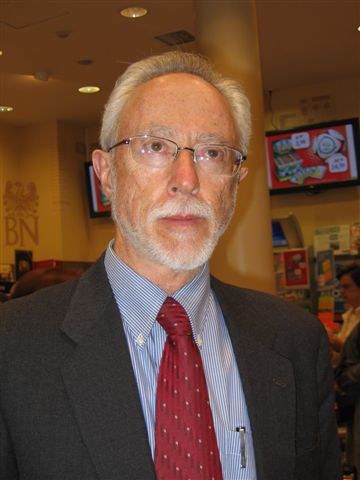
Dzieło
John Maxwell Coetzee słynne cytaty
John Maxwell Coetzee książka Czekając na barbarzyńców
Źródło: Czekając na barbarzyńców (1985), tłum. Anna Mysłowska
John Maxwell Coetzee Cytaty o czasie
Źródło: Powolny człowiek, tłum. Magdalena Konikowska.
John Maxwell Coetzee cytaty
„Rozsądek polega między innymi na tym, żeby zawsze mówić raczej mniej niż więcej.”
Źródło: Chłopięce lata. Sceny z prowincjonalnego życia (1998), tłum. Michał Kłobukowski
„Niektórzy ludzie nie są stworzeni do zabawy.”
Młodość (2002)
Źródło: rozdział 9
Młodość (2002)
Źródło: rozdział 8
John Maxwell Coetzee książka Foe
Foe
John Maxwell Coetzee książka Foe
Foe
Młodość (2002)
Źródło: rozdział 14
W sercu kraju
Źródło: Wiek żelaza (1990), tłum. Anna Mysłowska, rozdział 4.
John Maxwell Coetzee książka Foe
Foe
„Im mniej istotnych różnic dzieli dwa obozy, tym zajadlej się one nienawidzą.”
Źródło: Zapiski ze złego roku
John Maxwell Coetzee: Cytaty po angielsku
J.M. Coetzee książka Life & Times of Michael K
Life & Times of Michael K (1983)
Kontekst: He closed his eyes and tried to recover in his imagination the mudbrick walls and reed roof of her stories, the garden of prickly pear, the chickens scampering for the feed scattered by the little barefoot girl. And behind that child, in the doorway, her face obscured by shadow, he searched for a second woman, the woman from whom his mother had come into the world. When my mother was dying in the hospital, he thought, when she knew her end was coming, it was not me she looked to but someone who stood behind me: her mother or the ghost of her mother. To me she was a woman but to herself she was still a child calling to her mother to hold her hand and help her. And her own mother, in the secret life we do not see, was a child too. I come from a line of children without end.
J.M. Coetzee książka Life & Times of Michael K
Life & Times of Michael K (1983)
Kontekst: Though this is a large country, so large that you would think there would be space for everyone, what I have learned from life tells me that it is hard to keep out of the camps. Yet I am convinced there are areas that lie between the camps and belong to no camp, not even to the catchment areas of the camps — certain mountaintops, for example, certain islands in the middle of swamps, certain arid strips where human beings may not find it worth their while to live. I am looking for such a place in order to settle there, perhaps only till things improve, perhaps forever. I am not so foolish, however, as to imagine that I can rely on maps and roads to guide me. Therefore I have chosen you to show me the way.
“Perhaps if one flew high enough, he thought, one would be able to see.”
J.M. Coetzee książka Life & Times of Michael K
Life & Times of Michael K (1983)
Kontekst: I could live here forever, he thought, or till I die. Nothing would happen, every day would be the same as the day before, there would be nothing to say. The anxiety that belonged to the time on the road began to leave him. Sometimes, as he walked, he did not know whether he was awake or asleep. He could understand that people should have retreated here and fenced themselves in with miles and miles of silence; he could understand that they should have wanted to bequeath the privilege of so much silence to their children and grandchildren in perpetuity (though by what right he was not sure); he wondered whether there were not forgotten corners and angles and corridors between the fences, land that belonged to no one yet. Perhaps if one flew high enough, he thought, one would be able to see.
J.M. Coetzee książka Slow Man
Źródło: Slow Man
“A book should be an axe to chop open the frozen sea inside us.”
J.M. Coetzee książka Summertime
Źródło: Summertime
J.M. Coetzee książka Hańba
Źródło: Disgrace (1999), p. 3-4
Kontekst: Although he devoted hours of each day to his new discipline, he finds its first premise, as enunciated in the Communications 101 handbook, preposterous: 'Human society has created language in order that we may communicate our thoughts, feelings, and intentions to each other.' His own opinion, which he does not air, is that the origins of speech lie in song, and the origins of song in the need to fill out with sound the overlarge and rather empty human soul.
“Pain is truth; all else is subject to doubt.”
J.M. Coetzee książka Czekając na barbarzyńców
Źródło: Waiting for the Barbarians
J.M. Coetzee książka Slow Man
Źródło: Slow Man
J.M. Coetzee książka Czekając na barbarzyńców
Źródło: Waiting for the Barbarians
J.M. Coetzee książka Czekając na barbarzyńców
Źródło: Waiting for the Barbarians
“Was it serious? I don't know. It certainly had serious consequences.”
J.M. Coetzee książka Hańba
Źródło: Disgrace
“Our lies reveal as much about us as our truths.”
J.M. Coetzee książka Slow Man
Źródło: Slow Man (2004)
J.M. Coetzee książka Diary of a Bad Year
Źródło: Diary of a Bad Year (2007), p. 17
J.M. Coetzee książka Diary of a Bad Year
Źródło: Diary of a Bad Year (2007), p. 17
J.M. Coetzee książka Diary of a Bad Year
Źródło: Diary of a Bad Year (2007), p. 17
J.M. Coetzee książka The Lives of Animals
“Degrees of obscenity,” she replies.
Źródło: The Lives of Animals (1999), pp. 43-44
J.M. Coetzee książka Diary of a Bad Year
Źródło: Diary of a Bad Year (2007), p. 14


