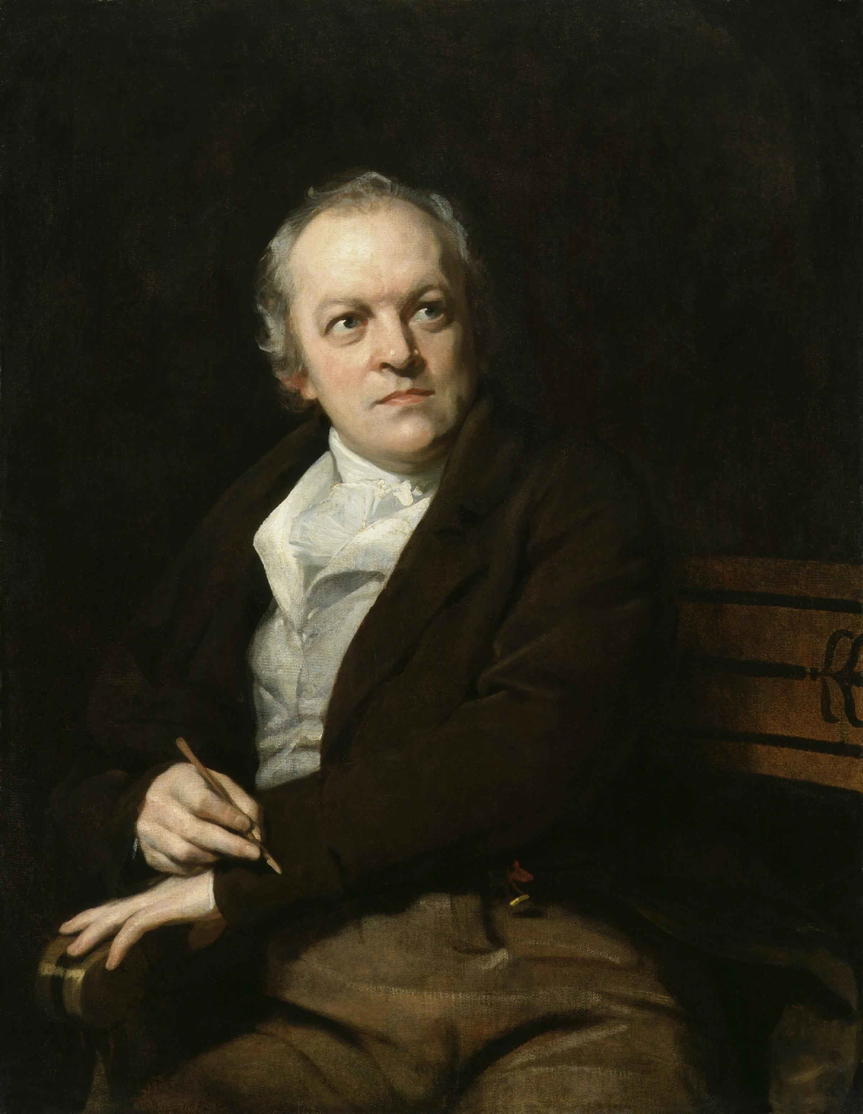
William Blake híres idézetei
William Blake Idézetek az emberekről
William Blake idézetek

„Igazságot nem lehet mondani úgy, hogy megértsék és mégse higgyék el.”
Babits Mihály fordítása
„Rossz szándékkal mondott igazság, Többet árt, mint bármely hazugság.”
Neki tulajdonított idézetek
William Blake: Idézetek angolul
A Little Girl Lost, st. 1
1790s, Songs of Experience (1794)
“The hours of folly are measur'd by the clock, but of wisdom no clock can measure.”
Forrás: 1790s, The Marriage of Heaven and Hell (1790–1793), Proverbs of Hell, Line 12
William Blake The Little Black Boy
The Little Black Boy, st. 1
1780s, Songs of Innocence (1789–1790)
William Blake The Chimney Sweeper
The Chimney Sweeper, st. 1
1780s, Songs of Innocence (1789–1790)
Forrás: 1800s, Jerusalem The Emanation of The Giant Albion (c. 1803–1820), Ch. 1, plate 15, lines 6-9
William Blake The Divine Image
The Divine Image, st. 3
1780s, Songs of Innocence (1789–1790)
“It is easier to forgive an Enemy than to forgive a Friend.”
Forrás: 1800s, Jerusalem The Emanation of The Giant Albion (c. 1803–1820), Ch. 4, plate 91, line 1

“If a thing loves, it is infinite.”
Annotations to Swedenborg (1788)
1780s
William Blake könyv The Marriage of Heaven and Hell
Forrás: The Marriage of Heaven and Hell
“If He had been Antichrist, Creeping Jesus,
He’d have done anything to please us”
The Everlasting Gospel (c. 1818)
Kontextus: If He had been Antichrist, Creeping Jesus,
He’d have done anything to please us;
Gone sneaking into synagogues,
And not us’d the Elders and Priests like dogs;
But humble as a lamb or ass
Obey’d Himself to Caiaphas.
“The vision of Christ that thou dost see
Is my vision's greatest enemy.”
The Everlasting Gospel (c. 1818)
Kontextus: The vision of Christ that thou dost see
Is my vision's greatest enemy.
Thine has a great hook nose like thine;
Mine has a snub nose like to mine.
Thine is the Friend of all Mankind;
Mine speaks in parables to the blind.
Thine loves the same world that mine hates;
Thy heaven doors are my hell gates.
Letter to Revd. Dr. Trusler (1799)
Kontextus: To the Eyes of a Miser a Guinea is more beautiful than the Sun & and a bag worn with the use of Money has more beautiful proportions than a Vine filled with Grapes. The tree which moves some to tears of joy is in the Eyes of others only a Green thing that stands in the way. Some see Nature all Ridicule and Deformity, and by these I shall not regulate my proportions; and some scarce see Nature at all. But to the Eyes of the Man of Imagination, Nature is Imagination itself. As a man is, So he Sees. As the Eye is formed, such are its Powers..
“Can Wisdom be put in a silver rod?
Or Love in a golden bowl?”
William Blake The Book of Thel
The Book of Thel, Thel's Motto (1789–1792)
Kontextus: Does the Eagle know what is in the pit?
Or wilt thou go ask the Mole?
Can Wisdom be put in a silver rod?
Or Love in a golden bowl?
The Letters Of William Blake https://archive.org/details/lettersofwilliam002199mbp (1956), p. 74-75 <br class="br">Kontextus: And now let me finish with assuring you that, Tho I have been very unhappy, I am so no longer. I am again. Emerged into the light of day; I still & shall to Eternity Embrace Christianity and Adore him who is the Express image of God; but I have travel'd thro' Perils & Darkness not unlike a Champion. I have Conquer'd, and shall still Go on Conquering. Nothing can withstand the fury of my Course among the Stars of God & in the Abysses of the Accuser. My Enthusiasm is still what it was, only Enlarged and conform'd.
“I do not behold the outward creation”
A Vision of the Last Judgment
Kontextus: I assert, for myself, that I do not behold the outward creation, and that to me it is hindrance and not action. "What!" it will be questioned, "when the sun rises, do you not see a round disc of fire somewhat like a guinea!" Oh! no, no! I see an innumerable company of the heavenly host crying "Holy, holy, holy is the Lord God Almighty!" I question not my corporeal eye any more than I would question a window concerning a sight. I look through it, and not with it.
“I look through it, and not with it.”
Kontextus: I assert, for myself, that I do not behold the outward creation, and that to me it is hindrance and not action. "What!" it will be questioned, "when the sun rises, do you not see a round disc of fire somewhat like a guinea!" Oh! no, no! I see an innumerable company of the heavenly host crying "Holy, holy, holy is the Lord God Almighty!" I question not my corporeal eye any more than I would question a window concerning a sight. I look through it, and not with it.
A Vision of the Last Judgment
“I question not my corporeal eye”
A Vision of the Last Judgment
Kontextus: I assert, for myself, that I do not behold the outward creation, and that to me it is hindrance and not action. "What!" it will be questioned, "when the sun rises, do you not see a round disc of fire somewhat like a guinea!" Oh! no, no! I see an innumerable company of the heavenly host crying "Holy, holy, holy is the Lord God Almighty!" I question not my corporeal eye any more than I would question a window concerning a sight. I look through it, and not with it.
William Blake könyv Jerusalem: The Emanation of the Giant Albion
Forrás: 1800s, Jerusalem The Emanation of The Giant Albion (c. 1803–1820), Ch. 1, plate 10, lines 20-21 The Words of Los
“The road of excess leads to the palace of wisdom.”
William Blake könyv The Marriage of Heaven and Hell
Forrás: 1790s, The Marriage of Heaven and Hell (1790–1793), Proverbs of Hell, Line 3
“You never know what is enough unless you know what is more than enough.”
William Blake könyv The Marriage of Heaven and Hell
Forrás: 1790s, The Marriage of Heaven and Hell (1790–1793), Proverbs of Hell, Line 46
William Blake könyv Songs of Experience
Forrás: Poems from the Pickering Manuscript (c. 1805), Auguries of Innocence, Line 123
Forrás: Songs of Experience
“Eternity is in love with the productions of time.”
William Blake könyv The Marriage of Heaven and Hell
Változat: Eternity is in love with the productions of time.
Forrás: 1790s, The Marriage of Heaven and Hell (1790–1793), Proverbs of Hell, Line 10
The Clod and the Pebble, st. 3
1790s, Songs of Experience (1794)
Forrás: Songs of Innocence and Songs of Experience
“Truth can never be told so as to be understood, and not be believed.”
Forrás: 1790s, The Marriage of Heaven and Hell (1790–1793), Proverbs of Hell, Line 69
“If the doors of perception were cleansed, everything would appear to man as it is: infinite.”
A Memorable Fancy
1790s, The Marriage of Heaven and Hell (1790–1793)
The Argument
1790s, The Marriage of Heaven and Hell (1790–1793)


