
Works
Famous W. H. Auden Quotes
“A poet is, before anything else, a person who is passionately in love with language.”
Squares and Oblongs, in Poets at Work (1948), p. 170
“Some books are undeservedly forgotten; none are undeservedly remembered.”
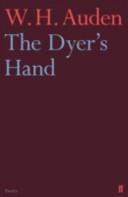
W. H. Auden book The Dyer's Hand
"Reading", p. 10
The Dyer's Hand, and Other Essays (1962)
“No opera plot can be sensible, for people do not sing when they are feeling sensible.”
W. H. Auden book The Dyer's Hand
"Notes on Music and Opera", p. 472
The Dyer's Hand, and Other Essays (1962)
“A professor is one who talks in someone else's sleep.”
Often attributed to Auden, but he was repeating an anonymous joke; he did not claim to have originated it. See "Who Wrote Auden's Definition of a Professor?" http://www.audensociety.org/definition.html <br class="br">Misattributed
W. H. Auden Quotes about love
W. H. Auden book Spain
Source: Spain (1937), Lines 81–92
First published in book form in Look, Stranger! (1936; US title On this Island)
Source: Autumn Song (1936), Lines 17–20
Lay your sleeping head, my love (1937), lines 1–2, written January 1937; also known as Lullaby.
W. H. Auden book The Dyer's Hand
"Hic et Ille", p. 104
The Dyer's Hand, and Other Essays (1962)
W. H. Auden: Trending quotes
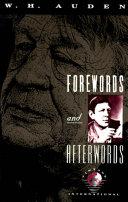
W. H. Auden book Forewords and Afterwords
"The Protestant Mystics", p. 73
Forewords and Afterwords (1973)
W. H. Auden book The Dyer's Hand
"The Poet & The City", p. 81
The Dyer's Hand, and Other Essays (1962)
W. H. Auden Quotes
W. H. Auden book Forewords and Afterwords
Assessing St. Augustine's perspectives in "Augustus to Augustine", p. 37
Forewords and Afterwords (1973)
Context: Man … always acts either self-loving, just for the hell of it, or God-loving, just for the heaven of it; his reasons, his appetites are secondary motivations. Man chooses either life or death, but he chooses; everything he does, from going to the toilet to mathematical speculation, is an act of religious worship, either of God or of himself.
Lastly by the classical apotheosis of Man-God, Augustine opposes the Christian belief in Jesus Christ, the God-Man. The former is a Hercules who compels recognition by the great deeds he does in establishing for the common people in the law, order and prosperity they cannot establish for themselves, by his manifestation of superior power; the latter reveals to fallen man that God is love by suffering, i. e. by refusing to compel recognition, choosing instead to be a victim of man's self-love. The idea of a sacrificial victim is not new; but that it should be the victim who chooses to be sacrificed, and the sacrificers who deny that any sacrifice has been made, is very new.
“One cannot review a bad book without showing off.”
W. H. Auden book The Dyer's Hand
"Reading", p. 11
The Dyer's Hand, and Other Essays (1962)
W. H. Auden book Forewords and Afterwords
"Walter de la Mare", p. 393
Forewords and Afterwords (1973)
W. H. Auden book The Dyer's Hand
"The Virgin & The Dynamo", p. 62
The Dyer's Hand, and Other Essays (1962)
W. H. Auden book Forewords and Afterwords
"One of the Family", p. 369
Forewords and Afterwords (1973)
“About suffering they were never wrong,
The Old Masters.”
W. H. Auden Musée des Beaux Arts
Source: Musée des Beaux Arts (1938), Lines 1–2
“We are all on earth to help others. What on earth the others are here for, I can't imagine.”
Often cited as by Auden without attribution, this quotation has been traced to John Foster Hall (1867-1945), an English comedian known as the Reverend Vivian Foster, Vicar of Mirth. Full history with sound recording http://audensociety.org/vivianfoster.html <br class="br">Misattributed
“All sin tends to be addictive, and the terminal point of addiction is what is called damnation.”
"Hell"
A Certain World: A Commonplace Book (1970)
“I and the public know
What all schoolchildren learn,
Those to whom evil is done
Do evil in return.”
Source: September 1, 1939 (1939), Lines 19–22
W. H. Auden book The Dyer's Hand
"Writing", p. 27
The Dyer's Hand, and Other Essays (1962)
“No person can be a great leader unless he takes genuine joy in the successes of those under him.”
Not by Auden; sources from the 1980s attribute it to the Rev. W. A. Nance (the name seems to have been confused with Auden's).
Misattributed
W. H. Auden book The Dyer's Hand
"The Poet & The City", p. 83
The Dyer's Hand, and Other Essays (1962)
Context: What the mass media offers is not popular art, but entertainment which is intended to be consumed like food, forgotten, and replaced by a new dish. This is bad for everyone; the majority lose all genuine taste of their own, and the minority become cultural snobs.
“Money is the necessity that frees us from necessity.”
W. H. Auden book Forewords and Afterwords
"A Poet of the Actual", p. 266
Forewords and Afterwords (1973)
Context: Money is the necessity that frees us from necessity. Of all novelists in any country, Trollope best understands the role of money. Compared with him even Balzac is a romantic.
W. H. Auden book Forewords and Afterwords
"A Poet of the Actual", p. 265
Forewords and Afterwords (1973)
Context: A craftsman knows in advance what the finished result will be, while the artist knows only what it will be when he has finished it. But it is unbecoming in an artist to talk about inspiration; that is the reader's business.
W. H. Auden book Forewords and Afterwords
"A Russian Aesthete", p. 279
Forewords and Afterwords (1973)
Context: Machines have no political opinions, but they have profound political effects. They demand a strict regimentation of time, and, by abolishing the need for manual skill, have transformed the majority of the population from workers into laborers. There are, that is to say, fewer and fewer jobs which a man can find a pride and satisfaction in doing well, more and more which have no interest in themselves and can be valued only for the money they provide.
W. H. Auden book Forewords and Afterwords
On Søren Kierkegaard, in "A Knight of Doleful Countenance", p. 192
Forewords and Afterwords (1973)
Context: He suffers from one great literary defect, which is often found in lonely geniuses: he never knows when to stop. Lonely people are apt to fall in love with the sound of their own voice, as Narcissus fell in love with his reflection, not out of conceit but out of despair of finding another who will listen and respond.
W. H. Auden book Forewords and Afterwords
"The Greatest of the Monsters", p. 247
Forewords and Afterwords (1973)
Context: I said earlier that I do not believe an artist's life throws much light upon his works. I do believe, however, that, more often than most people realize, his works may throw light upon his life. An artist with certain imaginative ideas in his head may then involve himself in relationships which are congenial to them.
W. H. Auden book Forewords and Afterwords
"The Protestant Mystics", p. 72
Forewords and Afterwords (1973)
Context: The mystics themselves do not seem to have believed their physical and mental sufferings to be a sign of grace, but it is unfortunate that it is precisely physical manifestations which appeal most to the religiosity of the mob. A woman might spend twenty years nursing lepers without having any notice taken of her, but let her once exhibit the stigmata or live for long periods on nothing but the Host and water, and in no time the crowd will be clamoring for her beatification.
W. H. Auden book Forewords and Afterwords
Assessing St. Augustine's perspectives in "Augustus to Augustine", p. 37
Forewords and Afterwords (1973)
Context: Man … always acts either self-loving, just for the hell of it, or God-loving, just for the heaven of it; his reasons, his appetites are secondary motivations. Man chooses either life or death, but he chooses; everything he does, from going to the toilet to mathematical speculation, is an act of religious worship, either of God or of himself.
Lastly by the classical apotheosis of Man-God, Augustine opposes the Christian belief in Jesus Christ, the God-Man. The former is a Hercules who compels recognition by the great deeds he does in establishing for the common people in the law, order and prosperity they cannot establish for themselves, by his manifestation of superior power; the latter reveals to fallen man that God is love by suffering, i. e. by refusing to compel recognition, choosing instead to be a victim of man's self-love. The idea of a sacrificial victim is not new; but that it should be the victim who chooses to be sacrificed, and the sacrificers who deny that any sacrifice has been made, is very new.
W. H. Auden book Forewords and Afterwords
"C.P. Cavafy", p. 341
Forewords and Afterwords (1973)
Context: In most poetic expressions of patriotism, it is impossible to distinguish what is one of the greatest human virtues from the worst human vice, collective egotism.
The virtue of patriotism has been extolled most loudly and publicly by nations that are in the process of conquering others, by the Roman, for example, in the first century B. C., the French in the 1790s, the English in the nineteenth century, and the Germans in the first half of the twentieth. To such people, love of one's country involves denying the right of others, of the Gauls, the Italians, the Indians, the Poles, to love theirs.
W. H. Auden book The Dyer's Hand
"Hic et Ille", p. 96
The Dyer's Hand, and Other Essays (1962)
“To ask the hard question is simple,
The simple act of the confused will.”
To Ask the Hard Question is Simple, first published in book form in Poems (1930)
W. H. Auden book Forewords and Afterwords
"The Greeks and Us", p. 21
Forewords and Afterwords (1973)
“The surest sign that a man has a genuine taste of his own is that he is uncertain of it.”
W. H. Auden book The Dyer's Hand
"Reading", p. 6
The Dyer's Hand, and Other Essays (1962)
“One can only blaspheme if one believes.”
W. H. Auden book Forewords and Afterwords
"Concerning the Unpredictable", p. 472
Forewords and Afterwords (1973)
“Death is the sound of distant thunder at a picnic.”
A misquotation of a haiku by Auden found elsewhere on this page ("Thoughts of his own death" etc.)
Misattributed
Variant: Thoughts of his own death,
like the distant roll
of thunder at a picnic.
W. H. Auden book The Dyer's Hand
"American Poetry", p. 367
The Dyer's Hand, and Other Essays (1962)
W. H. Auden book Forewords and Afterwords
"As It Seemed to Us", p. 498
Forewords and Afterwords (1973)
W. H. Auden book The Dyer's Hand
"Reading", p. 9
The Dyer's Hand, and Other Essays (1962)
Source: September 1, 1939 (1939), Lines 1–11
Source: Paris Review interview (1972), p. 266
W. H. Auden book Forewords and Afterwords
"The Justice of Dame Kind", p. 464
Forewords and Afterwords (1973)
It's no use raising a shout (1929), first published in book form in Poems (1930)
W. H. Auden book The Dyer's Hand
"Notes on the Comic", p. 372
The Dyer's Hand, and Other Essays (1962)
W. H. Auden book The Dyer's Hand
"Reading", p. 12
The Dyer's Hand, and Other Essays (1962)
Widely attributed online to Auden, this phrase does not occur anywhere in his writings. It is apparently a confused recollection of the title of his long poem The Age of Anxiety (1947). (The phrase "age of anxiety" occurs only in the title of the poem, not in the text, nor in anything else by Auden.)
Misattributed
W. H. Auden book The Dyer's Hand
"The Guilty Vicarage", p. 157
The Dyer's Hand, and Other Essays (1962)
W. H. Auden book Forewords and Afterwords
"The Protestant Mystics", p. 52
Forewords and Afterwords (1973)
"Tyranny”
A Certain World: A Commonplace Book (1970)


