“Beauty lies not in the things we see, but in the soul.”
Source: Aphorisms and Reflections (1901), p. 158
John Lancaster Spalding was an American author, poet, advocate for higher education, the first bishop of the Roman Catholic Diocese of Peoria from 1877 to 1908 and a co-founder of The Catholic University of America.
The diocesan offices of the Diocese of Peoria are located in the Spalding Center, named for him. Peoria's Catholic high school for boys, Spalding Institute, was named for him. The school closed in the 1988-1989 school year when it merged with Bergan High School to form Peoria Notre Dame High School. Spalding Hall at The Catholic University of America was also named for him. Wikipedia
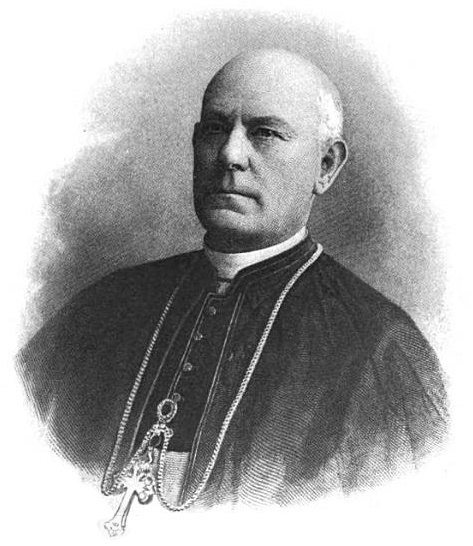
“Beauty lies not in the things we see, but in the soul.”
Source: Aphorisms and Reflections (1901), p. 158
Source: Aphorisms and Reflections (1901), p. 204
Source: Aphorisms and Reflections (1901), p. 165
“Make thyself perfect; others, happy.”
Source: Aphorisms and Reflections (1901), p. 76
Source: Aphorisms and Reflections (1901), p. 148
“They who think they know all, learn nothing.”
Source: Aphorisms and Reflections (1901), p. 257
Source: Aphorisms and Reflections (1901), p. 220
“Faith, like love, unites; opinion, like hate, separates.”
Source: Aphorisms and Reflections (1901), p. 64
Source: Aphorisms and Reflections (1901), p. 241
Source: Aphorisms and Reflections (1901), p. 117
Source: Aphorisms and Reflections (1901), p. 257-258
“The best book is but the record of the best life.”
Source: Aphorisms and Reflections (1901), p. 44
Source: Aphorisms and Reflections (1901), p. 14
Source: Aphorisms and Reflections (1901), p. 241
Source: Aphorisms and Reflections (1901), p. 226
“The zest of life lies in right doing, not in the garnered harvest.”
Source: Aphorisms and Reflections (1901), p. 71
Source: Aphorisms and Reflections (1901), pp. 11-12
Context: The multitude are matter-of-fact. They live in commonplace concerns and interests. Their problems are, how to get more plentiful and better food and drink, more comfortable and beautiful clothing, more commodious dwellings, for themselves and their children. When they seek relaxation from their labors for material things, they gossip of the daily happenings, or they play games or dance or go to the theatre or club, or they travel or they read story books, or accounts in the newspapers of elections, murders, peculations, marriages, divorces, failures and successes in business; or they simply sit in a kind of lethargy. They fall asleep and awake to tread again the beaten path. While such is their life, it is not possible that they should take interest or find pleasure in religion, poetry, philosophy, or art. To ask them to read books whose life-breath is pure thought and beauty is as though one asked them to read things written in a language they do not understand and have no desire to learn. A taste for the best books, as a taste for whatever is best, is acquired; and it can be acquired only by long study and practice. It is a result of free and disinterested self-activity, of efforts to attain what rarely brings other reward than the consciousness of having loved and striven for the best. But the many have little appreciation of what does not flatter or soothe the senses. Their world, like the world of children and animals, is good enough for them; meat and drink, dance and song, are worth more, in their eyes, than all the thoughts of all the literatures. A love tale is better than a great poem, and the story of a bandit makes Plutarch seem tiresome. This is what they think and feel, and what, so long as they remain what they are, they will continue to think and feel. We do not urge a child to read Plato—why should we find fault with the many for not loving the best books?
Source: Means and Ends of Education (1895), Chapter 1 "Truth and Love"
Source: Means and Ends of Education (1895), Chapter 1 "Truth and Love"
“The important thing is how we know, not what or how much.”
Source: Aphorisms and Reflections (1901), p. 22
Source: Aphorisms and Reflections (1901), p. 77
Source: Aphorisms and Reflections (1901), p. 127
Source: Aphorisms and Reflections (1901), p. 226
“Break not the will of the young, but guide it to right ends.”
Source: Aphorisms and Reflections (1901), p. 149
“When the mind has grasped the matter, words come like flowers at the call of spring.”
Source: Aphorisms and Reflections (1901), p. 17
“Where it is the chief aim to teach many things, little education is given or received.”
Source: Aphorisms and Reflections (1901), p. 232
“They who truly know have had to unlearn hardly less than they have had to learn.”
Variant: They who can no longer unlearn have lost the power to learn.
Source: Aphorisms and Reflections (1901), p. 90
“They who admire and reverence noble and heroic men are akin to them.”
Source: Aphorisms and Reflections (1901), p. 145
Source: Aphorisms and Reflections (1901), p. 161
Source: Means and Ends of Education (1895), Chapter 1 "Truth and Love"
Source: Aphorisms and Reflections (1901), p. 189
“It is not worth while to consider whether a truth be useful—it is enough that it is a truth.”
Source: Aphorisms and Reflections (1901), p. 167
Source: Aphorisms and Reflections (1901), p. 212
“Not to be able to utter one’s thought without giving offence, is to lack culture.”
Source: Aphorisms and Reflections (1901), p. 192
“It is more profitable to be mindful of our own faults than of those of our age.”
Aphorisms and Reflections (1901)
“When we know and love the best we are content to lack the approval of the many.”
Source: Aphorisms and Reflections (1901), p. 171
Source: Aphorisms and Reflections (1901), p. 116
Source: Aphorisms and Reflections (1901), p. 169
“Altruism is a barbarism. Love is the word.”
Source: Aphorisms and Reflections (1901), p. 170
Source: Aphorisms and Reflections (1901), p. 241
Source: Aphorisms and Reflections (1901), p. 80
“It is the business of the teacher … to fortify reason and to make conscience sovereign.”
Source: Aphorisms and Reflections (1901), p. 242
Source: Aphorisms and Reflections (1901), p. 116
Source: Aphorisms and Reflections (1901), p. 25
Source: Aphorisms and Reflections (1901), p. 16
Source: Aphorisms and Reflections (1901), p. 127
Source: Aphorisms and Reflections (1901), p. 130
Source: Aphorisms and Reflections (1901), p. 137
Source: Aphorisms and Reflections (1901), p. 208
Source: Aphorisms and Reflections (1901), p. 13
Aphorisms and Reflections (1901)
Source: Aphorisms and Reflections (1901), p. 24
“As display is vulgar, so fondness for jewelry is evidence of an uncultivated mind.”
Source: Aphorisms and Reflections (1901), p. 163
Source: Aphorisms and Reflections (1901), p. 170
“One may speak Latin and have but the mind of a peasant.”
Source: Aphorisms and Reflections (1901), p. 234
Source: Aphorisms and Reflections (1901), p. 81
Source: Aphorisms and Reflections (1901), p. 223
Source: Aphorisms and Reflections (1901), p. 230
“A hobby is the result of a distorted view of things. It is putting a planet in the place of a sun.”
Source: Aphorisms and Reflections (1901), p. 245
“What we acquire with joy, we possess with indifference.”
Source: Aphorisms and Reflections (1901), p. 202
Source: Aphorisms and Reflections (1901), p. 181
“If thou wouldst help others deal with them as though they were what they should be”
Source: Aphorisms and Reflections (1901), p. 119
“The doctrine of the utter vanity of life is a doctrine of despair, and life is hope.”
Source: Aphorisms and Reflections (1901), p. 32


