
Works

Emile, or On Education
Jean Jacques Rousseau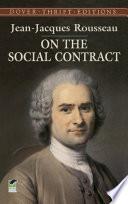
The Social Contract
Jean Jacques RousseauConfessions
Jean Jacques RousseauEmile, or On Education
Jean Jacques RousseauThe Social Contract
Jean Jacques RousseauConfessions
Jean Jacques RousseauFamous Jean Jacques Rousseau Quotes
Jean Jacques Rousseau Quotes about nature
“I propose to show my fellows a man as nature made him, and this man shall be myself.”
Source: Confessions of Jean-Jacques Rousseau (1765-1770; published 1782), Book I, I
Context: I have entered on an enterprise which is without precedent, and will have no imitator. I propose to show my fellows a man as nature made him, and this man shall be myself.
First Dialogue; translated by Judith R. Bush, Christopher Kelly, Roger D. Masters
Dialogues: Rousseau Judge of Jean-Jacques (published 1782)
Jean Jacques Rousseau book Emile, or On Education
Emile, or On Education (1762), Book I
Second Dialogue; translated by Judith R. Bush, Christopher Kelly, Roger D. Masters
Dialogues: Rousseau Judge of Jean-Jacques (published 1782)
Jean Jacques Rousseau Quotes about heart
“Why should we build our happiness on the opinons of others, when we can find it in our own hearts?”
Source: The Social Contract and Discourses
First Dialogue; translated by Judith R. Bush, Christopher Kelly, Roger D. Masters
Dialogues: Rousseau Judge of Jean-Jacques (published 1782)
Second Dialogue; translated by Judith R. Bush, Christopher Kelly, Roger D. Masters
Dialogues: Rousseau Judge of Jean-Jacques (published 1782)
Second Dialogue; translated by Judith R. Bush, Christopher Kelly, Roger D. Masters
Dialogues: Rousseau Judge of Jean-Jacques (published 1782)
Jean Jacques Rousseau: Trending quotes
Jean Jacques Rousseau book Emile, or On Education
Emile, or On Education (1762), Book II
“Hatred, as well as love, renders its votaries credulous.”
Source: Confessions of Jean-Jacques Rousseau (1765-1770; published 1782), Books II-VI, V
Jean Jacques Rousseau Quotes
Variant translation: Let the trumpet of the day of judgment sound when it will, I shall appear with this book in my hand before the Sovereign Judge, and cry with a loud voice, This is my work, there were my thoughts, and thus was I. I have freely told both the good and the bad, have hid nothing wicked, added nothing good.
Confessions of Jean-Jacques Rousseau (1765-1770; published 1782), Book I
Context: Whenever the last trumpet shall sound, I will present myself before the sovereign judge with this book in my hand, and loudly proclaim, thus have I acted; these were my thoughts; such was I. With equal freedom and veracity have I related what was laudable or wicked, I have concealed no crimes, added no virtues; and if I have sometimes introduced superfluous ornament, it was merely to occupy a void occasioned by defect of memory: I may have supposed that certain, which I only knew to be probable, but have never asserted as truth, a conscious falsehood. Such as I was, I have declared myself; sometimes vile and despicable, at others, virtuous, generous and sublime; even as thou hast read my inmost soul: Power eternal! assemble round thy throne an innumerable throng of my fellow-mortals, let them listen to my confessions, let them blush at my depravity, let them tremble at my sufferings; let each in his turn expose with equal sincerity the failings, the wanderings of his heart, and, if he dare, aver, I was better than that man.
“I would rather be a man of paradoxes than a man of prejudices.”
Source: Emile or On Education
“The money that we possess is the instrument of liberty”
Confessions of Jean-Jacques Rousseau (1765-1770; published 1782), Book I
Context: I love liberty, and I loathe constraint, dependence, and all their kindred annoyances. As long as my purse contains money it secures my independence, and exempts me from the trouble of seeking other money, a trouble of which I have always had a perfect horror; and the dread of seeing the end of my independence, makes me proportionately unwilling to part with my money. The money that we possess is the instrument of liberty, that which we lack and strive to obtain is the instrument of slavery.
“It is too difficult to think nobly when one thinks only of earning a living.”
Jean Jacques Rousseau book Confessions
Variant translation: It is too difficult to think nobly when one only thinks to get a living.
Source: Confessions of Jean-Jacques Rousseau (1765-1770; published 1782), Books II-VI, II
Source: Confessions
“There is no evildoer who could not be made good for something.”
Jean Jacques Rousseau book The Social Contract
Source: The Social Contract
“A born king is a very rare being.”
Jean Jacques Rousseau book The Social Contract
Source: The Social Contract
Jean Jacques Rousseau book Emile, or On Education
Emile, or On Education (1762), Book III
“An honest man nearly always thinks justly.”
As quoted in A Dictionary of Thoughts: Being a Cyclopedia of Laconic Quotations from the Best Authors of the World, Both Ancient and Modern (1908) by Tryon Edwards, p. 277.
“He thinks like a philosopher, but governs like a king.”
Of Frederick the Great
Source: Confessions of Jean-Jacques Rousseau (1765-1770; published 1782), Books VIII-XII, XII
First Dialogue; translated by Judith R. Bush, Christopher Kelly, Roger D. Masters
Dialogues: Rousseau Judge of Jean-Jacques (published 1782)
On the Subject and Form of This Writing; translated by Judith R. Bush, Christopher Kelly, Roger D. Masters
Dialogues: Rousseau Judge of Jean-Jacques (published 1782)
Dialogues: Rousseau Judge of Jean-Jacques (published 1782)
Source: Second Dialogue; translated by Judith R. Bush, Christopher Kelly, Roger D. Masters
Chère amie, ne savez-vous pas que la vertu est un état de guerre, et que, pour y vivre, on a toujours quelque combat à rendre contre soi? <br class="br"> Julie ou la Nouvelle Héloïse http://fr.wikisource.org/wiki/Julie_ou_la_Nouvelle_H%C3%A9lo%C3%AFse/Sixi%C3%A8me_partie#Lettre_VII._R.C3.A9ponse (French), Sixième partie, Lettre VII Réponse (1761) <br class="br"> Julie, or The New Heloise http://books.google.com/books?id=oN6_B_AFhcwC (English), Part Six, Letter VII Response, pg 560
Second Dialogue; translated by Judith R. Bush, Christopher Kelly, Roger D. Masters
Dialogues: Rousseau Judge of Jean-Jacques (published 1782)
Jean Jacques Rousseau book Emile, or On Education
Emile, or On Education (1762), Book IV
Jean Jacques Rousseau book Emile, or On Education
Emile, or On Education (1762), Book V
Day of Absence, reported in Bartlett's Familiar Quotations, 10th ed. (1919).
This passage contains a statement Qu'ils mangent de la brioche that has usually come to be attributed to Marie Antoinette; this was written in 1766, when Marie Antoinette was 10 and still 4 years away from her marriage to Louis XVI of France, and is an account of events of 1740, before she was born. It also implies the phrase had been long known before that time.
Variant: At length I recollected the thoughtless saying of a great princess, who, on being informed that the country people had no bread, replied, "Then let them eat cake!"
Source: Confessions of Jean-Jacques Rousseau (1765-1770; published 1782), Books II-VI, VI
“The thirst after happiness is never extinguished in the heart of man.”
Source: Confessions of Jean-Jacques Rousseau (1765-1770; published 1782), Books VIII-XII, IX


