“All thoughts that mould the age begin
Deep down within the primitive soul.”
An Incident in a Railroad Car
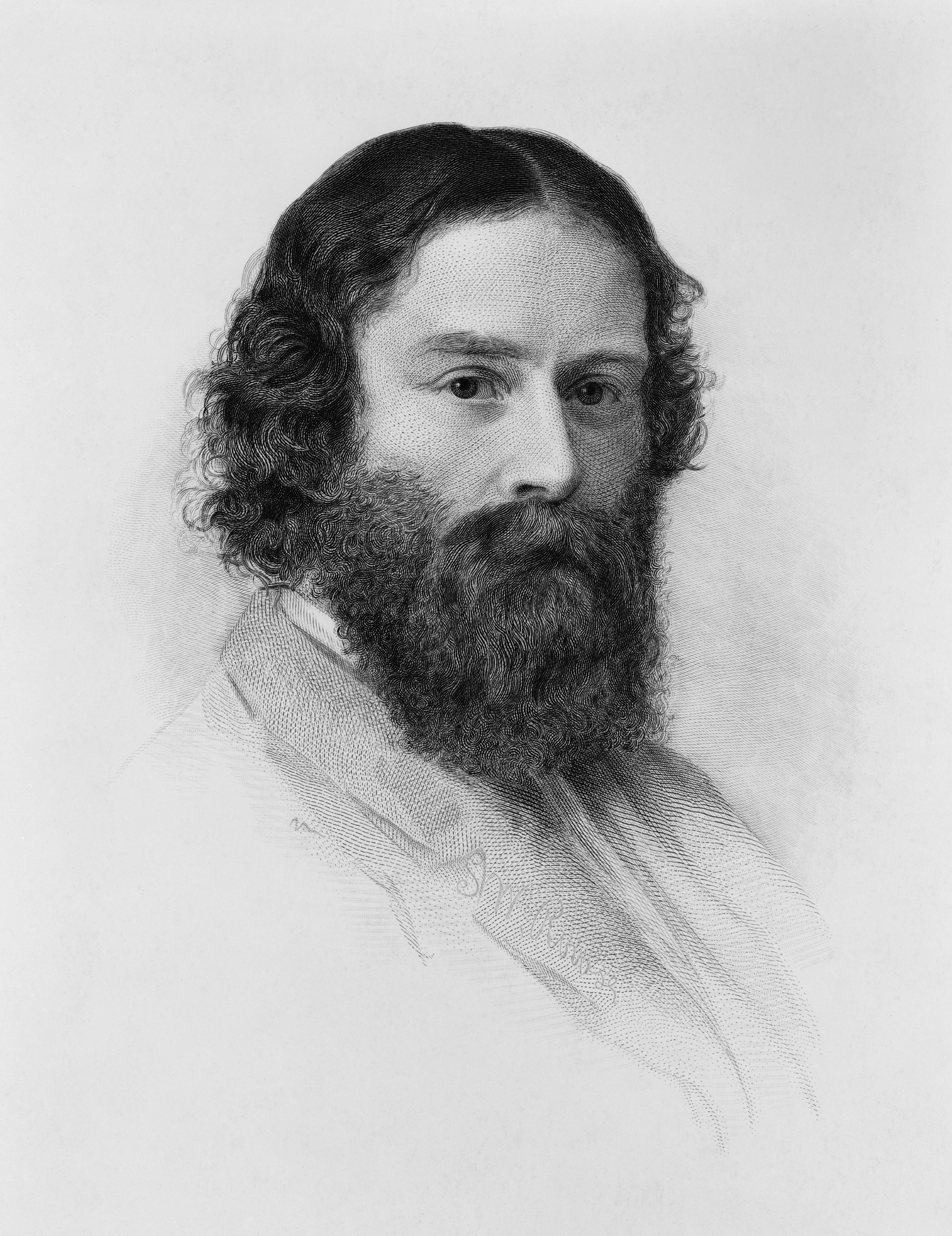
James Russell Lowell was an American Romantic poet, critic, editor, and diplomat. He is associated with the Fireside Poets, a group of New England writers who were among the first American poets that rivaled the popularity of British poets. These writers usually used conventional forms and meters in their poetry, making them suitable for families entertaining at their fireside.
Lowell graduated from Harvard College in 1838, despite his reputation as a troublemaker, and went on to earn a law degree from Harvard Law School. He published his first collection of poetry in 1841 and married Maria White in 1844. The couple had several children, though only one survived past childhood.
He became involved in the movement to abolish slavery, with Lowell using poetry to express his anti-slavery views and taking a job in Philadelphia, Pennsylvania, as the editor of an abolitionist newspaper. After moving back to Cambridge, Lowell was one of the founders of a journal called The Pioneer, which lasted only three issues. He gained notoriety in 1848 with the publication of A Fable for Critics, a book-length poem satirizing contemporary critics and poets. The same year, he published The Biglow Papers, which increased his fame. He went on to publish several other poetry collections and essay collections throughout his literary career.
Maria died in 1853, and Lowell accepted a professorship of languages at Harvard in 1854. He traveled to Europe before officially assuming his teaching duties in 1856, and married Frances Dunlap shortly thereafter in 1857. That year, Lowell also became editor of The Atlantic Monthly. He continued to teach at Harvard for twenty years.
He received his first political appointment, the ambassadorship to the Kingdom of Spain 20 years later. He was later appointed ambassador to the Court of St. James's. He spent his last years in Cambridge in the same estate where he was born, and died there in 1891.
Lowell believed that the poet played an important role as a prophet and critic of society. He used poetry for reform, particularly in abolitionism. However, his commitment to the anti-slavery cause wavered over the years, as did his opinion on African-Americans. He attempted to emulate the true Yankee accent in the dialogue of his characters, particularly in The Biglow Papers. This depiction of the dialect, as well as his many satires, was an inspiration to writers such as Mark Twain and H. L. Mencken.
Wikipedia
“All thoughts that mould the age begin
Deep down within the primitive soul.”
An Incident in a Railroad Car
“Not only around our infancy
Doth heaven with all its splendors lie”
Prelude to Pt. I, st. 2
The Vision of Sir Launfal (1848)
Context: Not only around our infancy
Doth heaven with all its splendors lie;
Daily, with souls that cringe and plot,
We Sinais climb and know it not.
“The Holy Supper is kept, indeed,
In whatso we share with another's need,—”
Pt. II, st. 8
The Vision of Sir Launfal (1848)
Context: The Holy Supper is kept, indeed,
In whatso we share with another's need,—
Not that which we give, but what we share,—
For the gift without the giver is bare;
Who bestows himself with his alms feeds three,—
Himself, his hungering neighbor, and me.
St. 4
"Stanzas on Freedom" (1843)
Witchcraft
Literary Essays, vol. II (1870–1890)
Witchcraft
Literary Essays, vol. II (1870–1890)
“Here was a type of the true elder race,
And one of Plutarch's men talked with us face to face.”
St. 5. <br class="br"> Ode Recited at the Harvard Commemoration http://www.readbookonline.net/readOnLine/1169/ (July 21, 1865)
Literary Essays, vol. II (1870–1890), New England Two Centuries Ago
No. 6, st. 10
The Biglow Papers (1848–1866), Series I (1848)
On Democracy (6 October 1884)
No. 10.
The Biglow Papers (1848–1866), Series II (1866)
The Election in November 1860 (1860)
James Russell Lowell The Present Crisis
St. 5
The Present Crisis (1844)
Context: Once to every man and nation comes the moment to decide,
In the strife of Truth with Falsehood, for the good or evil side;
Some great cause, God's new Messiah, offering each the bloom or blight,
Parts the goats upon the left hand, and the sheep upon the right,
And the choice goes by forever 'twixt that darkness and that light.
James Russell Lowell The Present Crisis
St. 8
The Present Crisis (1844)
Context: Careless seems the great Avenger; history's pages but record
One death-grapple in the darkness 'twixt old systems and the Word;
Truth forever on the scaffold, Wrong forever on the throne,—
Yet that scaffold sways the future, and, behind the dim unknown,
Standeth God within the shadow, keeping watch above his own.
St. 3. <br class="br"> Ode Recited at the Harvard Commemoration http://www.readbookonline.net/readOnLine/1169/ (July 21, 1865) <br class="br">Context: The little that we do<br>Is but half-nobly true;<br>With our laborious hiving<br>What men call treasure, and the gods call dross,<br>Life seems a jest of Fate's contriving,<br>Only secure in every one's conniving,<br>A long account of nothings paid with loss.
On Democracy (6 October 1884)
Context: The framers of the American Constitution were far from wishing or intending to found a democracy in the strict sense of the word, though, as was inevitable, every expansion of the scheme of government they elaborated has been in a democratical direction. But this has been generally the slow result of growth, and not the sudden innovation of theory; in fact, they had a profound disbelief in theory, and knew better than to commit the folly of breaking with the past. They were not seduced by the French fallacy that a new system of government could be ordered like a new suit of clothes. They would as soon have thought of ordering a new suit of flesh and skin. It is only on the roaring loom of time that the stuff is woven for such a vesture of their thought and experience as they were meditating. They recognized fully the value of tradition and habit as the great allies of permanence and stability. They all had that distaste for innovation which belonged to their race, and many of them a distrust of human nature derived from their creed.
“God, give us Peace! not such as lulls to sleep,
But sword on thigh and brow with purpose knit!”
The Washers of the Shroud, st. 20
Context: God, give us Peace! not such as lulls to sleep,
But sword on thigh and brow with purpose knit!
And let our Ship of State to harbor sweep,
Her ports all up, her battle lanterns lit,
And her leashed thunders gathering for their leap.
“In the scales of the destinies brawn will never weigh so much as brain.”
On Democracy (6 October 1884)
Context: In the scales of the destinies brawn will never weigh so much as brain. Our healing is not in the storm or in the whirlwind, it is not in monarchies, or aristocracies, or democracies, but will be revealed by the still small voice that speaks to the conscience and the heart, prompting us to a wider and wiser humanity.
James Russell Lowell The Present Crisis
St. 6
The Present Crisis (1844)
Context: Hast thou chosen, O my people, on whose party thou shalt stand,
Ere the Doom from its worn sandals shakes the dust against our land?
Though the cause of Evil prosper, yet ’tis Truth alone is strong,
And, albeit she wander outcast now, I see around her throng
Troops of beautiful, tall angels, to enshield her from all wrong.
“Democracy in its best sense is merely the letting in of light and air.”
On Democracy (6 October 1884)
Context: All free governments, whatever their name, are in reality governments by public opinion, and it is on the quality of this public opinion that their prosperity depends. It is, therefore, their first duty to purify the element from which they draw the breath of life. With the growth of democracy grows also the fear, if not the danger, that this atmosphere may be corrupted with poisonous exhalations from lower and more malarious levels, and the question of sanitation becomes more instant and pressing. Democracy in its best sense is merely the letting in of light and air.
On Democracy (6 October 1884)
Context: I have hinted that what people are afraid of in democracy is less the thing itself than what they conceive to be its necessary adjuncts and consequences. It is supposed to reduce all mankind to a dead level of mediocrity in character and culture, to vulgarize men's conceptions of life, and therefore their code of morals, manners, and conduct — to endanger the rights of property and possession. But I believe that the real gravamen of the charges lies in the habit it has of making itself generally disagreeable by asking the Powers that Be at the most inconvenient moment whether they are the powers that ought to be. If the powers that be are in a condition to give a satisfactory answer to this inevitable question, they need feel in no way discomfited by it.
“Nor attempt the Future’s portal with the Past’s blood-rusted key.”
James Russell Lowell The Present Crisis
St. 18
The Present Crisis (1844)
Context: New occasions teach new duties; Time makes ancient good uncouth;
They must upward still, and onward, who would keep abreast of Truth
Lo, before us gleam her camp-fires! we ourselves must Pilgrims be,
Launch our Mayflower, and steer boldly through the desperate winter sea,
Nor attempt the Future’s portal with the Past’s blood-rusted key.
On Democracy (6 October 1884)
Context: Few people take the trouble of trying to find out what democracy really is. Yet this would be a great help, for it is our lawless and uncertain thoughts, it is the indefiniteness of our impressions, that fill darkness, whether mental or physical, with spectres and hobgoblins. Democracy is nothing more than an experiment in government, more likely to succeed in a new soil, but likely to be tried in all soils, which must stand or fall on its own merits as others have done before it. For there is no trick of perpetual motion in politics any more than in mechanics.
“I do not believe in violent changes, nor do I expect them.”
On Democracy (6 October 1884)
Context: I do not believe in violent changes, nor do I expect them. Things in possession have a very firm grip. One of the strongest cements of society is the conviction of mankind that the state of things into which they are born is a part of the order of the universe, as natural, let us say, as that the sun should go round the earth. It is a conviction that they will not surrender except on compulsion, and a wise society should look to it that this compulsion be not put upon them. For the individual man there is no radical cure, outside of human nature itself, for the evils to which human nature is heir.
St. 3
"Stanzas on Freedom" (1843)
Context: p>Is true Freedom but to break
Fetters for our own dear sake,
And, with leathern hearts, forget
That we owe mankind a debt? No! true freedom is to share
All the chains our brothers wear,
And, with heart and hand, to be
Earnest to make others free!<p
James Russell Lowell The Present Crisis
St. 18
The Present Crisis (1844)
Context: New occasions teach new duties; Time makes ancient good uncouth;
They must upward still, and onward, who would keep abreast of Truth
Lo, before us gleam her camp-fires! we ourselves must Pilgrims be,
Launch our Mayflower, and steer boldly through the desperate winter sea,
Nor attempt the Future’s portal with the Past’s blood-rusted key.
“And what is so rare as a day in June?”
Prelude to Pt. I, st. 5
The Vision of Sir Launfal (1848)
Context: And what is so rare as a day in June?
Then, if ever, come perfect days;
Then Heaven tries the earth if it be in tune,
And over it softly her warm ear lays:
Whether we look, or whether we listen,
We hear life murmur, or see it glisten;
Every clod feels a stir of might,
An instinct within it that reaches and towers,
And, grasping blindly above it for light,
Climbs to a soul in grass and flowers.
On Democracy (6 October 1884)
Context: The framers of the American Constitution were far from wishing or intending to found a democracy in the strict sense of the word, though, as was inevitable, every expansion of the scheme of government they elaborated has been in a democratical direction. But this has been generally the slow result of growth, and not the sudden innovation of theory; in fact, they had a profound disbelief in theory, and knew better than to commit the folly of breaking with the past. They were not seduced by the French fallacy that a new system of government could be ordered like a new suit of clothes. They would as soon have thought of ordering a new suit of flesh and skin. It is only on the roaring loom of time that the stuff is woven for such a vesture of their thought and experience as they were meditating. They recognized fully the value of tradition and habit as the great allies of permanence and stability. They all had that distaste for innovation which belonged to their race, and many of them a distrust of human nature derived from their creed.
“Joy comes, grief goes, we know not how;
Everything is happy now,
Everything is upward striving”
Prelude to Pt. I, st. 7
The Vision of Sir Launfal (1848)
Context: Joy comes, grief goes, we know not how;
Everything is happy now,
Everything is upward striving;
'Tis as easy now for the heart to be true
As for grass to be green or skies to be blue,—
'Tis the natural way of living:
Who knows whither the clouds have fled?
In the unscarred heaven they leave no wake;
And the eyes forget the tears they have shed,
The heart forgets its sorrow and ache;
The soul partakes the season's youth,
And the sulphurous rifts of passion and woe
Lie deep 'neath a silence pure and smooth,
Like burnt-out craters healed with snow.
“Count me o'er earth's chosen heroes, — they were souls that stood alone”
James Russell Lowell The Present Crisis
St. 12
The Present Crisis (1844)
Context: Count me o'er earth's chosen heroes, — they were souls that stood alone,
While the men they agonized for hurled the contumelious stone,
Stood serene, and down the future saw the golden beam incline
To the side of perfect justice, mastered by their faith divine,
By one man's plain truth to manhood and to God's supreme design.
St. 1
"Stanzas on Freedom" (1843)
Context: If there breathe on earth a slave,
Are ye truly free and brave?
If ye do not feel the chain,
When it works a brother's pain,
Are ye not base slaves indeed,
Slaves unworthy to be freed?
Literary Essays, vol. II (1870–1890), Rousseau and the Sentimentalists
“There is no price set on the lavish summer,
And June may be had by the poorest comer.”
Prelude to Pt. I, st. 3
The Vision of Sir Launfal (1848)
“The capacity of indignation makes an essential part of the outfit of every honest man.”
On a Certain Condescension in Foreigners (1869)
Literary Essays, vol. II (1870–1890)
“Darkness is strong, and so is Sin,
But surely God endures forever.”
Villa Franca.
Bartlett's Familiar Quotations, 10th ed. (1919)
The Election in November 1860 (1860)
“T was kin' o' kingdom-come to look
On sech a blessed cretur.”
The Courtin' .
The Biglow Papers (1848–1866), Series II (1866)
The Courtin' .
The Biglow Papers (1848–1866), Series II (1866)
On Democracy (6 October 1884)
Epigram.
Bartlett's Familiar Quotations, 10th ed. (1919)
No. 2
The Biglow Papers (1848–1866), Series I (1848)
An Indian Summer Reverie http://www.readbookonline.net/readOnLine/1164/, st. 8 (1846)
“The foolish and the dead alone never change their opinions.”
My Study Windows (1871)
"On the Capture of Certain Fugitive Slaves Near Washington" (1845)
Literary Essays, vol. II (1870–1890), New England Two Centuries Ago
Literary Essays, vol. II (1870–1890), New England Two Centuries Ago
Fireside Travels, At Sea (1864)
Motto of the American Copyright League. (Written Nov. 20, 1885).
Bartlett's Familiar Quotations, 10th ed. (1919)
“No man can produce great things who is not thoroughly sincere in dealing with himself.”
Literary Essays, vol. II (1870–1890), Rousseau and the Sentimentalists
Graves of Two English Soldiers on Concord Battleground, st. 3 (1849)
“Bad work follers ye ez long's ye live.”
No. 2.
The Biglow Papers (1848–1866), Series II (1866)
“Blessed are they who have nothing to say, and who cannot be persuaded to say it.”
Speech at the banquet for Grand Duke Alexis, 11 November 1871 at the Revere House Hotel in Boston, p. 102 books.google https://books.google.de/books?id=YRmn-_vXZ58C&pg=PA102&dq=persuaded <br class="br">Cf. George Eliot 1879: Blessed is the man who, having nothing to say, abstains from giving us wordy evidence of the fact
“It's 'most enough to make a deacon swear.”
No. 2.
The Biglow Papers (1848–1866), Series II (1866)
“Soft-heartedness, in times like these,
Shows sof'ness in the upper story.”
No. 7.
The Biglow Papers (1848–1866), Series II (1866)
The Washers of the Shroud http://www.bartleby.com/102/129.html, st. 1 (October 1861)
No. 5.
The Biglow Papers (1848–1866), Series II (1866)
Cambridge Thirty Years Ago.
Literary Essays, vol. I (1864-1890)
The Courtin' , st. 1.
The Biglow Papers (1848–1866), Series II (1866)
Prelude to Pt. I, st. 4
The Vision of Sir Launfal (1848)


