"Friendships"
Soliloquies in England and Later Soliloquies (1922)
Works
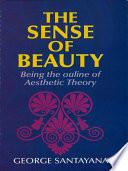
The Sense of Beauty
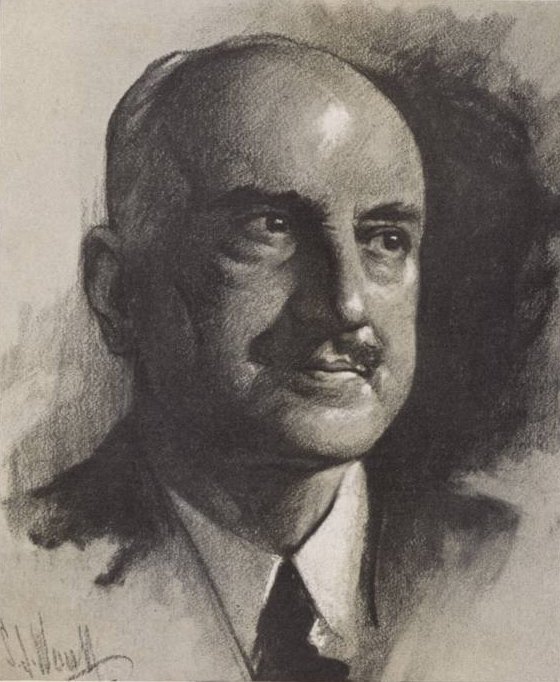
George Santayana
Scepticism and Animal Faith
George SantayanaThe Sense of Beauty
George SantayanaScepticism and Animal Faith
George SantayanaGeorge Santayana: 109 quotes8 likes
Famous George Santayana Quotes
“Beauty as we feel it is something indescribable: what it is or what it means can never be said.”
George Santayana book The Sense of Beauty
Pt. IV, Expression; § 67: "Conclusion.", p. 267
The Sense of Beauty (1896)
“Only the dead are safe; only the dead have seen the end of war.”
Attributed to Plato by General Douglas MacArthur, earliest source found is work of George Santayana who doesn't attribute it to anyone. Plato and his dialogues by Bernard SUZANNE, "Frequently Asked Questions about Plato : Did Plato write "Only the dead have seen the end of war"?" http://plato-dialogues.org/faq/faq008.htm
Source: Soliloquies in England and Later Soliloquies (1922), "Tipperary"
George Santayana Quotes about the world
O World, Thou Choosest Not http://www.bartleby.com/236/270.html (1894) <br class="br">Other works
The Poet's Testament http://www.poemhunter.com/poem/the-poet-s-testament/ <br class="br">Other works
"The Irony of Liberalism"
Soliloquies in England and Later Soliloquies (1922)
George Santayana Quotes about life
"Materialism and Idealism" p. 175 ( Hathi Trust http://hdl.handle.net/2027/uc1.b3923968?urlappend=%3Bseq=191) <br class="br">Character and Opinion in the United States (1920)
Source: The Life of Reason: The Phases of Human Progress (1905-1906), Vol. II, Reason in Society, Ch. VIII: Ideal Society
"The Academic Environment" p. 47 ( Hathi Trust http://hdl.handle.net/2027/uc1.b3923968?urlappend=%3Bseq=63) <br class="br">Character and Opinion in the United States (1920)
George Santayana: Trending quotes
Source: The Genteel Tradition in American Philosophy (1911), pp. 48-49
Context: Professional philosophers are usually only apologists: that is, they are absorbed in defending some vested illusion or some eloquent idea. Like lawyers or detectives, they study the case for which they are retained.
“Those who cannot remember the past are condemned to repeat it.”
This famous statement has produced many paraphrases and variants:
Those who cannot learn from history are doomed to repeat it.
Those who do not remember their past are condemned to repeat their mistakes.
Those who do not read history are doomed to repeat it.
Those who fail to learn from the mistakes of their predecessors are destined to repeat them.
Those who do not know history's mistakes are doomed to repeat them.
There is a similar quote by Edmund Burke (in Revolution in France) that often leads to misattribution: "People will not look forward to posterity, who never look backward to their ancestors."
The Life of Reason: The Phases of Human Progress (1905-1906), Vol. I, Reason in Common Sense
Source: The Life of Reason: Five Volumes in One
Context: Progress, far from consisting in change, depends on retentiveness. When change is absolute there remains no being to improve and no direction is set for possible improvement: and when experience is not retained, as among savages, infancy is perpetual. Those who cannot remember the past are condemned to repeat it.
George Santayana Quotes
“Sanity is a madness put to good uses.”
Source: The Essential Santayana: Selected Writings
“Theory helps us to bear our ignorance of fact.”
George Santayana book The Sense of Beauty
Pt. III, Form; § 30: "The average modified in the direction of pleasure.", p. 125
The Sense of Beauty (1896)
Context: In fact, the whole machinery of our intelligence, our general ideas and laws, fixed and external objects, principles, persons, and gods, are so many symbolic, algebraic expressions. They stand for experience; experience which we are incapable of retaining and surveying in its multitudinous immediacy. We should flounder hopelessly, like the animals, did we not keep ourselves afloat and direct our course by these intellectual devices. Theory helps us to bear our ignorance of fact.
“In Walt Whitman democracy is carried into psychology and morals.”
Source: The Genteel Tradition in American Philosophy (1911), p. 53
Context: In Walt Whitman democracy is carried into psychology and morals. The various sights, moods, and emotions are given each one vote; they are declared to be all free and equal, and the innumerable commonplace moments of life are suffered to speak like the others. Those moments formerly reputed great are not excluded, but they are made to march in the ranks with their companions—plain foot-soldiers and servants of the hour.
Source: The Life of Reason: The Phases of Human Progress (1905-1906), Vol. V, Reason in Science, Ch. 2 "History"
Context: History is nothing but assisted and recorded memory. It might almost be said to be no science at all, if memory and faith in memory were not what science necessarily rest on. In order to sift evidence we must rely on some witness, and we must trust experience before we proceed to expand it. The line between what is known scientifically and what has to be assumed in order to support knowledge is impossible to draw. Memory itself is an internal rumour; and when to this hearsay within the mind we add the falsified echoes that reach us from others, we have but a shifting and unseizable basis to build upon. The picture we frame of the past changes continually and grows every day less similar to the original experience which it purports to describe.
“History is nothing but assisted and recorded memory.”
Source: The Life of Reason: The Phases of Human Progress (1905-1906), Vol. V, Reason in Science, Ch. 2 "History"
Context: History is nothing but assisted and recorded memory. It might almost be said to be no science at all, if memory and faith in memory were not what science necessarily rest on. In order to sift evidence we must rely on some witness, and we must trust experience before we proceed to expand it. The line between what is known scientifically and what has to be assumed in order to support knowledge is impossible to draw. Memory itself is an internal rumour; and when to this hearsay within the mind we add the falsified echoes that reach us from others, we have but a shifting and unseizable basis to build upon. The picture we frame of the past changes continually and grows every day less similar to the original experience which it purports to describe.
Source: The Genteel Tradition in American Philosophy (1911), p. 64
Context: Because the peculiarity of man is that his machinery for reaction on external things has involved an imaginative transcript of these things, which is preserved and suspended in his fancy; and the interest and beauty of this inward landscape, rather than any fortunes that may await his body in the outer world, constitute his proper happiness. By their mind, its scope, quality, and temper, we estimate men, for by the mind only do we exist as men, and are more than so many storage-batteries for material energy. Let us therefore be frankly human. Let us be content to live in the mind.
“A child educated only at school is an uneducated child.”
“Why I Am Not a Marxist” http://books.google.com/books?id=O4weAQAAMAAJ&q=educated+only+at+school+#search_anchor “Modern Monthly: Volume: 9″ (April 1935); Page: 77-79. <br class="br">Other works
"On My Friendly Critics"
Soliloquies in England and Later Soliloquies (1922)
Source: Soliloquies in England & Later Soliloquies
“There is no cure for birth and death save to enjoy the interval.”
"War Shrines"
Soliloquies in England and Later Soliloquies (1922)
“Fanaticism consists in redoubling your efforts when you have forgotten your aim.”
The Life of Reason: The Phases of Human Progress (1905-1906), Vol. I, Reason in Common Sense
“Skepticism, like chastity, should not be relinquished too readily.”
George Santayana, as quoted in Quotations for Our Time (1977) edited by Laurence J. Peter
Other works
Introduction to The Ethics of Spinoza (1910)
The Life of Reason: The Phases of Human Progress (1905-1906), Vol. I, Reason in Common Sense
Interpretations of Poetry and Religion (1900), p. 251
Other works
“Every moment celebrates obsequies over the virtues of its predecessor.”
Source: The Life of Reason: The Phases of Human Progress (1905-1906), Vol. III, Reason in Religion, Ch. XIV
“Eternal vigilance is the price of knowledge.”
Source: The Genteel Tradition in American Philosophy (1911), p. 58
The Life of Reason: The Phases of Human Progress (1905-1906), Vol. I, Reason in Common Sense
The Life of Reason: The Phases of Human Progress (1905-1906), Vol. II, Reason in Society
Source: The Life of Reason: The Phases of Human Progress (1905-1906), Vol. II, Reason in Society, Ch. V: Democracy
John Herman Randall, "The Nature of Naturalism", epilogue to Naturalism and the Human Spirit (1944)
Misattributed
Source: Winds of Doctrine: Studies in Contemporary Opinion (1913), p. 199
“The idea of Christ is much older than Christianity.”
The Idea of Christ in the Gospels (1946)
Other works
Source: Dialogues in Limbo (1926), Ch. 3, P. 62
"The Irony of Liberalism"
Soliloquies in England and Later Soliloquies (1922)
“England is the paradise of individuality, eccentricity, heresy, anomalies, hobbies, and humors.”
"The British Character"
Soliloquies in England and Later Soliloquies (1922)
"The Irony of Liberalism"
Soliloquies in England and Later Soliloquies (1922)
“The soul, too, has her virginity and must bleed a little before bearing fruit.”
"Normal Madness," Ch. 3, P. 56 http://books.google.com/books?id=apSwAAAAIAAJ&q=%22The+soul+too+has+her+virginity+and+must+bleed+a+little+before+bearing+fruit%22&pg=PA56#v=onepage <br class="br">Dialogues in Limbo (1926)
Source: Persons and Places (1944), p. 159
George Santayana book Scepticism and Animal Faith
"Objections to Belief in Substance", p. 201
Scepticism and Animal Faith (1923)
“Art like life should be free, since both are experimental.”
The Life of Reason: The Phases of Human Progress (1905-1906), Vol. IV, Reason in Art
“When men and women agree, it is only in their conclusions; their reasons are always different.”
Ch. VI: Free Society http://books.google.com/books?id=ICAsAAAAYAAJ&q=%22When+men+and+women+agree+it+is+only+in+their+conclusions+their+reasons+are+always+different%22&pg=PA148#v=onepage <br class="br">The Life of Reason: The Phases of Human Progress (1905-1906), Vol. II, Reason in Society
Giorgio de Santillana (1902-1974) The Crime of Galileo http://books.google.com/books?id=34uQ6tlYHRgC&q=%22The+working+of+great+administrations+is+mainly+the+result+of+a+vast+mass+of+routine+petty+malice+self-interest+carelessness+and+sheer+mistake+Only+a+residual+fraction+is+thought%22&pg=PA290#v=onepage (1958) <br class="br">Many sources mistakenly attribute this quote to Santayana, and one http://books.google.com/books?id=e4tzpkw4caAC&q=%22The+working+of+great+institutions+is+mainly+the+result+of+a+vast+mass+of+routine+petty+malice+self-interest+carelessness+and+sheer+mistake+Only+a+residual+fraction+is+thought%22&pg=PA283#v=onepage even identifies the correct book, without realizing that George Santayana and Giorgio de Santillana are two different people <br class="br">Misattributed
“The truth is cruel, but it can be loved, and it makes free those who have loved it.”
Source: Little Essays (1921), p. 107
“To call war the soil of courage and virtue is like calling debauchery the soil of love.”
Source: The Life of Reason: The Phases of Human Progress (1905-1906), Vol. II, Reason in Society, Ch. III: Industry, Government, and War
“The young man who has not wept is a savage, and the old man who will not laugh is a fool.”
Source: Dialogues in Limbo (1926), Ch. 3, P. 57
“Never since the heroic days of Greece has the world had such a sweet, just, boyish master.”
"The British Character"
Soliloquies in England and Later Soliloquies (1922)
“Philosophers are as jealous as women. Each wants a monopoly of praise.”
Source: Dialogues in Limbo (1926), P. 30
Source: The Life of Reason: The Phases of Human Progress (1905-1906), Vol. III, Reason in Religion, Ch. VII
Source: Persons and Places (1944), p. 14


