
“Beauty as we feel it is something indescribable: what it is or what it means can never be said.”
George Santayana book The Sense of Beauty
Pt. IV, Expression; § 67: "Conclusion.", p. 267
The Sense of Beauty (1896)
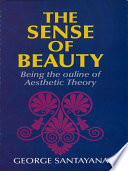
The Sense of Beauty is a book on aesthetics by the philosopher George Santayana. The book was published in 1896 by Charles Scribner's Sons, and is based on the lectures Santayana gave on aesthetics while teaching at Harvard University. Santayana published the book out of necessity, for tenure, rather than inspiration. In an anecdote retold by art critic Arthur Danto of a meeting with Santayana in 1950, Santayana was reported to have said that "they let me know through the ladies that I had better publish a book... on art, of course. So I wrote this wretched potboiler."The book is divided into four parts: "The Nature of Beauty", "The Materials of Beauty", "Form", and "Expression". Beauty, as defined by Santayana, is an "objectified pleasure." It does not originate from divine inspiration, as was commonly described by philosophers, but from a naturalistic psychology. Santayana objects to the role of God in aesthetics in the metaphysical sense, but accepts the use of God as metaphor. His argument that beauty is a human experience, based on the senses, is influential in the field of aesthetics. However, Santayana would reject this approach, which he called "skirt[ing] psychologism," later on in life.According to Santayana, beauty is linked to pleasure, and is fundamental to human purpose and experience. Beauty does not originate from pleasurable experiences, by itself, or from the objects that bring about pleasure. It is when the experience and emotion of pleasure intertwines with the qualities of the object that beauty arises. Beauty is a "manifestation of perfection", and as Santayana writes, "the sense of beauty has a more important place in life than aesthetic theory has ever taken in philosophy."
“Beauty as we feel it is something indescribable: what it is or what it means can never be said.”
George Santayana book The Sense of Beauty
Pt. IV, Expression; § 67: "Conclusion.", p. 267
The Sense of Beauty (1896)
George Santayana book The Sense of Beauty
Pt. IV, Expression; § 67: "Conclusion.", p. 270
The Sense of Beauty (1896)
“Theory helps us to bear our ignorance of fact.”
George Santayana book The Sense of Beauty
Pt. III, Form; § 30: "The average modified in the direction of pleasure.", p. 125
The Sense of Beauty (1896)
Context: In fact, the whole machinery of our intelligence, our general ideas and laws, fixed and external objects, principles, persons, and gods, are so many symbolic, algebraic expressions. They stand for experience; experience which we are incapable of retaining and surveying in its multitudinous immediacy. We should flounder hopelessly, like the animals, did we not keep ourselves afloat and direct our course by these intellectual devices. Theory helps us to bear our ignorance of fact.


