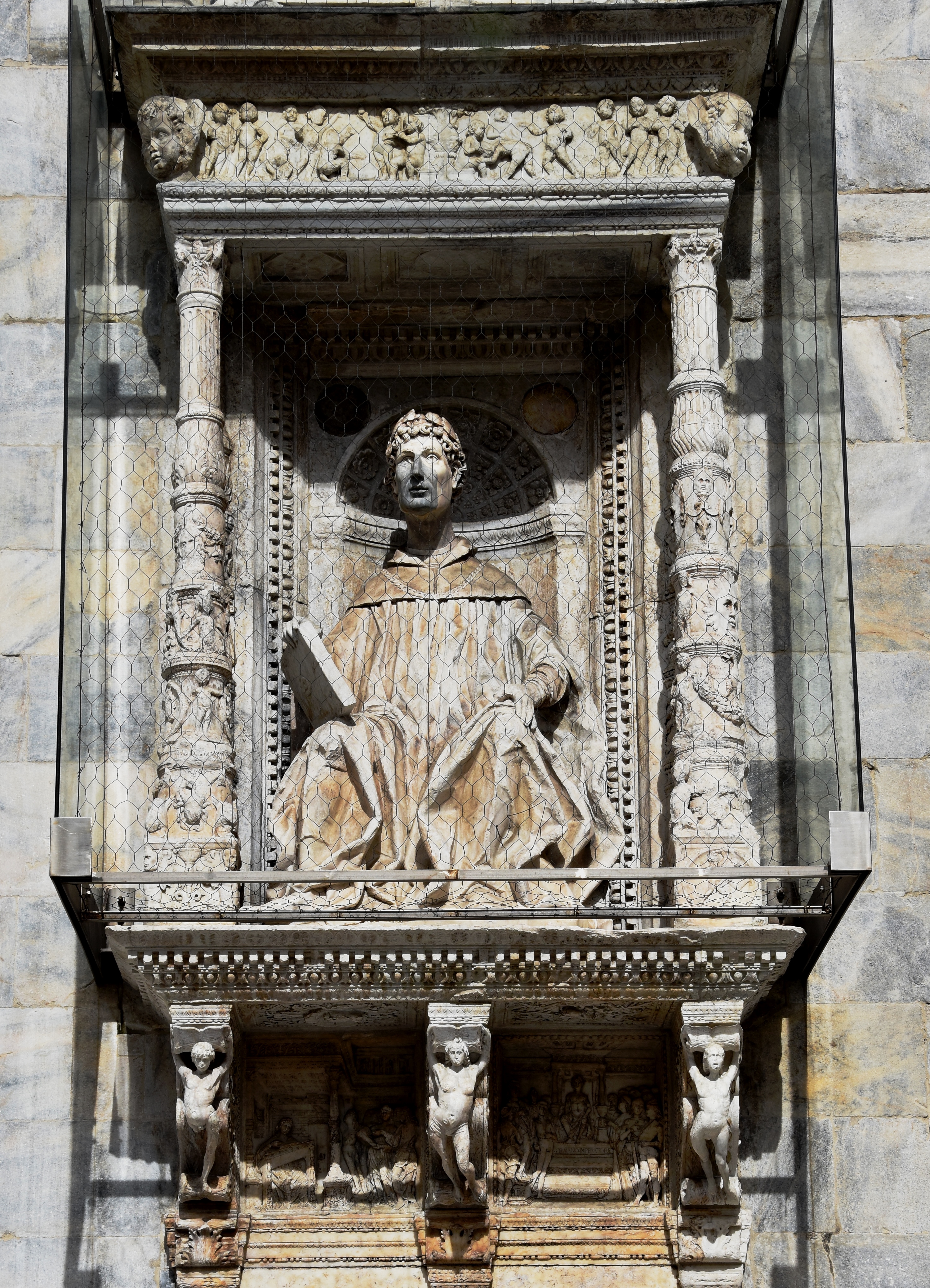
Pliniusz Młodszy słynne cytaty
Pliniusz Młodszy: Cytaty po angielsku
“It is in the body politic, as in the natural, those disorders are most dangerous that flow from the head.”
Utque in corporibus sic in imperio gravissimus est morbus, qui a capite diffunditur.
Letter 22, 7.
Letters, Book IV
“Prosperity proves men to be fortunate, while it is adversity which makes them great.”
Secunda felices, adversa magnos probent.
XXXI.
Panegyricus
“Honour is to you and me as strong an obligation, as necessity to others.”
Neque enim minus apud nos honestas quam apud alios necessitas valet.
Letter 10, 3.
Letters, Book IV
“The lust of lucre has so totally seized upon mankind, that their wealth seems rather to possess them, than they to possess their wealth.”
Ea invasit homines habendi cupido, ut possideri magis quam possidere videantur.
Letter 30, 4.
Letters, Book IX
“As it is far better to excel in any single art, than to arrive only at a mediocrity in several; so on the other hand, a moderate skill in several is to be preferred, where one cannot attain to excellency in any.”
Ut satius unum aliquid insigniter facere quam plura mediocriter, ita plurima mediocriter, si non possis unum aliquid insigniter.
Letter 29, 1.
Letters, Book IX
“Objects which are usually the motives of our travels by land and by sea are often overlooked and neglected if they lie under our eye.”
Ad quae noscenda iter ingredi, transmittere mare solemus, ea sub oculis posita neglegimu. ... Differimus tamquam saepe visuri, quod datur videre quotiens velis cernere.
Letter 20, 1.
Letters, Book VIII
Kontekst: Objects which are usually the motives of our travels by land and by sea are often overlooked and neglected if they lie under our eye.... We put off from time to time going and seeing what we know we have an opportunity of seeing when we please.
“This expression of ours, "Father of a family."”
Letter 19, 2.
Letters, Book V
“His only fault is that he has no fault.”
Nihil peccat, nisi quod nihil peccat.
Letter 26, 1.
Letters, Book IX
“It is the usual though inequitable method of the world, to pronounce an action to be either right or wrong, as it is attended with good or ill success.”
Est omnino iniquum, sed usu receptum, quod honesta consilia vel turpia, prout male aut prospere cedunt, ita vel probantur vel reprehenduntur.
Letter 9, 7.
Letters, Book V
“Such are the vicissitudes of our mortal lot: misfortune is born of prosperity, and good fortune of ill-luck.”
Habet has vices conditio mortalium, ut adversa ex secundis, ex adversis secunda nascantur.
V.
Panegyricus
“We should read much, we should not read many books.”
Multum legendum esse, non multa.
Letter 9, 15.
Letters, Book VII
“Experience, that excellent master.”
Usus, magister egregius.
Letter 20, 12.
Letters, Book I
“A man must rate public and permanent, above private and fleeting advantages and study how to render his benefaction most useful, rather than how he may bestow it with least expense.”
Oportet privatis utilitatibus publicas, mortalibus aeternas anteferre, multoque diligentius muneri suo consulere quam facultatibus.
Letter 18, 5.
Letters, Book VII
“They will by this means receive their education where they receive their birth, and be accustomed from their infancy to inhabit and affect their native soil.”
Educentur hic qui hic nascuntur, statimque ab infantia natale solum amare frequentare consuescant.
Letter 13, 9.
Letters, Book IV
“The truth is, the generality of mankind stand in awe of public opinion, while conscience is feared only by the few.”
Multi famam, conscientiam pauci verentur.
Letter 20, 9.
Letters, Book III
Letter 12, 11–13; on the death of his friend Cornelius Rufus.
Letters, Book I
“A certain large collective wisdom resides in a crowd, as such; and men whose individual judgement is defective are excellent judges when grouped together.”
In numero ipso est quoddam magnum collatumque consilium, quibusque singulis iudicii parum, omnibus plurimum.
Letter 17, 10.
Letters, Book VII
Nam nec historia debet egredi veritatem, et honeste factis veritas sufficit.
Letter 33, 10.
Letters, Book VII
“There is certainly no truth in the popular belief, that a man's will is the mirror of his character.”
Falsum est nimirum quod creditur vulgo, testamenta hominum speculum esse morum.
Letter 18, 1.
Letters, Book VIII
“The living voice is that which sways the soul.”
Letter 3, 9.
Letters, Book II
“If you compute the years in which all this has happened, it is but a little while; if you number the vicissitudes, it seems an age.”
Si computes annos, exiguum tempus, si vices rerum, aevum putes.
Letter 24, 5.
Letters, Book IV
“Never do a thing concerning the rectitude of which you are in doubt.”
Quod dubites, ne feceris.
Letter 18, 5.
Letters, Book I
“To name the man is to say all!”
Dixi omnia cum hominem nominavi.
Letter 22, 4.
Letters, Book IV
“An object in possession seldom retains the same charm that it had in pursuit.”
Rarum id quidem nihil enim aeque gratum est adeptis quam concupiscentibus.
Letter 15, 1.
Letters, Book II
“The expense of a monument is superfluous; my memory will endure if my actions deserve it.”
Impensa monumenti supervacua est; memoria nostri durabit, si vita meruimus.
Letter 19, 6; quoting Frontinus.
Letters, Book IX
“There is little difference between expecting misfortune and undergoing it; except that grief has limits, whereas apprehension has none. For we grieve only for what we know has happened; but we fear all that possibly may happen.”
Parvolum differt, patiaris adversa an exspectes; nisi quod tamen est dolendi modus, non est timendi. Doleas enim quantum scias accidisse, timeas quantum possit accidere.
Letter 17, 6.
Letters, Book VIII
“How much does the fame of human actions depend upon the station of those who perform them!”
Quam multum interest quid a quoque fiat!
Letter 24, 1.
Letters, Book VI


