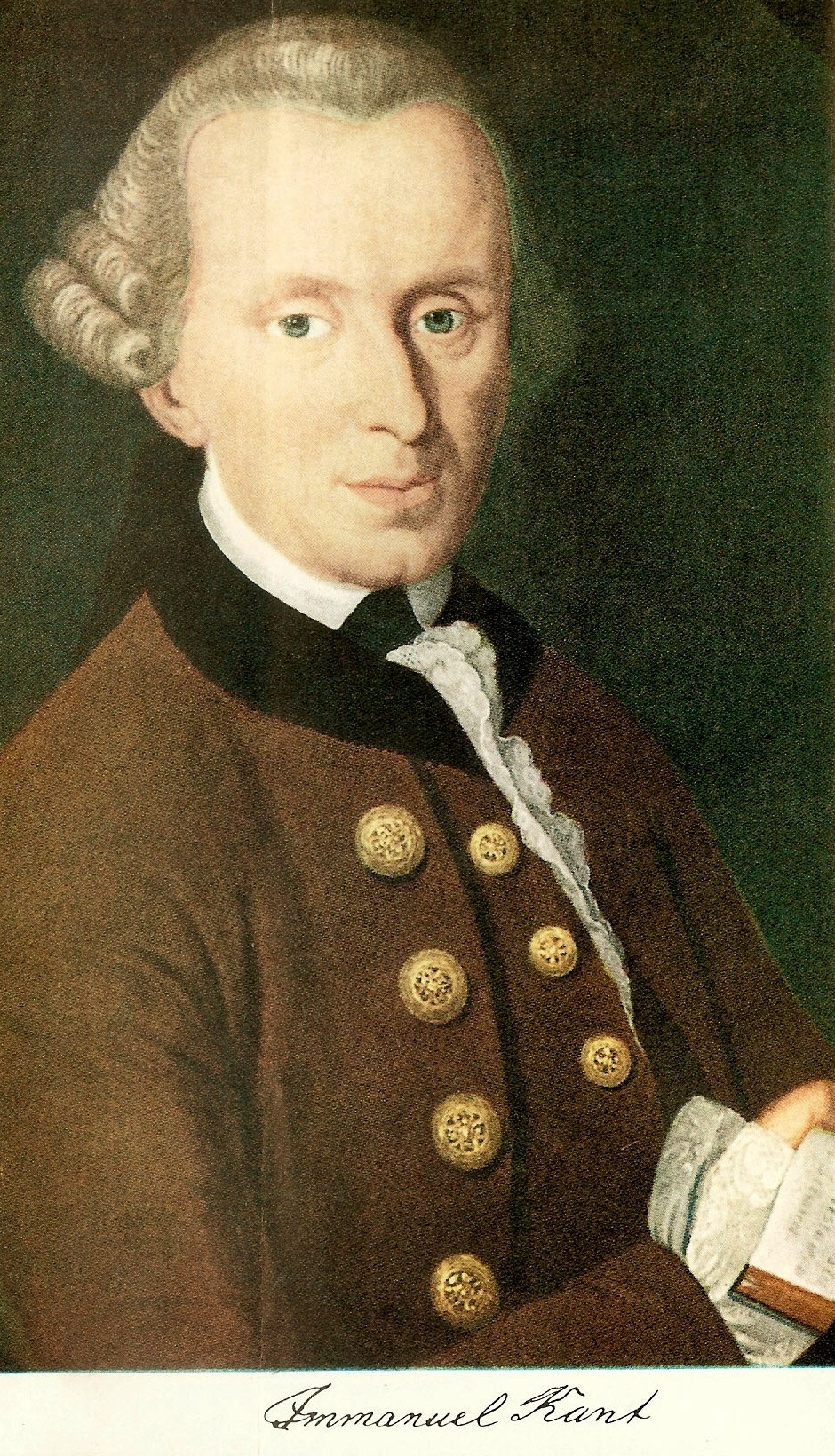
Immanuel Kant híres idézetei
Immanuel Kant Idézetek a törvényekről
Immanuel Kant idézetek
Immanuel Kant: Idézetek angolul
Book IV, Part 1
Religion within the Limits of Reason Alone (1793)
Groundwork of the Metaphysics of Morals (1785)
A lecture at Königsberg (1775), as quoted in A New Dictionary of Quotations on Historical Principles from Ancient and Modern Sources (1946) by H. L. Mencken, p. 1043
“I have therefore found it necessary to deny knowledge in order to make room for faith.”
Forrás: Critique of Pure Reason (1781; 1787)
In the meantime, this little is something which mathematics indispensably requires in its application to natural science, which, inasmuch as it must here necessarily borrow from metaphysics, need not be ashamed to allow itself to be seen in company with the latter.
Preface, Tr. Bax (1883) citing Isaac Newton's Principia
Metaphysical Foundations of Natural Science (1786)
Fourth Thesis
Idea for a Universal History from a Cosmopolitan Point of View (1784)
Kant's Inaugural Dissertation (1770), Section V On The Method Respecting The Sensuous And The Intellectual In Metaphysics
Kant's Inaugural Dissertation (1770), Section V On The Method Respecting The Sensuous And The Intellectual In Metaphysics
Kant's Inaugural Dissertation (1770), Section V On The Method Respecting The Sensuous And The Intellectual In Metaphysics
Kant's Inaugural Dissertation (1770), Section V On The Method Respecting The Sensuous And The Intellectual In Metaphysics
“A spurious axiom of the first class is: Whatever is, is somewhere and sometime.”
Kant's Inaugural Dissertation (1770), Section V On The Method Respecting The Sensuous And The Intellectual In Metaphysics
Kant's Inaugural Dissertation (1770), Section V On The Method Respecting The Sensuous And The Intellectual In Metaphysics
Kant's Inaugural Dissertation (1770), Section V On The Method Respecting The Sensuous And The Intellectual In Metaphysics
Kant's Inaugural Dissertation (1770), Section IV On The Principle Of The Form Of The Intelligible World
Kant's Inaugural Dissertation (1770), Section IV On The Principle Of The Form Of The Intelligible World
Kant's Inaugural Dissertation (1770), Section IV On The Principle Of The Form Of The Intelligible World
Kant's Inaugural Dissertation (1770), Section IV On The Principle Of The Form Of The Intelligible World
Kant's Inaugural Dissertation (1770), Section IV On The Principle Of The Form Of The Intelligible World
Kant's Inaugural Dissertation (1770), Section III On The Principles Of The Form Of The Sensible World
Kant's Inaugural Dissertation (1770), Section III On The Principles Of The Form Of The Sensible World
Kant's Inaugural Dissertation (1770), Section III On The Principles Of The Form Of The Sensible World
“The concept of space is not abstracted from external sensations.”
Kant's Inaugural Dissertation (1770), Section III On The Principles Of The Form Of The Sensible World
Kant's Inaugural Dissertation (1770), Section III On The Principles Of The Form Of The Sensible World
Kant's Inaugural Dissertation (1770), Section III On The Principles Of The Form Of The Sensible World
Kant's Inaugural Dissertation (1770), Section II On The Distinction Between The Sensible And The Intelligible Generally
Kant's Inaugural Dissertation (1770), Section II On The Distinction Between The Sensible And The Intelligible Generally
Kant's Inaugural Dissertation (1770), Section II On The Distinction Between The Sensible And The Intelligible Generally
Kant's Inaugural Dissertation (1770), Section II On The Distinction Between The Sensible And The Intelligible Generally
Kant's Inaugural Dissertation (1770), Section I On The Idea Of A World In General
Kant's Inaugural Dissertation (1770), Section I On The Idea Of A World In General


