“Fear (in times of doubt the worst of prophets) revolves many things.”
Plurima versat,
pessimus in dubiis augur, timor.
Source: Thebaid, Book III, Line 5
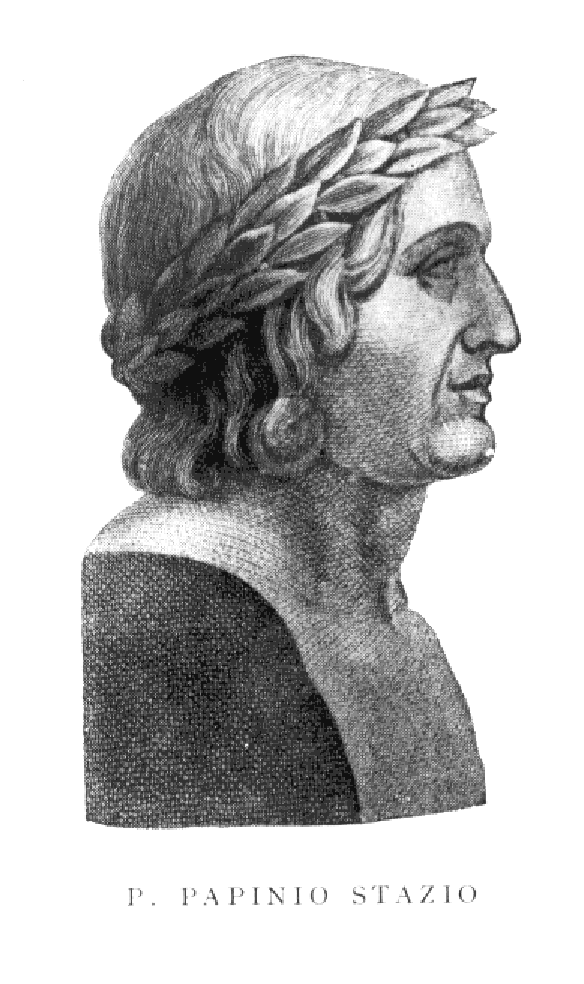
Publius Papinius Statius was a Roman poet of the 1st century AD. His surviving Latin poetry includes an epic in twelve books, the Thebaid; a collection of occasional poetry, the Silvae; and an unfinished epic, the Achilleid. He is also known for his appearance as a guide in the Purgatory section of Dante's epic poem, the Divine Comedy.
Wikipedia
“Fear (in times of doubt the worst of prophets) revolves many things.”
Plurima versat,
pessimus in dubiis augur, timor.
Source: Thebaid, Book III, Line 5
“The wood that crowns the peak of Nesis set fast in ocean.”
Silvaque quae fixam pelago Nesida coronat.
i, line 148 (tr. J. H. Mozley)
Silvae, Book III
“A Nemean steed in terror of the fight bears the hero from the citadel of Pallas, and fills the fields with the huge flying shadow, and the long trail of dust rises upon the plain.”
Illum Palladia sonipes Nemeaeus ab arce
devehit arma pavens umbraque inmane volanti
implet agros longoque attollit pulvere campum.
Source: Thebaid, Book IV, Line 136 (tr. J. H. Mozley)
“While spear in hand he repels the hounds agape to rend him.”
Tela manu, reicitque canes in vulnus hiantes.
Source: Thebaid, Book IV, Line 574 (tr. J. H. Mozley)
“Hear oh hear, if my prayer be worthy and such as you yourself might whisper to my frenzy. Those I begot (no matter in what bed) did not try to guide me, bereft of sight and sceptre, or sway my grieving with words. Nay behold (ah agony!), in their pride, kings this while by my calamity, they even mock my darkness, impatient of their father's groans. Even to them am I unclean? And does the sire of the gods see it and do naught? Do you at least, my rightful champion, come hither and range all my progeny for punishment. Put on your head this gore-soaked diadem that I tore off with my bloody nails. Spurred by a father's prayers, go against the brothers, go between them, let steel make partnership of blood fly asunder. Queen of Tartarus' pit, grant the wickedness I would fain see.”
Exaudi, si digna precor quaeque ipsa furenti
subiceres. orbum visu regnisque carentem
non regere aut dictis maerentem flectere adorti,
quos genui quocumque toro; quin ecce superbi
—pro dolor!—et nostro jamdudum funere reges
insultant tenebris gemitusque odere paternos.
hisne etiam funestus ego? et videt ista deorum
ignavus genitor? tu saltem debita vindex
huc ades et totos in poenam ordire nepotes.
indue quod madidum tabo diadema cruentis
unguibus abripui, votisque instincta paternis
i media in fratres, generis consortia ferro
dissiliant. da, Tartarei regina barathri,
quod cupiam vidisse nefas.
Source: Thebaid, Book I, Line 73
“You are the grandson of the sky and sea.”
Tu caeli pelagique nepos.
Source: Achilleid, Book I, Line 869; Ulysses to Achilles.
“Love of life, which departs last from the heart.”
Qui mente novissimus exit,
lucis amor.
Source: Thebaid, Book VIII, Line 386 (tr. W. J. Dominik)
“Whence first arose among unhappy mortals throughout the world that sickly craving for the future? Sent by heaven, wouldst thou call it? Or is it we ourselves, a race insatiable, never content to abide on knowledge gained, that search out the day of our birth and the scene of our life's ending, what the kindly Father of the gods is thinking, or iron-hearted Clotho? Hence comes it that entrails occupy us, and the airy speech of birds, and the moon's numbered seeds, and Thessalia's horrid rites. But that earlier golden age of our forefathers, and the races born of rock or oak were not thus minded; their only passion was to gain the mastery of the woods and the soil by might of hand; it was forbidden to man to know what to-morrow's day would bring. We, a depraved and pitiable crowd, probe deep the counsels of the gods.”
Unde iste per orbem
primus venturi miseris animantibus aeger
crevit amor? divumne feras hoc munus, an ipsi,
gens avida et parto non umquam stare quieti,
eruimus quae prima dies, ubi terminus aevi,
quid bonus ille deum genitor, quid ferrea Clotho
cogitet? hinc fibrae et volucrum per nubila sermo
astrorumque vices numerataque semita lunae
Thessalicumque nefas. at non prior aureus ille
sanguis avum scopulisque satae vel robore gentes
mentibus his usae; silvas amor unus humumque
edomuisse manu; quid crastina volveret aetas
scire nefas homini. nos, pravum et flebile vulgus,
scrutati penitus superos.
Source: Thebaid, Book III, Line 551 (tr. J. H. Mozley)
“One in particular, whose warped will it ever was even in the upper world (hence his life ended ill) to insult misfortune and wax sour at prosperity.”
Unus ibi ante alios, cui laeva voluntas
semper et ad superos (hinc et gravis exitus aevi)
insultare malis rebusque aegrescere laetis.
Source: Thebaid, Book II, Line 16
“Barren are the years behind me. This is the first day of my span, here is the threshold of my life.”
Steriles transmisimus annos:
haec aevi mihi prima dies, hic limina vitae.
ii, line 12
Silvae, Book IV
“Sweet semblance of the children who have forsaken me, Archemorus, solace of my lost estate and country, pride of my servitude, what guilty gods took your life, my joy, whom but now in parting I left at play, crushing the grasses as you hastened in your forward crawl? Ah, where is your starry face? Where your words unfinished in constricted sounds, and laughs and gurgles that only I could understand? How often would I talk to you of Lemnos and the Argo and lull you to sleep with my long tale of woe!”
O mihi desertae natorum dulcis imago,
Archemore, o rerum et patriae solamen ademptae
seruitiique decus, qui te, mea gaudia, sontes
extinxere dei, modo quem digressa reliqui
lascivum et prono uexantem gramina cursu?
heu ubi siderei vultus? ubi verba ligatis
imperfecta sonis risusque et murmura soli
intellecta mihi? quotiens tibi Lemnon et Argo
sueta loqui et longa somnum suadere querela!
Source: Thebaid, Book V, Line 608
“Oedipus had already probed his impious eyes with guilty hand and sunk deep his shame condemned to everlasting night; he dragged out his life in a long-drawn death. He devotes himself to darkness, and in the lowest recess of his abode he keeps his home on which the rays of heaven never look; and yet the fierce daylight of his soul flits around him with unflagging wings and the Avengers of his crimes are in his heart.”
Impia jam merita scrutatus lumina dextra
merserat aeterna damnatum nocte pudorem
Oedipodes longaque animam sub morte trahebat.
illum indulgentem tenebris imaeque recessu
sedis inaspectos caelo radiisque penates
seruantem tamen adsiduis circumuolat alis
saeva dies animi, scelerumque in pectore Dirae.
Source: Thebaid, Book I, Line 46
“Whoever worships the gods in good faith, loves their priests too.”
Qui bona fide deos colit amat et sacerdotes.
Preface, line 10
Silvae, Book V
“Beyond the cloud-wrapt chambers of western gloom and Aethiopia's other realm there stands a motionless grove, impenetrable by any star; beneath it the hollow recesses of a deep and rocky cave run far into a mountain, where the slow hand of Nature has set the halls of lazy Sleep and his untroubled dwelling. The threshold is guarded by shady Quiet and dull Forgetfulness and torpid Sloth with ever drowsy countenance. Ease, and Silence with folded wings sit mute in the forecourt and drive the blustering winds from the roof-top, and forbid the branches to sway, and take away their warblings from the birds. No roar of the sea is here, though all the shores be sounding, nor yet of the sky; the very torrent that runs down the deep valley nigh the cave is silent among the rocks and boulders; by its side are sable herds, and sheep reclining one and all upon the ground; the fresh buds wither, and a breath from the earth makes the grasses sink and fail. Within, glowing Mulciber had carved a thousand likenesses of the god: here wreathed Pleasure clings to his side, here Labour drooping to repose bears him company, here he shares a couch with Bacchus, there with Love, the child of Mars. Further within, in the secret places of the palace he lies with Death also, but that dread image is seen by none. These are but pictures: he himself beneath humid caverns rests upon coverlets heaped with slumbrous flowers, his garments reek, and the cushions are warm with his sluggish body, and above the bed a dark vapour rises from his breathing mouth. One hand holds up the locks that fall from his left temple, from the other drops his neglected horn.”
Stat super occiduae nebulosa cubilia Noctis
Aethiopasque alios, nulli penetrabilis astro,
lucus iners, subterque cavis graue rupibus antrum
it uacuum in montem, qua desidis atria Somni
securumque larem segnis Natura locavit.
limen opaca Quies et pigra Oblivio servant
et numquam vigili torpens Ignauia vultu.
Otia vestibulo pressisque Silentia pennis
muta sedent abiguntque truces a culmine ventos
et ramos errare vetant et murmura demunt
alitibus. non hic pelagi, licet omnia clament
litora, non ullus caeli fragor; ipse profundis
vallibus effugiens speluncae proximus amnis
saxa inter scopulosque tacet: nigrantia circum
armenta omne solo recubat pecus, et nova marcent
germina, terrarumque inclinat spiritus herbas.
mille intus simulacra dei caelaverat ardens
Mulciber: hic haeret lateri redimita Voluptas,
hic comes in requiem vergens Labor, est ubi Baccho,
est ubi Martigenae socium puluinar Amori
obtinet. interius tecti in penetralibus altis
et cum Morte jacet, nullique ea tristis imago
cernitur. hae species. ipse autem umentia subter
antra soporifero stipatos flore tapetas
incubat; exhalant vestes et corpore pigro
strata calent, supraque torum niger efflat anhelo
ore vapor; manus haec fusos a tempore laevo
sustentat crines, haec cornu oblita remisit.
Source: Thebaid, Book X, Line 84 (tr. J. H. Mozley)
“Even so a crowd of nestlings, seeing their mother returning through the air afar, would fain go to meet her, and lean gaping from the edge of the nest, and would even now be falling, did she not spread all her motherly bosom to save them, and chide them with loving wings.”
Volucrum sic turba recentum,
cum reducem longo prospexit in aere matrem,
ire cupit contra summique e margine nidi
extat hians, iam iamque cadat, ni pectore toto
obstet aperta parens et amantibus increpat alis.
Source: Thebaid, Book X, Line 458 (tr. J. H. Mozley)
“So does he strive to rescue your shade from the pyre and wages a mighty contest with Death, wearying the efforts of artists and seeking to love you in every material. But beauty created by toil of cunning hand is mortal.”
Sic auferre rogis umbram conatur et ingens
certamen cum Morte gerit, curasque fatigat
artificum inque omni te quaerit amare metallo.
Sed mortalis honos, agilis quem dextra laborat.
i, line 7
Silvae, Book V
“So a lioness that has newly whelped, beset by Numidian hunters in her cruel den, stands upright over her young, gnashing her teeth in grim and piteous wise, her mind in doubt; she could disrupt the groups and break their weapons with her bite, but love for her offspring binds her cruel heart and from the midst of her fury she looks round at her cubs.”
Ut lea, quam saeuo fetam pressere cubili
venantes Numidae, natos erecta superstat,
mente sub incerta torvum ac miserabile frendens;
illa quidem turbare globos et frangere morsu
tela queat, sed prolis amor crudelia vincit
pectora, et a media catulos circumspicit ira.
Source: Thebaid, Book X, Line 414
“Thrace, steeped in the passionate love of war.”
Studiis multum Mavortia, Thrace.
Source: Achilleid, Book I, Line 201
“"The thunderbolt, ay, where the thunderbolt?" Apollo laments.”
Fulmen, io ubi fulmen?' ait. gemit auctor Apollo.
Fulmen, io ubi fulmen?'
ait. gemit auctor Apollo.
Source: Thebaid, Book X, Line 889 (tr. J. H. Mozley)
“The claw tips are tamed with gold.”
Auro mansueverat ungues.
Source: Thebaid, Book VI, Line 724. Thomas Gray's translation: "And calm'd the terrors of his claws in gold".
“…glad applause and the heaven-flung shout of the populace.”
Laetifici plausus missusque ad sidera vulgi
clamor.
Source: Thebaid, Book XII, Line 521 (tr. J. H. Mozley)
“Spying a young plane tree with long stem and countless branches and summit aspiring to heaven.”
Primaevam visu platanum, cui longa propago
innumeraeque manus et iturus in aethera vertex.
iii, line 39 (tr. J. H. Mozley)
Silvae, Book II
“All soil is human birthright.”
Omne homini natale solum.
Variant translation: The whole world is a man's birthplace.
Source: Thebaid, Book VIII, Line 320 (tr. J. H. Mozley)
“Too little mindful of your folk.”
Nimiumque oblite tuorum.
Source: Thebaid, Book VII, Line 547
“Pleasant is it to the unhappy to speak, and to recall the sorrows of old time.”
Dulce loqui miseris veteresque reducere questus.
Source: Thebaid, Book V, Line 48 (tr. J. H. Mozley)
“And now it was your purpose to weep Vesuvius' flames in pious melody and spend your tears on the losses of your native place, what time the Father took the mountain from earth and lifted it to the stars only to plunge it down upon the hapless cities far and wide.”
Jamque et flere pio Vesuvina incendia cantu
mens erat et gemitum patriis impendere damnis,
cum pater exemptum terris ad sidera montem
sustulit et late miseras deiecit in urbes.
iii, line 205
Silvae, Book V
“And bold Stesichorus and rash Sappho, who feared not Leucas but took the manly leap.”
Stesichorusque ferox saltusque ingressa viriles
non formidata temeraria Leucade Sappho.
iii, line 154
Silvae, Book V
“Like is he to a wolf that has forced an entrance to a rich fold of sheep, and now, his breast all clotted with foul corruption and his gaping bristly mouth unsightly with blood-stained wool, hies him from the pens, turning this way and that his troubled gaze, should the angry shepherds find out their loss and follow in pursuit, and flees all conscious of his bold deed.”
Ille velut pecoris lupus expugnator opimi,
pectora tabenti sanie grauis hirtaque saetis
ora cruentata deformis hiantia lana,
decedit stabulis huc illuc turbida versans
lumina, si duri comperta clade sequantur
pastores, magnique fugit non inscius ausi.
Source: Thebaid, Book IV, Line 363 (tr. J. H. Mozley)
“Among them pert-faced Elegy draws near.”
Quas inter vultu petulans Elegea propinquat.
ii, line 7
Silvae, Book I
“Wonderful but true! Shall future progeny of men believe, when crops grow again and this desert shall once more be green, that cities and peoples are buried below and that an ancestral countryside vanished in a common doom? Nor does the summit yet cease its deadly thrust.”
Mira fides! credetne virum ventura propago,
cum segetes iterum, cum iam haec deserta virebunt,
infra urbes populosque premi proavitaque tanto
rura abiisse mari? necdum letale minari
cessat apex.
iv, line 81
Silvae, Book IV
“So in the dark of night a dense crowd of shepherds wards off a wolf from the steer he has caught.”
Sic densa lupum jam nocte sub atra
arcet ab apprenso pastorum turba juvenco.
Source: Thebaid, Book VIII, Line 691
“That day was the day of Tydeus: from him they flee and tremble.”
Tydeos illa dies, illum fugiuntque tremuntque.
Source: Thebaid, Book VIII, Line 663 (tr. J. H. Mozley)
“Raise your half-buried countenance from the sudden shower of dust, Parthenope, and place your locks, singed by the mountains breath, on the tomb and body of your great foster son.”
Exsere semirutos subito de pulvere vultus,
Parthenope, crinemque adflato monte sepultum
pone super tumulos et magni funus alumni.
iii, line 104
Silvae, Book V
“Yet all does the sire himself ruthlessly condemn to the murky flames, and bid his own signs of rank be borne withal, if by their loss he may sate his devouring grief.”
Cuncta ignibus atris
damnat atrox suaque ipse parens gestamina ferri,
si damnis rabidum queat exaturare dolorem.
Source: Thebaid, Book VI, Line 81 (tr. J. H. Mozley)
“As a mariner caught in a winter sea, to whom neither lazy Wain nor Moon with friendly radiance shows directions, stands clueless in mid commotion of land and sea, expecting every moment rocks sunk in treacherous shallows, or foaming cliffs with spiky tops to run upon the rearing prow.”
Ac velut hiberno deprensus navita ponto,
cui neque Temo piger neque amico sidere monstrat
Luna vias, medio caeli pelagique tumultu
stat rationis inops, jam jamque aut saxa malignis
expectat summersa vadis aut vertice acuto
spumantes scopulos erectae incurrere prorae.
Source: Thebaid, Book I, Line 370
“They wonder in silence and turn pale for the dubious thunderbolt.”
Mirantur taciti et dubio pro fulmine pallent.
Source: Thebaid, Book X, Line 920
“For they say that Aegina was carried by force from her father's stream.”
Namque ferunt raptam patriis Aeginan ab undis.
Source: Thebaid, Book VII, Line 319 (tr. J. H. Mozley)
“The loss of one lion alone drew a tear from mighty Caesar's eye.”
Magni quod Caesaris ora...
unius amissi tetigit jactura leonis.
v, line 27 (tr. J. H. Mozley)
Silvae, Book II
“Reputation hidden in death.”
Titulique in morte latentes.
Source: Thebaid, Book X, Line 712
“The cruelty of war makes for peace.”
As quoted in Our Day of Empire (1954) by Louis Obed Renne, p. 180.
Attributed
“Adrastus is amazed thereat and slow to believe.”
Stupet haec et credere Adrastus
cunctatur.
Source: Thebaid, Book VIII, Line 150
“And snatched sweet grapes from the hills.”
Et dulces rapuit de collibus uvas.
ii, line 103
Silvae, Book II
“Tis noble to spare the vanquished.”
Pulchrum vitam donare minori.
Source: Thebaid, Book VI, Line 816 (tr. J. H. Mozley)
“Him did Galatia dare to provoke to war in lusty pride.”
Hunc Galatea vigens ausa est incessere bello.
iv, line 76 (tr. J. H. Mozley)
Silvae, Book I
“More stars fall from the loosened sky.”
Pluraque laxato ceciderunt sidera caelo.
Source: Thebaid, Book X, Line 145
“To stand still is torture; a thousand paces are wasted before the start, the heavy hoof strikes the absent flat.”
Stare adeo miserum est, pereunt vestigia mille
ante fugam, absentemque ferit grauis ungula campum.
Source: Thebaid, Book VI, Line 400
“Ah! what fury! alas! mankind, alas! dread Promethean skill!”
O furor, o homines diraeque Prometheos artes!
Source: Thebaid, Book XI, Line 468 (tr. J. H. Mozley)
“As a little skiff attached to a great ship, when the storm blows high, takes in her small share of the raging waters and tosses in the same south wind.”
Immensae veluti conexa carinae
cumba minor, cum saevit hiems, pro parte furentis
parva receptat aquas et eodem volvitur austro.
iv, line 120
Silvae, Book I
“A brief reign spares not the folk.”
Non parcit populis regnum breve.
Source: Thebaid, Book II, Line 446
“For what cause, youthful Sleep, kindest of gods, or what error have I deserved, alas to lack your boon? All cattle are mute and birds and beasts, and the nodding tree-tops feign weary slumbers, and the raging rivers abate their roar; the ruffling of the waves subsides, the sea is still, leaning against the shore.”
Crimine quo merui, juvenis placidissime divum,
quove errore miser, donis ut solus egerem,
Somne, tuis? tacet omne pecus volucresque feraeque
et simulant fessos curvata cacumina somnos,
nec trucibus fluviis idem sonus; occidit horror
aequoris, et terris maria adclinata quiescunt.
iv, line 1
Silvae, Book V
“Give not rein to your hot mood, give time, a little delay; impulse is ever a bad servant.”
Ne frena animo permitte calenti,
da spatium tenuemque moram, male cuncta ministrat
impetus.
Source: Thebaid, Book X, Line 703. Variant translation: Give not reins to your inflamed passions: take time and a little delay; impetuosity manages all things badly.
“May that day perish from Time's record, nor future generations believe it! Let us at least keep silence, and suffer the crimes of our own house to be buried deep in whelming darkness.”
Excidat illa dies aevo nec postera credant
saecula. nos certe taceamus et obruta multa
nocte tegi propriae patiamur crimina gentis.
ii, line 88 (tr. J. H. Mozley)
Silvae, Book V
“Long time has Thetis been scanning every corner with silent glance.”
Jamdudum tacito lustrat Thetis omnia visu.
Source: Achilleid, Book I, Line 126
“Jupiter, what spoils of war will our gift make yours!”
Juppiter, o quanta belli donabere praeda!
Source: Thebaid, Book IV, Line 769
“Worthiest progeny of heaven.”
Dignissima caeli
progenies.
Source: Achilleid, Book II, Line 86
“The sounds of early night die down. Mingled with the darkness of his kinsman Death and dripping with Stygian dew, Sleep enfolds the doomed city, pouring heavy ease from his unforgiving horn, and separates the men.”
Primae decrescunt murmura noctis,
cum consanguinei mixtus caligine Leti
rore madens Stygio morituram amplectitur urbem
Somnus et implacido fundit grauia otia cornu
secernitque viros.
Source: Thebaid, Book V, Line 196
“But no clouds in a red sky promised daylight's return, nor in lessening shadows did a long twilight gleam with reflected sun. Black night that no ray can pierce comes ever denser from earth, veiling the heavens.”
Sed nec puniceo rediturum nubila caelo
promisere jubar, nec rarescentibus umbris
longa repercusso nituere crepuscula Phoebo:
densior a terris et nulli peruia flammae
subtexit nox atra polos.
Source: Thebaid, Book I, Line 342
“The priest confirmed it not, and my prayer was lost.”
Non ratus ore sacerdos,
damnataeque preces.
Source: Thebaid, Book VI, Line 200 (tr. J. H. Mozley)
“Then they invite her to join the dance and approach the holy rites, and make room for her in their ranks and rejoice to be near her. Just as Idalian birds, cleaving the soft clouds and long since gathered in the sky or in their homes, if a strange bird from some distant region has joined them wing to wing, are at first all filled with amaze and fear; then nearer and nearer they fly, and while yet in the air have made him one of them and hover joyfully around with favouring beat of pinions and lead him to their lofty resting-places.”
Dehinc sociare choros castisque accedere sacris
hortantur ceduntque loco et contingere gaudent.
qualiter Idaliae volucres, ubi mollia frangunt
nubila, iam longum caeloque domoque gregatae,
si iunxit pinnas diversoque hospita tractu
venit avis, cunctae primum mirantur et horrent;
mox propius propiusque volant, atque aere in ipso
paulatim fecere suam plausuque secundo
circumeunt hilares et ad alta cubilia ducunt.
Source: Achilleid, Book I, Line 370
“Dries his wet face with her soft hair.”
Umida siccat
mollibus ora comis.
Source: Thebaid, Book IX, Line 374
“Blind counsels of the wicked! Crime cowardly ever!”
O caeca nocentum
consilia! o semper timidum scelus!
Source: Thebaid, Book II, Line 489
“A cry like the last yell when warring cities are opened up.”
Clamorem, bello supremus apertis
urbibus.
Source: Thebaid, Book III, Line 56. J. H. Mozley's translation: "...that last cry when cities are flung open to the victors".
“No image is there, to no metal is the divine form entrusted, in hearts and minds does the goddess delight to dwell.”
Nulla autem effigies, nulli commissa metallo
forma dei: mentes habitare et pectora gaudet.
Source: Thebaid, Book XII, Line 493 (tr. J. H. Mozley)
“A just fortune awaits the deserving.”
Sors aequa merentes
respicit.
Source: Thebaid, Book I, Line 661 (tr. C. T. Ramage). Compare: Fortuna meliores sequitur ("Fortune follows the deserving"), Sallust, Hist. 1.77.21.
“Soon, if any envy still spreads clouds before you, it shall perish, and after me you shall be paid the honours you deserve.”
Mox, tibi si quis adhuc praetendit nubila livor,
occidet, et meriti post me referentur honores.
Source: Thebaid, Book XII, Line 818
“The crowd is at silent odds with the prince. As is the way of a populace, the man of the future is the favourite.”
Tacitumque a principe vulgus<br/>dissidet, et, qui mos populis, venturus amatur.
Tacitumque a principe vulgus
dissidet, et, qui mos populis, venturus amatur.
Source: Thebaid, Book I, Line 169
“But now the route that used to wear out a solid day barely takes two hours.”
At nunc, quae solidum diem terebat,
horarum via facta vix duarum.
iii, line 36
Silvae, Book IV
“As when a tigress hears the noise of the hunters, she bristles into her stripes and shakes off the sloth of sleep; athirst for battle she loosens her jaws and flexes her claws, then rushes upon the troop and carries in her mouth a breathing man, food for her bloody young.”
Qualis ubi audito venantum murmure tigris
horruit in maculas somnosque excussit inertes,
bella cupit laxatque genas et temperat ungues,
mox ruit in turmas natisque alimenta cruentis
spirantem fert ore virum.
Source: Thebaid, Book II, Line 128
“What sweat in muddy dust for horses and for men! Ah, how high shall rivers be cruelly reddened!”
Quantus equis quantusque viris in puluere crasso
sudor! io quanti crudele rubebitis amnes!
Source: Thebaid, Book III, Line 210
“Yet no stiff and frowning face was hers, no undue austerity in her manners, but gay and simple loyalty, charm blended with modesty.”
Nec frons triste rigens nimiusque in moribus horror
sed simplex hilarisque fides et mixta pudori
gratia.
i, line 64
Silvae, Book V


