“It is not poverty, Nestor, to have nothing at all.”
Non est paupertas, Nestor, habere nihil.
Martial book Epigrammata
XI, 32 (Loeb translation).
Epigrams (c. 80 – 104 AD)
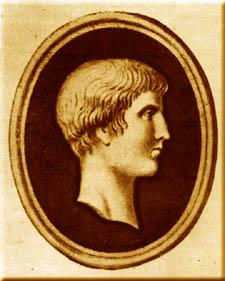
Marcus Valerius Martialis was a Roman poet from Hispania best known for his twelve books of Epigrams, published in Rome between AD 86 and 103, during the reigns of the emperors Domitian, Nerva and Trajan. In these short, witty poems he cheerfully satirises city life and the scandalous activities of his acquaintances, and romanticises his provincial upbringing. He wrote a total of 1,561 epigrams, of which 1,235 are in elegiac couplets.
Martial has been called the greatest Latin epigrammatist, and is considered the creator of the modern epigram. Wikipedia
“It is not poverty, Nestor, to have nothing at all.”
Non est paupertas, Nestor, habere nihil.
Martial book Epigrammata
XI, 32 (Loeb translation).
Epigrams (c. 80 – 104 AD)
“Virtue extends our days: he lives two lives who relives his past with pleasure.”
Ampliat aetatis spatium sibi vir bonus. Hoc est
Vivere bis vita posse priore frui.
Martial book Epigrammata
Ampliat aetatis spatium sibi vir bonus. Hoc est
Vivere bis vita posse priore frui.
X, 23. Alternatively translated as "The good man prolongs his life; to be able to enjoy one's past life is to live twice", in Bartlett's Familiar Quotations, 10th ed. (1919). Compare: "For he lives twice who can at once employ / The present well, and e'en the past enjoy", Alexander Pope, Imitation of Martial.
Epigrams (c. 80 – 104 AD)
“Although the words run speedily, the hand is swifter than they; the tongue has not yet, the hand has already, completed its work.”
Currant verba licet, manus est velocior illis;
Nondum lingua suum, dextra peregit opus.
Martial book Epigrammata
XIV, 208.
Epigrams (c. 80 – 104 AD)
“Tis degrading to undertake difficult trifles; and foolish is the labour spent on puerilities.”
Turpe est difficiles habere nugas,
Et stultus labor est ineptiarum.
Martial book Epigrammata
Turpe est difficiles habere nugas,
Et stultus labor est ineptiarum.
II, 86 (Loeb translation).
Epigrams (c. 80 – 104 AD)
“The mode of death is sadder than death itself.”
Martial book Epigrammata
XI, 91.
Epigrams (c. 80 – 104 AD)
“You will always be poor, if you are poor, Aemilianus. Wealth is given to-day to none save the rich.”
Semper eris pauper, si pauper es, Aemiliane;
Dantur opes nulli nunc, nisi divitibus.
Martial book Epigrammata
Semper eris pauper, si pauper es, Aemiliane;
Dantur opes nulli nunc, nisi divitibus.
V, 81 (Loeb translation).
Epigrams (c. 80 – 104 AD)
“My poems are naughty, but my life is pure.”
Lasciva est nobis pagina, vita proba.
Martial book Epigrammata
I, 4.
Epigrams (c. 80 – 104 AD)
“Life is not living, but living in health.”
Vita non est vivere, sed valera vita est.
Martial book Epigrammata
VI, 70.
Variant translations:
It is not life to live, but to be well.
Life's not just being alive, but being well.
Epigrams (c. 80 – 104 AD)
“Believe me, wise men don't say ‘I shall live to do that’, tomorrow's life is too late; live today.”
Non est, crede mihi, sapientis dicere ‘Vivam’:
Sera nimis vita est crastina: vive hodie.
Martial book Epigrammata
I, 15.
Variant translations:
'I'll live to-morrow', 'tis not wise to say:
'Twill be too late to-morrow—live to-day.
Tomorrow will I live, the fool does say;
Today itself's too late; the wise lived yesterday.
Epigrams (c. 80 – 104 AD)
“The bee enclosed and through the amber shown
Seems buried in the juice which was his own.”
Martial book Epigrammata
IV, 32, reported in Bartlett's Familiar Quotations, 10th ed. (1919). Compare: "Whence we see spiders, flies, or ants entombed and preserved forever in amber, a more than royal tomb", Francis Bacon, Historia Vitæ et Mortis; Sylva Sylvarum, Cent. i. experiment 100.
Epigrams (c. 80 – 104 AD)
“You praise, in three hundred verses, Sabellus, the baths of Ponticus, who gives such excellent dinners. You wish to dine, Sabellus, not to bathe.”
Laudas balnea versibus trecentis
Cenantis bene Pontici, Sabelle.
Vis cenare, Sabelle, non lavari.
Martial book Epigrammata
Laudas balnea versibus trecentis
Cenantis bene Pontici, Sabelle.
Vis cenare, Sabelle, non lavari.
IX, 19.
Epigrams (c. 80 – 104 AD)
“Stop abusing my verses, or publish some of your own.”
Martial book Epigrammata
I, 91.
Epigrams (c. 80 – 104 AD)
“Tis a hard task this, not to sacrifice manners to wealth.”
Ardua res haec est opibus non tradere mores.
Martial book Epigrammata
XI, 5 (Loeb translation).
Epigrams (c. 80 – 104 AD)
“A man who lives everywhere lives nowhere.”
Quisquis ubique habitat, Maxime, nusquam habitat.
Martial book Epigrammata
VII, 73.
Epigrams (c. 80 – 104 AD)
“Selius affirms, in heav'n no gods there are:
And while he thrives, and they their thunder spare,
His daring tenet to the world seems fair. Anon. 1695.”
Nullos esse deos, inane caelum
Adfirmat Segius: probatque, quod se
Factum, dum negat haec, videt beatum.
Martial book Epigrammata
Nullos esse deos, inane caelum
Adfirmat Segius: probatque, quod se
Factum, dum negat haec, videt beatum.
IV, 21.
Epigrams (c. 80 – 104 AD)
“They praise those works, but read these.”
Laudant illa sed ista legunt.
Martial book Epigrammata
IV, 49.
Epigrams (c. 80 – 104 AD)
“They [the hours] pass by, and are put to our account.”
Nobis pereunt et imputantur.
Martial book Epigrammata
V, 20, line 13; this phrase is often found as an inscription on sundials.
Epigrams (c. 80 – 104 AD)
“Let a defect, which is possibly but small, appear undisguised.
A fault concealed is presumed to be great.”
Simpliciter pateat vitium fortasse pusillum:
Quod tegitur, magnum creditur esse malum
Martial book Epigrammata
Variant translation: Conceal a flaw, and the world will imagine the worst.
III, 42.
Epigrams (c. 80 – 104 AD)
“I do not love thee, Sabidius, nor can I say why; this only I can say, I do not love thee.”
Martial book Epigrammata
I, 32, reported in Bartlett's Familiar Quotations, 10th ed. (1919). Compare: "I do not love thee, Doctor Fell, / The reason why I cannot tell; / But this alone I know full well, / I do not love thee, Doctor Fell", Tom Brown, Laconics.
Epigrams (c. 80 – 104 AD)
“Glory paid to ashes comes too late.”
Cineri gloria sera venit.
Martial book Epigrammata
I, 25, line 8.
Epigrams (c. 80 – 104 AD)
“Fortune to many gives too much, enough to none.”
Fortuna multis dat nimis, satis nulli.
Martial book Epigrammata
XII, 10.
Epigrams (c. 80 – 104 AD)
“Take while you can; brief is the moment of profit.”
Accipe quam primum; brevis est occasio lucri.
Martial book Epigrammata
VIII, 9.
Epigrams (c. 80 – 104 AD)
“Let me have a plump home-born slave, have a wife not too lettered, have night with sleep, have day without a lawsuit.”
Sit mihi verna satur: sit non doctissima conjux:
Sit nox cum somno: sit sine lite dies.
Martial book Epigrammata
Sit mihi verna satur: sit non doctissima conjux:
Sit nox cum somno: sit sine lite dies.
II, 90 (Loeb translation).
Epigrams (c. 80 – 104 AD)
Martial book Epigrammata
I, 110.
Epigrams (c. 80 – 104 AD)
“Neither fear your death's day nor long for it.”
Martial book Epigrammata
X, 47. Alternatively translated as "Neither fear, nor wish for, your last day", in Bartlett's Familiar Quotations, 10th ed. (1919). Compare: "Nor love thy life, nor hate; but what thou livest / Live well: how long or short permit to heaven", John Milton, Paradise Lost, book xi, line 553.
Epigrams (c. 80 – 104 AD)
“You ask what a nice girl will do? She won't give an inch, but she won't say no.”
Martial book Epigrammata
IV, 71.
Epigrams (c. 80 – 104 AD)
“He who refuses nothing…will soon have nothing to refuse.”
Martial book Epigrammata
XII, 79.
Epigrams (c. 80 – 104 AD)
“Difficult and easy-going, pleasant and churlish, you are at the same time: I can neither live with you nor without you.”
Difficilis facilis iucundus acerbus es idem:
Nec possum tecum vivere nec sine te.
Martial book Epigrammata
Difficilis facilis iucundus acerbus es idem:
Nec possum tecum vivere nec sine te.
XII, 46
Variant translation: Difficult or easy, pleasant or bitter, you are the same you: I cannot live with you—or without you.
Compare: "Thus I can neither live with you nor without you", Ovid, Amores, Book III, xib, 39
Epigrams (c. 80 – 104 AD)
“If glory comes after death, I hurry not.”
Si post fata venit gloria, non propero.
Martial book Epigrammata
V, 10 (trans. Zachariah Rush).
Epigrams (c. 80 – 104 AD)
“You invite no man to dinner, Cotta, but your bath-companion; the baths alone provide you with a guest. I was wondering why you had never asked me; now I understand that when naked I displeased you.”
Invitas nullum nisi cum quo, Cotta, lavaris
et dant convivam balnea sola tibi
mirabar quare numquam me, Cotta, vocasses:
iam scio me nudum displicuisse tibi.
Martial book Epigrammata
Invitas nullum nisi cum quo, Cotta, lavaris
et dant convivam balnea sola tibi
mirabar quare numquam me, Cotta, vocasses:
iam scio me nudum displicuisse tibi.
I, 23 (Loeb translation).
Epigrams (c. 80 – 104 AD)


