
Works
Famous Molière Quotes
“It is a wonderful seasoning of all enjoyments to think of those we love.”
C'est un merveilleux assaisonnement aux plaisirs qu'on goûte que la présence des gens qu'on aime.
Act V, sc. iv
Le Misanthrope (1666)
Plus on aime quelqu'un, moins il faut qu'on le flatte:
À rien pardonner le pur amour éclate.
Act II, sc. iv
Le Misanthrope (1666)
Molière Quotes about love
“Ah, it's a lovely thing to know a thing or two.”
Ah, la belle chose que de savoir quelque chose. <br class="br"> Act II, sc. iv. http://books.google.com/books?id=GxlAFXHk4NcC&q=%22ah+la+belle+chose+que+de+savoir+quelque+chose%22&pg=PA39#v=onepage <br class="br">Le Bourgeois Gentilhomme (1670)
Molière Quotes about the world
“The world, dear Agnes, is a strange affair.”
Le monde, chère Agnès, est une étrange chose.
L'École des Femmes (1662), Act II, sc. v
“I will maintain it before the whole world.”
Je le soutiendrai devant tout le monde.
Act IV, sc. iii
Le Bourgeois Gentilhomme (1670)
“The world will not reform for all your meddling.”
Et c’est une folie, à nulle autre, seconde,
De vouloir se mêler de corriger le monde.
As published in Le Misanthrope, Molière, tr. Curtis Hidden Page, G.P. Putnam’s Sons (1913), p. 12
Variant translation: Of all follies there is none greater than wanting to make the world a better place.
As contained in The Columbia Dictionary of Quotations, ed. Robert Andrews, Columbia University Press (1993), p.772 : ISBN 0231071949
Act I, sc. 1, lines 155-156 (Philinte)
Le Misanthrope (1666)
“He makes his cook his merit,
And the world visits his dinners and not him.”
Que de son cuisinier il s'est fait un mérite,
Et que c'est à sa table à qui l'on rend visite.
Act II, sc. iv
Le Misanthrope (1666)
Molière: Trending quotes
“My lord Jupiter knows how to sugarcoat the pill.”
Le Seigneur Jupiter sait dorer la pilule.
Act III, sc. x
Amphitryon (1666)
Molière Quotes
“A learned fool is more foolish than an ignorant one.”
Un sot savant est sot plus qu'un sot ignorant.
Act IV, sc. iii
Les Femmes Savantes (1672)
“We die only once, and for such a long time!”
On ne meurt qu'une fois; et c'est pour si longtemps!
Le Dépit Amoureux (1656), Act V, sc. iii
“I have the defect of being more
sincere than persons wish.”
Source: The Misanthrope
“One must eat to live, and not live to eat.”
Il faut manger pour vivre, et non pas vivre pour manger.
L'Avare (1668), Act III, sc. i.
Firstly, an inaccurate sourcing: in Act III, yes—but in Scene I, no: rather, in Scene V—HARPAGON, VALÈRE, MASTER JACQUES (see, e.g., the Project Gutenberg HTML version of the English translation: http://www.gutenberg.org/files/6923/6923-h/6923-h.htm). Secondly, a misattribution made clear by the Molière text—the character in the play, VAL, obviously points out that the quote refers to a "saying of one of the ancients" (and the quote is precisely written in quotation marks as well), in the full line of dialogue below:
Know, Master Jacques, you and people like you, that a table overloaded with eatables is a real cut-throat; that, to be the true friends of those we invite, frugality should reign throughout the repast we give, and that according to the saying of one of the ancients, "We must eat to live, and not live to eat."
The "ancients" to which VAL/Molière refers is Cicero, Diogenes Laertius, and the oldest known attribution, Socrates (whom Laertius explicitly attributes—and Cicero presumably invokes). Various books of quotations document this—e.g., Elizabeth Knowles' 2006 The Oxford Dictionary of Phrase and Fable (http://books.google.com/books?id=r2KIvsLi-2kC&dq=%22one+must+eat+to+live+not+live+to+eat%22&source=gbs_navlinks_s) and Jennifer Speake's 1982 A Dictionary of Proverbs (http://books.google.com/books?id=-IpkOkM3IfEC&dq=%22one+must+eat+to+live+not+live+to+eat%22&source=gbs_navlinks_s): the former lists the quote as "a proverbial saying, late 14th century, distinguishing between necessity and indulgence; Diogenes Laertius says of Socrates, 'he said that other men live to eat, but eats to live.' A similar idea is found in the Latin of Cicero, 'one must eat to live, not live to eat'"; the latter, reiterates this. Moreover, in William Shepard Walsh's 1909 Handy-book of Literary Curiosities, he adds that "According to Plutarch, what Socrates said was, 'Bad men live that they may eat and drink, whereas good men eat and drink that they may live.'" He also adds that Atheneus quotes similarly to Laertius, as well as explores other later variations (http://books.google.com/books?id=hrJkAAAAMAAJ&source=gbs_navlinks_s).
Misattributed
“I prefer an accommodating vice
To an obstinate virtue.”
J'aime mieux un vice commode,
Qu'une fatigante vertu.
Act I, sc. iv
Amphitryon (1666)
“There is no rampart that will hold out against malice.”
Act I, sc. i
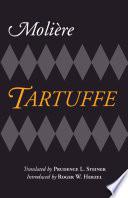
Tartuffe (1664)
“To create a public scandal is what's wicked;
To sin in private is not a sin.”
Le scandale du monde est ce qui fait l'offense,
Et ce n'est pas pécher que pécher en silence.
Act IV, sc. v
Tartuffe (1664)
“You are a fool in three letters, my son.”
Vous êtes un sot en trois lettres, mon fils.
Act I, sc. i
Tartuffe (1664)
“He's a wonderful talker, who has the art
Of telling you nothing in a great harangue.”
C'est un parleur étrange, et qui trouve toujours
L'art de ne vous rien dire avec de grands discours.
Act II, sc. iv
Le Misanthrope (1666)
“My fair one, let us swear
An eternal friendship.”
Act IV, sc. i
Le Bourgeois Gentilhomme (1670)
“She is laughing up her sleeve at you, my brother.”
Variant: She is laughing in your face, my brother.
Source: Tartuffe (1664), Act I, sc. v
“Grammar, which knows how to control even kings.”
La grammaire qui sait régenter jusqu'aux rois.
Act II, sc. vi. An apparent reference to Sigismund I, at the Council of Constance, 1414, said to a prelate who had objected to his Majesty's grammar, "Ego sum rex Romanus, et supra grammaticam" (I am the Roman emperor, and am above grammar).
Les Femmes Savantes (1672)
“Ah, there are no longer any children!”
Ah! Il n'y a plus d'enfants!
Le Malade Imaginaire (1673), Act II, sc. xi
“All that is not prose is verse; and all that is not verse is prose.”
Tout ce qui n'est point prose, est vers; et tout ce qui n'est point vers, est prose.
Act II, sc. iv
Le Bourgeois Gentilhomme (1670)
“A witty woman is a devil at intrigue.”
Une femme d'esprit est un diable en intrigue.
L'École des Femmes (1662), Act III, sc. iii
“Good heavens! For more than forty years I have been speaking prose without knowing it.”
Par ma foi, il y a plus de quarante ans que je dis de la prose, sans que j'en susse rien.
Act II, sc. iv
Le Bourgeois Gentilhomme (1670)
“I saw him, I say, saw him with my own eyes.”
Je l'ai vu, dis-je, de mes propres yeux vu.
Act V, sc. iii
Tartuffe (1664)
“The true Amphitryon
Is the Amphitryon who gives dinner.”
Le véritable Amphitryon,
Est l'Amphitryon où l'on dine.
Act III, sc. v
Amphitryon (1666)
“Cover that bosom that I must not see:
Souls are wounded by such things.”
Couvrez ce sein que je ne saurais voir.
Par de pareils objets les âmes sont blessées.
Act III, sc. ii
Tartuffe (1664)
“Anyone may be an honorable man, and yet write verse badly.”
On peut être honnête homme et faire mal des vers.
Act IV, sc. i
Le Misanthrope (1666)
“To pull the chestnuts out of the fire with the cat's paw.”
Tirer les marrons du feu avec la patte du chat.
L'Étourdi (1655), Act III, sc. v
“I always make the first verse well, but I have trouble making the others.”
Je fais toujours bien le premier vers: mais j'ai peine à faire les autres.
'Les Précieuses Ridicules (1659), Act I, sc. xi
“The beautiful eyes of my cash-box.”
Les beaux yeux de ma cassette.
Act V, scene iii
L'Avare (1668)
“Those whose conduct gives room for talk
Are always the first to attack their neighbors.”
Ceux de qui la conduite offre le plus à rire
Sont toujours sur autrui les premiers à médire.
Act I, sc. i
Tartuffe (1664)
“Why Opium produces sleep: … Because there is in it a dormitive power.”
Quare Opium facit dormire: … Quia est in eo Virtus dormitiva.
Le Malade Imaginaire (1673), Act III, sc. iii
“You are speaking before a man to whom all Naples is known.”
Vous parlez devant un homme à qui tout Naples est connu.
Act V, scene v
L'Avare (1668)
Si l’emploi de la comédie est de corriger les vices des hommes, je ne vois pas par quelle raison il y en aura de privilégiés. Celui-ci est, dans l’État, d’une conséquence bien plus dangereuse que tous les autres ; et nous avons vu que le théâtre a une grande vertu pour la correction. Les plus beaux traits d’une sérieuse morale sont moins puissants, le plus souvent, que ceux de la satire ; et rien ne reprend mieux la plupart des hommes que la peinture de leurs défauts. C’est une grande atteinte aux vices que de les exposer à la risée de tout le monde. On souffre aisément des répréhensions ; mais on ne souffre point la raillerie. On veut bien être méchant, mais on ne veut point être ridicule. <br class="br"> Preface http://books.google.com/books?id=HH4fAAAAYAAJ&q=%22On+veut+bien+%C3%AAtre+m%C3%A9chant+mais+on+ne+veut+point+%C3%AAtre+ridicule%22&pg=PT87#v=onepage, as translated by John Wood in The Misanthrope and Other Plays (Penguin, 1959), p. 101 <br class="br"> Variant translation http://books.google.com/books?id=vdFMAQAAIAAJ&q=%22People+do+not+mind+being+wicked+but+they+object+to+being+made+ridiculous%22&pg=PA127#v=onepage: People do not mind being wicked; but they object to being made ridiculous. <br class="br">Tartuffe (1664)
“What the devil was he doing in that galley?”
Molière Les Fourberies de Scapin
Que diable allait-il faire dans cette galère?
Les Fourberies de Scapin (1671), Act II, sc. vi
“On some preference esteem is based;
To esteem everything is to esteem nothing.”
Sur quelque préférence une estime se fonde,
Et c'est n'estimer rien qu'estimer tout le monde.
Act I, sc. i
Le Misanthrope (1666)
Ah que je— Vous l'avez voulu, vous l'avez voulu, George Dandin, vous l'avez voulu, cela vous sied fort bien, et vous voilà ajusté comme il faut, vous avez justement ce que vous méritez.
Georges Dandin (1668), Act I, sc. vii
[J]e veux que tu me dises à qui lu parles quand lu dis cela.
Je parle... je parle à mon bonnet.
Act I, scene iii
L'Avare (1668)
Si de probité tout était revêtu,
Si tous les cœurs était francs, justes et dociles,
La plupart des vertus nous seraient inutiles,
Puisqu'on en met l'usage à pouvoir sans ennui
Supporter dans nos droits l'injustice d'autrui.
Act V, sc. i
Le Misanthrope (1666)
“Doubts are more cruel than the worst of truths.”
Les doutes sont fâcheux plus que toute autre chose.
Act III, sc. v
Le Misanthrope (1666)
“Nearly all men die of their remedies, and not of their illnesses.”
Presque tous les hommes meurent de leurs remèdes, et non pas de leurs maladies.
Le Malade Imaginaire (1673), Act III, sc. iii
“A woman always has her revenge ready.”
Une femme a toujours une vengeance prête.
Act II, sc. ii
Tartuffe (1664)
“You see him laboring to produce bons mots.”
On voit qu'il se travaille à dire de bons mots.
Act II, sc. iv
Le Misanthrope (1666)
“It is seasoned throughout with Attic salt.”
Il est de sel attique assaisonné partout.
Act III, sc. ii
Les Femmes Savantes (1672)


