“Charity and treating begin at home.”
John Fletcher Wit Without Money
Scene 2.
Wit Without Money (c. 1614; published 1639)
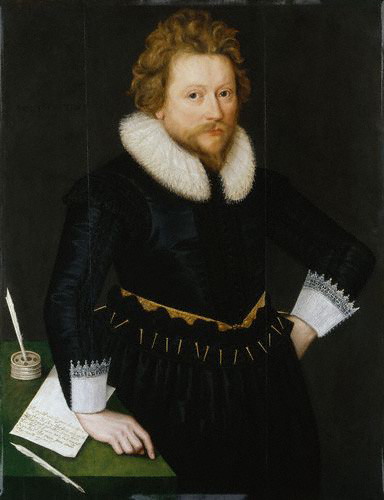
John Fletcher was a Jacobean playwright. Following William Shakespeare as house playwright for the King's Men, he was among the most prolific and influential dramatists of his day; both during his lifetime and in the early Restoration, his fame rivalled Shakespeare's. Though his reputation has been far eclipsed since, Fletcher remains an important transitional figure between the Elizabethan popular tradition and the popular drama of the Restoration.
“Charity and treating begin at home.”
John Fletcher Wit Without Money
Scene 2.
Wit Without Money (c. 1614; published 1639)
Valentinian (1610–14; published 1647), Act IV, scene 4.
“That soul that can
Be honest is the only perfect man.”
John Fletcher The Honest Man's Fortune
Epilogue. Compare: "An honest man's the noblest work of God", Alexander Pope, Essay on Man, epistle iv. line 248.
The Honest Man's Fortune, (1613; published 1647)
“From the crown of our head to the sole of our foot.”
John Fletcher The Honest Man's Fortune
Act II, scene 2. Compare Thomas Middleton, A Mad World, My Masters, Act I, scene 3. Pliny, Natural History, Book VII, Chapter XVII. William Shakespeare, Much Ado About Nothing, Act III, scene 2.
The Honest Man's Fortune, (1613; published 1647)
“Fountain heads and pathless groves,
Places which pale passion loves.”
The Nice Valour (c. 1615–25; publsihed 1647), Act iii, scene 3.
“Great things thro' greatest hazards are achiev'd,
And then they shine.”
John Fletcher The Loyal Subject
Act I, scene 5.
The Loyal Subject (c. 1616–19; published 1647, 1679)
“Let no man fear to die: We love to sleep all,
And death is but the sounder sleep.”
John Fletcher The Humorous Lieutenant
Act III, scene 6.
The Humorous Lieutenant (c. 1619; published 1647)
“Then, everlasting Love, restrain thy will;
'Tis god-like to have power, but not to kill.”
The Chances (c. 1613–25; 1647), Act II, scene 2. Song.
“Of all the paths lead to a woman's love
Pity's the straightest.”
The Knight of Malta (1647), Act I, sc. i.
“Though I say't that should not say't.”
Wit at Several Weapons (with Thomas Middleton and William Rowley; c. 1610–20; published 1647), Act II, scene 2.
“There is no jesting with edge tools.”
John Fletcher The Little French Lawyer
Act IV, scene vii.
The Little French Lawyer (c. 1619–23; published 1647)
The Lover's Progress (licensed 6 December 1623; revised 1634; published 1647), Act iii. Sc. 4. Compare: "Deeds, not words", Samuel Butler, Hudibras, part i, canto i, line 867.
“This is a gimcrack
That can get nothing but new fashions on you.”
John Fletcher The Elder Brother
Act III, scene 3.
The Elder Brother (c. 1625; published 1637)
“Twas when young Eustace wore his heart in's breeches.”
John Fletcher The Elder Brother
Act V.
The Elder Brother (c. 1625; published 1637)
John Fletcher The Honest Man's Fortune
Epilogue. Compare: "Every man hath a good and a bad angel attending on him in particular all his life long", Robert Burton, Anatomy of Melancholy, part i. sect. 2, memb. 1, subsect. 2.
The Honest Man's Fortune, (1613; published 1647)
The Nice Valor (1647), Melancholy. Compare: "Naught so sweet as melancholy", Robert Burton, Anatomy of Melancholy.
John Fletcher The Woman's Prize
The Woman's Prize, or The Tamer Tamed (c. 1611; published 1647), Act IV, scene 5, line 199.
The Two Noble Kinsmen (with William Shakespeare; c. 1613; published 1634), Act V, scene 1.
“Tis a word that's quickly spoken,
Which being restrained, a heart is broken.”
John Fletcher The Spanish Curate
The Spanish Curate (licensed 24 October 1622; 1647), Act II, scene 5, Song.
The Queen of Corinth (1647), Act III, sc. ii. Compare: "Weep no more, Lady! weep no more, Thy sorrow is in vain; For violets plucked, the sweetest showers Will ne'er make grow again", Thomas Percy, Reliques of Ancient English Poetry, "The Friar of Orders Gray".
“I'll put that in my considering cap.”
John Fletcher The Loyal Subject
Act II, scene 1.
The Loyal Subject (c. 1616–19; published 1647, 1679)
“Come, sing now, sing; for I know you sing well;
I see you have a singing face.”
John Fletcher The Wild Goose Chase
The Wild Goose Chase (c. 1621; published 1652), Act II. 2.
“Drink today, and drown all sorrow;
You shall perhaps not do't tomorrow.”
Act II, scene ii.
Rollo, Duke of Normandy, or The Bloody Brother, (c. 1617; revised c. 1627–30; published 1639)
“Thy clothes are all the soul thou hast.”
John Fletcher The Honest Man's Fortune
Act V, scene 3, line 170.
The Honest Man's Fortune, (1613; published 1647)
“I'll put a spoke among your wheels.”
The Mad Lover, (acted 5 January 1617; 1647), Act III, scene 5.
John Fletcher The Honest Man's Fortune
Act III, scene 3.
The Honest Man's Fortune, (1613; published 1647)
“Let them learn first to show pity at home.”
John Fletcher Wit Without Money
Scene 2.
Wit Without Money (c. 1614; published 1639)
“Speak boldly, and speak truly, shame the devil.”
John Fletcher Wit Without Money
Act IV, scene 4.
Wit Without Money (c. 1614; published 1639)
“Look babies in your eyes, my pretty sweet one.”
John Fletcher The Loyal Subject
The Loyal Subject (c. 1616–19; published 1647, 1679)
John Fletcher The Elder Brother
Act I, scene 2.
The Elder Brother (c. 1625; published 1637)
“One good turn deserves another.”
John Fletcher The Little French Lawyer
Act III, scene 2.
The Little French Lawyer (c. 1619–23; published 1647)
“Let's meet and either do or die.”
John Fletcher The Island Princess
The Island Princess (c. 1620; published 1647), Act II, scene 2. Compare: "Let us do or die", Robert Burns, Bannockburn; same in Thomas Campbell, Gertrude of Wyoming, part iii. stanza 37.
Act III, scene 2. Song.
Rollo, Duke of Normandy, or The Bloody Brother, (c. 1617; revised c. 1627–30; published 1639)
Variant: Three merry boys, and three merry boys,
And three merry boys are we,
As ever did sing in a hempen string
Under the gallow-tree.
“Death hath so many doors to let out life.”
John Fletcher The Custom of the Country
The Custom of the Country (with Philip Massinger; c. 1619–23; published 1647), Act II, scene 2
Compare: "I know death hath ten thousand several doors / For men to take their exits.", John Webster, Dutchess of Malfi (1623); act IV, scene ii
“And he that will to bed go sober
Falls with the leaf in October.”
Act II, scene ii. The following well-known catch, or glee, is formed on this song: "He who goes to bed, and goes to bed sober, Falls as the leaves do, and dies in October; But he who goes to bed, and goes to bed mellow, Lives as he ought to do, and dies an honest fellow".
Rollo, Duke of Normandy, or The Bloody Brother, (c. 1617; revised c. 1627–30; published 1639)
“There's nothing that allays an angry mind
So soon as a sweet beauty.”
John Fletcher The Elder Brother
Act III, scene 5.
The Elder Brother (c. 1625; published 1637)
“As high as Heaven, as deep as Hell.”
John Fletcher The Honest Man's Fortune
Act IV, scene 1.
The Honest Man's Fortune, (1613; published 1647)
“What mare's nest hast thou found?”
Act IV, scene 2.
The Tragedy of Bonduca (1611–14; published 1647)
“Whistle, and she'll come to you.”
John Fletcher Wit Without Money
Act IV, scene 4.
Wit Without Money (c. 1614; published 1639)
Act V, scene 5.
The Tragedy of Bonduca (1611–14; published 1647)
“All things that are
Made for our general uses are at war,—
Even we among ourselves.”
John Fletcher The Honest Man's Fortune
The Honest Man's Fortune, (1613; published 1647)
Act IV, scene i. Compare: "Take, O, take those lips away, That so sweetly were forsworn; And those eyes, the break of day, Lights that do mislead the morn: But my kisses bring again, bring again; Seals of love, but sealed in vain, sealed in vain", William Shakespeare, Measure for Measure.
Rollo, Duke of Normandy, or The Bloody Brother, (c. 1617; revised c. 1627–30; published 1639)
“Lie lightly on my ashes, gentle earthe.”
Act IV, scene 3. ("Sit tibi terra levis," familiar inscription).
The Tragedy of Bonduca (1611–14; published 1647)
Comedy of Monsieur Thomas (c. 1610–16; published 1639), Act III, scene 1.
The Lover's Progress (licensed 6 December 1623; revised 1634; published 1647), Act I, scene 1.
John Fletcher Wit Without Money
Act IV, scene 1.
Wit Without Money (c. 1614; published 1639)
John Fletcher The Little French Lawyer
Act I, scene 1.
The Little French Lawyer (c. 1619–23; published 1647)
John Fletcher Rule a Wife and Have a Wife
Rule a Wife and Have a Wife (licensed 19 October 1624; 1640), Act III, scene 5.
Act V, scene 2.
The Tragedy of Bonduca (1611–14; published 1647)
John Fletcher The Little French Lawyer
Act II, scene 1.
The Little French Lawyer (c. 1619–23; published 1647)
John Fletcher Wit Without Money
Act V, scene 2. Compare William Shakespeare, The Taming of the Shrew, introduction, scene 1, line 5. Also Scene 2, line 146. ("Slip" in folio).
Wit Without Money (c. 1614; published 1639)
John Fletcher Wit Without Money
Act IV, scene 4.
Wit Without Money (c. 1614; published 1639)


