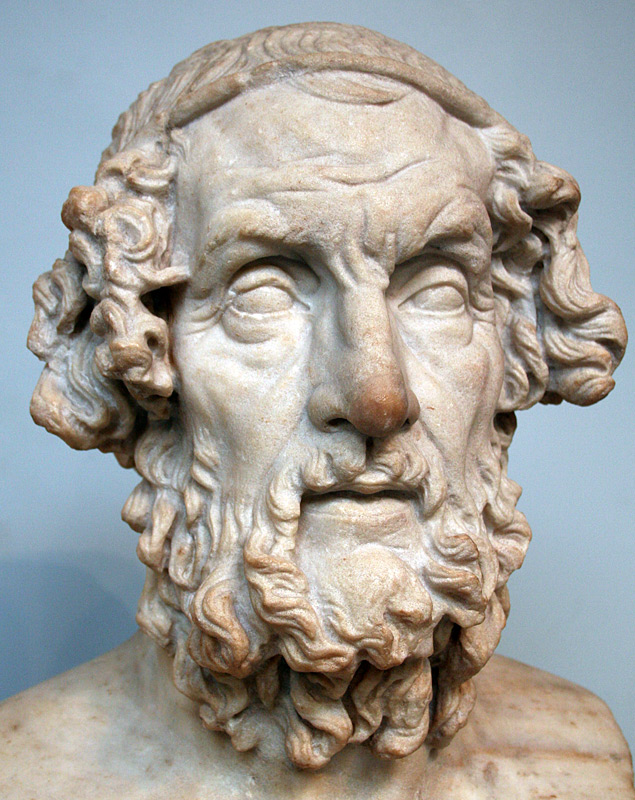
Homer słynne cytaty
„(…) wolooka (czcigodna) Hera (…).”
Boopis (potnia) Here. (gr.)
Iliada
Źródło: 3, 144; 7, 10; 18, 40 i in.
Homer cytaty
„Gdzie wiele rąk, tam łatwa praca.”
Źródło: Wacław Idziak, Biznes, Koszalińskie Wydawnictwo Prasowe, Koszalin 1990, s. 93.
„Muzo! męża wyśpiewaj, co święty gród Troi
Zburzywszy, długo błądził.”
Odyseja
Źródło: I, 1 tłum.L. Siemieński
„Rzeczą człowieka jest walczyć, a rzeczą nieba – dać zwycięstwo.”
Źródło: „Przekrój”, wydania 2898–2914, wyd. Czytelnik, 2001, s. 58.
Źródło: Leksykon złotych myśli, wyboru dokonał K. Nowak, Warszawa 1998.
„Jak los liści na drzewach, taki też los rodu ludzkiego.”
Źródło: Leksykon złotych myśli, wyboru dokonał Krzysztof Nowak, Warszawa 1998.
Homer: Cytaty po angielsku
“We two have secret signs,
known to us both but hidden from the world.”
Homér Odyseja
XXIII. 109–110 (tr. Robert Fagles).
Odyssey (c. 725 BC)
“I'll fling a spear myself and leave the rest to Zeus.”
Homér Iliada
XVII. 515 (tr. Robert Fagles).
Iliad (c. 750 BC)
“See now, how men lay blame upon us gods for what is after all nothing but their own folly.”
Homér Odyseja
I. 32–34 (tr. Samuel Butler).
Odyssey (c. 725 BC)
“Who, on his own,
has ever really known who gave him life?”
Homér Odyseja
I. 216 (tr. Robert Fagles).
Odyssey (c. 725 BC)
“He in the turning dust lay
mightily in his might, his horsemanship all forgotten.”
Homér Iliada
XVI. 775–776 (tr. R. Lattimore).
Iliad (c. 750 BC)
“He will tell you no lies, for he is an excellent person.”
Homér Odyseja
III. 328 (tr. Samuel Butler).
Odyssey (c. 725 BC)
“The proof of battle is action, proof of words, debate.”
Homér Iliada
XVI. 630 (tr. Robert Fagles).
Iliad (c. 750 BC)
“The gods don't hand out all their gifts at once,
not build and brains and flowing speech to all.”
Homér Odyseja
VIII. 167–168 (tr. Robert Fagles).
Odyssey (c. 725 BC)
Homér Odyseja
XVI. 190–191 (tr. Samuel Butler).
Odyssey (c. 725 BC)
Homér Odyseja
VIII. 221–222 (tr. Samuel Butler).
Odyssey (c. 725 BC)
Homér Odyseja
I. 58–59 (tr. Robert Fitzgerald).
Odyssey (c. 725 BC)
“If indeed there be a god in heaven.”
Homér Odyseja
XVII. 484 (tr. S. H. Butcher and Andrew Lang).
Odyssey (c. 725 BC)
“Bird-signs!
Fight for your country—that is the best, the only omen!”
Homér Iliada
XII. 243 (tr. Robert Fagles).
Iliad (c. 750 BC)
Homér Iliada
XII. 322–328 (tr. R. Lattimore); Sarpedon to Glaukos.
Iliad (c. 750 BC)
“Hardship can age a person overnight.”
Homér Odyseja
XIX. 360 (tr. Robert Fagles).
Odyssey (c. 725 BC)
“It's light work for the gods who rule the skies
to exalt a mortal man or bring him low.”
Homér Odyseja
XVI. 211–212 (tr. Robert Fagles).
Odyssey (c. 725 BC)
“There she encountered Sleep, the brother of Death.”
Homér Iliada
XIV. 231 (tr. R. Lattimore).
Iliad (c. 750 BC)
Homér Odyseja
VI. 180–185 (tr. Robert Fitzgerald); Odysseus to Nausicaa.
Odyssey (c. 725 BC)
Homér Odyseja
I. 1–5 (tr. Robert Fagles).
Odyssey (c. 725 BC)
Homér Iliada
VI. 142–143 (tr. Robert Fagles).
Iliad (c. 750 BC)
Homér Odyseja
Δοιαὶ γάρ τε πύλαι ἀμενηνῶν εἰσὶν ὀνείρων·
αἱ μὲν γὰρ κεράεσσι τετεύχαται, αἱ δ' ἐλέφαντι.
οἵ ῥ' ἐλεφαίρονται, ἔπε' ἀκράαντα φέροντες·
οἳ δὲ διὰ ξεστῶν κεράων ἔλθωσι θύραζε,
οἵ ῥ' ἔτυμα κραίνουσι, βροτῶν ὅτε κέν τις ἴδηται.
XIX. 563–568 (tr. Robert Fagles); spoken by Penelope.
Odyssey (c. 725 BC)
“The blessed gods have no love for crime.
They honor justice, honor the decent acts of men.”
Homér Odyseja
XIV. 83–84 (tr. Robert Fagles).
Odyssey (c. 725 BC)
Homér Odyseja
XIII. 79–80 (tr. Robert Fagles).
Odyssey (c. 725 BC)
“The recklessness of their own ways destroyed them all.”
Homér Odyseja
I. 7 (tr. Robert Fagles).
Odyssey (c. 725 BC)
“A deep sleep took hold upon him and eased the burden of his sorrows.”
Homér Odyseja
XXIII. 343–344 (tr. Samuel Butler).
Odyssey (c. 725 BC)
“When a Man's exhausted, wine will build his strength.”
Homér Iliada
VI. 261 (tr. Robert Fagles).
Iliad (c. 750 BC)
“Friends, we're hardly strangers at meeting danger.”
Homér Odyseja
XII. 209 (tr. Robert Fagles).
Odyssey (c. 725 BC)


