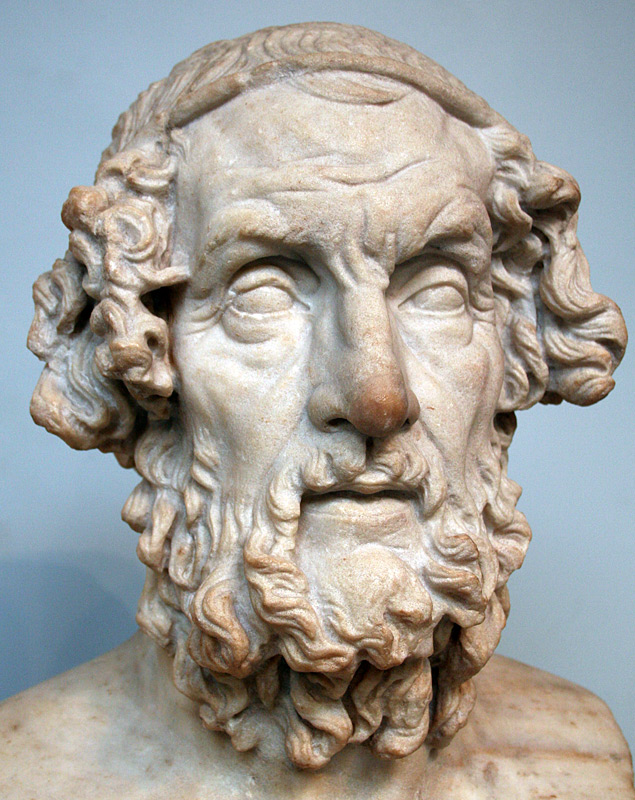
Homer słynne cytaty
„(…) wolooka (czcigodna) Hera (…).”
Boopis (potnia) Here. (gr.)
Iliada
Źródło: 3, 144; 7, 10; 18, 40 i in.
Homer cytaty
„Gdzie wiele rąk, tam łatwa praca.”
Źródło: Wacław Idziak, Biznes, Koszalińskie Wydawnictwo Prasowe, Koszalin 1990, s. 93.
„Muzo! męża wyśpiewaj, co święty gród Troi
Zburzywszy, długo błądził.”
Odyseja
Źródło: I, 1 tłum.L. Siemieński
„Rzeczą człowieka jest walczyć, a rzeczą nieba – dać zwycięstwo.”
Źródło: „Przekrój”, wydania 2898–2914, wyd. Czytelnik, 2001, s. 58.
Źródło: Leksykon złotych myśli, wyboru dokonał K. Nowak, Warszawa 1998.
„Jak los liści na drzewach, taki też los rodu ludzkiego.”
Źródło: Leksykon złotych myśli, wyboru dokonał Krzysztof Nowak, Warszawa 1998.
Homer: Cytaty po angielsku
Homér Iliada
I. 599–600 (tr. Robert Fagles); hence the expression "Homeric laughter".
Iliad (c. 750 BC)
“Be both a speaker of words and a doer of deeds.”
Homér Iliada
IX. 443 (tr. Andrew Lang).
Iliad (c. 750 BC)
“Iron has powers to draw a man to ruin.”
Homér Odyseja
XIX. 13 (tr. Robert Fagles); Odysseus to Telemachus.
Odyssey (c. 725 BC)
“It is the god who accomplishes all things.”
Homér Iliada
XIX. 90 (tr. R. Lattimore).
Iliad (c. 750 BC)
Homér Iliada
XXI. 110 (tr. R. Lattimore); spoken by Achilles.
Iliad (c. 750 BC)
“Clearly doing good puts doing bad to shame.”
Homér Odyseja
XXII. 374 (tr. Robert Fagles).
Odyssey (c. 725 BC)
“How ill, alas! do want and shame agree!”
Homér Odyseja
XVII. 347 (tr. Alexander Pope).
Odyssey (c. 725 BC)
Homér Odyseja
XV. 392–394 (tr. Alexander Pope).
Odyssey (c. 725 BC)
“The time for trusting women's gone forever!”
Homér Odyseja
XI. 456 (tr. Robert Fagles).
Alexander Pope's translation:
: For since of womankind so few are just,
Think all are false, nor even the faithful trust.
Odyssey (c. 725 BC)
Homér Iliada
XIII. 730–733 (tr. Alexander Pope).
Iliad (c. 750 BC)
“Victory passes back and forth between men.”
Homér Iliada
VI. 339 (tr. R. Lattimore); Paris contemplates the fickleness of victory as he prepares to go into battle.
Iliad (c. 750 BC)
“Life and death are balanced as it were on the edge of a razor.”
Homér Iliada
X. 173–174 (tr. Samuel Butler).
Iliad (c. 750 BC)
Homér Odyseja
IX. 34–36 (tr. Robert Fagles).
Odyssey (c. 725 BC)
“In form of Stentor of the brazen voice,
Whose shout was as the shout of fifty men.”
Homér Iliada
V. 785–786 (tr. Lord Derby).
Iliad (c. 750 BC)
“Welcome words on their lips, and murder in their hearts.”
Homér Odyseja
XVII. 66 (tr. Robert Fagles).
Odyssey (c. 725 BC)
“But the gods give to mortals not everything at the same time.”
Homér Iliada
IV. 320 (tr. R. Lattimore).
Iliad (c. 750 BC)
“My soul
Shall bear that also; for, by practice taught,
I have learned patience, having much endured.”
Homér Odyseja
V. 222–223 (tr. William Cowper).
Odyssey (c. 725 BC)
Homér Iliada
VIII. 485–486 (tr. Robert Fagles).
Iliad (c. 750 BC)
“Now sure enough the vile man leads the vile!
As ever, god brings like and like together!”
Homér Odyseja
XVII. 217–218 (tr. G. H. Palmer).
Odyssey (c. 725 BC)
Homér Iliada
IV. 442–443 (tr. R. Lattimore).
Iliad (c. 750 BC)
“Once a thing has been done, the fool sees it.”
Homér Iliada
XVII. 32 (tr. R. Lattimore).
Iliad (c. 750 BC)
“Sweet oblivion, sleep
dissolving all, the good and the bad, once it seals our eyes.”
Homér Odyseja
XX. 85–86 (tr. Robert Fagles).
Odyssey (c. 725 BC)
“If I hold out here and I lay siege to Troy,
my journey home is gone, but my glory never dies.”
Homér Iliada
IX. 413 (tr. Robert Fagles); spoken by Achilles.
Iliad (c. 750 BC)
Homér Odyseja
XV. 398–401 (tr. Alexander Pope).
E. V. Rieu's translation:
: Meanwhile let us two, here in the hut, over our food and wine, regale ourselves with the unhappy memories that each can recall. For a man who has been through bitter experiences and travelled far can enjoy even his sufferings after a time.
Odyssey (c. 725 BC)
“Helios, Sun above us, you who see all, hear all things!”
Homér Iliada
III. 277 (tr. Robert Fagles).
Iliad (c. 750 BC)
“Jove weighs affairs of earth in dubious scales,
And the good suffers, while the bad prevails.”
Homér Odyseja
VI. 188 (tr. Alexander Pope).
Odyssey (c. 725 BC)
Homér Odyseja
XIV. 56–59 (tr. Robert Fagles).
Odyssey (c. 725 BC)
Homér Odyseja
XV. 19–23 (tr. Samuel Butler).
Odyssey (c. 725 BC)
Homér Iliada
XVII. 446–447 (tr. R. Lattimore); Zeus.
Robert Fagles's translation:
: There is nothing alive more agonized than man
of all that breathe and crawl across the earth.
Iliad (c. 750 BC)


