„Nie w poznaniu jest szczęście, ale w poznawaniu.”
Not in knowledge is happiness, but in the acquisition of knowledge! (ang.)
Źródło: Potęga słowa
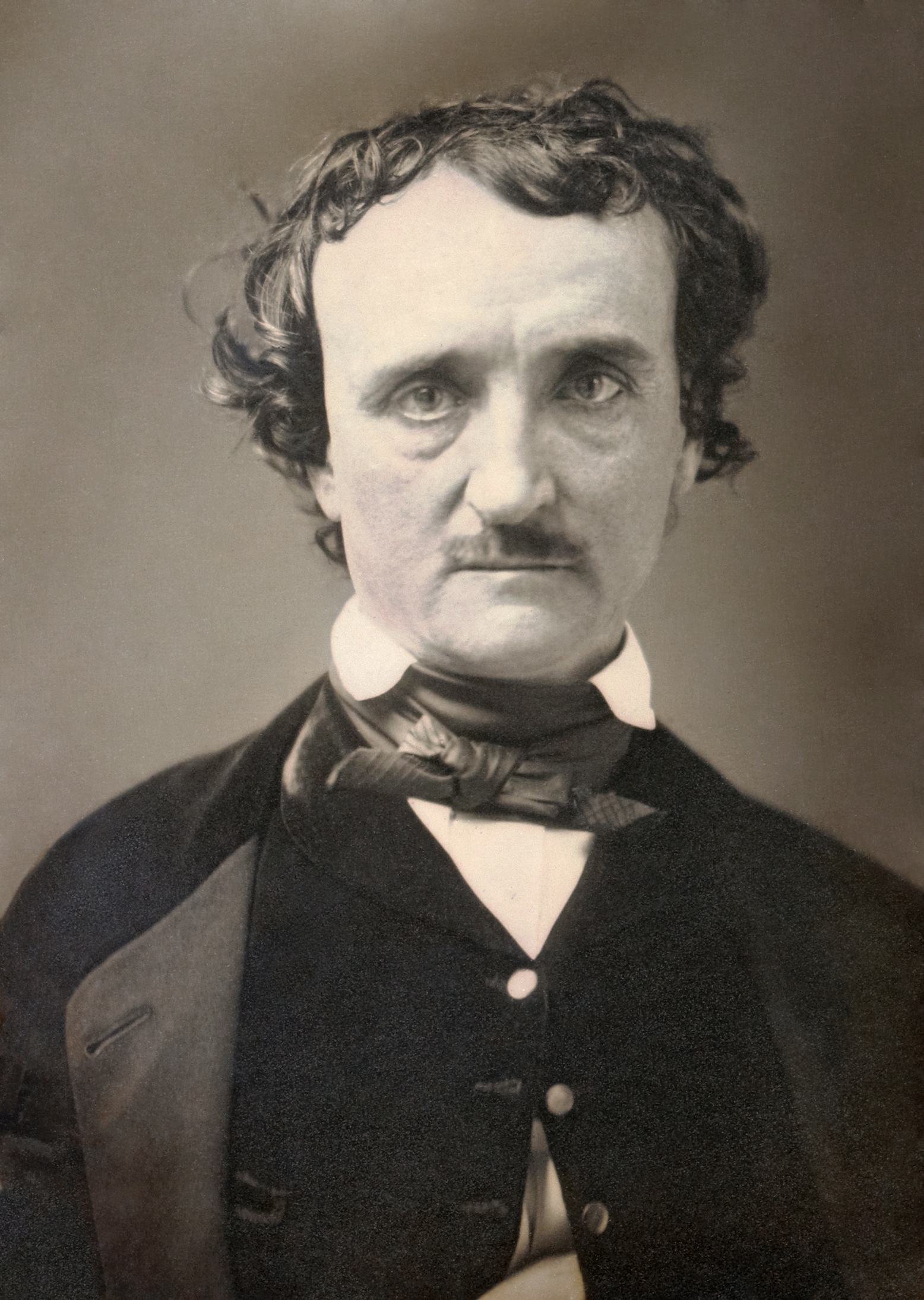
Edgar Allan Poe – amerykański poeta, nowelista, krytyk literacki i redaktor. Przedstawiciel romantyzmu w literaturze amerykańskiej. W jego twórczości dominowały wątki fantastyki i horroru. Zapoczątkował gatunek noweli kryminalnej . Stworzył także pierwszą w literaturze postać detektywa – C. Auguste’a Dupina.
Jego prozę charakteryzował silny psychologizm postaci oraz surrealistyczne, skrajnie brutalne opisy makabry, przywołujące na myśl stany epileptyczne czy upojenie alkoholowe. W twórczości Edgara Allana Poe odnaleźć można postawy choroby wieku – neurozy, świadomości dualizmu świata czy też bólu istnienia, które pod koniec XIX wieku stały się sztandarowymi pojęciami nowych nurtów sztuki: dekadentyzmu, ekspresjonizmu oraz symbolizmu.
Poe inspirował Baudelaire’a, Huysmansa, Dostojewskiego, Meyrinka, de Quinceya, Bierce'a, Lovecrafta, jak i całą rzeszę poetów surrealistycznych. Stephane Mallarme określił jego poemat Ulalume jako odbiegające od schematów swojej epoki arcydzieło poezji. Za jego przykładem szło wielu twórców, również polskich, np. Stefan Grabiński. Tadeusz Miciński wielokrotnie wspomina w swoich utworach inspirację fantastyczną wyobraźnią poety.
Zarówno poezję, jak i prozę Edgara Allana Poego tłumaczyło na polski wielu wybitnych literatów, jak np. Stanisław Wyrzykowski, Antoni Lange, Bolesław Leśmian, Tadeusz Miciński czy Zenon Przesmycki.
Twórczością Poego inspirowali się również filmowcy, tworząc mniej lub bardziej wierne ekranizacje jego opowiadań. Do najbardziej znanych dzieł filmowych należy nakręcony w latach 60. XX wieku cykl w reżyserii Rogera Cormana.
Mianem Edgarów nazywa się nagrody przyznawane przez organizację Mystery Writers of America. Wikipedia
„Nie w poznaniu jest szczęście, ale w poznawaniu.”
Not in knowledge is happiness, but in the acquisition of knowledge! (ang.)
Źródło: Potęga słowa
Źródło: Ligeja, przeł. Stanisław Wyrzykowski
„Czas to pieniądz, a pieniądz to więcej niż czas.”
Time with me now, is money & money more than time. (ang.)
„Zawsze wierzyłem w głupców. Moi przyjaciele nazywają to wiarą w samego siebie.”
I have great faith in fools – self-confidence my friends will call it. (ang.) <br class="br">Źródło: Marginalia w: The works of Edgar Allan Poe http://books.google.pl/books?id=an1KAAAAYAAJ, tom 3, Widdleton, 1849, s. 525.
„Ci, co śnią za dnia, wiedzą o wielu rzeczach niedostępnych dla tych, co śnią tylko nocą.”
Edgar Allan Poe książka Eleonora
They who dream by day are cognizant of many things which escape those who dream only by night. (ang.)
Źródło: Eleonora
Edgar Allan Poe książka William Wilson
Men usually grow base by degrees. From me, in an instant, all virtue dropped bodily as a mantle. (ang.)
William Wilson
Źródło: Opowieści nadzwyczajne tom II, tłum. Bolesław Leśmian, wyd. Tow. Akc. S. Orgelbranda S-ów, 1913.
„Jeśli chcesz od razu o czymś zapomnieć, zanotuj sobie, że to trzeba pamiętać.”
If you wish to forget anything on the spot, make a note that this thing is to be remembered. (ang.) <br class="br">Źródło: Marginalia w: The works of Edgar Allan Poe http://books.google.pl/books?id=an1KAAAAYAAJ, tom 3, Widdleton, 1849, s. 483.
Quoth the Raven, „Nevermore!”
Inna wersja: Rzekł kruk na to: „Nigdy już!” (tłum. Zenon Przesmycki)
Źródło: Kruk, 1845
Edgar Allan Poe książka William Wilson
William Wilson
Źródło: Opowieści nadzwyczajne tom II, tłum. Bolesław Leśmian, wyd. Tow. Akc. S. Orgelbranda S-ów, 1913.
„Zazwyczaj ludzie podleją stopniowo.”
Źródło: Wielka księga mądrości, wybór Jacek i Tomasz Ilga
“I became insane, with long intervals of horrible sanity.”
Letter http://www.eapoe.org/works/letters/p4801040.htm to George W. Eveleth, Jan. 4, 1848.
“From childhood's hour I have not been
As others were — I have not seen
As others saw —”
" Alone http://gothlupin.tripod.com/valone.html", l. 1-8 (written 1829, published 1875). <br class="br">Kontekst: From childhood's hour I have not been<br>As others were — I have not seen<br>As others saw — I could not bring<br>My passions from a common spring —<br>From the same source I have not taken<br>My sorrow — I could not awaken<br>My heart to joy at the same tone —<br>And all I lov'd — I lov'd alone
“All that we see or seem
Is but a dream within a dream.”
Edgar Allan Poe książka A Dream Within a Dream
"A Dream Within a Dream" (1849).
Kontekst: You are not wrong, who deem
That my days have been a dream;
Yet if hope has flown away
In a night, or in a day,
In a vision, or in none,
Is it therefore the less gone?
All that we see or seem
Is but a dream within a dream.
“Beauty is the sole legitimate province of the poem.”
Edgar Allan Poe książka The Philosophy of Composition
"The Philosophy of Composition" (published 1846).
“Man is an animal that diddles, and there is no animal that diddles but man.”
" Diddling: Considered As One Of The Exact Sciences http://www.classicreader.com/read.php/sid.6/bookid.1390/"; first published as "Raising the Wind" in Saturday Courier (1843-10-14).
“Believe nothing you hear, and only one half that you see.”
Edgar Allan Poe książka The System of Doctor Tarr and Professor Fether
"The System of Doctor Tarr and Professor Fether" (1845)
“Sleep. Those little slices of death. How I loathe them.”
Various forms of this quote are attributed to Poe, primarily by a title card in the movie A Nightmare on Elm Street 3, though there is no record of his having ever said it.
Misattributed
“You are not wrong, who deem
That my days have been a dream;”
Edgar Allan Poe książka A Dream Within a Dream
"A Dream Within a Dream" (1849).
Kontekst: You are not wrong, who deem
That my days have been a dream;
Yet if hope has flown away
In a night, or in a day,
In a vision, or in none,
Is it therefore the less gone?
All that we see or seem
Is but a dream within a dream.
Edgar Allan Poe Annabel Lee
St. 2.
Annabel Lee (1849)
Kontekst: I was a child and she was a child,
In this kingdom by the sea,
But we loved with a love that was more than love —
I and my Annabel Lee —
With a love that the wingèd seraphs of Heaven
Coveted her and me.
Edgar Allan Poe Annabel Lee
St. 1.
Annabel Lee (1849)
Kontekst: It was many and many a year ago,
In a kingdom by the sea,
That a maiden lived whom you may know
By the name of Annabel Lee; —
And this maiden she lived with no other thought
Than to love and be loved by me.
Edgar Allan Poe Kruk
Stanza 1.
The Raven (1844)
Kontekst: Once upon a midnight dreary, while I pondered, weak and weary,
Over many a quaint and curious volume of forgotten lore,
While I nodded, nearly napping, suddenly there came a tapping,
As of some one gently rapping, rapping at my chamber door.
“And now have I not told you that what you mistake for madness is but over-acuteness of the senses?”
Edgar Allan Poe książka The Tell-Tale Heart
The Tell-Tale Heart (1843)
Kontekst: And now have I not told you that what you mistake for madness is but over-acuteness of the senses? -- now, I say, there came to my ears a low, dull, quick sound, such as a watch makes when enveloped in cotton. I knew that sound too. It was the beating of the old man's heart. It increased my fury, as the beating of a drum stimulates the soldier into courage.
“If you wish to forget anything on the spot, make a note that this thing is to be remembered.”
Marginalia http://www.easylit.com/poe/comtext/prose/margin.shtml (November 1844) <br class="br">Wariant: If you wish to forget anything on the spot, make a note that this thing is to be remembered.
Edgar Allan Poe książka The Black Cat
The Black Cat (1843)
“As for myself, I am simply Hop-Frog, the jester — and this is my last jest.”
Edgar Allan Poe książka Hop-Frog
"Hop-Frog" (1850).
Edgar Allan Poe książka The Murders in the Rue Morgue
"The Murders in the Rue Morgue" (1841).
“O, human love! thou spirit given,
On Earth, of all we hope in Heaven!”
Edgar Allan Poe Tamerlane
"Tamerlane", l. 177 (1827).
“Years of love have been forgot
In the hatred of a minute.”
To M——— (1829), reported in Bartlett's Familiar Quotations, 10th ed. (1919).
Edgar Allan Poe książka The Black Cat
Have we not a perpetual inclination, in the teeth of our best judgement, to violate that which is Law, merely because we understand it to be such?
The Black Cat (1843)
“All that we see or seem
Is but a dream within a dream.”
Źródło: báseň A Dream Within a Dream
“By a route obscure and lonely,
Haunted by ill angels only,”
"Dreamland", st. 1 (1845).
Kontekst: By a route obscure and lonely,
Haunted by ill angels only,
Where an Eidolon, named NIGHT,
On a black throne reigns upright,
I have reached these lands but newly
From an ultimate dim Thule —
From a wild weird clime that lieth, sublime,
Out of SPACE — out of TIME.
“Thy Naiad airs have brought me home
To the glory that was Greece
And the grandeur that was Rome.”
"To Helen", st. 1-2 (1831).
Kontekst: p>Helen, thy beauty is to me
Like those Nicean barks of yore,
That gently, o'er a perfumed sea,
The weary, wayworn wanderer bore
To his own native shore.On desperate seas long wont to roam,
Thy hyacinth hair, thy classic face,
Thy Naiad airs have brought me home
To the glory that was Greece
And the grandeur that was Rome.</p
Edgar Allan Poe książka Berenice
"Berenice".
“Thy grace, thy more than beauty,
Shall be an endless theme of praise,
And love — a simple duty.”
" To Frances S. Osgood http://www.readbookonline.net/readOnLine/595/" (1845). <br class="br">Kontekst: Thou wouldst be loved? — then let thy heart<br>From its present pathway part not!<br>Being everything which now thou art,<br>Be nothing which thou art not.<br>So with the world thy gentle ways,<br>Thy grace, thy more than beauty,<br>Shall be an endless theme of praise,<br>And love — a simple duty.
“Thou wast that all to me, love,
For which my soul did pine —”
Edgar Allan Poe książka To One in Paradise
"To One in Paradise", st. 1 (1834).
Kontekst: Thou wast that all to me, love,
For which my soul did pine —
A green isle in the sea, love,
A fountain and a shrine,
All wreathed with fairy fruits and flowers,
And all the flowers were mine.


