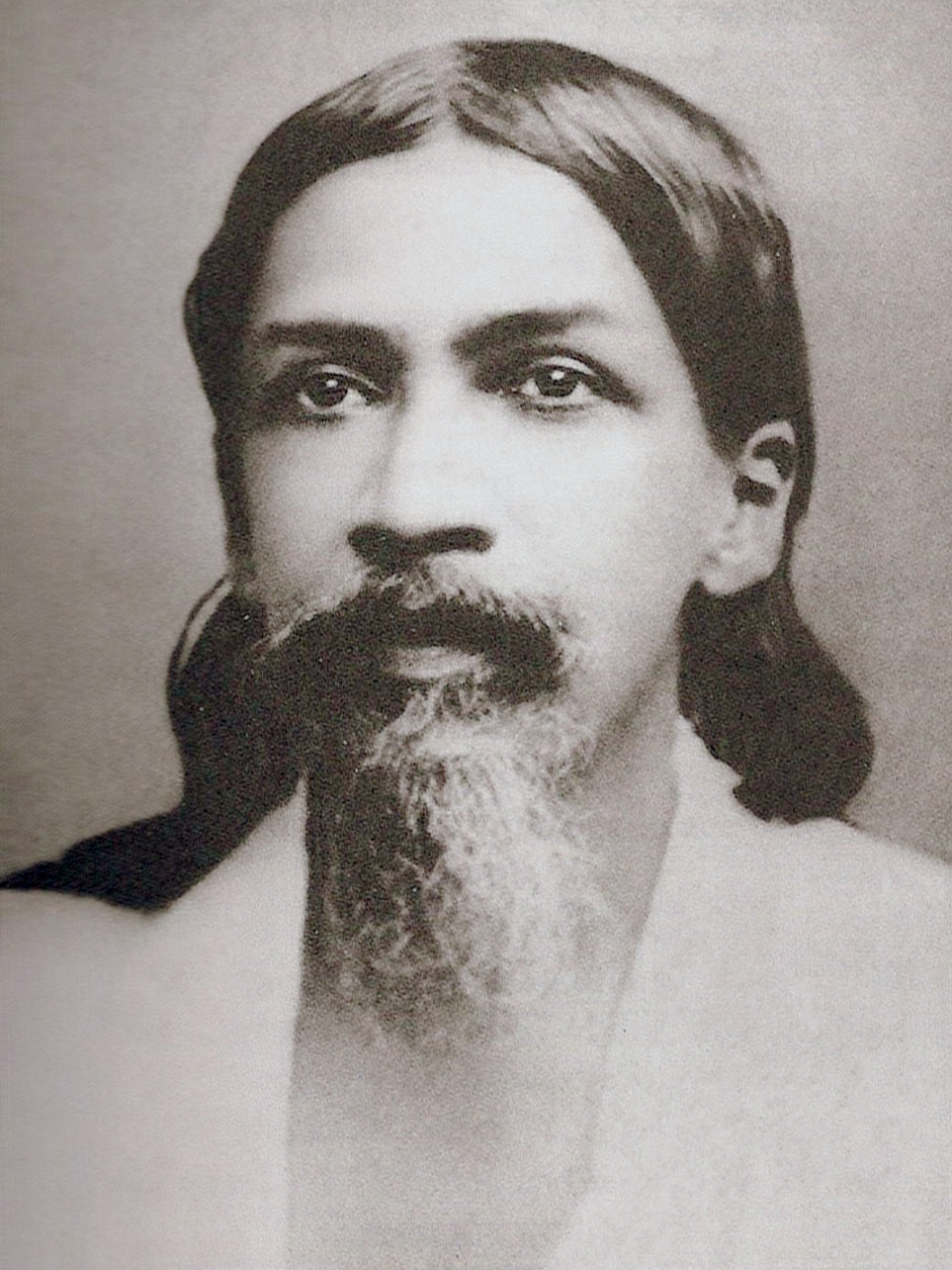
Sri Aurobindo idézet
oldal 7

Sri Aurobindo , születési neve Aurobindo Ghosh vagy Ghose , indiai hazafi, szabadságharcos, filozófus, jógi, guru, és költő. Csatlakozott a brit uralom elleni indiai szabadságmozgalomhoz, amelynek az egyik befolyásos vezetőjévé vált. Később spirituális reformer lett, és megfogalmazta az emberi fejlődéssel és a spirituális evolúcióval kapcsolatos nézeteit.Aurobindo indiai közszolgálati ösztöndíjjal a Cambridge-i Egyetemen végezte tanulmányait. Visszatérve Indiába, különböző közszolgálati feladatokat látott el Baroda Maharadzsája számára, és kezdett belekapcsolódni a politikába is. 1908-ban a brit uralom ellen íródott cikkei miatt bebörtönözték - ahol misztikus és spirituális tapasztalatokat élt át -, majd bizonyíték hiányában szabadon bocsátották. Ezt követően Pondicherry-be ment, véglegesen feladta a politikát, és kizárólag spirituális tevékenységet folytatott.Pondicherry-ben Aurobindo egy új spirituális gyakorlati módszert fejlesztett ki, amelyet Integrált jógának nevezett el. Koncepciójának központi témája az emberi életnek az isteni életbe való evolúciója volt. Egy olyan spirituális megvalósításban hitt, amely nem csak megszabadította az embert, hanem át is alakította annak természetét, ezzel lehetővé téve az isteni életet a földön. 1926-ban spirituális munkatársa, Mira Alfassa segítségével megalapította a Sri Aurobindo Asramot. 1950. december 5-én hunyt el. Aurobindo egyike volt az első indiaiknak, akik angolul hoztak létre egy irodalmi életművet.Fő művei: Az Isteni Élet, amely az Integrált jóga elméleti aspektusaival foglalkozik; A Jóga Szintézise, amely gyakorlati útmutatást nyújt az Integrált jógához; és epikus költeménye, a Mahábhárata egyik epizódját feldolgozó, Szávitrí amelyben a szereplők az életükben megvalósítják az Integrált jógát. Egyéb főbb művei közt megtalálhatók még a Védák, az Upanisadok és a Gíta fordításai és a hozzájuk fűzött kommentárjai, és a társadalom spirituális fejlődésével foglalkozó művek. Wikipedia  

✵ 15. augusztus 1872 – 5. december 1950
Sri Aurobindo fénykép
Sri Aurobindo: 236   idézetek 2   Kedvelés

Sri Aurobindo híres idézetei

„Amikor a magasabb tudat békéje leereszkedik, mindig magával hozza ezt a hajlamosságot az egyenlő elbírálás, a szamata felé.”

Eredeti: Letters of Sri Aurobindo, The Secure Foundation of Sadhana, p.149

„Isten gyermekei vagyunk, és olyanná is kell válnunk, mint Ő Maga.”

Eredeti: We are sons of God, and must be even as He. szöveg (angolul) https://books.google.de/books?id=71RXCaLDTbAC&pg=PA25&lpg=PA25&dq=We+are+sons+of+God,+and+must+be+even+as+He.+aurobindo&source=bl&ots=5MZig8JUth&sig=m3Q8f6G_RyaLBS79ZHBqW6TyDg8&hl=hu&sa=X&ved=0ahUKEwj60vvp8YbaAhWDJlAKHZ_QCPIQ6AEIMjAB#v=onepage&q=We%20are%20sons%20of%20God%2C%20and%20must%20be%20even%20as%20He.%20aurobindo&f=falseTeljes

Sri Aurobindo idézetek

Sri Aurobindo: Idézetek angolul

“Our first necessity, if India is to survive and do her appointed work in the world, is that the youth of India should learn to think,—to think on all subjects, to think independently, fruitfully, going to the heart of things, not stopped by their surface, free of prejudgments, shearing sophism and prejudice asunder as with a sharp sword, smiting down obscurantism of all kinds as with the mace of Bhima. (…) When there is destruction, it is the form that perishes, not the spirit—for the world and its ways are forms of one Truth which appears in this material world in ever new bodies…. In India, the chosen land, [that Truth] is preserved; in the soul of India it sleeps expectant on that soul's awakening, the soul of India leonine, luminous, locked in the closed petals of the ancient lotus of love, strength and wisdom, not in her weak, soiled, transient and miserable externals. India alone can build the future of mankind. (…) Ancient or pre-Buddhistic Hinduism sought Him both in the world and outside it; it took its stand on the strength and beauty and joy of the Veda, unlike modern or post-Buddhistic Hinduism which is oppressed with Buddha's sense of universal sorrow and Shankara's sense of universal illusion,—Shankara who was the better able to destroy Buddhism because he was himself half a Buddhist. Ancient Hinduism aimed socially at our fulfilment in God in life, modern Hinduism at the escape from life to God. The more modern ideal is fruitful of a noble and ascetic spirituality, but has a chilling and hostile effect on social soundness and development; social life under its shadow stagnates for want of belief and delight, sraddha and ananda. If we are to make our society perfect and the nation is to live again, then we must revert to the earlier and fuller truth.”

1910-1912
India's Rebirth

“Escape brings not the victory and the crown!”

Sri Aurobindo könyv Savitri: A Legend and a Symbol

Savitri (1918-1950), Book Three : The Book of the Divine Mother

“Life has no 'isms' in it, Supermind also has no 'isms'. It is the mind that introduces all 'isms' and creates confusion. That is the difference between a man who lives and a thinker who can't: a leader who thinks too much and is busy with ideas, trying all the time to fit the realities of life to his ideas, hardly succeeds, while the leader who is destined to succeed does not bother his head about ideas. He sees the forces at work and knows by intuition those that make for success. He also knows the right combination of forces and the right moment when he should act…. At one time it was thought that the mind could grasp the whole Truth and solve all the problems that face humanity. The mind had its full play and we find that it is not able to solve the problems. Now, we find that it is possible to go beyond mind and there is the Supermind which is the organization of the Infinite Consciousness. There you find the truth of all that is in mind and life…. For instance, you find that Democracy, Socialism and Communism have each some truth behind it, but it is not the whole Truth. What you have to do is to find out the forces that are at work and understand what it is of which all these mental ideas and 'isms' are a mere indication. You have to know the mistakes which people commit in dealing with the truth of these forces and the truth that is behind the mistakes also. I am, at present, speaking against democracy; that does not mean that there is no truth behind it. I know the truth [behind democracy], but I speak against democracy because that mentality is at present against the Truth that is trying to come down.”

May 18, 1926
India's Rebirth

Hasonló szerzők

Paramahansza Jógánanda fénykép
Paramahansza Jógánanda 6
Jogi és guru
Rabindranáth Tagore fénykép
Rabindranáth Tagore 8
Bengáli költő és filozófus
Jorge Luis Borges fénykép
Jorge Luis Borges 37
argentin költő, elbeszélő, esszéíró, irodalomtörténész, fil…
Dzsaváharlál Nehru fénykép
Dzsaváharlál Nehru 3
indiai politikus, író, India első miniszterelnöke
Mahatma Gandhi fénykép
Mahatma Gandhi 138
indiai politikai, spirituális vezető
Henri Bergson fénykép
Henri Bergson 2
Nobel-díjas francia filozófus
Ludwig Wittgenstein fénykép
Ludwig Wittgenstein 7
osztrák-brit filozófus
Robert Frost fénykép
Robert Frost 13
amerikai költő
Simone Weil fénykép
Simone Weil 2
francia írónő, aktivista, filozófus és misztikus