Joseph Addison book Cato
Act I, scene iv.
Cato, A Tragedy (1713)
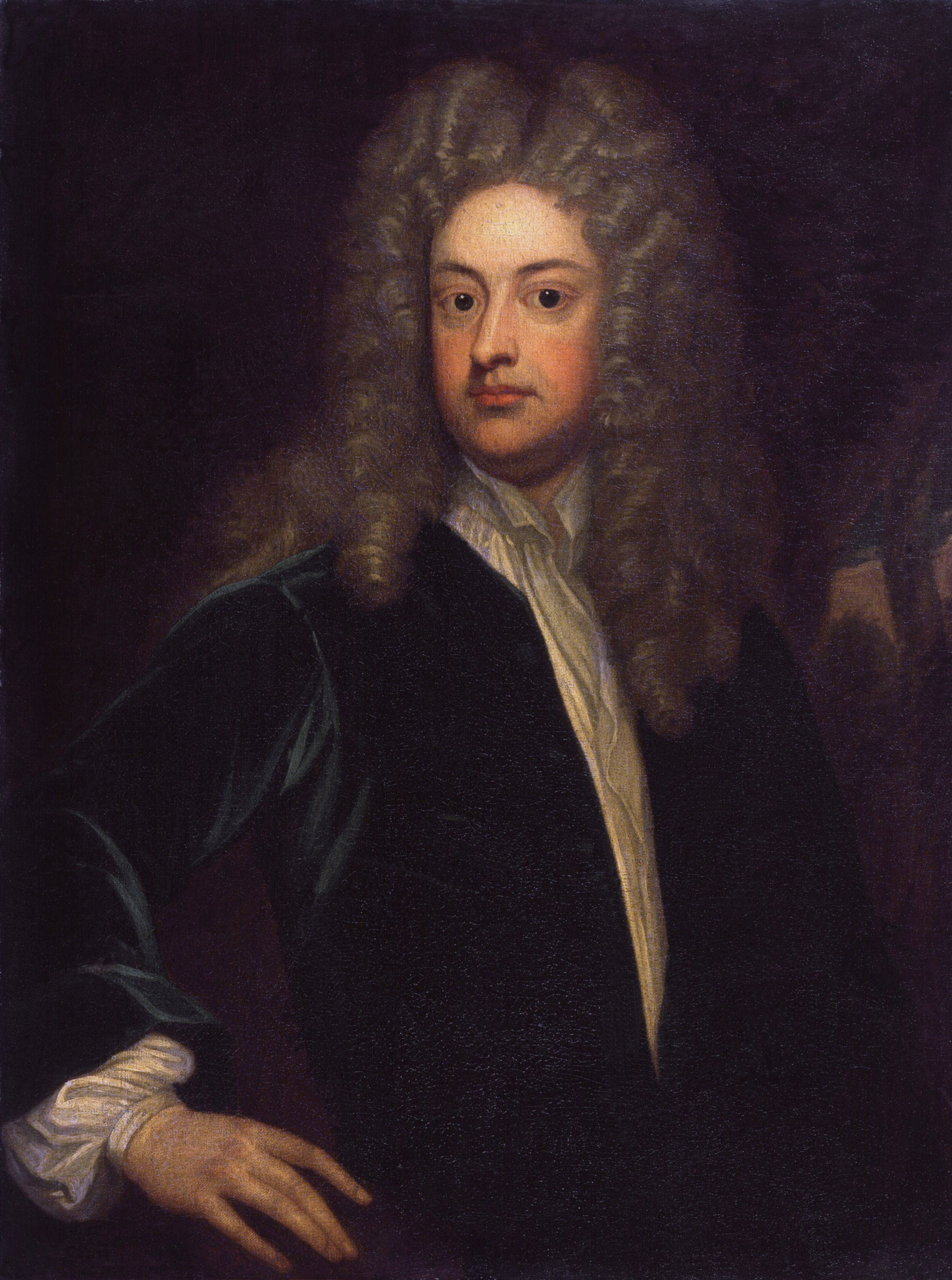
Joseph Addison was an English essayist, poet, playwright and politician. He was the eldest son of The Reverend Lancelot Addison. His name is usually remembered alongside that of his long-standing friend Richard Steele, with whom he founded The Spectator magazine. Wikipedia
Joseph Addison book Cato
Act I, scene iv.
Cato, A Tragedy (1713)
“There is nothing which we receive with so much reluctance as advice.”
No. 512 (17 October 1712).
The Spectator (1711–1714)
“Charity is a virtue of the heart, and not of the hands.”
No. 166.
The Guardian (1713)
Joseph Addison book Cato
Act IV, scene iv.
Cato, A Tragedy (1713)
“Curse on his virtues! they've undone his country.”
Joseph Addison book Cato
Act IV, scene iv.
Cato, A Tragedy (1713)
“Mutability of temper and inconsistency with ourselves is the greatest weakness of human nature.”
No. 162 (5 September 1711).
The Spectator (1711–1714)
Spectator, No. 444.
Bartlett's Familiar Quotations, 10th ed. (1919)
Source: The Campaign (1704), Line 309.
“Nations with nations mix'd confus'dly die,
And lost in one promiscuous carnage lie.”
Source: The Campaign (1704), Line 152.
Moncure Daniel Conway, in The Sacred Anthology (Oriental) : A Book of Ethnical Scriptures 5th edition (1877), p. 386; this statement appears beneath an Arabian proverb, and Upton Sinclair later attributed it to the Qur'an, in The Cry for Justice : An Anthology of the Literature of Social Protest (1915), p. 475.
Misattributed
No. 185 http://archive.twoaspirinsandacomedy.com/spectator/spectator.php?line=185 (2 October 1711). <br class="br">Often misquoted as "To be an atheist requires an infinitely greater measure of faith than to receive all the great truths which atheism would deny." <br class="br">The Spectator (1711–1714)
“These widows, sir, are the most perverse creatures in the world.”
No. 335 (25 March 1712).
The Spectator (1711–1714)
“A woman seldom asks advice before she has bought her wedding clothes.”
No. 475 (4 September 1712).
The Spectator (1711–1714)
No. 269 (8 January 1712).
The Spectator (1711–1714)
Samuel Johnson in The Rambler, no. 148 (17 August 1751).
Misattributed
“Some virtues are only seen in affliction and some in prosperity.”
No. 257 (25 December 1711).
The Spectator (1711–1714)
“There is not so variable a thing in Nature as a lady's head-dress.”
No. 98 (22 June 1711).
The Spectator (1711–1714)
“The utmost extent of man's knowledge, is to know that he knows nothing.”
These words, sometimes attributed to Addison, are not found in his works, but in The Spectator, no. 54, he translates the following words of Socrates, as quoted in Plato's Apology: "When I left him, I reasoned thus with myself: I am wiser than this man, for neither of us appears to know anything great and good; but he fancies he knows something, although he knows nothing; whereas I, as I do not know anything, so I do not fancy I do. In this trifling particular, then, I appear to be wiser than he, because I do not fancy I know what I do not know."
Misattributed
Samuel Johnson in The Rambler no. 148 (17 August 1751).
Misattributed
Sir Alfred Jules Ayer, in his "The Meaning of Life", collected in The Meaning of Life, and Other Essays (1990).
Misattributed
No. 562 (2 July 1714).
The Spectator (1711–1714)
“Why wilt thou add to all the griefs I suffer
Imaginary ills, and fancy'd tortures?”
Joseph Addison book Cato
Act IV, scene i.
Cato, A Tragedy (1713)
“There is not a more unhappy being than a superannuated idol.”
No. 73 (24 May 1711).
The Spectator (1711–1714)
No. 291 (2 February 1712).
The Spectator (1711–1714)
Joseph Addison book Cato
Act V, scene i.
Cato, A Tragedy (1713)
No. 476 (5 September 1712).
The Spectator (1711–1714)
No. 169 (13 September 1711).
The Spectator (1711–1714)
“The honors of this world, what are they
But puff, and emptiness, and peril of falling?”
Joseph Addison book Cato
Act IV, scene iv.
Cato, A Tragedy (1713)
No. 120 (18 July 1711).
The Spectator (1711–1714)
No. 477 (6 September 1712).
The Spectator (1711–1714)
No. 225
The Tatler (1711–1714)
No. 225
The Tatler (1711–1714)
No. 225
The Tatler (1711–1714)
No. 225
The Tatler (1711–1714)
No. 177 (22 September 1711)
The Spectator (1711–1714)
No. 166 (10 September 1711)
The Spectator (1711–1714)
“That nothing is capable of being well set to Musick, that is not Nonsense.”
No. 18 (March 21, 1711)
The Spectator (1711–1714)
Thoughts in Westminster Abbey (1711)
No. 453 (9 August 1712)
The Spectator (1711–1714)
No. 25 (29 March 1711)
The Spectator (1711–1714)
Joseph Addison book Cato
Act V, scene i
Cato, A Tragedy (1713)


