
“Rumor is rarely more interesting than fact, but it is always more readily available.”
Stephen L. Carter book The Emperor of Ocean Park
Source: The Emperor of Ocean Park (2002), Ch. 46, Resting Places, I
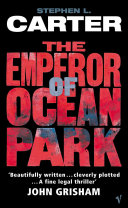
The Emperor of Ocean Park is a 2002 novel by American author and law professor Stephen L. Carter. It is the first part of Carter's Elm Harbor series; two more novels in the series were published in 2007 and 2008. The book was Carter's first work of fiction, and spent 11 weeks on The New York Times best-seller list following its publication. Described as a murder mystery, the novel tells the story of Talcott Garland, a law professor who uncovers a mystery surrounding his father, the titular 'Emperor of Ocean Park'. Written from Tal's first person perspective, the book explores themes of privileged black identity, politics, and law, and contains many allusions to chess.Because a number of publishing houses were interested in obtaining the rights to the book, Carter received an exceptionally large advance of $4.2 million. The size of the advance, for a debut novel from an African-American writer, contributed to an important shift for African-American literature, with the book marketed and received as a mainstream work of fiction, rather than one aimed at a specialized audience. The novel was well-reviewed by most critics, with attention being drawn to its then-unusual setting for a murder mystery story, featuring an African-American protagonist and with most of the story taking place in wealthy, predominately African-American neighborhoods in Washington, D.C. and Martha's Vineyard. It won the 2003 Anisfield-Wolf Book Award and BCALA Literary Award, and was nominated for several more, including the NAACP Image Award for Outstanding Literary Work, Fiction and the New Blood Dagger from the Crime Writer's Association.
“Rumor is rarely more interesting than fact, but it is always more readily available.”
Stephen L. Carter book The Emperor of Ocean Park
Source: The Emperor of Ocean Park (2002), Ch. 46, Resting Places, I
Stephen L. Carter book The Emperor of Ocean Park
Source: The Emperor of Ocean Park (2002), Ch. 12, A Special Delivery, II
Stephen L. Carter book The Emperor of Ocean Park
Jack Ziegler, Ch. 44, Stormy Weather, III
The Emperor of Ocean Park (2002)
Stephen L. Carter book The Emperor of Ocean Park
Karl, Ch. 26, Sam Loyd's Challenge
The Emperor of Ocean Park (2002)
Stephen L. Carter book The Emperor of Ocean Park
Source: The Emperor of Ocean Park (2002), Ch. 18, More News by Phone, III
Stephen L. Carter book The Emperor of Ocean Park
Source: The Emperor of Ocean Park (2002), Ch. 9, A Pedagogical Disagreement, II
Stephen L. Carter book The Emperor of Ocean Park
Source: The Emperor of Ocean Park (2002), Ch. 25, A Modest Request, I
Stephen L. Carter book The Emperor of Ocean Park
Source: The Emperor of Ocean Park (2002), Ch. 50, Again Old Town, I
Stephen L. Carter book The Emperor of Ocean Park
Source: The Emperor of Ocean Park (2002), Ch. 17, The Brass Ring, IV
Stephen L. Carter book The Emperor of Ocean Park
Source: The Emperor of Ocean Park (2002), Ch. 17, The Brass Ring, II
Stephen L. Carter book The Emperor of Ocean Park
All at once, you find yourself in thrall to the very thing that most terrifies you. Your work slides, your friendships slide, your marriage slides, but you scarcely notice: to be depressed is to be half in love with disaster.
Source: The Emperor of Ocean Park (2002), Ch. 12, A Special Delivery, II
Stephen L. Carter book The Emperor of Ocean Park
Not exactly the building, not exactly the faculty or the students or the alumni — more than all those things but also less, a paradox, an order, a mystery, a monster, an utter joy.
Source: The Emperor of Ocean Park (2002), Ch. 9, A Pedagogical Disagreement, II


