Miguel de Unamuno cytaty
strona 7

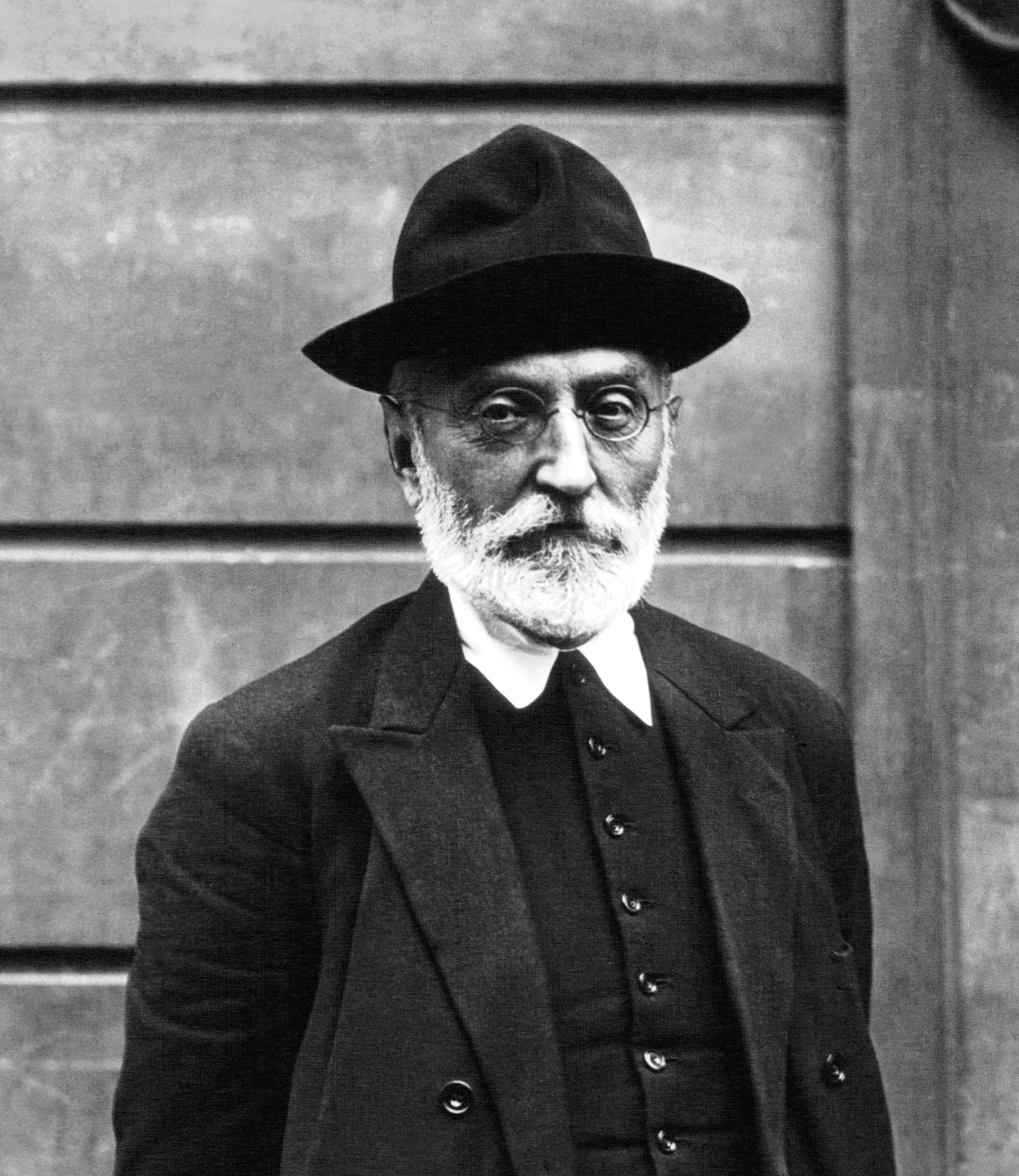
Miguel de Unamuno y Jugo – hiszpański filozof, pisarz, dramaturg i poeta, rektor Uniwersytetu w Salamance, z pochodzenia Bask. Zrozpaczony działaniami Republiki poparł początkowo generała Francisca Franco. Nie mógł jednak zignorować rzezi i morderstw, których ofiarami padli jego przyjaciele: Casto Prieto , Salvador Vila oraz Federico García Lorca. Wziął udział w Festiwalu Rasy Hiszpańskiej, zorganizowanym 12 października 1936 r. W odpowiedzi na gwałtowne ataki profesora Francisca Maldonado przeciwko Katalończykom i Baskom wygłosił przemowę przeciwko ideom nacjonalistów. Prawdopodobnie tylko obecność żony generała Francisca Franco uratowała go przed linczem. Generał Franco życzył sobie rozstrzelania filozofa, nie uczynił tego jednak ze względu na jego międzynarodową sławę i reakcje, jakie wywołało za granicą morderstwo Federico Garcíi Lorki.

✵ 29. Wrzesień 1864 – 31. Grudzień 1936
Miguel de Unamuno Fotografia
Miguel de Unamuno: 216 cytatów3 Polubienia

Miguel de Unamuno słynne cytaty

Miguel de Unamuno cytaty

„Świadomość jest chorobą.”

Miguel de Unamuno

O poczuciu tragiczności życia wśród ludzi i wśród narodów

„Miłość wynaleźli poeci, żeby móc później na jej temat wypisywać różne nudne brednie. Pozytywną rzeczą jest tylko małżeństwo.”

Miguel de Unamuno

Źródło: Mikołaj Kozakiewicz, O miłości prawie wszystko, LSW, Warszawa 1982, s. 139.

„Wiara, która nie wątpi jest martwą wiarą.”

Miguel de Unamuno

Fe que no duda es fe muerta. (hiszp.)
Źródło: Tu mano es mi destino pod red. Cirilo Flóreza Miguela

„Nie zadawaj się z osobami poważnymi, bo kto nigdy nie mówi głupstw, jest głupi od stóp do głów.”

Miguel de Unamuno

Źródło: Antonio Vasquez, Małżeństwo na nowe czasy

Miguel de Unamuno: Cytaty po angielsku

“Windelband, the historian of philosophy, in his essay on the meaning of philosophy (Was ist Philosophie? in the first volume of his Präludien) tells us that "the history of the word 'philosophy' is the history of the cultural significance of science." He continues: "When scientific thought attains an independent existence as a desire for knowledge, it takes the name of philosophy; when subsequently knowledge as a whole divides into its various branches, philosophy is the general knowledge of the world that embraces all other knowledge. As soon as scientific thought stoops again to becoming a means to ethics or religious contemplation, philosophy is transformed into an art of life or into a formulation of religious beliefs. And when afterwards the scientific life regains its liberty, philosophy acquires once again its character as an independent knowledge of the world, and in so far as it abandons the attempt to solve this problem, it is changed into a theory of knowledge itself." Here you have a brief recapitulation of the history of philosophy from Thales to Kant, including the medieval scholasticism upon which it endeavored to establish religious beliefs. But has philosophy no other office to perform, and may not its office be to reflect upon the tragic sense of life itself, such as we have been studying it, to formulate this conflict between reason and faith, between science and religion, and deliberately to perpetuate this conflict?”

Miguel de Unamuno

The Tragic Sense of Life (1913), Conclusion : Don Quixote in the Contemporary European Tragi-Comedy

“I would say that teleology is theology, and that God is not a "because," but rather an "in order to."”

Miguel de Unamuno książka San Manuel Bueno, Mártir

San Manuel Bueno, Mártir (1933), Prologue

“But as far as our own world is concerned, its gradual leveling-down — or, we might say, its death — appears to be proved. And how will this process affect the fate of our spirit? Will it wane with the degradation of the energy of our world and return to unconsciousness, or will it grow according as the utilizable energy diminishes and by virtue of the very efforts that it makes to retard this degradation and to dominate Nature?”

Miguel de Unamuno książka The Tragic Sense of Life

for this it is that constitutes the life of the spirit. May it be that consciousness and its extended support are two powers in contraposition, the one growing at the expense of the other?
The Tragic Sense of Life (1913), X : Religion, the Mythology of the Beyond and the Apocatastasis

Podobni autorzy

Ramón Gómez de la Serna Fotografia
Ramón Gómez de la Serna46
pisarz hiszpański None
Vicente Aleixandre Fotografia
Vicente Aleixandre1
hiszpański poeta, noblista None
Pablo Picasso Fotografia
Pablo Picasso29
hiszpański malarz, rzeźbiarz None
Jean-Paul Sartre Fotografia
Jean-Paul Sartre81
powieściopisarz, dramaturg, eseista i filozof francuski, no… None
Bertolt Brecht Fotografia
Bertolt Brecht49
niemiecki pisarz, dramaturg, teoretyk teatru, inscenizator … None
Elias Canetti Fotografia
Elias Canetti58
poeta i dramaturg austriacki, noblista None
William Butler Yeats Fotografia
William Butler Yeats13
poeta i dramaturg irlandzki, noblista None
Martin Heidegger Fotografia
Martin Heidegger20
filozof niemiecki None
Gabriele d'Annunzio Fotografia
Gabriele d'Annunzio8
włoski poeta, dramaturg i prozaik None
Thomas Stearns Eliot Fotografia
Thomas Stearns Eliot18
poeta, dramaturg i eseista angielski None