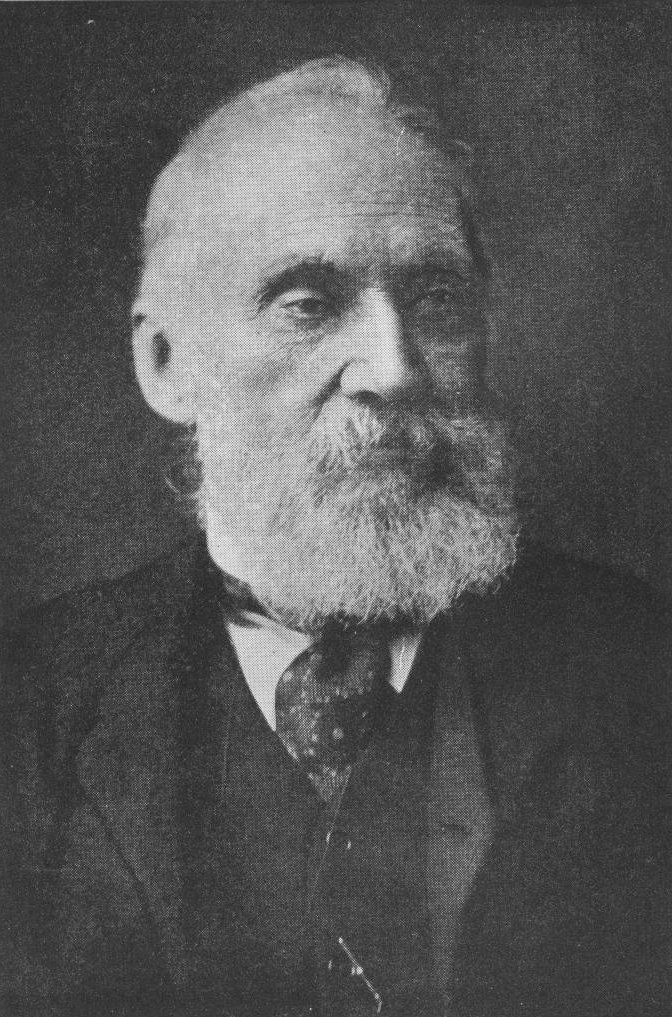
Lord Kelvin cytaty
„Maszyny latające cięższe od powietrza są niemożliwe.”
Heavier-than-air flying machines are impossible. (ang.)
w 1895.
Źródło: Gordon Dryden, Jeanette Vos, Rewolucja w uczeniu, Moderski i S-ka, Poznań 2000, tłum. Bożena Jóźwiak, s. 194.
Lord Kelvin: Cytaty po angielsku
Lecture on "Electrical Units of Measurement" (3 May 1883), published in Popular Lectures Vol. I, p. 73, as quoted in The Life of Lord Kelvin (1910) by Silvanus Phillips Thompson
“I have not the smallest molecule of faith in aerial navigation other than ballooning”
As a response to Major B. F. S. Baden Powell's request to join the Aeronautical Society, December 8, 1896 http://zapatopi.net/kelvin/papers/letters.html#baden-powell.<br>Often reproduced out of context and without citation to any primary source as "Heavier-than-air flying machines are impossible", like in The Experts Speak : The Definitive Compendium of Authoritative Misinformation (1984) by Christopher Cerf and Victor Navasky, p. 236 <br class="br">Kontekst: I am afraid I am not in the flight for “aerial navigation”. I was greatly interested in your work with kites; but I have not the smallest molecule of faith in aerial navigation other than ballooning or of expectation of good results from any of the trials we hear of. So you will understand that I would not care to be a member of the aëronautical Society.
From a 1900, April 27, , Sixth Series, 2, 1–40 (1901).
Thermodynamics quotes
Kontekst: The beauty and clearness of the dynamical theory, which asserts heat and light to be modes of motion, is at present obscured by two clouds. I. The first came into existence with the undulatory theory of light, and was dealt with by Fresnel and Dr. Thomas Young; it involved the question, how could the earth move through an elastic solid, such as essentially is the luminiferous ether? II. The second is the Maxwell–Boltzmann doctrine regarding the partition of energy.
As quoted in The Life of Lord Kelvin (1910), by Silvanus Phillips, Volume 2, (2005 edition, . p. 866)
“Tesla has contributed more to electrical science than any man up to his time.”
Statement of 1896, as quoted in Prodigal Genius : The Life of Nikola Tesla (2007) by James J. O'Neill
Lecture on "Electrical Units of Measurement" (3 May 1883), published in Lectures Vol. I, p. 73 https://archive.org/stream/popularlecturesa01kelvuoft#page/73/mode/1up|Popular
As quoted in The Life of Lord Kelvin (1910), by Silvanus Phillips, Volume 2, (2005 edition, . p. 1093)
Mathematical and Physical Papers, Vol.1 http://books.google.com/books?id=nWMSAAAAIAAJ p. 179 (1882) "On the Dynamical Theory of Heat with Numerical Results Deduced from Mr Joule's Equivalent of a Thermal Unit and M. Regnault's Observations on Steam" originally from Transactions of the Royal Society of Edinburgh, March, 1851 and Philosophical Magazine iv, 1852 <br class="br">Thermodynamics quotes
Quoted in Life of Lord Kelvin (1910) by Silvanus Phillips Thompson
Misattributed to Kelvin since the 1980s, either without citation or stating that it was made in an address to the British Association for the Advancement of Science in 1900. There is no evidence that Kelvin said this, and the quote is instead a paraphrase of Albert A. Michelson, who in 1894 stated: "… it seems probable that most of the grand underlying principles have been firmly established … An eminent physicist remarked that the future truths of physical science are to be looked for in the sixth place of decimals." The attribution to Kelvin giving an address in 1900 is presumably a confusion with his “Two clouds” speech, delivered to the Royal Society in 1900 (see above), and which on the contrary pointed out areas that would subsequently see revolutions. <br class="br">Misattributed <br class="br">Źródło: Superstring: A theory of everything? (1988) by Paul Davies and Julian Brown <br class="br">Źródło: Rebuilding the Matrix : Science and Faith in the 21st Century (2003) by Denis Alexander <br class="br">Źródło: Einstein (2007) by Walter Isaacson, page 575 <br class="br">Źródło: The End of Science (1996), by , p. 19 https://books.google.com/books?id=S1Lmqh79dOoC&pg=PA19
“To live among friends is the primary essential of happiness.”
Lord Kelvin’s Replies to Addresses given on the Celebration of the Jubilee of his Professorship (June 15-17, 1896). Quoted in Lord Kelvin, Professor of Natural Philosophy in the University of Glasgow 1846-1899 (1899) by George F. Fitzgerald http://historical.library.cornell.edu/cgi-bin/cul.math/docviewer?did=03620002
Letter to G. F. FitzGerald (1896) as quoted in A History of Vector Analysis : The Evolution of the Idea of a Vectorial System (1994) by Michael J. Crowe, p. 120
Letter to Robert Baldwin Hayward (1892), as quoted in Energy and Empire : A Biographical Study of Lord Kelvin (1989) by Crosbie Smith and M. Norton Wise
Mathematical and Physical Papers, Vol.1 http://books.google.com/books?id=nWMSAAAAIAAJ p. 512 (1882) "On a Universal Tendency in Nature to the Dissipation of Mechanical Energy" originally from the Proceedings of the Royal Society of Edinburgh for April 19, 1852, also Philosophical Magazine, Oct. 1852 <br class="br">Thermodynamics quotes
Mathematical and Physical Papers, Vol.2 http://books.google.com/books?id=kNrVAAAAMAAJ (1884) "On Mechanical Antecedents of Motion, Heat and Light" (originally published 1854, 1855) <br class="br">Thermodynamics quotes
“Mathematics is the only true metaphysics.”
As quoted by Silvanus Phillips Thompson, The Life of William Thomson, Baron Kelvin of Largs (1910) Vol. 2 https://books.google.com/books?id=S_PPAAAAMAAJ, p. 1124 <br class="br">Wariant: Mathematics is the only good metaphysics.
“I am afraid I am not in the flight for “aerial navigation.””
I was greatly interested in your work with kites; but I have not the smallest molecule of faith in aerial navigation other than ballooning or of expectation of good results from any of the trials we hear of. So you will understand that I would not care to be a member of the aëronautical Society. <br class="br">As a response to Major B. F. S. Baden Powell's request to join the Aeronautical Society, December 8, 1896 http://zapatopi.net/kelvin/papers/letters.html#baden-powell. <br class="br">Often reproduced out of context and without citation to any primary source as "Heavier-than-air flying machines are impossible", like in The Experts Speak : The Definitive Compendium of Authoritative Misinformation (1984) by Christopher Cerf and Victor Navasky, p. 236
Źródło: In a letter addressed to George Stokes dated December 20, 1857, as quoted in Fluid Mechanics in the Next Century https://doi.org/10.1115/1.3101925 (1996), by Mohamed Gad-el-Hak and Mihir Sen.
“I think it cannot be done. No balloon and no aeroplane will ever be practically successful.”
Źródło: *The Newark Advocate*, April 26, 1902.
https://zapatopi.net/kelvin/papers/interview_aeronautics_and_wireless.html


