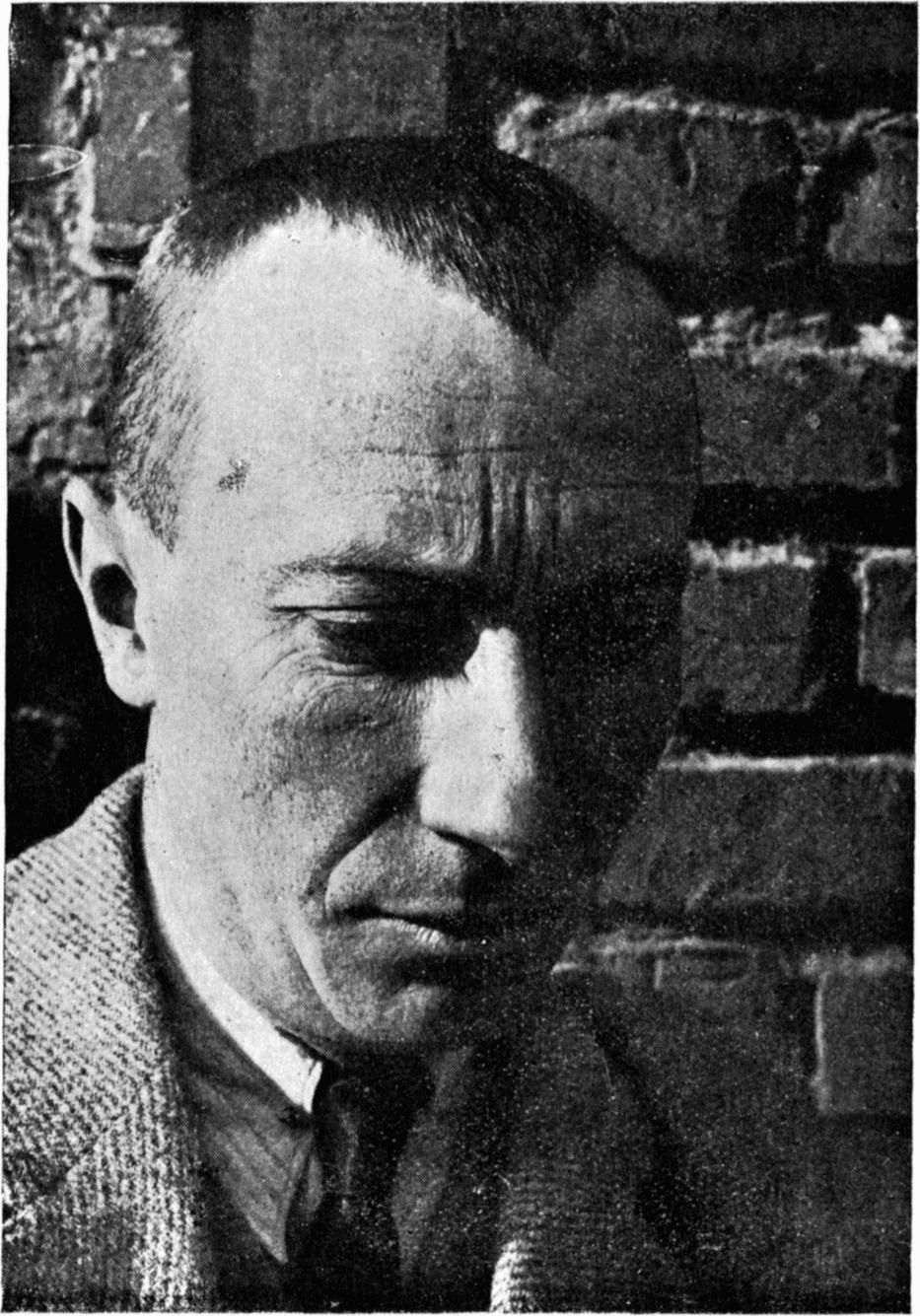
Hans Arp słynne cytaty
Hans Arp: Cytaty po angielsku
Źródło: 1960s, Jours effeuillés: Poèmes, essaies, souvenirs (1966), p. 183: Serge Fauchereau (1988) in Arp, p. 20 commented: 'Even though his work was nonrepresentational, Arp disapproved of the term 'abstract art' being applied to it, as he often explained with the above quote'.
Kontekst: We do not wish to copy nature. We do not want to reproduce, we want to produce. We want to produce as a plant produces a fruit and does not itself reproduce. We want to produce directly and without meditation. As there is not the least trace of abstraction in this art, we will call it concrete art.
Źródło: 1960s, Jours effeuillés: Poèmes, essaies, souvenirs (1966), p. 183
Kontekst: I wanted to find another order, another value for man in nature. He should no longer be the measure of all things, nor should everything be compared with him, but, on the contrary, all things, and man as well, should be like nature, without measure. I wanted to create new appearances, to extract new forms from man. This is made clear in my objects from 1917.
Źródło: 1960s, Jours effeuillés: Poèmes, essaies, souvenirs (1966), p. 63
Kontekst: Dada was given the Venus of Milo a clyster and has allowed the Laocoön and his sons to rest awhile, after thousands of years of struggle with the good sausage Python. The philosophers are of less use to Dada than an old toothbrush, and it leaves them on the scrap heap for the great leaders of the world.
quote in Arp on Arp: poems, essays, memories, Viking, 1972, p. 231
Attributed from posthumous publications
Kontekst: Soon silence will have passed into legend. Man has turned his back on silence. Day after day he invents machines and devices that increase noise and distract humanity from the essence of life, contemplation, meditation.... tooting, howling, screeching, booming, crashing, whistling, grinding, and trilling bolster his ego. His anxiety subsides. His inhuman void spreads monstrously like a gray vegetation.
Źródło: 1960s, Jours effeuillés: Poèmes, essaies, souvenirs (1966), p. 315
Kontekst: Since the time of the cavemen, man has glorified himself, has made himself divine, and his monstrous vanity has caused human catastrophe. Art has collaborated in this false development. I find this concept of art which has sustained man's vanity to be loathsome.
“I like nature but not its substitutes. Naturalist art, illusionism, is a substitute for nature.”
Źródło: 1960s, Jours effeuillés: Poèmes, essaies, souvenirs (1966), p. 359
Kontekst: I like nature but not its substitutes. Naturalist art, illusionism, is a substitute for nature. I remember that in arguing with Piet Mondrian [in Paris, 1920's], he opposed art to nature saying that art is artificial and nature is natural. I do not share this opinion. I do not think that nature is in natural opposition to art. Art's origins are natural.
on creating art without using oil colors to avoid any reference with usual painting, in The Art of Jean Arp, Herbert Read, Abrams, New York 1968, p. p. 34, 38
1960s
Arp wrote this in lowercase letters
Notes From a Dada Diary; published, 1932 in 'Transition magazine'; as quoted (in lowercase letters), “Soby, James Thrall. Arp: The Museum of Modern Art. Doubleday, New York, 1958, Print. p. 17
1930s
In 1915, w:Otto van Rees, A.C. van Rees, Freundlich, S. Taeuber [his wife] and Arp made an attempt of this sort, as Arp mentioned himself.
Źródło: 1940s, Abstract Art, Concrete Art (c. 1942), p. 118
Looking, Arp, Jean; as quoted by Soby, James Thrall. Arp: The Museum of Modern Art. Doubleday, New York, 1958, Print. p. 12
1960s
Źródło: 1960s, Jours effeuillés: Poèmes, essaies, souvenirs (1966), p. 431
Źródło: 1960s, Jours effeuillés: Poèmes, essaies, souvenirs (1966), p. 420 - quote on his early collages, Hans Arp made ca. 1914.
Dadaland (1948); Quoted in: Cosana Maria Eram (2010) The autobiographical pact: otherness and redemption in four French avant-garde artists, p. 20
Quote of Jean Arp, referring to Swiss Dada in Zurich after 1914.
1940s
Źródło: 1960s, Jours effeuillés: Poèmes, essaies, souvenirs (1966), p. 431
Źródło: 1960s, Jours effeuillés: Poèmes, essaies, souvenirs (1966), p. 307
Hans Arp's quote on drawing on the black surface; as quoted in Search for the Real, Hans Hofmann, Addison Gallery of modern Art, 1948
1940s
Arp's quote from his text in a catalogue of his exhibition, in Zürich 1915; quoted by Arp himself in his text 'Abstract Art, Concrete Art,' Hans Arp, c. 1942; as quoted in Theories of Modern Art: A Source Book by Artists and Critics, by Herschel Browning Chipp, Peter Selz, p. 390
1910-20s
Źródło: 1960s, Jours effeuillés: Poèmes, essaies, souvenirs (1966), p. 383
Arp's quote on his wife, in 'Sophie Taeuber-Arp', Hans Arp; in Arp on Arp: Poems, Essays, Memories, ed. Marcel Jean, transl. Joachim Neugroschel; Viking Press, New York 1972, p. 222
1910-20s
Dialogue between Hans Arp and Kurt Schwitters, (1956) with introduction in: Franz Müllers Drahtfrühling-- Memories of Kurt Schwitters; as quoted in I is Style, ed. Siegfried Gohr & Gunda Luyken, commissioned by w:Rudi Fuchs, 2000, pp. 139-140
1950s
Źródło: 1960s, Jours effeuillés: Poèmes, essaies, souvenirs (1966), p. 307
Dada poetry lines from his poem 'Der Vogel Selbdritt', Jean / Hans Arp - first published in 1920; as quoted in Gesammelte Gedichte I (transl. Herbert Read), p. 41
1910-20s
In 'Unsern täglichen Traum', Hans Arp (1914 - 1954); p. 76; as quoted in Arp, ed. Serge Fauchereau, Ediciones Poligrafa, S. A., Barcelona 1988, p. 11
1960s
Źródło: 1960s, Jours effeuillés: Poèmes, essaies, souvenirs (1966), p. 307
Źródło: 1960s, Jours effeuillés: Poèmes, essaies, souvenirs (1966), p. 430
Looking, Arp, Jean; as quoted by Soby, James Thrall. Arp: The Museum of Modern Art. Doubleday, New York, 1958, Print. p. 12
1960s
Źródło: 1960s, Jours effeuillés: Poèmes, essaies, souvenirs (1966), p. 288, Arp refers in this quote to the structure in the early watercolor paintings by his wife Sophie Taeuber.
1910-20s
Źródło: Isms in Art, (Hans Arp and El Lissitzky, The isms of art, 1924), published in 1925
“To be full of joy when looking at an oeuvre is not a little thing.”
Źródło: 1960s, Jours effeuillés: Poèmes, essaies, souvenirs (1966), p. 571 - Hans Arp's quote, made in 1962 in Galerie Denise René - this remark is also the last line in the art book Jours effeuillés: Poèmes, essaies, souvenirs, Hans Arp, Gallimard, Paris 1966
Źródło: 1960s, Jours effeuillés: Poèmes, essaies, souvenirs (1966), p. 406


