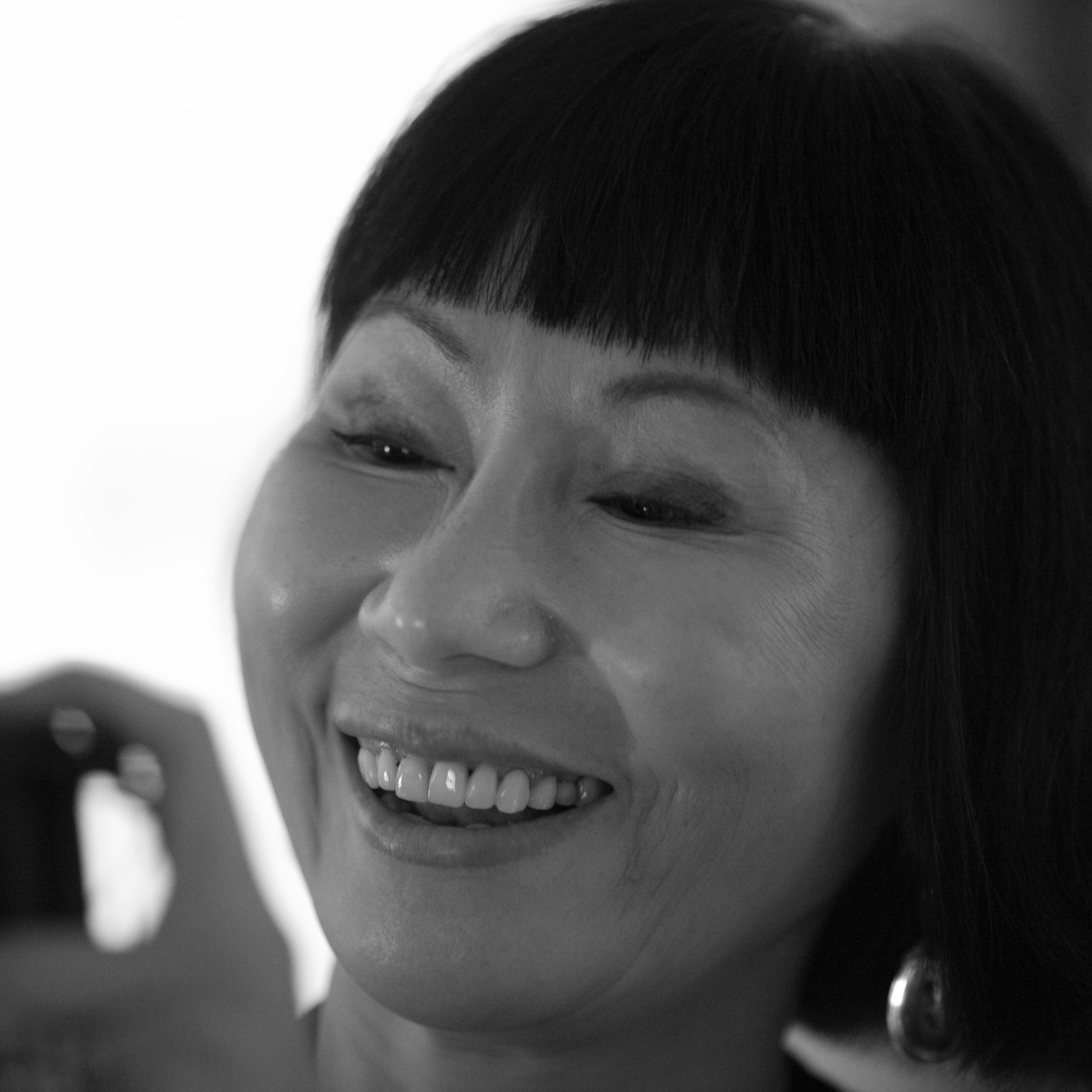
Amy Tan: 108 cytatów0 Polubień
Amy Tan słynne cytaty
„Szczęście daje nam myśl, że sytuacja kogoś innego może być znacznie gorsza od naszej.”
Córka nastawiacza kości
Postać: Siostra Yu
Córka nastawiacza kości
„Wyobraźnia karmi się wspomnieniami, a w mojej aż się roi od koszmarów.”
Źródło: „Zwierciadło”, 2007, nr 3/1925
Amy Tan cytaty
„Pisarz pisze i ten proces – nie sława czy fortuna – jest najważniejszy.”
Źródło: „Zwierciadło”, 2007, nr 3/1925
„Czymże jest przeszłość, jeśli nie tym, co sami postanawiamy pamiętać.”
Córka nastawiacza kości
„Pisanie o czym się tylko zechce, było najniebezpieczniejszą formą wyrażania życzeń.”
Córka nastawiacza kości
Źródło: „Zwierciadło”, 2007, nr 3/1925
„Człowiek powinien wiedzieć, jak coś się zaczęło. Początek prowadzi zwykle do określonego końca.”
Postać: Droga Ciocia
Córka nastawiacza kości
„Kiedy piszesz, musisz zebrać w jeden strumień wszystkie swobodne prądy serca.”
Córka nastawiacza kości
Źródło: „Zwierciadło”, 2007, nr 3/1925
Amy Tan: Cytaty po angielsku
“That was how dishonesty and betrayal started, not in big lies but in small secrets.”
Amy Tan książka The Bonesetter's Daughter
Źródło: The Bonesetter's Daughter
Amy Tan The Joy Luck Club
American Acheivement interview (1996)
Źródło: The Joy Luck Club
Kontekst: Reading for me was a refuge. I could escape from everything that was miserable in my life and I could be anyone I wanted to be in a story, through a character. It was almost sinful how much I liked it. That's how I felt about it. If my parents knew how much I loved it, I thought they would take it away from me. I think I was also blessed with a very wild imagination because I can remember, when I was at an age before I could read, that I could imagine things that weren't real and whatever my imagination saw is what I actually saw. Some people would say that was psychosis but I prefer to say it was the beginning of a writer's imagination. If I believed that insects had eyes and mouths and noses and could talk, that's what they did. If I thought I could see devils dancing out of the ground, that's what I saw. If I thought lightning had eyes and would follow me and strike me down, that's what would happen. And I think I needed an outlet for all that imagination, so I found it in books.
“Too many good things all seem the same after a while.”
Amy Tan The Joy Luck Club
Źródło: The Joy Luck Club
“Writing what you wished was the most dangerous form of wishful thinking.”
Amy Tan książka The Bonesetter's Daughter
Źródło: The Bonesetter's Daughter
“Chance is the first step you take, luck is what comes afterward.”
Amy Tan The Kitchen God's Wife
Źródło: The Kitchen God's Wife
Amy Tan The Hundred Secret Senses
Wariant: Everyone must dream. We dream to give ourselves hope. To stop dreaming — well, that’s like saying you can never change your fate. Isn’t that true?
Źródło: The Hundred Secret Senses (1995)
“Yin people is the term Kwan uses, because "ghosts" is politically incorrect.”
SALON Interview (1995)
Kontekst: I've long thought about how life is influenced by death, how it influences what you believe in and what you look for. Yes, I think I was pushed in a way to write this book by certain spirits — the yin people — in my life. They've always been there, I wouldn't say to help, but to kick me in the ass to write.... Yin people is the term Kwan uses, because "ghosts" is politically incorrect. People have such terrible assumptions about ghosts — you know, phantoms that haunt you, that make you scared, that turn the house upside down. Yin people are not in our living presence but are around, and kind of guide you to insights. Like in Las Vegas when the bells go off, telling you you've hit the jackpot. Yin people ring the bells, saying, "Pay attention." And you say, "Oh, I see now." Yet I'm a fairly skeptical person. I'm educated, I'm reasonably sane, and I know that this subject is fodder for ridicule.... To write the book, I had to put that aside. As with any book. I go through the anxiety, "What will people think of me for writing something like this?" But ultimately, I have to write what I have to write about, including the question of life continuing beyond our ordinary senses.
Amy Tan The Joy Luck Club
The Joy Luck Club (1989), Chapter 1, First lines
“I have always known a thing before it happens.”
Amy Tan The Joy Luck Club
The Joy Luck Club (1989), Ch. 14, pg. 243
“My sister Kwan believes she has yin eyes.”
Amy Tan The Hundred Secret Senses
The Hundred Secret Senses (1995)
Kontekst: My sister Kwan believes she has yin eyes. She sees those who have died and now dwell in the World of Yin, ghosts who leave the mists just to visit her kitchen on Balboa Street in San Francisco.
"Libby-ah," she'll say to me. "Guess who I see yesterday, you guess." And I don't have to guess that she's talking about someone dead.
SALON Interview (1995)
Kontekst: Other Asian-American writers just shudder when they are compared to me; it really denigrates the uniqueness of their own work. I find it happening less here partly because people are more aware now of the flaws of political correctness — that literature has to do something to educate people. I don't see myself, for example, writing about cultural dichotomies, but about human connections. All of us go through angst and identity crises. And even when you write in a specific context, you still tap into that subtext of emotions that we all feel about love and hope, and mothers and obligations and responsibilities.
SALON Interview (1995)
Kontekst: I've long thought about how life is influenced by death, how it influences what you believe in and what you look for. Yes, I think I was pushed in a way to write this book by certain spirits — the yin people — in my life. They've always been there, I wouldn't say to help, but to kick me in the ass to write.... Yin people is the term Kwan uses, because "ghosts" is politically incorrect. People have such terrible assumptions about ghosts — you know, phantoms that haunt you, that make you scared, that turn the house upside down. Yin people are not in our living presence but are around, and kind of guide you to insights. Like in Las Vegas when the bells go off, telling you you've hit the jackpot. Yin people ring the bells, saying, "Pay attention." And you say, "Oh, I see now." Yet I'm a fairly skeptical person. I'm educated, I'm reasonably sane, and I know that this subject is fodder for ridicule.... To write the book, I had to put that aside. As with any book. I go through the anxiety, "What will people think of me for writing something like this?" But ultimately, I have to write what I have to write about, including the question of life continuing beyond our ordinary senses.
Amy Tan The Joy Luck Club
Źródło: The Joy Luck Club (1989)
“I hid my deepest feelings so well I forgot where I placed them.”
Amy Tan książka Saving Fish from Drowning
Źródło: Saving Fish from Drowning
Amy Tan The Hundred Secret Senses
Źródło: The Hundred Secret Senses
Amy Tan The Joy Luck Club
Źródło: The Joy Luck Club
Amy Tan książka Saving Fish from Drowning
Źródło: Saving Fish from Drowning
“You remember only what you want to remember. You know only what your heart allows you to know.”
Amy Tan książka Saving Fish from Drowning
Źródło: Saving Fish from Drowning
“But she never looked back with regret. There were so many ways for things to get better.
-Jing-mei”
Amy Tan The Joy Luck Club
Źródło: The Joy Luck Club
“I love and am loved, fully and freely, nothing expected, more than enough received.”
Amy Tan The Hundred Secret Senses
Źródło: The Hundred Secret Senses
Amy Tan The Kitchen God's Wife
Źródło: The Kitchen God's Wife


.jpg)