
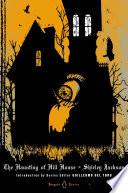
“Am I walking toward something I should be running away from?”
Shirley Jackson book The Haunting of Hill House
Source: The Haunting of Hill House
Shirley Hardie Jackson was an American writer. She was popular during her life, and her work has received increased attention from literary critics in recent years. She has been cited as an influence on a diverse set of authors, including Neil Gaiman, Stephen King, Sarah Waters, Nigel Kneale, Joanne Harris and Richard Matheson.
She is best known for the short story "The Lottery" , which reveals a secret, sinister underside to a bucolic American village, and for The Haunting of Hill House , which is widely considered to be one of the best ghost stories ever written. In her critical biography of Jackson, Lenemaja Friedman notes that when "The Lottery" was published in the June 26, 1948, issue of The New Yorker, it received a response that "no New Yorker story had ever received". Hundreds of letters poured in that were characterized by, as Jackson put it, "bewilderment, speculation, and old-fashioned abuse". In the July 22, 1948, issue of the San Francisco Chronicle, Jackson offered the following in response to persistent queries from her readers about her intentions:
Explaining just what I had hoped the story to say is very difficult. I suppose, I hoped, by setting a particularly brutal ancient rite in the present and in my own village to shock the story's readers with a graphic dramatization of the pointless violence and general inhumanity in their own lives.
Jackson's husband, the literary critic Stanley Edgar Hyman, wrote in his preface to a posthumous anthology of her work that "she consistently refused to be interviewed, to explain or promote her work in any fashion, or to take public stands and be the pundit of the Sunday supplements. She believed that her books would speak for her clearly enough over the years". Hyman insisted that the dark visions found in Jackson's work were not, as some critics claimed, the product of "personal, even neurotic, fantasies", but, rather, comprised "a sensitive and faithful anatomy" of the Cold War era in which she lived, "fitting symbols for [a] distressing world of the concentration camp and the Bomb." Jackson may even have taken pleasure in the subversive impact of her work, as revealed by Hyman's statement that she "was always proud that the Union of South Africa banned 'The Lottery', and she felt that they at least understood the story".
“Am I walking toward something I should be running away from?”
Shirley Jackson book The Haunting of Hill House
Source: The Haunting of Hill House
“On the moon we wore feathers in our hair, and rubies on our hands. On the moon we had gold spoons.”
Shirley Jackson book We Have Always Lived in the Castle
Source: We Have Always Lived in the Castle
“I can't help it when people are frightened," says Merricat. "I always want to frighten them more.”
Shirley Jackson book We Have Always Lived in the Castle
Source: We Have Always Lived in the Castle
“Poor strangers, they have so much to be afraid of.”
Shirley Jackson book We Have Always Lived in the Castle
Source: We Have Always Lived in the Castle
“No live organism can continue for long to exist sanely under conditions of absolute reality.”
Shirley Jackson book The Haunting of Hill House
Source: The Haunting of Hill House
“Hill House, she thought, You're as hard to get into as heaven.”
Shirley Jackson book The Haunting of Hill House
Source: The Haunting of Hill House
Shirley Jackson book The Haunting of Hill House
Source: The Haunting of Hill House (1959), Ch. 1
Context: No live organism can continue for long to exist sanely under conditions of absolute reality; even larks and katydids are supposed, by some, to dream. Hill House, not sane, stood by itself against its hills, holding darkness within; it had stood so for eighty years and might stand for eighty more. Within, walls continued upright, bricks met neatly, floors were firm, and doors were sensibly shut; silence lay steadily against the wood and stone of Hill House, and whatever walked there, walked alone.
Shirley Jackson book We Have Always Lived in the Castle
Source: We Have Always Lived in the Castle
Shirley Jackson book The Haunting of Hill House
Source: The Haunting of Hill House (1959)
Context: This house, which seemed somehow to have formed itself, flying together into its own powerful pattern under the hands of its builders, fitting itself into its own construction of lines and angles, reared its great head back against the sky without concession to humanity. It was a house without kindness, never meant to be lived in, not a fit place for people or for love or for hope. Exorcism cannot alter the countenance of a house; Hill House would stay as it was until it was destroyed.
Shirley Jackson book The Haunting of Hill House
Source: The Haunting of Hill House (1959), Ch. 2
“A pretty sight, a lady with a book.”
Shirley Jackson book We Have Always Lived in the Castle
Source: We Have Always Lived in the Castle
Shirley Jackson book We Have Always Lived in the Castle
Source: We Have Always Lived in the Castle
Shirley Jackson book We Have Always Lived in the Castle
Source: We Have Always Lived in the Castle
Shirley Jackson book We Have Always Lived in the Castle
Source: We Have Always Lived in the Castle
“All cat stories start with this statement: "My mother, who was the first cat, told me this…”
Shirley Jackson book We Have Always Lived in the Castle
Source: We Have Always Lived in the Castle
“I'm going to put death in all their food and watch them die.”
Shirley Jackson book We Have Always Lived in the Castle
Source: We Have Always Lived in the Castle
“I shall weave a suit of leaves. At once. With acorns for buttons.”
Shirley Jackson book We Have Always Lived in the Castle
Source: We Have Always Lived in the Castle
Shirley Jackson book We Have Always Lived in the Castle
Source: We Have Always Lived in the Castle
Shirley Jackson book We Have Always Lived in the Castle
Source: We Have Always Lived in the Castle
Shirley Jackson book We Have Always Lived in the Castle
Source: We Have Always Lived in the Castle
“God! Whose hand was I holding?”
Shirley Jackson book The Haunting of Hill House
Source: The Haunting of Hill House
“Oh Constance, we are so happy.”
Shirley Jackson book We Have Always Lived in the Castle
Source: We Have Always Lived in the Castle
Shirley Jackson book We Have Always Lived in the Castle
Source: We Have Always Lived in the Castle
“Life Among the Savages is a disrespectful memoir of my children.”
Stanley J. Kunitz and Howard Harcraft's Twentieth Century Authors (1954)
Shirley Jackson book The Lottery
The Lottery (1948)
Lecture (1960); printed in her collection, Come Along with Me (1968)
Shirley Jackson book The Lottery
The Lottery (1948)
Regarding her story The Lottery, in the San Francisco Chronicle (22 July 1948)
“Some places have already quit lotteries.”
Shirley Jackson book The Lottery
Mrs. Adams said.
"Nothing but trouble in that," Old Man Warner said stoutly. "Pack of young fools."
The Lottery (1948)


