

“Every production of an artist should be the expression of an adventure of his soul.”
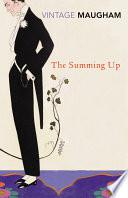
W. Somerset Maugham book The Summing Up
Source: The Summing Up (1938), p. 310
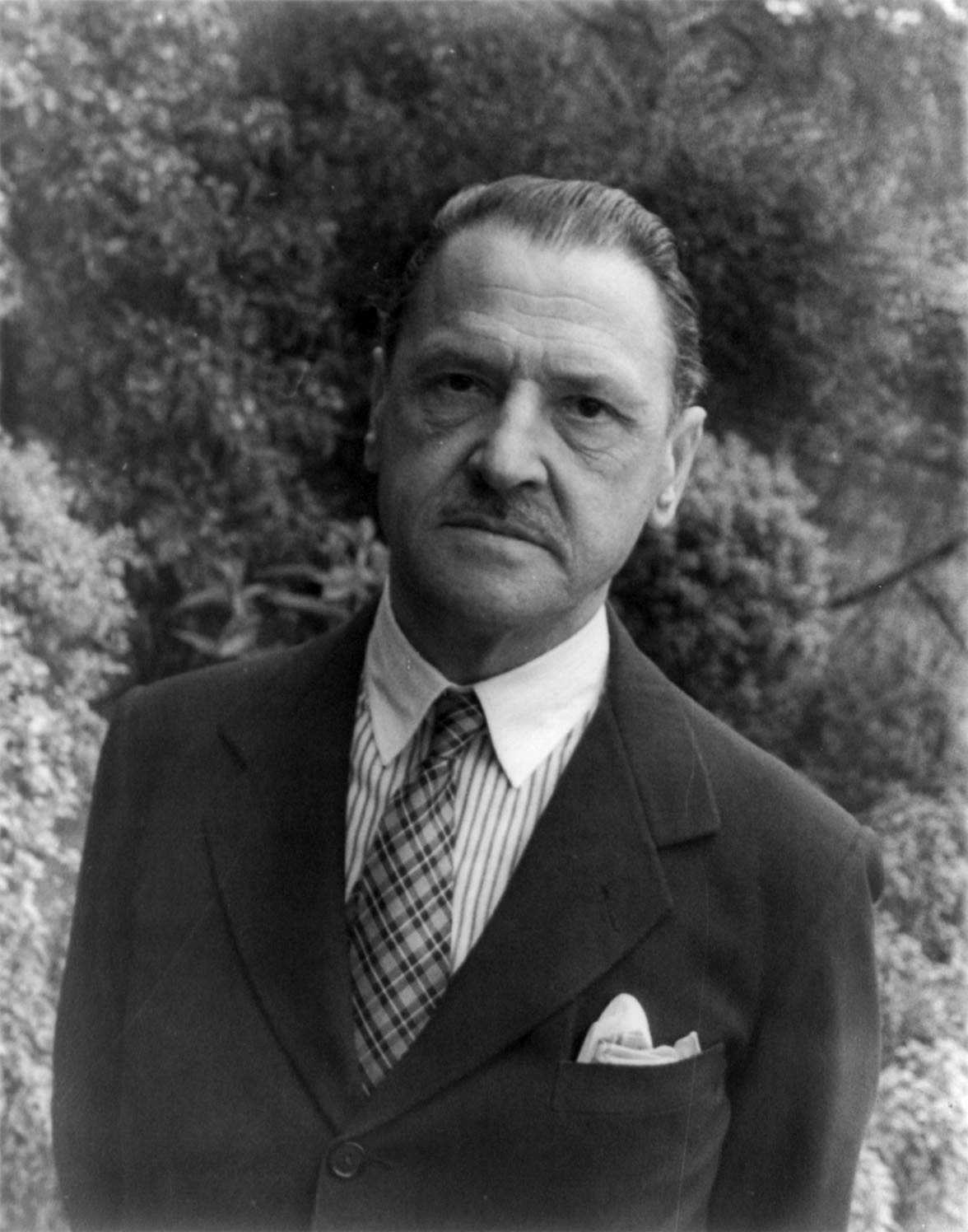
William Somerset Maugham, CH , better known as W. Somerset Maugham, was an English playwright, novelist, and short story writer. He was among the most popular writers of his era and reputedly the highest-paid author during the 1930s.Both Maugham's parents died before he was 10, and he was raised by a paternal uncle who was emotionally cold. He did not want to become a lawyer like other men in his family, so he trained and qualified as a physician. The initial run of his first novel Liza of Lambeth sold out so rapidly that he gave up medicine to write full-time.
During the First World War, he served with the Red Cross and in the ambulance corps before being recruited in 1916 into the British Secret Intelligence Service, for which he worked in Switzerland and Russia before the October Revolution of 1917. During and after the war, he travelled in India, Southeast Asia and the Pacific, and those experiences were reflected in later short stories and novels. Wikipedia
“Every production of an artist should be the expression of an adventure of his soul.”
W. Somerset Maugham book The Summing Up
Source: The Summing Up (1938), p. 310
W. Somerset Maugham book The Moon and Sixpence
Source: The Moon and Sixpence (1919), Ch. 41, p. 142
W. Somerset Maugham book Of Human Bondage
Source: Of Human Bondage (1915), Ch. 42
W. Somerset Maugham book The Moon and Sixpence
Source: The Moon and Sixpence (1919), Ch. 58, p. 213
“Life isn't long enough for love and art.”
W. Somerset Maugham book The Moon and Sixpence
Source: The Moon and Sixpence (1919), Ch. 21, p. 80
“We must go through life so inconspicuously that Fate does not notice us.”
W. Somerset Maugham book The Moon and Sixpence
Source: The Moon and Sixpence (1919), Ch. 38, p. 129
W. Somerset Maugham book The Summing Up
Source: The Summing Up (1938), p. 182
W. Somerset Maugham book The Summing Up
section 66
The Summing Up (1938)
"1941", p. 336
A Writer's Notebook (1946)
Newsweek, 23 May, 1960
W. Somerset Maugham book The Summing Up
Source: The Summing Up (1938), p. 182
“People ask you for criticism, but they only want praise.”
W. Somerset Maugham book Of Human Bondage
Source: Of Human Bondage (1915), Ch. 50
W. Somerset Maugham book The Moon and Sixpence
Source: The Moon and Sixpence (1919), Ch. 42, p. 147
“The Riviera isn't only a sunny place for shady people.”
Strictly Personal, p. 156 (Doubleday, Doran and co., inc., 1941)
“Beauty is an ecstasy; it is as simple as hunger. There is really nothing to be said about it.”
Source: Cakes and Ale: Or, The Skeleton in the Cupboard (1930), p. 140.<!-- Doubleday Doran & Co. -->
Context: Beauty is an ecstasy; it is as simple as hunger. There is really nothing to be said about it. It is like the perfume of a rose: you can smell it and that is all.
W. Somerset Maugham book The Razor's Edge
The Razor's Edge (1943)
Context: Nothing in the world is permanent, and we're foolish when we ask anything to last, but surely we're still more foolish not to take delight in it while we have it. If change is of the essence of existence one would have thought it only sensible to make it the premise of our philosophy.
“What mean and cruel things men can do for the love of God.”
"1901", p. 67
A Writer's Notebook (1946)
“A god that can be understood is not a god.”
W. Somerset Maugham book The Razor's Edge
The Razor's Edge (1943), p. 283
W. Somerset Maugham book Of Human Bondage
Source: Of Human Bondage (1915), Ch. 51
Context: You will hear people say that poverty is the best spur to the artist. They have never felt the iron of it in their flesh. They do not know how mean it makes you. It exposes you to endless humiliation, it cuts your wings, it eats into your soul like a cancer. It is not wealth one asks for, but just enough to preserve one's dignity, to work unhampered, to be generous, frank, and independent.
"The judgement seat", p. 316
Short Stories, Collected short stories 1
“Marriage is a very good thing, but I think it's a mistake to make a habit out of it.”
'"The Treasure"
Short Stories
“Women are always glad to listen when you discourse upon love…”
W. Somerset Maugham book The Razor's Edge
p, 125
The Razor's Edge (1943)
W. Somerset Maugham book The Moon and Sixpence
Source: The Moon and Sixpence (1919), Ch. 44, p. 157
W. Somerset Maugham book The Moon and Sixpence
Source: The Moon and Sixpence (1919), Ch. 1, p. 8
“But when all was said the important thing was to love rather than to be loved.”
W. Somerset Maugham book Of Human Bondage
Source: Of Human Bondage (1915), Ch. 70
The Mixture As Before (1940) "The Treasure"
Short Stories
“Old age has its pleasures, which, though different, are not less than the pleasures of youth.”
W. Somerset Maugham book The Summing Up
Source: The Summing Up (1938), p. 290
W. Somerset Maugham book Of Human Bondage
Source: Of Human Bondage (1915), Ch. 45
Source: Cakes and Ale: Or, The Skeleton in the Cupboard (1930), p. 137
“It was such a lovely day I thought it was a pity to get up.”
Our Betters (1923)
Plays
W. Somerset Maugham book The Summing Up
Source: The Summing Up (1938), Ch. 5, p. 12 http://books.google.com/books?id=2hNbAAAAMAAJ&q=%22There+is+only+one+thing+about+which+I+am+certain+and+this+is%22&pg=PA12#v=onepage- 13 http://books.google.com/books?id=2hNbAAAAMAAJ&q=%22that+there+is+very+little+about+which+one+can+be+certain%22&pg=PA13#v=onepage
“Religion is…a conspiracy of…priests to gain control over the people…”
W. Somerset Maugham book The Razor's Edge
The Razor's Edge (1943)
"1896", p. 20
A Writer's Notebook (1946)
“You know that the Tasmanians, who never committed adultery, are now extinct.”
The Bread-Winner (1930)
Plays
“In art honesty is not only the best but the only policy.”
W. Somerset Maugham book The Razor's Edge
p, 125
The Razor's Edge (1943)
“The poignancy which all beauty has.”
W. Somerset Maugham book The Moon and Sixpence
Source: The Moon and Sixpence (1919), Ch. 23, p. 87
W. Somerset Maugham book The Summing Up
Ch. 4, p. 11 http://books.google.com/books?id=Ma3RAAAAMAAJ&q=%22There+is+a+sort+of+man+who+pays+no+attention+to+his+good+actions+but+is+tormented+by+his+bad+ones+this+is+the+type+that+most+often+writes+about+himself%22&pg=PA11#v=onepage <br class="br">The Summing Up (1938)
"The escape", p. 309
Short Stories, Collected short stories 1
“Things don't get any easier by putting them off.”
W. Somerset Maugham book The Razor's Edge
The Razor's Edge (1943)
"The pool", p. 140
Short Stories, Collected short stories 1
W. Somerset Maugham book The Moon and Sixpence
Source: The Moon and Sixpence (1919), Ch. 17, p. 64
W. Somerset Maugham book The Moon and Sixpence
Source: The Moon and Sixpence (1919), Ch. 11, p. 39
“Do you know that conversation is one of the greatest pleasures in life? But it wants leisure.”
The Trembling of a Leaf (1921), ch. 3
“It is salutary to train oneself to be no more affected by censure than by praise…”
W. Somerset Maugham book The Summing Up
Source: The Summing Up (1938), p. 223
"1901", p. 66
A Writer's Notebook (1946)
“She had a pretty gift for quotation, which is a serviceable substitute for wit…”
[1926, August, The Creative Impulse, Harper's Bazar, 41, 0017-7873, Hearst Corp., New York]
Revised with quotation in the 1931 compilation Six Stories Written in the First Person Singular.
Often misattributed to George Bernard Shaw or Oscar Wilde
Short Stories
“Impropriety is the soul of wit.”
W. Somerset Maugham book The Moon and Sixpence
Source: The Moon and Sixpence (1919), Ch. 4, p. 17
“There is no object to life. To nature nothing matters but the continuation of the species.”
Source: A Writer's Notebook (1946), p. 38. Maugham says something similar in The Summing up, Ch 22: "Love was only the dirty trick nature played on us to achieve the continuation of the species"
“At a dinner party one should eat wisely but not too well, and talk well but not too wisely.”
Unidentified page
A Writer's Notebook (1946)
W. Somerset Maugham book Then and Now
Then and Now : A Novel (1946), p. 136
W. Somerset Maugham book The Moon and Sixpence
Source: The Moon and Sixpence (1919), Ch. 8, p. 31
W. Somerset Maugham book The Summing Up
Source: The Summing Up (1938), p. 185
“…we learn resignation not by our own suffering, but by the suffering of others.”
W. Somerset Maugham book The Summing Up
Source: The Summing Up (1938), p. 64
W. Somerset Maugham book The Moon and Sixpence
Source: The Moon and Sixpence (1919), Ch. 14, p. 54
“The sad Don Quixote of a worthless purpose.”
W. Somerset Maugham book The Razor's Edge
p, 125
The Razor's Edge (1943)


