

Philip K. Dick book Now Wait for Last Year
Source: Now Wait for Last Year
Philip Kindred Dick was an American science fiction writer. Dick explored philosophical, social, and political themes in his novels with plots dominated by monopolistic corporations, alternative universes, authoritarian governments, and altered states of consciousness. His work reflected his personal interest in metaphysics and theology, and often drew upon his life experiences in addressing the nature of reality, identity, drug abuse, schizophrenia, and transcendental experiences.
Born in Illinois before moving to California, Dick began publishing science fiction stories in the 1950s, initially finding little commercial success. His 1962 alternative history novel The Man in the High Castle earned Dick early acclaim, including a Hugo Award for Best Novel. He followed with science fiction novels such as Do Androids Dream of Electric Sheep? and Ubik . His 1974 novel Flow My Tears, the Policeman Said won the John W. Campbell Memorial Award for best novel. Following a series of religious experiences in February–March 1974, Dick's work engaged more explicitly with issues of theology, philosophy, and the nature of reality, as in such novels as A Scanner Darkly and VALIS . A collection of his non-fiction writing on these themes was published posthumously as The Exegesis of Philip K. Dick . He died in 1982 of a stroke, aged 53.
In addition to 44 published novels, Dick wrote approximately 121 short stories, most of which appeared in science fiction magazines during his lifetime. A variety of popular films based on his works have been produced, including Blade Runner , Total Recall , Minority Report , A Scanner Darkly , and The Adjustment Bureau . In 2005, Time magazine named Ubik one of the hundred greatest English-language novels published since 1923. In 2007, Dick became the first science fiction writer to be included in The Library of America series.

Philip K. Dick book Now Wait for Last Year
Source: Now Wait for Last Year
“The most dangerous kind of person… is one who is afraid of his own shadow.”
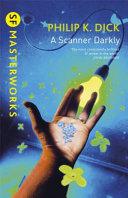
Philip K. Dick book A Scanner Darkly
Source: A Scanner Darkly
Philip K. Dick book A Scanner Darkly
Source: A Scanner Darkly (1977), Chapter 13 (p. 213)
“I like her; I could watch her the rest of my life. She has breasts that smile.”
Philip K. Dick book Do Androids Dream of Electric Sheep?
Source: Do Androids Dream of Electric Sheep?
Philip K. Dick book A Scanner Darkly
Author’s Note (pp. 276-277)
A Scanner Darkly (1977)
“It's the basic condition of life to be required to violate our own identity.”
Philip K. Dick book Do Androids Dream of Electric Sheep?
Source: Do Androids Dream of Electric Sheep?
Philip K. Dick book The Man in the High Castle
The Man in the High Castle (1962)
"How To Build A Universe That Doesn't Fall Apart Two Days Later" (1978)
Philip K. Dick book Do Androids Dream of Electric Sheep?
Source: Do Androids Dream of Electric Sheep?
"How To Build A Universe That Doesn't Fall Apart Two Days Later" (1978)
Philip K. Dick book Null-O
"Null-O"
The Phillip K. Dick Reader
“…we all lie to ourselves; we tell our own selves more lies than we ever do other people.”
Philip K. Dick book Counter-Clock World
Source: Counter-Clock World
“It is sometimes an appropriate response to reality to go insane.”
Philip K. Dick book VALIS
Variant: What he did not know then is that it is sometimes an appropriate response to reality to go insane.
Source: VALIS (1981)
The Golden Man (1954)
Context: "We were always afraid a mutant with superior intellectual powers would come along," Baines said reflectively. "A deeve who would be to us what we are to the great apes. Something with a bulging cranium, telepathic ability, a perfect semantic system, ultimate powers of symbolization and calculation. A development along our own path. A better human being."
"He acts by reflex," Anita said wonderingly. She had the analysis and was sitting at one of the desks studying it intently. "Reflex — like a lion. A golden lion." She pushed the tape aside, a strange expression on her face. "The lion god."
"Beast," Wisdom corrected tartly. "Blond beast, you mean."
"He runs fast," Baines said, "and that's all. No tools. He doesn't build anything or utilize anything outside himself. He just stands and waits for the right opportunity and then he runs like hell."
"This is worse than anything we've anticipated," Wisdom said. His beefy face was lead-gray. He sagged like an old man, his blunt hands trembling and uncertain. "To be replaced by an animal! Something that runs and hides. Something without a language!" He spat savagely. "That's why they weren't able to communicate with it. We wondered what kind of semantic system it had. It hasn't got any! No more ability to talk and think than a — dog."
“Reality is that which when you stop believing in it, it doesn't go away.”
Philip K. Dick book I Hope I Shall Arrive Soon
VALIS (1981)
Source: I Hope I Shall Arrive Soon
“I'm not much, but I'm all I have.”
Philip K. Dick book Martian Time-Slip
Source: Martian Time-Slip (1964)
“My schedule for today lists a six-hour self-accusatory depression.”
Philip K. Dick book Do Androids Dream of Electric Sheep?
Source: Do Androids Dream of Electric Sheep?
“Don't try to solve serious matters in the middle of the night.”
"What The Dead Men Say" (1964)
Introduction to The Golden Man (1980)
Context: That was my problem then and it's my problem now; I have a bad attitude. In a nutshell, I fear authority but at the same time I resent it — the authority and my own fear — so I rebel. And writing SF is a way to rebel. … SF is a rebellious art form and it needs writers and readers and bad attitudes — an attitude of "Why?" or "How come?" or "Who says?"
In Pursuit of Valis: Selections from the Exegesis (1991)
Context: I am a fictionalizing philosopher, not a novelist; my novel and story-writing ability is employed as a means to formulate my perception. The core of my writing is not art but truth. Thus what I tell is the truth, yet I can do nothing to alleviate it, either by deed or explanation. Yet this seems somehow to help a certain kind of sensitive troubled person, for whom I speak. I think I understand the common ingredient in those whom my writing helps: they cannot or will not blunt their own intimations about the irrational, mysterious nature of reality, and, for them, my corpus of writing is one long ratiocination regarding this inexplicable reality, an investigation and presentation, analysis and response and personal history. My audience will always be limited to those people.
“Anyhow, even if they agreed to lead us, I felt uneasy as where we would wind up going.”
Story notes for The Golden Man (1953), in the short story anthology The Golden Man (1980)
Context: Here I am saying that mutants are dangerous to us ordinaries, a view which John W. Campbell, Jr. deplored. We were supposed to view them as our leaders. But I always felt uneasy as to how they would view us. I mean, maybe they wouldn't want to lead us. Maybe from their superevolved lofty level we wouldn't seem worth leading. Anyhow, even if they agreed to lead us, I felt uneasy as where we would wind up going. It might have something to do with buildings marked SHOWERS but which really weren't.
As quoted in "Vertex Interviews Philip K. Dick" by Arthur Byron Cover, in Vertex, Vol. 1, no. 6 (February 1974) http://2010philipkdickfans.philipkdickfans.com/frank/vertexin.htm <br class="br">Context: I started reading SF when I was about twelve and I read all I could, so any author who was writing about that time, I read. But there's no doubt who got me off originally and that was A. E. van Vogt. There was in van Vogt's writing a mysterious quality, and this was especially true in The World of Null A. All the parts of that book did not add up; all the ingredients did not make a coherency. Now some people are put off by that. They think that's sloppy and wrong, but the thing that fascinated me so much was that this resembled reality more than anybody else's writing inside or outside science fiction. … reality really is a mess, and yet it's exciting. The basic thing is, how frightened are you of chaos? And how happy are you with order? Van Vogt influenced me so much because he made me appreciate a mysterious chaotic quality in the universe which is not to be feared.
“Can any of us fix anything? No. None of us can do that. We're specialized.”
"The Variable Man" (1952), The Collected Short Stories of Philip K. Dick, v.1: The Short Happy Life of the Brown Oxford (1987)
Context: Can any of us fix anything? No. None of us can do that. We're specialized. Each one of us has his own line, his own work. I understand my work, you understand yours. The tendency in evolution is toward greater and greater specialization. Man's society is an ecology that forces adaptation to it. Continued complexity makes it impossible for us to know anything outside our own personal field — I can't follow the work of the man sitting at the next desk over from me. Too much knowledge has piled up in each field. And there are too many fields.
“My major preoccupation is the question, 'What is reality?”
Many of my stories and novels deal with psychotic states or drug-induced states by which I can present the concept of a multiverse rather than a universe. Music and sociology are themes in my novels, also radical political trends; in particular I've written about fascism and my fear of it.
Statement of 1975 quoted in the Dictionary of Literary Biography (1981) vol. 8, part 1
“We are not aware that we are doing this, that in fact this is all we are doing.”
Philip K. Dick book VALIS
VALIS (1981)
Context: We hypostasize information into objects. Rearrangement of objects is change in the content of the information; the message has changed. This is a language which we have lost the ability to read. We ourselves are a part of this language; changes in us are changes in the content of the information. We ourselves are information-rich; information enters us, is processed and is then projected outwards once more, now in an altered form. We are not aware that we are doing this, that in fact this is all we are doing.
“My audience will always be limited to those people.”
In Pursuit of Valis: Selections from the Exegesis (1991)
Context: I am a fictionalizing philosopher, not a novelist; my novel and story-writing ability is employed as a means to formulate my perception. The core of my writing is not art but truth. Thus what I tell is the truth, yet I can do nothing to alleviate it, either by deed or explanation. Yet this seems somehow to help a certain kind of sensitive troubled person, for whom I speak. I think I understand the common ingredient in those whom my writing helps: they cannot or will not blunt their own intimations about the irrational, mysterious nature of reality, and, for them, my corpus of writing is one long ratiocination regarding this inexplicable reality, an investigation and presentation, analysis and response and personal history. My audience will always be limited to those people.
The Golden Man (1954)
Context: "He can look ahead. See what's coming. He can — prethink. Let's call it that. He can see into the future. Probably he doesn't perceive it as the future."
"No," Anita said thoughtfully. "It would seem like the present. He has a broader present. But his present lies ahead, not back. Our present is related to the past. Only the past is certain, to us. To him, the future is certain. And he probably doesn't remember the past, any more than any animal remembers what happened."
"As he develops," Baines said, "as his race evolves, it'll probably expand its ability to prethink. Instead of ten minutes, thirty minutes. Then an hour. A day. A year. Eventually they'll be able to keep ahead a whole lifetime. Each one of them will live in a solid, unchanging world. There'll be no variables, no uncertainty. No motion! They won't have anything to fear. Their world will be perfectly static, a solid block of matter."
"And when death comes," Anita said, "they'll accept it. There won't be any struggle; to them, it'll already have happened."
“He had reached a critical region; he was about to move through worlds of intricate complexity.”
The Golden Man (1954)
Context: He was always moving, advancing into new regions he had never seen before. A constantly unfolding panorama of sights and scenes, frozen landscapes spread out ahead. All objects were fixed. Pieces on a vast chess board through which he moved, arms folded, face calm. A detached observer who saw objects that lay ahead of him as clearly as those under foot.
Right now, as he crouched in the small supply closet, he saw an unusually varied multitude of scenes for the next half hour. Much lay ahead. The half hour was divided into an incredibly complex pattern of separate configurations. He had reached a critical region; he was about to move through worlds of intricate complexity.
“Man's society is an ecology that forces adaptation to it.”
"The Variable Man" (1952), The Collected Short Stories of Philip K. Dick, v.1: The Short Happy Life of the Brown Oxford (1987)
Context: Can any of us fix anything? No. None of us can do that. We're specialized. Each one of us has his own line, his own work. I understand my work, you understand yours. The tendency in evolution is toward greater and greater specialization. Man's society is an ecology that forces adaptation to it. Continued complexity makes it impossible for us to know anything outside our own personal field — I can't follow the work of the man sitting at the next desk over from me. Too much knowledge has piled up in each field. And there are too many fields.
“To fight the Empire is to be infected by its derangement”
Philip K. Dick book VALIS
VALIS (1981)
Context: To fight the Empire is to be infected by its derangement … Whoever defeats the Empire becomes the Empire; it proliferates like a virus … thereby it becomes its enemies.
“I always felt uneasy as to how they would view us. I mean, maybe they wouldn't want to lead us.”
Story notes for The Golden Man (1953), in the short story anthology The Golden Man (1980)
Context: Here I am saying that mutants are dangerous to us ordinaries, a view which John W. Campbell, Jr. deplored. We were supposed to view them as our leaders. But I always felt uneasy as to how they would view us. I mean, maybe they wouldn't want to lead us. Maybe from their superevolved lofty level we wouldn't seem worth leading. Anyhow, even if they agreed to lead us, I felt uneasy as where we would wind up going. It might have something to do with buildings marked SHOWERS but which really weren't.
As quoted in "Vertex Interviews Philip K. Dick" by Arthur Byron Cover, in Vertex, Vol. 1, no. 6 (February 1974) http://2010philipkdickfans.philipkdickfans.com/frank/vertexin.htm <br class="br">Context: I started reading SF when I was about twelve and I read all I could, so any author who was writing about that time, I read. But there's no doubt who got me off originally and that was A. E. van Vogt. There was in van Vogt's writing a mysterious quality, and this was especially true in The World of Null A. All the parts of that book did not add up; all the ingredients did not make a coherency. Now some people are put off by that. They think that's sloppy and wrong, but the thing that fascinated me so much was that this resembled reality more than anybody else's writing inside or outside science fiction. … reality really is a mess, and yet it's exciting. The basic thing is, how frightened are you of chaos? And how happy are you with order? Van Vogt influenced me so much because he made me appreciate a mysterious chaotic quality in the universe which is not to be feared.
Philip K. Dick book VALIS
VALIS (1981)
Context: We hypostasize information into objects. Rearrangement of objects is change in the content of the information; the message has changed. This is a language which we have lost the ability to read. We ourselves are a part of this language; changes in us are changes in the content of the information. We ourselves are information-rich; information enters us, is processed and is then projected outwards once more, now in an altered form. We are not aware that we are doing this, that in fact this is all we are doing.
“That is the best in humanity, there; that is who and what I love.”
Introduction to The Golden Man (1980)
Context: Several years ago, when I was ill, Heinlein offered his help, anything he could do, and we had never met; he would phone me to cheer me up and see how I was doing. He wanted to buy me an electric typewriter, God bless him — one of the few true gentlemen in this world. I don't agree with any ideas he puts forth in his writing, but that is neither here nor there. One time when I owed the IRS a lot of money and couldn't raise it, Heinlein loaned the money to me. I think a great deal of him and his wife; I dedicated a book to them in appreciation. Robert Heinlein is a fine-looking man, very impressive and very military in stance; you can tell he has a military background, even to the haircut. He knows I'm a flipped-out freak and still he helped me and my wife when we were in trouble. That is the best in humanity, there; that is who and what I love.
Philip K. Dick book VALIS
VALIS (1981)
Context: For each person there is a sentence — a series of words — which has the power to destroy him … another sentence exists, another series of words, which will heal the person. If you're lucky you will get the second; but you can be certain of getting the first: that is the way it works. On their own, without training, individuals know how to deal out the lethal sentence, but training is required to deal out the second.
“I don't agree with any ideas he puts forth in his writing, but that is neither here nor there.”
Introduction to The Golden Man (1980)
Context: Several years ago, when I was ill, Heinlein offered his help, anything he could do, and we had never met; he would phone me to cheer me up and see how I was doing. He wanted to buy me an electric typewriter, God bless him — one of the few true gentlemen in this world. I don't agree with any ideas he puts forth in his writing, but that is neither here nor there. One time when I owed the IRS a lot of money and couldn't raise it, Heinlein loaned the money to me. I think a great deal of him and his wife; I dedicated a book to them in appreciation. Robert Heinlein is a fine-looking man, very impressive and very military in stance; you can tell he has a military background, even to the haircut. He knows I'm a flipped-out freak and still he helped me and my wife when we were in trouble. That is the best in humanity, there; that is who and what I love.
“Cris didn't want to play. He never played.”
The Golden Man (1954)
Context: Cris didn't want to play. He never played. He was off in a world of his own, a world into which none of them could come. He never joined in anything, games or chores or family activities. He was by himself always. Remote, detached, aloof. Seeing past everyone and everything — that is, until all at once something clicked and he momentarily rephased, reentered their world briefly.
The Golden Man (1954)
Context: In one dim scene he saw himself lying charred and dead; he had tried to run through the line, out the exit.
But that scene was vague. One wavering, indistinct still out of many. The inflexible path along which he moved would not deviate in that direction. It would not turn him that way. The golden figure in that scene, the miniature doll in that room, was only distantly related to him. It was himself, but a far-away self. A self he would never meet. He forgot it and went on to examine the other tableau.
The myriad of tableaux that surrounded him were an elaborate maze, a web which he now considered bit by bit. He was looking down into a doll's house of infinite rooms, rooms without number, each with its furniture, its dolls, all rigid and unmoving. <!-- The same dolls and furniture were repeated in many. He, himself, appeared often. The two men on the platform. The woman. Again and again the same combinations turned up; the play was redone frequently, the same actors and props moved around in all possible ways.
Before it was time to leave the supply closet, Cris Johnson had examined each of the rooms tangent to the one he now occupied. He had consulted each, considered its contents thoroughly.
He pushed the door open and stepped calmly out into the hall. He knew exactly where he was going. And what he had to do. Crouched in the stuffy closet, he had quietly and expertly examined each miniature of himself, observed which clearly-etched configuration lay along his inflexible path, the one room of the doll house, the one set out of legions, toward which he was moving.
Philip K. Dick book Adjustment Team
Adjustment Team (1954)
Context: "I get the picture." His voice was almost inaudible. A chilling premonition moved through him. "I was supposed to be changed like the others. But I guess something went wrong."
"Something went wrong. An error occurred. And now a serious problem exists. You have seen these things. You know a great deal. And you are not coordinated with the new configuration."
"Gosh," Ed muttered. "Well, I won't tell anybody." Cold sweat poured off him. "You can count on that. I'm as good as changed."
The Golden Man (1954)
Context: He was always moving, advancing into new regions he had never seen before. A constantly unfolding panorama of sights and scenes, frozen landscapes spread out ahead. All objects were fixed. Pieces on a vast chess board through which he moved, arms folded, face calm. A detached observer who saw objects that lay ahead of him as clearly as those under foot.
Right now, as he crouched in the small supply closet, he saw an unusually varied multitude of scenes for the next half hour. Much lay ahead. The half hour was divided into an incredibly complex pattern of separate configurations. He had reached a critical region; he was about to move through worlds of intricate complexity.
The Golden Man (1954)
Context: The chamber was an inferno of energy. The figure had completely disappeared. Wisdom waited a moment, then nodded to the technicians operating the cube. They touched guide buttons and the muzzles slowed and died. Some sank back into the cube. All became silent. The works of the cube ceased humming.
Cris Johnson was still alive. He emerged from the settling clouds of ash, blackened and singed. But unhurt. He had avoided each beam. He had weaved between them and among them as they came, a dancer leaping over glittering sword-points of pink fire. He had survived.
The Golden Man (1954)
Context: For a moment he studied the massive figure who stood calmly between the two Civil Policemen. Beside him, they seemed to have shrunk, become ungainly and repellent. Like dwarves... What had Jean said? A god come to earth. Baines broke angrily away. "Come on," he muttered brusquely. "This one may be tough; we've never run up against one like it before. We don't know what the hell it can do."
“I think that, like in my writing, reality is always a soap bubble, Silly Putty thing anyway.”
Interview, Science Fiction Review (August 1976)
Context: I think that, like in my writing, reality is always a soap bubble, Silly Putty thing anyway. In the universe people are in, people put their hands through the walls, and it turns out they're living in another century entirely. … I often have the feeling — and it does show up in my books — that this is all just a stage.
“It was himself, but a far-away self. A self he would never meet.”
The Golden Man (1954)
Context: In one dim scene he saw himself lying charred and dead; he had tried to run through the line, out the exit.
But that scene was vague. One wavering, indistinct still out of many. The inflexible path along which he moved would not deviate in that direction. It would not turn him that way. The golden figure in that scene, the miniature doll in that room, was only distantly related to him. It was himself, but a far-away self. A self he would never meet. He forgot it and went on to examine the other tableau.
The myriad of tableaux that surrounded him were an elaborate maze, a web which he now considered bit by bit. He was looking down into a doll's house of infinite rooms, rooms without number, each with its furniture, its dolls, all rigid and unmoving. <!-- The same dolls and furniture were repeated in many. He, himself, appeared often. The two men on the platform. The woman. Again and again the same combinations turned up; the play was redone frequently, the same actors and props moved around in all possible ways.
Before it was time to leave the supply closet, Cris Johnson had examined each of the rooms tangent to the one he now occupied. He had consulted each, considered its contents thoroughly.
He pushed the door open and stepped calmly out into the hall. He knew exactly where he was going. And what he had to do. Crouched in the stuffy closet, he had quietly and expertly examined each miniature of himself, observed which clearly-etched configuration lay along his inflexible path, the one room of the doll house, the one set out of legions, toward which he was moving.
Introduction to The Golden Man (1980)
Context: Several years ago, when I was ill, Heinlein offered his help, anything he could do, and we had never met; he would phone me to cheer me up and see how I was doing. He wanted to buy me an electric typewriter, God bless him — one of the few true gentlemen in this world. I don't agree with any ideas he puts forth in his writing, but that is neither here nor there. One time when I owed the IRS a lot of money and couldn't raise it, Heinlein loaned the money to me. I think a great deal of him and his wife; I dedicated a book to them in appreciation. Robert Heinlein is a fine-looking man, very impressive and very military in stance; you can tell he has a military background, even to the haircut. He knows I'm a flipped-out freak and still he helped me and my wife when we were in trouble. That is the best in humanity, there; that is who and what I love.
“We hypostasize information into objects.”
Philip K. Dick book VALIS
VALIS (1981)
Context: We hypostasize information into objects. Rearrangement of objects is change in the content of the information; the message has changed. This is a language which we have lost the ability to read. We ourselves are a part of this language; changes in us are changes in the content of the information. We ourselves are information-rich; information enters us, is processed and is then projected outwards once more, now in an altered form. We are not aware that we are doing this, that in fact this is all we are doing.
"Man, Androids and Machine" (1975), reprinted in The Shifting Realities of Philip K. Dick (1995) Lawrence Sutin, ed.
Context: These creatures are among us, although morphologically they do not differ from us; we must not posit a difference of essence, but a difference of behavior. In my science fiction I write about about them constantly. Sometimes they themselves do not know they are androids. Like Rachel Rosen, they can be pretty but somehow lack something; or, like Pris in We Can Build You, they can be absolutely born of a human womb and even design androids — the Abraham Lincoln one in that book — and themselves be without warmth; they then fall within the clinical entity "schizoid," which means lacking proper feeling. I am sure we mean the same thing here, with the emphasis on the word "thing." A human being without the proper empathy or feeling is the same as an android built so as to lack it, either by design or mistake. We mean, basically, someone who does not care about the fate which his fellow living creatures fall victim to; he stands detached, a spectator, acting out by his indifference John Donne's theorem that "No man is an island," but giving that theorem a twist: that which is a mental and a moral island is not a man.
“Everything in life is just for a while.”
Philip K. Dick book A Scanner Darkly
Source: A Scanner Darkly
“Reality denied comes back to haunt.”
Philip K. Dick book Flow My Tears, the Policeman Said
Source: Flow My Tears, the Policeman Said
“Truth, she thought. As terrible as death. But harder to find.”
Philip K. Dick book The Man in the High Castle
Source: The Man in the High Castle
Philip K. Dick The Transmigration of Timothy Archer
Source: The Transmigration of Timothy Archer
“Strange how paranoia can link up with reality now and then.”
Philip K. Dick book A Scanner Darkly
Source: A Scanner Darkly
“If I had known it was harmless
I would have killed it myself.”
Philip K. Dick book A Scanner Darkly
Source: A Scanner Darkly (1977), Chapter 6 (p. 94)
Philip K. Dick book VALIS
Source: Flow My Tears, The Policeman Said (1974), Chapter 21 (p. 171)
Source: VALIS
Context: "Fear,” Jason said, “can make you do more wrong than hate or jealousy. If you're afraid you don’t commit yourself to life completely; fear makes you always, always hold something back.”'


