

“If wilderness is outlawed, only outlaws can save wilderness.”
A Voice Crying in the Wilderness (Vox Clamantis in Deserto) (1990)
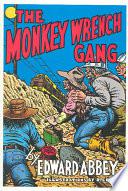
Edward Paul Abbey was an American author and essayist noted for his advocacy of environmental issues and criticism of public land policies. His best-known works include Desert Solitaire, a non-fiction autobiographical account of his time as a park ranger at Arches National Park considered to be iconic work of nature writing and a staple of early environmentalist writing, the novel The Monkey Wrench Gang, which has been cited as an inspiration by environmentalists and groups defending nature by various means, also called eco-warriors, his novel Hayduke Lives, and his essay collections Down the River and One Life at a Time, Please . Wikipedia
“If wilderness is outlawed, only outlaws can save wilderness.”
A Voice Crying in the Wilderness (Vox Clamantis in Deserto) (1990)
Edward Abbey book Desert Solitaire
"Down the River", p. 148
Desert Solitaire (1968)
“A patriot must always be ready to defend his country against his government.”
A Voice Crying in the Wilderness (Vox Clamantis in Deserto) (1990)
A Voice Crying in the Wilderness (Vox Clamantis in Deserto) (1990)
“Fire Lookout: Numa Ridge”, p. 57
The Journey Home (1977)
Source: The Journey Home: Some Words in Defense of the American West
“Be loyal to what you love, be true to the earth, fight your enemies with passion and laughter.”
Source: Confessions of a Barbarian
Source: The Serpents of Paradise: A Reader
Edward Abbey book Desert Solitaire
"Down the River", p. 147
Desert Solitaire (1968)
“Love can defeat that nameless terror. Loving one another, we take the sting from death.”
Edward Abbey book Down the River
Down the River (1982)
Context: Love can defeat that nameless terror. Loving one another, we take the sting from death. Loving our mysterious blue planet, we resolve riddles and dissolve all enigmas in contingent bliss.
“Come on in. The earth, like the sun, like the air, belongs to everyone — and to no one.”
“Come On In”, p. 88
The Journey Home (1977)
“Sentiment without action is the ruin of the soul.”
A Voice Crying in the Wilderness (Vox Clamantis in Deserto) (1990)
“Better a cruel truth than a comfortable delusion.”
A Voice Crying in the Wilderness (Vox Clamantis in Deserto) (1990)
Abbey's Road (1979)
Context: The tank, the B-52, the fighter-bomber, the state-controlled police and military are the weapons of dictatorship. The rifle is the weapon of democracy. Not for nothing was the revolver called an "equalizer." Egalite implies liberte. And always will. Let us hope our weapons are never needed — but do not forget what the common people of this nation knew when they demanded the Bill of Rights: An armed citizenry is the first defense, the best defense, and the final defense against tyranny.
“To be everywhere at once is to be nowhere forever, if you ask me.”
"Walking", p. 205
The Journey Home (1977)
Context: There are some good things to be said about walking. Not many, but some. Walking takes longer, for example, than any other known form of locomotion except crawling. Thus it stretches time and prolongs life. Life is already too short to waste on speed. I have a friend who's always in a hurry; he never gets anywhere. Walking makes the world much bigger and thus more interesting. You have time to observe the details. The utopian technologists foresee a future for us in which distance is annihilated and anyone can transport himself anywhere, instantly. Big deal, Buckminster. To be everywhere at once is to be nowhere forever, if you ask me. <!-- π
Quoted in Saving Nature's Legacy : Protecting and Restoring Biodiversity (1994) by Reed F. Noss, Allen Y. Cooperrider, and Rodger Schlickeisen, p. 338
Context: One final paragraph of advice: do not burn yourselves out. Be as I am — a reluctant enthusiast... a part-time crusader, a half-hearted fanatic. Save the other half of yourselves and your lives for pleasure and adventure. It is not enough to fight for the land; it is even more important to enjoy it. While you can. While it’s still here. So get out there and hunt and fish and mess around with your friends, ramble out yonder and explore the forests, climb the mountains, bag the peaks, run the rivers, breathe deep of that yet sweet and lucid air, sit quietly for a while and contemplate the precious stillness, the lovely, mysterious, and awesome space. Enjoy yourselves, keep your brain in your head and your head firmly attached to the body, the body active and alive, and I promise you this much; I promise you this one sweet victory over our enemies, over those desk-bound men and women with their hearts in a safe deposit box, and their eyes hypnotized by desk calculators. I promise you this; You will outlive the bastards.
“Civilization flows; culture thickens and coagulates, like tired, sick, stifled blood.”
Edward Abbey book Desert Solitaire
"Episodes and Visions", p. 308
Desert Solitaire (1968)
Context: To make the distinction unmistakably clear: Civilization is the vital force in human history; culture is that inert mass of institutions and organizations which accumulate around and tend to drag down the advance of life; Civilization is Giordano Bruno facing death by fire; culture is the Cardinal Bellarmino, after ten years of inquisition, sending Bruno to the stake in the Campo di Fiori; Civilization is Sartre; culture Cocteau; Civilization is mutual aid and self-defense; culture is the judge, the lawbook and the forces of Law & Ordure (sic); Civilization is uprising, insurrection, revolution; culture is the war of state against state, or of machines against people, as in Hungary and Vietnam; Civilization is tolerance, detachment and humor, or passion, anger, revenge; culture is the entrance examination, the gas chamber, the doctoral dissertation and the electric chair; Civilization is the Ukrainian peasant Nestor Makhno fighting the Germans, then the Reds, then the Whites, then the Reds again; culture is Stalin and the Fatherland; Civilization is Jesus turning water into wine; culture is Christ walking on the waves; Civilization is a youth with a Molotov cocktail in his hand; culture is the Soviet tank or the L. A. cop that guns him down; Civilization is the wild river; culture, 592,000 tons of cement; Civilization flows; culture thickens and coagulates, like tired, sick, stifled blood.
“The longest journey begins with a single step, not with the turn of an ignition key.”
“Walking” p. 205
The Journey Home (1977)
Context: The longest journey begins with a single step, not with the turn of an ignition key. That’s the best thing about walking, the journey itself. It doesn’t much matter whether you get where you’re going or not. You’ll get there anyway. Every good hike brings you eventually back home. Right where you started.
“Every good hike brings you eventually back home. Right where you started.”
“Walking” p. 205
The Journey Home (1977)
Context: The longest journey begins with a single step, not with the turn of an ignition key. That’s the best thing about walking, the journey itself. It doesn’t much matter whether you get where you’re going or not. You’ll get there anyway. Every good hike brings you eventually back home. Right where you started.
Edward Abbey book Desert Solitaire
"Episodes and Visions", p. 308
Desert Solitaire (1968)
Context: To make the distinction unmistakably clear: Civilization is the vital force in human history; culture is that inert mass of institutions and organizations which accumulate around and tend to drag down the advance of life; Civilization is Giordano Bruno facing death by fire; culture is the Cardinal Bellarmino, after ten years of inquisition, sending Bruno to the stake in the Campo di Fiori; Civilization is Sartre; culture Cocteau; Civilization is mutual aid and self-defense; culture is the judge, the lawbook and the forces of Law & Ordure (sic); Civilization is uprising, insurrection, revolution; culture is the war of state against state, or of machines against people, as in Hungary and Vietnam; Civilization is tolerance, detachment and humor, or passion, anger, revenge; culture is the entrance examination, the gas chamber, the doctoral dissertation and the electric chair; Civilization is the Ukrainian peasant Nestor Makhno fighting the Germans, then the Reds, then the Whites, then the Reds again; culture is Stalin and the Fatherland; Civilization is Jesus turning water into wine; culture is Christ walking on the waves; Civilization is a youth with a Molotov cocktail in his hand; culture is the Soviet tank or the L. A. cop that guns him down; Civilization is the wild river; culture, 592,000 tons of cement; Civilization flows; culture thickens and coagulates, like tired, sick, stifled blood.
“The domination of nature leads to the domination of human nature.”
"A Walk in the Desert Hills", page 44
Beyond the Wall: Essays from the Outside (1984)
Context: If the life of natural things, millions of years old, does not seem sacred to us, then what can be sacred? Human vanity alone? Contempt for the natural world implies contempt for life. The domination of nature leads to the domination of human nature.
“The earth will survive our most ingenious folly.”
“Shadows from the Big Woods”, p. 225
The Journey Home (1977)
Context: The earth is not a mechanism but an organism, a being with its own life and its own reasons, where the support and sustenance of the human animal is incidental. If man in his newfound power and vanity persists in the attempt to remake the planet in his own image, he will succeed only in destroying himself — not the planet. The earth will survive our most ingenious folly.
Source: The Journey Home (1977), p. 121
Context: As for the "solitary confinement of the mind," my theory is that solipsism, like other absurdities of the professional philosopher, is a product of too much time wasted in library stacks between the covers of a book, in smoke-filled coffeehouses (bad for brains) and conversation-clogged seminars. To refute the solipsist or the metaphysical idealist all that you have to do is take him out and throw a rock at his head: if he ducks he's a liar. His logic may be airtight but his argument, far from revealing the delusions of living experience, only exposes the limitations of logic.
Edward Abbey book Desert Solitaire
"The First Morning", p. 1
Desert Solitaire (1968)
Context: This is the most beautiful place on earth.
There are many such places. Every man, every woman, carries in heart and mind the image of the ideal place, the right place, the one true home, known or unknown, actual or visionary. A houseboat in Kashmir, a view down Atlantic Avenue in Brooklyn, a gray gothic farmhouse two stories high at the end of a red dog road in the Allegheny Mountains, a cabin on the shore of a blue lake in spruce and fir country, a greasy alley near the Hoboken waterfront, or even, possibly, for those of a less demanding sensibility, the world to be seen from a comfortable apartment high in the tender, velvety smog of Manhattan, Chicago, Paris, Tokyo, Rio, or Rome — there's no limit to the human capacity for the homing sentiment.
Context: The tank, the B-52, the fighter-bomber, the state-controlled police and military are the weapons of dictatorship. The rifle is the weapon of democracy. Not for nothing was the revolver called an "equalizer." Egalite implies liberte. And always will. Let us hope our weapons are never needed — but do not forget what the common people of this nation knew when they demanded the Bill of Rights: An armed citizenry is the first defense, the best defense, and the final defense against tyranny.
Abbey's Road (1979)
“I hold no preference among flowers, so long as they are wild, free, spontaneous.”
Edward Abbey book Desert Solitaire
Bricks to all greenhouses! Black thumb and cutworm to the potted plant!
"Cliffrose and Bayonets", p. 25
Desert Solitaire (1968)
“The industrial way of life leads to the industrial way of death.”
Source: A Voice Crying in the Wilderness (Vox Clamantis in Deserto) (1990), Ch. 11 : Money Et Cetera, p. 100
Context: The industrial way of life leads to the industrial way of death. From Shiloh to Dachau, from Antietam to Stalingrad, from Hiroshima to Vietnam and Afghanistan, the great specialty of industry and technology has been the mass production of human corpses.
Quoted in Saving Nature's Legacy : Protecting and Restoring Biodiversity (1994) by Reed F. Noss, Allen Y. Cooperrider, and Rodger Schlickeisen, p. 338
Context: One final paragraph of advice: do not burn yourselves out. Be as I am — a reluctant enthusiast... a part-time crusader, a half-hearted fanatic. Save the other half of yourselves and your lives for pleasure and adventure. It is not enough to fight for the land; it is even more important to enjoy it. While you can. While it’s still here. So get out there and hunt and fish and mess around with your friends, ramble out yonder and explore the forests, climb the mountains, bag the peaks, run the rivers, breathe deep of that yet sweet and lucid air, sit quietly for a while and contemplate the precious stillness, the lovely, mysterious, and awesome space. Enjoy yourselves, keep your brain in your head and your head firmly attached to the body, the body active and alive, and I promise you this much; I promise you this one sweet victory over our enemies, over those desk-bound men and women with their hearts in a safe deposit box, and their eyes hypnotized by desk calculators. I promise you this; You will outlive the bastards.
Edward Abbey book Desert Solitaire
"Episodes and Visions", p. 308
Desert Solitaire (1968)
Context: To make the distinction unmistakably clear: Civilization is the vital force in human history; culture is that inert mass of institutions and organizations which accumulate around and tend to drag down the advance of life; Civilization is Giordano Bruno facing death by fire; culture is the Cardinal Bellarmino, after ten years of inquisition, sending Bruno to the stake in the Campo di Fiori; Civilization is Sartre; culture Cocteau; Civilization is mutual aid and self-defense; culture is the judge, the lawbook and the forces of Law & Ordure (sic); Civilization is uprising, insurrection, revolution; culture is the war of state against state, or of machines against people, as in Hungary and Vietnam; Civilization is tolerance, detachment and humor, or passion, anger, revenge; culture is the entrance examination, the gas chamber, the doctoral dissertation and the electric chair; Civilization is the Ukrainian peasant Nestor Makhno fighting the Germans, then the Reds, then the Whites, then the Reds again; culture is Stalin and the Fatherland; Civilization is Jesus turning water into wine; culture is Christ walking on the waves; Civilization is a youth with a Molotov cocktail in his hand; culture is the Soviet tank or the L. A. cop that guns him down; Civilization is the wild river; culture, 592,000 tons of cement; Civilization flows; culture thickens and coagulates, like tired, sick, stifled blood.
“Growth for the sake of growth is a cancerous madness.”
"Water", p. 114
Desert Solitaire (1968)
Source: The Journey Home: Some Words in Defense of the American West
“You can't study the darkness by flooding it with light.”
Source: The Best of Edward Abbey
A Voice Crying in the Wilderness (Vox Clamantis in Deserto) (1990)
Edward Abbey book Desert Solitaire
A Voice Crying in the Wilderness (Vox Clamantis in Deserto) (1990)
Source: Desert Solitaire
“Freedom begins between the ears.”
A Voice Crying in the Wilderness (Vox Clamantis in Deserto) (1990)
Edward Abbey book Desert Solitaire
Preface (dated June 1987) for 1988 reprint of Desert Solitaire
Desert Solitaire (1968)
Context: May your trails be crooked, winding, lonesome, dangerous, leading to the most amazing view. May your mountains rise into and above the clouds. May your rivers flow without end, meandering through pastoral valleys tinkling with bells, past temples and castles and poets' towers into a dark primeval forest where tigers belch and monkeys howl, through miasmal and mysterious swamps and down into a desert of red rock, blue mesas, domes and pinnacles and grottos of endless stone, and down again into a deep vast ancient unknown chasm where bars of sunlight blaze on profiled cliffs, where deer walk across the white sand beaches, where storms come and go as lightning clangs upon the high crags, where something strange and more beautiful and more full of wonder than your deepest dreams waits for you — beyond that next turning of the canyon walls.
“I am not an atheist but an earthiest.”
Edward Abbey book Desert Solitaire
"Down the River", p. 163
Desert Solitaire (1968)
“The idea of wilderness needs no defense. It only needs more defenders.”
"Shadows from the Big Woods", p. 223
The Journey Home (1977)
“There's beauty, heartbreaking beauty, everywhere.”
"The Ancient Dust", page 153
Beyond the Wall: Essays from the Outside (1984)
“An economic system which can only expand or expire must be false to all that is human.”
Edward Abbey book Desert Solitaire
Source: Desert Solitaire
“Somewhere in the depths of solitude, beyond wilderness and freedom, lay the trap of madness.”
Edward Abbey book The Monkey Wrench Gang
Source: The Monkey Wrench Gang (1975)
“Where all think alike there is little danger of innovation.”
Edward Abbey book Desert Solitaire
Source: Desert Solitaire
Source: Postcards from Ed: Dispatches and Salvos from an American Iconoclast
Source: Postcards from Ed: Dispatches and Salvos from an American Iconoclast
“When the situation is hopeless, there's nothing to worry about.”
Edward Abbey book The Monkey Wrench Gang
page 294
A Voice Crying in the Wilderness (Vox Clamantis in Deserto) (1990)
Variant: He recalled Dr. Sarvis' favorite apothegm: When the situation is hopeless, there's nothing to worry about.
Source: The Monkey Wrench Gang
Source: Postcards from Ed: Dispatches and Salvos from an American Iconoclast
Source: Postcards from Ed: Dispatches and Salvos from an American Iconoclast
A Voice Crying in the Wilderness (Vox Clamantis in Deserto) (1990)


