“Once socialism replaces capitalism, reason will determine the policies of states.”
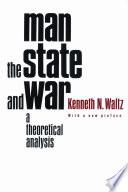
Kenneth N. Waltz book Man, the State, and War
Source: Man, the State, and War (1959), Chapter V, Some Implications Of The Second Image, p. 150
Kenneth Neal Waltz was an American political scientist who was a member of the faculty at both the University of California, Berkeley and Columbia University and one of the most prominent scholars in the field of international relations. He was a veteran of both World War II and the Korean War.Waltz was one of the original founders of neorealism, or structural realism, in international relations theory and later became associated with the school of defensive neorealism. Waltz's theories have been extensively debated within the field of international relations. In 1981, Waltz published a monograph arguing that in some cases the proliferation of nuclear weapons could increase the probability of international peace.Leslie H. Gelb has considered Waltz one of the "giants" who helped define the field of international relations as an academic discipline. Columbia University colleague Robert Jervis has said of Waltz, "Almost everything he has written challenges the consensus that prevailed at the time" and "Even when you disagree, he moves your thinking ahead." Wikipedia

“Once socialism replaces capitalism, reason will determine the policies of states.”
Kenneth N. Waltz book Man, the State, and War
Source: Man, the State, and War (1959), Chapter V, Some Implications Of The Second Image, p. 150
Kenneth N. Waltz book Man, the State, and War
Source: Man, the State, and War (1959), Chapter VII, Some Implications Of The Third Image, p. 188
Kenneth N. Waltz book Man, the State, and War
Source: Man, the State, and War (1959), Chapter IV, The Second Image, p. 81
Kenneth N. Waltz book Man, the State, and War
Source: Man, the State, and War (1959), Chapter VIII, Conclusion, p. 230
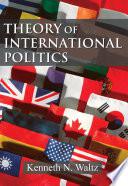
Kenneth N. Waltz book Theory of International Politics
Source: Theory of International Politics (1979), p. 110
Kenneth N. Waltz book Man, the State, and War
Source: Man, the State, and War (1959), Chapter III, Some Implications Of The First Image, p. 42
Kenneth N. Waltz book Man, the State, and War
Source: Man, the State, and War (1959), Chapter VI, The Third Image, p. 159
Kenneth N. Waltz book Man, the State, and War
Source: Man, the State, and War (1959), Chapter II, The First Image, p. 16
“War may achieve a redistribution of resources, but labor, not war, creates wealth.”
Kenneth N. Waltz book Man, the State, and War
Source: Man, the State, and War (1959), Chapter VIII, Conclusion, p. 224
Kenneth N. Waltz book Man, the State, and War
Source: Man, the State, and War (1959), Chapter I, Introduction, p. 1
Kenneth N. Waltz book Man, the State, and War
Source: Man, the State, and War (1959), Chapter IV, The Second Image, p. 98
“No system of balance functions automatically.”
Kenneth N. Waltz book Man, the State, and War
Source: Man, the State, and War (1959), Chapter VII, Some Implications Of The Third Image, p. 210
“Each man does seek his own interest, but, unfortunately, not according to the dictates of reason.”
Kenneth N. Waltz book Man, the State, and War
Source: Man, the State, and War (1959), Chapter II, The First Image, p. 23
Kenneth N. Waltz book Man, the State, and War
Source: Man, the State, and War (1959), Chapter VI, The Third Image, p. 186
Kenneth N. Waltz book Man, the State, and War
Source: Man, the State, and War (1959), Chapter III, Some Implications Of The First Image, p. 69
“In anarchy there is no automatic harmony.”
Kenneth N. Waltz book Man, the State, and War
Source: Man, the State, and War (1959), Chapter VI, The Third Image, p. 160
Kenneth N. Waltz book Man, the State, and War
Source: Man, the State, and War (1959), Chapter V, Some Implications Of The Second Image, p. 127
Kenneth N. Waltz book Man, the State, and War
Source: Man, the State, and War (1959), Chapter VII, Some Implications Of The Third Image, p. 204
“To build a theory of international relations on accidents of geography and history is dangerous.”
Kenneth N. Waltz book Man, the State, and War
Source: Man, the State, and War (1959), Chapter IV, The Second Image, p. 107
Kenneth N. Waltz book Man, the State, and War
Source: Man, the State, and War (1959), Chapter VI, The Third Image, p. 163
“In a zero-sum game, the problem is entirely one of distribution, not at all one of production.”
Kenneth N. Waltz book Man, the State, and War
Source: Man, the State, and War (1959), Chapter VII, Some Implications Of The Third Image, p. 202
Kenneth N. Waltz book Man, the State, and War
Source: Man, the State, and War (1959), Chapter VIII, Conclusion, p. 238
Kenneth N. Waltz book Theory of International Politics
Source: Theory of International Politics (1979), p. 4
“External pressure seems to produce internal unity.”
Kenneth N. Waltz book Man, the State, and War
Source: Man, the State, and War (1959), Chapter V, Some Implications Of The Second Image, p. 149
Kenneth N. Waltz book Man, the State, and War
Source: Man, the State, and War (1959), Chapter II, The First Image, p. 38
Kenneth N. Waltz book Theory of International Politics
Source: Theory of International Politics (1979), p. 137


