Simon, Herbert A. "The proverbs of administration." Public Administration Review 6.1 (1946): 53-67.
1940s-1950s
Context: Most of the propositions that make up the body of administrative theory today share, unfortunately, this defect of proverbs. For almost every principle one can find an equally plausible and acceptable contradictory principle.
Works
Administrative Behavior
Herbert A. SimonAdministrative Behavior
Herbert A. SimonHerbert A. Simon: 58 quotes4 likes
Famous Herbert A. Simon Quotes
Simon, H. A. (1971) "Designing Organizations for an Information-Rich World" in: Martin Greenberger, Computers, Communication, and the Public Interest, Baltimore. MD: The Johns Hopkins Press. pp. 40–41.
1960s-1970s
Source: 1960s-1970s, The Sciences of the Artificial, 1969, p. 53.
“… a wealth of information creates a poverty of attention…”
Simon, H. A. (1971) "Designing Organizations for an Information-Rich World" in: Martin Greenberger, Computers, Communication, and the Public Interest, Baltimore. MD: The Johns Hopkins Press. pp. 40–41.
1960s-1970s
Context: In an information-rich world, the wealth of information means a dearth of something else: a scarcity of whatever it is that information consumes. What information consumes is rather obvious: it consumes the attention of its recipients. Hence a wealth of information creates a poverty of attention and a need to allocate that attention efficiently among the overabundance of information sources that might consume it.
Herbert A. Simon book Administrative Behavior
Source: 1940s-1950s, Administrative Behavior, 1947, p. 78.
Herbert A. Simon Quotes about behavior
Simon (1990) "Invariants of Human Behavior" in: Annu. Rev. Psychol. 41: p. 6.
1980s and later
Book abstract, 1991
1940s-1950s, Public administration, 1950
Herbert A. Simon book Administrative Behavior
Source: 1940s-1950s, Administrative Behavior, 1947, p. 84.
Source: 1940s-1950s, Models of Man, 1957, p. 198; Cited in P. Slovic (1972, p. 2).
attain targets while satisfying constraints
Simon (1997, p. 17); As cited in: Gustavo Barros (2010, p. 460).
1980s and later
Herbert A. Simon book Administrative Behavior
1940s-1950s, Administrative Behavior, 1947
Herbert A. Simon: Trending quotes
Herbert A. Simon book Administrative Behavior
Source: 1940s-1950s, Administrative Behavior, 1947, p. 43.
H.A. Simon (1962) "The Architecture of complexity." in: Proceedings of the American Philosophical Society. Vol 106, pp. 467-468. as cited in: "James Grier Miller (1916-)" at isss.org retrieved Nov 16, 2012.
1960s-1970s
Herbert A. Simon book Administrative Behavior
Source: 1940s-1950s, Administrative Behavior, 1947, p. xiv.
Herbert A. Simon Quotes
Herbert A. Simon book Administrative Behavior
Variant: The principle of bounded rationality [is] the capacity of the human mind for formulating and solving complex problems is very small compared with the size of the problems whose solution is required for objectively rational behavior in the real world — or even for a reasonable approximation to such objective rationality.
Source: 1940s-1950s, Administrative Behavior, 1947, p. 198.
“The world you perceive is drastically simplified model of the real world.”
Herbert A. Simon book Administrative Behavior
Source: 1940s-1950s, Administrative Behavior, 1947, p. xxvi.
Source: 1980s and later, Models of my life, 1991, p. 199.
“Over Christmas, Allen Newell and I created a thinking machine.”
Simon (1956) quoted on CMU Libraries: Problem Solving Research http://shelf1.library.cmu.edu/IMLS/MindModels/problemsolving.html <br class="br">1940s-1950s
Simon (1975, p. ix); As cited in Stefano Franchi(2006) " Herbert simon, anti-philosopher http://cleinias.org/sites/default/files/Simon-anti-Philosopher-preprint.pdf." Computing and Philosophy. p. 34. <br class="br">1960s-1970s
Source: 1940s-1950s, Public administration, 1950, p. 75
Source: 1960s-1970s, The Sciences of the Artificial, 1969, p. 130.
Herbert A. Simon book Administrative Behavior
Source: 1940s-1950s, Administrative Behavior, 1947, p. 265.
Herbert A. Simon book Administrative Behavior
Source: 1940s-1950s, Administrative Behavior, 1947, p. 204‑5; As cited in: Gustavo Barros (2010) " Herbert A. Simon and the concept of rationality: boundaries and procedures http://www.scielo.br/pdf/rep/v30n3/a06v30n3.pdf." Revista de Economia Política 30.3. p. 461.
Source: 1980s and later, "Why a diagram is (sometimes) worth ten thousand words," (1987), p. 65
Herbert A. Simon book Administrative Behavior
Source: 1940s-1950s, Administrative Behavior, 1947, p. xxix.
Herbert A. Simon (1986) in Preface to: Gilad & Kaish (eds.), Handbook of Behavioral Economics, p. xvi.
1980s and later
Herbert A. Simon book Administrative Behavior
Source: 1940s-1950s, Administrative Behavior, 1947, p. 62.
Herbert A. Simon book Administrative Behavior
Source: 1940s-1950s, Administrative Behavior, 1947, p. 24.
Newell & Simon (1958), quoted in AI, by Daniel Crevier
1940s-1950s
Herbert A. Simon book Administrative Behavior
Source: 1940s-1950s, Administrative Behavior, 1947, p. 43.
Herbert A. Simon book Administrative Behavior
Source: 1940s-1950s, Administrative Behavior, 1947, p. 274.
Source: 1980s and later, Models of my life, 1991, p. 302.
Simon (1991) "Organizations and Markets:" in: Journal of Economic Perspectives. 5 (2 Spring 1991): p. 28.
1980s and later
H.A. Simon (1986), " Rationality in psychology and economics http://www.kgt.bme.hu/targyak/msc/ng/BMEGT30MN40/data/JoBus-86-rationality-HSimon.pdf," Journal of Business, p. 210-11” <br class="br">1980s and later
“The behaviour of individuals is the tool with which the organisation achieves its targets.”
Herbert A. Simon book Administrative Behavior
Source: 1940s-1950s, Administrative Behavior, 1947, p. 108.
Herbert A. Simon book Administrative Behavior
Source: 1940s-1950s, Administrative Behavior, 1947, p. 114.
Herbert A. Simon book Administrative Behavior
Source: 1940s-1950s, Administrative Behavior, 1947, p. 100.
Source: 1960s-1970s, "Rational decision making in business organizations", Nobel Memorial Lecture 1978, p. 502; As cited in Barros (2010, p. 464-5).
Simon (1945, p. 179); As cited in: Harry M. Johnson (1966) Sociology: A Systematic Introduction. p. 287.
1940s-1950s
Simon (1955) "A behavioral model of rational choice", The Quarterly Journal of Economics, Vol. 69 (1); As cited in: Gustavo Barros (2010, p. 462).
1940s-1950s
Herbert A. Simon book Administrative Behavior
Source: 1940s-1950s, Administrative Behavior, 1947, p. 79; As cited in: Terry Winograd, Fernando Flores (1986) Understanding Computers and Cognition: A New Foundation for Design. p. 21.
Herbert A. Simon book Administrative Behavior
Source: 1940s-1950s, Administrative Behavior, 1947, p. 62.
So remote were the operations researchers from the social science community that economists wishing to enter the territory had to establish their own colony, which they called “management science”.
1960s-1970s, "Rational decision making in business organizations", Nobel Memorial Lecture 1978
Source: 1940s-1950s, Public administration, 1950, p. 7
Simon (1945, p. 353); As cited in: Philosophy of Technology and Engineering Sciences (2009) p. 425.
1940s-1950s
Source: 1960s-1970s, "Rational decision making in business organizations", Nobel Memorial Lecture 1978, p. 498; As cited in: Arjang A. Assad, Saul I. Gass (2011) Profiles in Operations Research: Pioneers and Innovators. p. 260-1.
Source: 1980s and later, "Why a diagram is (sometimes) worth ten thousand words," (1987), p. 71, as cited in: Bauer, Malcolm I., and Philip N. Johnson-Laird. " How diagrams can improve reasoning http://mentalmodels.princeton.edu/papers/1993diags%26reasoning.pdf." Psychological Science 4.6 (1993): 372-378.
Simon (1945, p. 240); As cited in:
1940s-1950s
Simon (1993. p. 2); Cited in Mario Catalani, Giuseppe F. Clerico (1996) Decision making structures. p. 1.
1980s and later
1960s-1970s, "Rational decision making in business organizations", Nobel Memorial Lecture 1978
Herbert A. Simon book Administrative Behavior
Source: 1940s-1950s, Administrative Behavior, 1947, p. 137.
Herbert A. Simon book Administrative Behavior
Source: 1940s-1950s, Administrative Behavior, 1947, p. 100.
Herbert A. Simon book Administrative Behavior
Source: 1940s-1950s, Administrative Behavior, 1947, p. xxix; As cited in: Jesper Simonsen (1994) Administrative Behavior: How Organizations can be Understood in Terms of Decision Processes http://jespersimonsen.dk/Downloads/Simon-introduction.pdf. Roskilde Universitet.
p.361
Source: 1980s and later, Models of my life, 1991, p. 361; As cited in Ronald J. Baker (2010) Implementing Value Pricing: A Revolutionary Business Model for Professional Firms. p. 122.
Source: 1980s and later, Models of my life, 1991, p. 166; As cited in Ronald J. Baker (2010, p. 122).
Herbert A. Simon book Administrative Behavior
Source: 1940s-1950s, Administrative Behavior, 1947, p. 252; As cited in: Herbert Simon (1996) The Sciences of the Artificial. page xii.


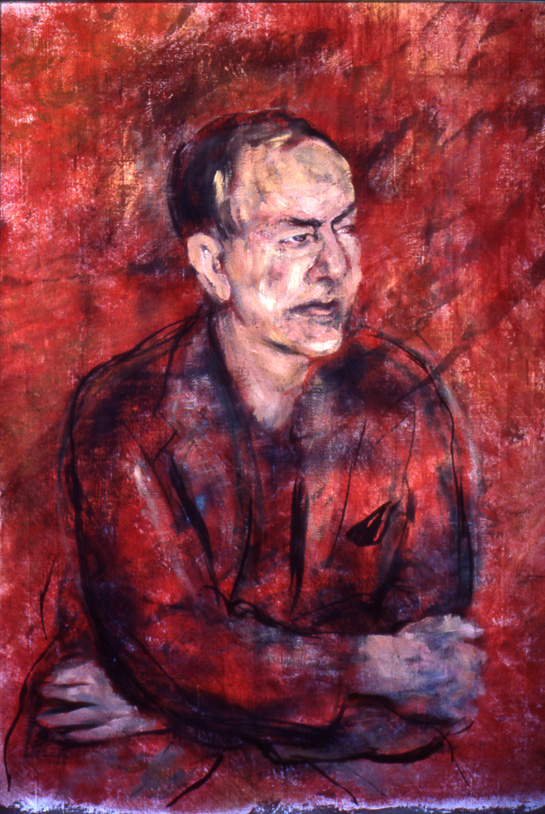
![Richard Rappaport [3] [4], Own work](https://commons.wikimedia.org/wiki/File:Herbert_simon_red_complete.jpg)