Harold Innis Quotes

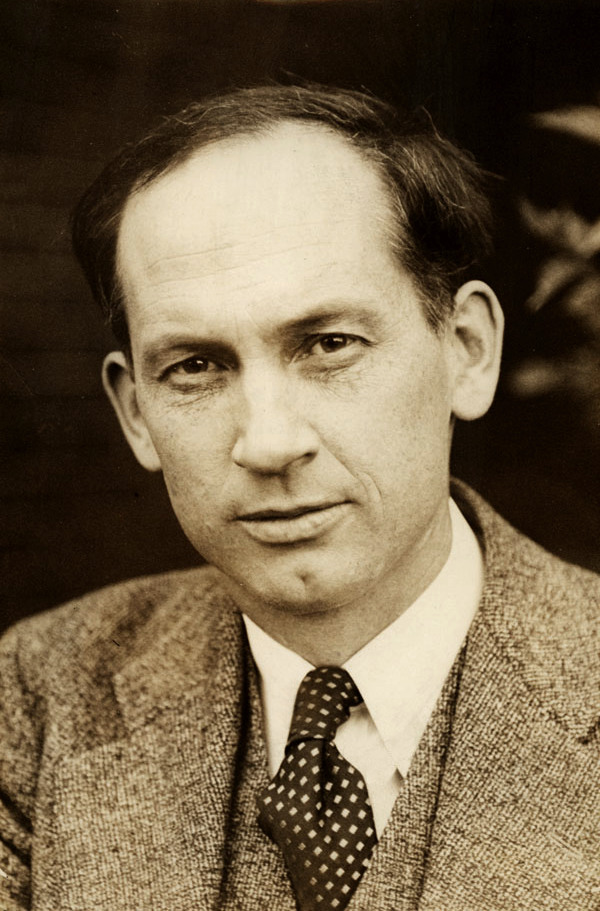
Harold Adams Innis was a Canadian professor of political economy at the University of Toronto and the author of seminal works on media, communication theory, and Canadian economic history. Despite his dense and difficult prose, Innis was one of Canada's most original thinkers. He helped develop the staples thesis, which holds that Canada's culture, political history, and economy have been decisively influenced by the exploitation and export of a series of "staples" such as fur, fishing, lumber, wheat, mined metals, and coal. The staple thesis dominated economic history in Canada 1930s–1960s, and continues to be a fundamental part of the Canadian political economy tradition.Innis's writings on communication explore the role of media in shaping the culture and development of civilizations. He argued, for example, that a balance between oral and written forms of communication contributed to the flourishing of Greek civilization in the 5th century BC. He warned, however, that Western civilization is now imperiled by powerful, advertising-driven media obsessed by "present-mindedness" and the "continuous, systematic, ruthless destruction of elements of permanence essential to cultural activity." His intellectual bond with Eric A. Havelock formed the foundations of the Toronto School of communication theory, which provided a source of inspiration for future members of the school: Marshall McLuhan and Edmund Snow Carpenter.Innis laid the basis for scholarship that looked at the social sciences from a distinctly Canadian point of view. As the head of the University of Toronto's political economy department, he worked to build up a cadre of Canadian scholars so that universities would not continue to rely as heavily on British or American-trained professors unfamiliar with Canada's history and culture. He was successful in establishing sources of financing for Canadian scholarly research.As the Cold War grew hotter after 1947, Innis grew increasingly hostile to the United States. He warned repeatedly that Canada was becoming a subservient colony to its much more powerful southern neighbor. "We are indeed fighting for our lives," he warned, pointing especially to the "pernicious influence of American advertising.... We can only survive by taking persistent action at strategic points against American imperialism in all its attractive guises." His views influenced some younger scholars, including Donald Creighton.Innis also tried to defend universities from political and economic pressures. He believed that independent universities, as centres of critical thought, were essential to the survival of Western civilization. His intellectual disciple and university colleague, Marshall McLuhan, lamented Innis's premature death as a disastrous loss for human understanding. McLuhan wrote: "I am pleased to think of my own book The Gutenberg Galaxy as a footnote to the observations of Innis on the subject of the psychic and social consequences, first of writing then of printing." Wikipedia  

✵ 5. November 1894 – 8. November 1952
Harold Innis photo

Works

Harold Innis: 22 quotes5 likes

Famous Harold Innis Quotes

“The mixture of the oral and the written traditions in the writings of Plato enabled him to dominate the history of the West.”

Harold Innis

Minerva's Owl (1947), an address to the Royal Society of Canada, published in The Bias of Communication (1951) p. 10.
The Bias of Communication (1951)

“The Middle Ages burned its heretics and the modern age threatens them with atom bombs.”

Harold Innis

Industrialism and Cultural Values p. 139.
The Bias of Communication (1951)

Harold Innis Quotes about communication

Harold Innis Quotes

“A change in the type of medium implies a change in the type of appraisal and hence makes it difficult for one civilization to understand another.”

Harold Innis book Empire and Communications

2007 edition, p. 29.
Empire and Communications (1950)
Context: The significance of a basic medium to its civilization is difficult to appraise since the means of appraisal are influenced by the media, and indeed the fact of appraisal appears to be peculiar to certain types of media. A change in the type of medium implies a change in the type of appraisal and hence makes it difficult for one civilization to understand another.

“The present Dominion emerged not in spite of geography but because of it.”

Harold Innis

Conclusion, p. 393.
The Fur Trade in Canada (1930)
Context: Canada emerged as a political entity with boundaries largely determined by the fur trade. These boundaries included a vast north temperate land area extending from the Atlantic to the Pacific and dominated by the Canadian Shield. The present Dominion emerged not in spite of geography but because of it.

“Industrialism implies technology and the cutting of time into precise fragments suited to the needs of the engineer and the accountant.”

Harold Innis

Industrialism and Cultural Values p. 140.
The Bias of Communication (1951)

“The voice of a second-rate person is more impressive than the published opinion of superior ability.”

Harold Innis book Empire and Communications

2007 edition, p. 31.
Empire and Communications (1950)
Context: Graham Wallas has reminded us that writing as compared with speaking involves an impression at the second remove and reading an impression at the third remove. The voice of a second-rate person is more impressive than the published opinion of superior ability.

“We have not yet realized that the Indian and his culture were fundamental to the growth of Canadian institutions.”

Harold Innis

Conclusion (1930) of The Fur Trade in Canada, (1970 edition), p. 392.
The Fur Trade in Canada (1930)

“The history of Canada has been profoundly influenced by the habits of an animal which very fittingly occupies a prominent place on her coat of arms.”

Harold Innis

The Beaver (1930) Part I of The Fur Trade in Canada, (1970 edition), p. 3.
The Fur Trade in Canada (1930)

“The discovery of printing in the middle of the fifteenth century implied the beginning of a return to a type of civilization dominated by the eye rather than the ear.”

Harold Innis

Industrialism and Cultural Values (1950), a paper presented at meetings of the American Economic Association in Chicago, published in The Bias of Communication (1951) p. 138.
The Bias of Communication (1951)

Similar authors

Elinor Ostrom photo
Elinor Ostrom4
American political economist None
Margaret Atwood photo
Margaret Atwood348
Canadian writer None
Jean Vanier photo
Jean Vanier36
Canadian humanitarian None
Paul Krugman photo
Paul Krugman106
American economist None
Alice Munro photo
Alice Munro38
Canadian novelist None
Olavo de Carvalho photo
Olavo de Carvalho6
Brazilian journalist, essayist and professor of philosophy None
Joseph E. Stiglitz photo
Joseph E. Stiglitz39
American economist and professor, born 1943. None
Herbert A. Simon photo
Herbert A. Simon58
American political scientist, economist, sociologist, and p… None
Hannah Arendt photo
Hannah Arendt85
Jewish-American political theorist None
Saul Bellow photo
Saul Bellow103
Canadian-born American writer None