“How we spend our days is, of course, how we spend our lives.”
Source: " The Writing Life http://www.tikkun.org/mediagallery/download.php?mid=20090505114218282" (link is to PDF download), Tikkun magazine, Volume 3, Number 6, 1988
Annie Dillard is an American author, best known for her narrative prose in both fiction and non-fiction. She has published works of poetry, essays, prose, and literary criticism, as well as two novels and one memoir. Her 1974 work Pilgrim at Tinker Creek won the 1975 Pulitzer Prize for General Nonfiction. From 1980, Dillard taught for 21 years in the English department of Wesleyan University, in Middletown, Connecticut. Wikipedia

“How we spend our days is, of course, how we spend our lives.”
Source: " The Writing Life http://www.tikkun.org/mediagallery/download.php?mid=20090505114218282" (link is to PDF download), Tikkun magazine, Volume 3, Number 6, 1988
Source: Teaching a Stone to Talk: Expeditions and Encounters
" Total Eclipse https://www.theatlantic.com/science/archive/2017/08/annie-dillards-total-eclipse/536148/", Teaching a Stone to Talk (1982)
“She read books as one would breathe air, to fill up and live.”
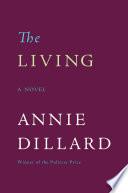
Annie Dillard book The Living
Source: The Living
“I had been my whole life a bell, and never knew it until at that moment I was lifted and struck.”
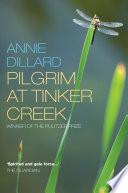
Annie Dillard book Pilgrim at Tinker Creek
Source: Pilgrim at Tinker Creek
“You can't test courage cautiously, so I ran hard and waved my arms hard, happy.”
Source: An American Childhood
“A schedule defends from chaos and whim. A net for catching days.”
Source: The Writing Life
Annie Dillard book Pilgrim at Tinker Creek
Source: Pilgrim at Tinker Creek
“The real and proper question is: why is it beautiful?”
Annie Dillard book Pilgrim at Tinker Creek
Source: Pilgrim at Tinker Creek
“I am a fugitive and a vagabond, a sojourner seeking signs.”
Annie Dillard book Pilgrim at Tinker Creek
Source: Pilgrim at Tinker Creek
Annie Dillard book Pilgrim at Tinker Creek
Source: Pilgrim at Tinker Creek
Source: Teaching a Stone to Talk: Expeditions and Encounters
“These are our few live seasons. Let us live them as purely as we can, in the present.”
Annie Dillard book Pilgrim at Tinker Creek
Source: Pilgrim at Tinker Creek
“We are here to witness the creation and to abet it.”
Source: Teaching a Stone to Talk: Expeditions and Encounters
Source: Teaching a Stone to Talk: Expeditions and Encounters
Source: Teaching a Stone to Talk: Expeditions and Encounters
“Push it. examine all things intensely and relentlessly.”
Annie Dillard book Pilgrim at Tinker Creek
Source: Pilgrim at Tinker Creek
“There is no shortage of good days. It is good lives that are hard to come by.”
Source: The Writing Life
“We wake, if we ever wake at all, to mystery, rumors of death, beauty, violence…”
Annie Dillard book Pilgrim at Tinker Creek
Source: Pilgrim at Tinker Creek
“Anything you do not give freely and abundantly becomes lost to you.”
Source: The Writing Life
Source: Teaching a Stone to Talk: Expeditions and Encounters
“I would like to learn, or remember, how to live.”
Source: Teaching a Stone to Talk: Expeditions and Encounters
“Whenever a work's structure is intentionally one of its own themes, another of its themes is art.”
Quoted by Ted Nelson in Literary Machines (1982)
An American Childhood (1987)
"An Expedition to the Pole", Teaching a Stone to Talk (1982)
Annie Dillard book Pilgrim at Tinker Creek
"The Horns of the Altar", pp. 237–238
Pilgrim at Tinker Creek (1976)
Annie Dillard book Pilgrim at Tinker Creek
"Fecundity", p. 171
Pilgrim at Tinker Creek (1976)
The Writing Life (1989)
" The Force That Drives the Flower https://www.theatlantic.com/magazine/archive/1973/11/the-force-that-drives-the-flower/308963/", The Atlantic, Nov. 1973


