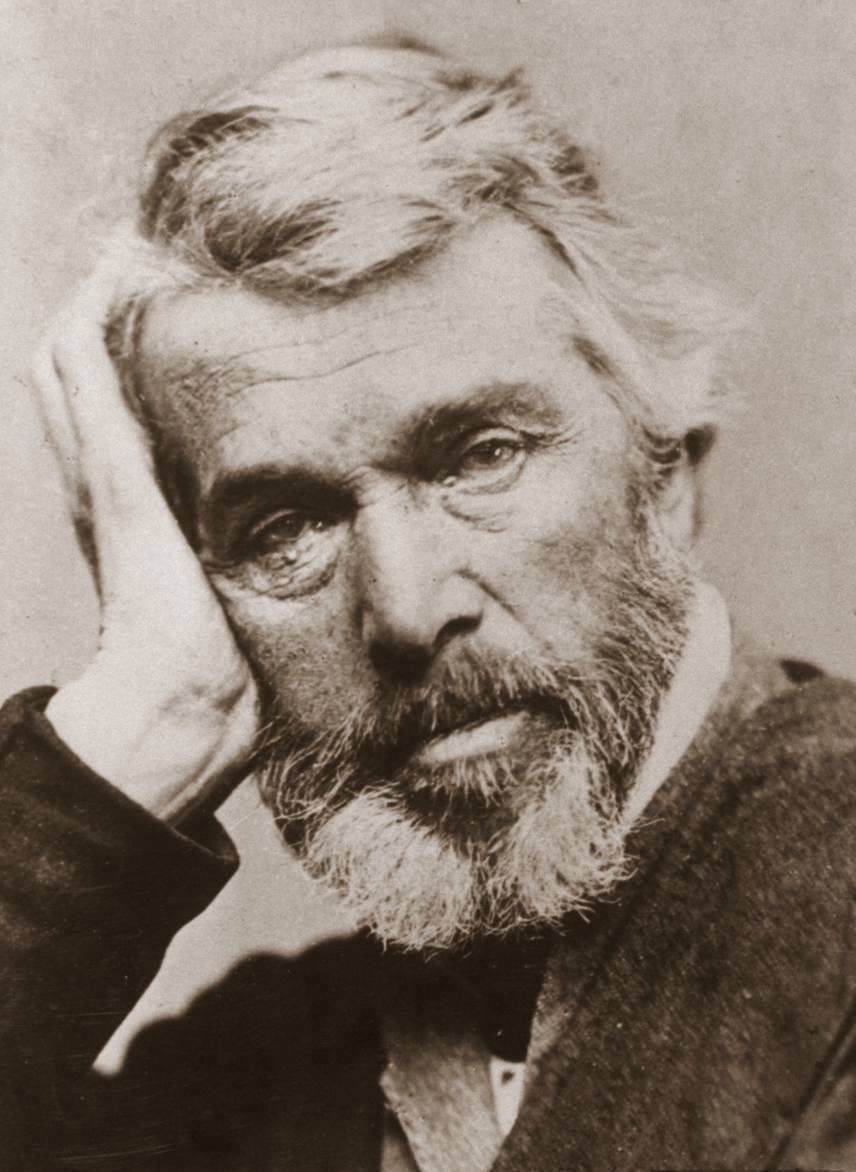
Thomas Carlyle cytaty
strona 10

Thomas Carlyle , szkocki pisarz społeczny, historyk i filozof historii, propagator i współtwórca specyficznej historiozofii zwanej heroizmem. Bardzo wpływowy w czasach wiktoriańskich, oddziałał też szeroko na myśl prawicową.

Poślubił Jane Baillie Welsh , od r. 1865 był rektorem uniwersytetu w Edynburgu. Rewolucyjnym i zgorzkniałym nastrojom epoki Byrona przeciwstawił ewangelię wypełniania swego obowiązku, opowiadając się za reformami społecznymi i organizacją pracy. Niwelacyjnej sile tendencji demokratycznych przeciwstawił kult herosów. W walce przeciwko mechanicznemu poglądowi na świat, uwielbieniu większości i utylitaryzmowi wysuwał jako istotną treść życia rozwój najwyższych, ponadindywidualnych wartości człowieka. W społeczeństwie i państwie ci tylko rządzić powinni, którzy czują w sobie przemożny pęd do władzy. Carlyle jednak powodzenie woli zmierzającej do potęgi utożsamiał z jej usprawiedliwieniem, brał je za dowód idealizmu zwróconego stale ku celom ponad osobowym, i w tym leży słabość i niebezpieczeństwo jego nauki, wywodzącej się ze szkockiego purytanizmu i idealizmu niemieckiego. Politycznie odegrał dużą rolę jako teoretyk imperializmu, podejmujący ideę misji dziejowej narodu angielskiego, która objąć ma świat cały. Z pism Carlyle wymienić należy przede wszystkim rozważania filozoficzno-historyczne „Bohaterowie. Cześć dla bohaterów i pierwiastek bohaterstwa w historii” , dzieła o rewolucji francuskiej, o Fryderyku II. pruskim. Jego „Sartora Resartusa, życie i zdania Pana Teufelsdröckha” przeł. Sygurd Wiśniowski .

Pod wpływem fascynacji niemieckim romantyzmem porzucił kalwinizm. Jego dług wobec filozofii romantycznej widoczny jest w tłumaczeniu Lat nauki Wilhelma Meistra Goethego i książce Life of Schiller. Z romantyzmu Carlyle czerpie przede wszystkim daleko posunięty indywidualizm .

Podstawowym tematem myśli Carlyle'a jest heros, jednostka wybitna, górująca nad masami siłą aktywności życiowej, przede wszystkim moralnej. W podkreśleniu właśnie przewagi moralnej a nie np. intelektualnej herosa widoczny jest wpływ purytanizmu. Mimo to Carlyle antycypuje antropologię Nietzschego.

Germanofil. Zagorzały miłośnik Fryderyka Wielkiego, a także autor jego historii .

Wydaje się, że specyficzna maniera jego umysłowości wywarła znaczny wpływ na formy współczesnej kultury masowej, np. powieść fantasy czy kino akcji. Jego wpływ na myśl prawicową to przede wszystkim widoczny w niej opór wobec myśli Karola Marksa, że byt określa świadomość, jako że heros Carlyle'a może i musi walczyć z naporem generowanych przez naturę i poddany jej motłoch treści, w heroistycznym języku określanych jako potwory.

Stąd historiozofia Carlyle'a nie uznaje żadnych praw dziejowych, w szczególności deterministycznych praw ekonomii, a historię przedstawia na płaszczyślie kosmologicznej jako sekwencję powtarzalnych walk wybitnych jednostek ze złem .

Zobacz też: heroizm, elitaryzm, filozofia historii, antydemokratyzm, kontrrewolucja.


✵ 4. Grudzień 1795 – 5. Luty 1881   •   Natępne imiona Томас Карлайл
Thomas Carlyle Fotografia
Thomas Carlyle: 494   Cytaty 6   Polubień

Thomas Carlyle słynne cytaty

„Staraj się zostać uczciwym człowiekiem – zyskasz dzięki temu pewność, że na świecie jest o jednego drania mniej.”

Źródło: Wielka księga mądrości, wybór Jacek i Tomasz Ilga

Thomas Carlyle cytaty

„Kapitanowie przemysłu.”

Captains of Industry. (ang.)
Źródło: Przeszłość i teraźniejszość (ang. Past and Present) 4, 4

„Szczęśliwi ludzie, których dzieje nie wypełniają podręczników historii.”

Happy the people whose annals are blank in history books! (ang.)

Thomas Carlyle: Cytaty po angielsku

“Nature admits no lie.”

Latter Day Pamphlet, No. 5. (1850).
1820s, Critical and Miscellaneous Essays (1827–1855)

“History a distillation of Rumour.”

Pt. I, Bk. VII, ch. 5.
1830s, The French Revolution. A History (1837)

“He who would write heroic poems should make his whole life a heroic poem.”

Life of Schiller.
1820s, Critical and Miscellaneous Essays (1827–1855)

“He that has a secret should not only hide it, but hide that he has it to hide.”

Pt. II, Bk. I, ch. 7.
1830s, The French Revolution. A History (1837)

“We have oftener than once endeavoured to attach some meaning to that aphorism, vulgarly imputed to Shaftesbury, which however we can find nowhere in his works, that "ridicule is the test of truth."”

Thomas Carlyle książka Characteristics

Voltaire, Foreign Review, (1829); compare: "How comes it to pass, then, that we appear such cowards in reasoning, and are so afraid to stand the test of ridicule?", Shaftesbury, Characteristics. A Letter concerning Enthusiasm, sect. 2.; "Truth, 't is supposed, may bear all lights; and one of those principal lights or natural mediums by which things are to be viewed in order to a thorough recognition is ridicule itself", Shaftesbury, Essay on the Freedom of Wit and Humour, sect. 1.; "'T was the saying of an ancient sage [Gorgias Leontinus, apud Aristotle's "Rhetoric," lib. iii. c. 18], that humour was the only test of gravity, and gravity of humour. For a subject which would not bear raillery was suspicious; and a jest which would not bear a serious examination was certainly false wit", ibid. sect. 5.
1820s, Critical and Miscellaneous Essays (1827–1855)

“I shall now no more behold my dear father with these "bodily eyes. With him a whole threescore and ten years of the past has doubly died for me. It is as if a new leaf in the great hook of time were turned over. Strange time — endless time or of which I see neither end nor beginning. All rushes on. Man follows man. His life is as a tale that has been told; yet under Time does there not lie Eternity? Perhaps my father, all that essentially was my father, is even now near me, with me. Both he and I are with God. Perhaps, if it so please God, we shall in some higher state of being meet one another, recognize one another. As it is written. We shall be forever with God. The possibility, nay (in some way), the certainty, of perennial existence daily grows plainer to me. "The essence of whatever was, is, or shall be, even now is." God is great. God is good. His will be done, for it will be right. As it is, I can think peaceably of the departed love. All that was earthly, harsh, sinful, in our relation has fallen away; all that was holy in it remains. I can see my dear father's life in some measure as the sunk pillar on which mine was to rise and be built; the waters of time have now swelled up round his (as they will round mine); I can see it all transfigured, though I touch it no longer. I might almost say his spirit seems to have entered into me (so clearly do I discern and love him); I seem to myself only the continuation and second volume of my father. These days that I have spent thinking of him and of his end are the peaceablest, the only Sabbath that I have had in London. One other of the universal destinies of man has overtaken me. Thank Heaven, I know, and have known, what it is to be a son; to love a father, as spirit can love spirit. God give me to live to my father's honor and to His. And now, beloved father, farewell for the last time in this world of shadows I In the world of realities may the Great Father again bring us together in perfect holiness and perfect love! Amen!”

1880s, Reminiscences (1881)

Podobni autorzy

Robert Louis Stevenson Fotografia
Robert Louis Stevenson 11
pisarz szkocki
Henry David Thoreau Fotografia
Henry David Thoreau 94
amerykański pisarz, poeta i filozof
William James Fotografia
William James 26
filozof i psycholog amerykański
Mark Twain Fotografia
Mark Twain 128
amerykański pisarz, satyryk, humorysta
Arthur Schopenhauer Fotografia
Arthur Schopenhauer 97
filozof niemiecki
John Henry Newman Fotografia
John Henry Newman 10
angielski teolog katolicki, filozof, kardynał
Karol Marks Fotografia
Karol Marks 136
niemiecki filozof, ekonomista i działacz rewolucyjny