Bernard Malamud The Natural
Źródło: The Natural (1952), p. 152
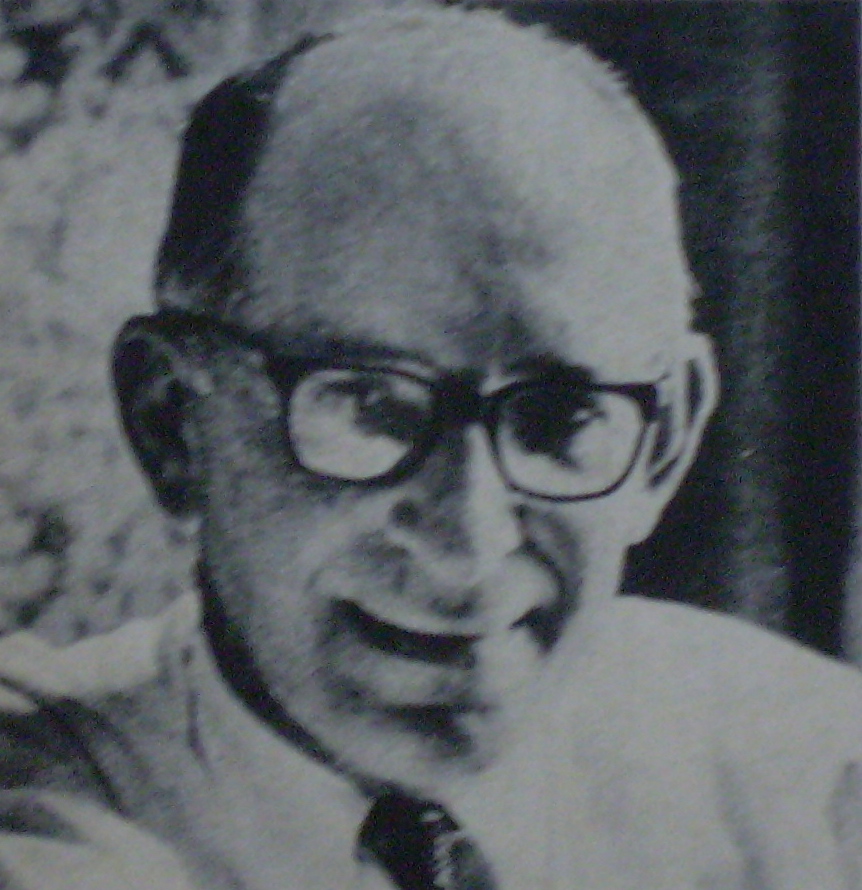
Bernard Malamud - amerykański pisarz, prozaik i autor sztuk teatralnych.
Malamud urodził się na Brooklynie w rodzinie rosyjskich Żydów. Jego utwory często rozgrywają się w żydowskich środowiskach Nowego Jorku, pisarz nie ogranicza się jednak jedynie do opisania tradycyjnych żydowskich zwyczajów i postaw na tle wielokulturowej społeczności. Interesuje go głównie jednostka i sposób realizacji jej ambicji oraz marzeń wobec oporu otoczenia. Jego proza, w pełni realistyczna i z pozoru oschła, zaskakuje ukrytym liryzmem.
Najbardziej znana jego powieść, Fachman w 1967 zdobyła National Book Award i Nagrodę Pulitzera w dziedzinie fikcji literackiej. Bohaterem książki jest Jakow Bok, Żyd oskarżony w Imperium Rosyjskim o popełnienie mordu rytualnego. Pisarz oparł swą powieść o rzeczywiste wydarzenia z lat 1911 - 1913. National Book Award uhonorowano także wcześniejszy zbiór opowiadań Malamuda - The Magic Barrel. Wikipedia
Bernard Malamud The Natural
Źródło: The Natural (1952), p. 152
"An Interview with Bernard Malamud", in Leslie A. Field and Joyce W. Field (eds.) Bernard Malamud: A Collection of Critical Essays (London: Prentice-Hall, 1975) p. 11
"The Man in the Drawer", in Rembrandt's Hat (1973); cited from Selected Stories (Harmondsworth: Penguin, 1985) p. 225
Address at Bennington College (30 October 1984) http://www.nytimes.com/books/97/09/28/reviews/malamud-reflections.html as published in "Reflections of a Writer: Long Work, Short Life" in The New York Times (20 March 1988); also in Talking Horse : Bernard Malamud on Life and Work (1996) edited by Alan Cheuse and Nicholas Delbanco, p. 35 <br class="br">Kontekst: If I may, I would at this point urge young writers not to be too much concerned with the vagaries of the marketplace. Not everyone can make a first-rate living as a writer, but a writer who is serious and responsible about his work, and life, will probably find a way to earn a decent living, if he or she writes well. A good writer will be strengthened by his good writing at a time, let us say, of the resurgence of ignorance in our culture. I think I have been saying that the writer must never compromise with what is best in him in a world defined as free.
Address at Bennington College (30 October 1984) as published in "Reflections of a Writer: Long Work, Short Life" in The New York Times (20 March 1988)
Kontekst: I have written almost all my life. My writing has drawn, out of a reluctant soul, a measure of astonishment at the nature of life. And the more I wrote well, the better I felt I had to write.
In writing I had to say what had happened to me, yet present it as though it had been magically revealed. I began to write seriously when I had taught myself the discipline necessary to achieve what I wanted. When I touched that time, my words announced themselves to me. I have given my life to writing without regret, except when I consider what in my work I might have done better. I wanted my writing to be as good as it must be, and on the whole I think it is. I would write a book, or a short story, at least three times — once to understand it, the second time to improve the prose, and a third to compel it to say what it still must say.
Somewhere I put it this way: first drafts are for learning what one's fiction wants him to say. Revision works with that knowledge to enlarge and enhance an idea, to re-form it. Revision is one of the exquisite pleasures of writing: The men and things of today are wont to lie fairer and truer in tomorrow's meadow, Henry Thoreau said.
I don't regret the years I put into my work. Perhaps I regret the fact that I was not two men, one who could live a full life apart from writing; and one who lived in art, exploring all he had to experience and know how to make his work right; yet not regretting that he had put his life into the art of perfecting the work.
Address at Bennington College (30 October 1984) http://www.nytimes.com/books/97/09/28/reviews/malamud-reflections.html as published in "Reflections of a Writer: Long Work, Short Life" in The New York Times (20 March 1988); also in Talking Horse : Bernard Malamud on Life and Work (1996) edited by Alan Cheuse and Nicholas Delbanco, p. 35 <br class="br">Kontekst: If I may, I would at this point urge young writers not to be too much concerned with the vagaries of the marketplace. Not everyone can make a first-rate living as a writer, but a writer who is serious and responsible about his work, and life, will probably find a way to earn a decent living, if he or she writes well. A good writer will be strengthened by his good writing at a time, let us say, of the resurgence of ignorance in our culture. I think I have been saying that the writer must never compromise with what is best in him in a world defined as free.
Address at Bennington College (30 October 1984) as published in "Reflections of a Writer: Long Work, Short Life" in The New York Times (20 March 1988)
Kontekst: I have written almost all my life. My writing has drawn, out of a reluctant soul, a measure of astonishment at the nature of life. And the more I wrote well, the better I felt I had to write.
In writing I had to say what had happened to me, yet present it as though it had been magically revealed. I began to write seriously when I had taught myself the discipline necessary to achieve what I wanted. When I touched that time, my words announced themselves to me. I have given my life to writing without regret, except when I consider what in my work I might have done better. I wanted my writing to be as good as it must be, and on the whole I think it is. I would write a book, or a short story, at least three times — once to understand it, the second time to improve the prose, and a third to compel it to say what it still must say.
Somewhere I put it this way: first drafts are for learning what one's fiction wants him to say. Revision works with that knowledge to enlarge and enhance an idea, to re-form it. Revision is one of the exquisite pleasures of writing: The men and things of today are wont to lie fairer and truer in tomorrow's meadow, Henry Thoreau said.
I don't regret the years I put into my work. Perhaps I regret the fact that I was not two men, one who could live a full life apart from writing; and one who lived in art, exploring all he had to experience and know how to make his work right; yet not regretting that he had put his life into the art of perfecting the work.
“Without heroes, we're all plain people, and don't know how far we can go.”
Bernard Malamud The Natural
The Natural (1952) p. 154 http://books.google.com/books?id=wCWhegoGUxwC&q=%22Without+heroes+we're+all+plain+people+and+don't+know+how+far+we+can+go%22&pg=PA148#v=onepage
“Those who write about life, reflect about life…. you see in others who you are.”
Bernard Malamud książka Dubin's Lives
Dubin's Lives (1979)
Bernard Malamud książka Dubin's Lives
Dubin's Lives (Harmondsworth: Penguin, 1979) p. 27
“Life is a tragedy full of joy.”
New York Times (29 January 1979)
“Mourning is a hard business," Cesare said. "If people knew there'd be less death.”
"Life is Better than Death", in Idiots First (1963), p. 85
On how Dubin’s Lives resulted from a lifetime of reading biographies, W (16 February 1979)
“If you ever forget you are a Jew a goy will remind you.”
"Black is My Favorite Color", in Idiots First (1963), p. 29
“Levin wanted friendship and got friendliness; he wanted steak and they offered spam.”
Bernard Malamud książka A New Life
A New Life (1961; repr. Harmondsworth: Penguin, 1968) p. 111
“I don't think you can do anything for anyone without giving up something of your own.”
Bernard Malamud The Natural
The Natural (Farrar, Straus and Giroux, 2003) p. 149 http://books.google.com/books?id=wCWhegoGUxwC&q=%22I+don't+think+you+can+do+anything+for+anyone+without+giving+up+something+of+your+own%22&pg=PA149#v=onepage. (originally published 1952)


