“They are the affectation of affectation.”
Henry Fielding livre Joseph Andrews
Book III, Ch. 3
Joseph Andrews (1742)
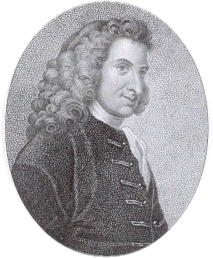
Henry Fielding, né le 22 avril 1707 à Sharpham Park près de Glastonbury, Somerset, Angleterre et mort à Lisbonne le 8 octobre 1754, est un dramaturge, poète, essayiste et romancier anglais.
Fielding fréquente le Collège d'Eton puis l'université de Leyde aux Pays-Bas comme étudiant en lettres.
Pendant de longues années, il se consacre au théâtre et ses pièces font bientôt de lui l'un des dramaturges les plus célèbres de la capitale britannique. C'est seulement en 1741 qu'il entre en fiction avec Shamela, parodie du très populaire Paméla ou la Vertu récompensée de Richardson, puis avec Joseph Andrews. Le sommet de son œuvre est sans doute atteint avec l’Histoire de Tom Jones, enfant trouvé.
L'ironie est souveraine chez Fielding, en harmonie avec l'époque, l'âge d'or du genre. Ce style bien particulier, parfois appelé « oblique », vise autant l'auteur que son narrateur, ses lecteurs et ses personnages. Tous les procédés techniques sont utilisés selon une savante rhétorique qu'appuie une solide érudition classique, encore que des erreurs de citations soient parfois commises, mais à dessein, pour mieux taquiner le lecteur inattentif quelques chapitres plus loin.
Il existe de multiples facettes à la personnalité de Fielding, à sa carrière, à son œuvre. Personnage important dans le Londres de la première moitié du XVIIIe siècle, tant par ses activités de magistrat que par ses publications, il n'a vécu que quarante-sept ans, a connu la misère et la gloire, le bonheur et le deuil, la calomnie et le panégyrique. Il a été attaqué, vilipendé, censuré et encensé, mais il a vécu avec la certitude que ses œuvres seraient reconnues par la postérité. De fait, Walter Scott l'a appelé « le père du roman anglais » , et selon Somerset Maugham, son Histoire de Tom Jones, enfant trouvé figure parmi les dix meilleurs romans jamais écrits ; de récents sondages conduits par The Guardian confirment cette faveur du public. Wikipedia
“They are the affectation of affectation.”
Henry Fielding livre Joseph Andrews
Book III, Ch. 3
Joseph Andrews (1742)
“The only source of the true Ridiculous (as it appears to me) is affectation”
Henry Fielding livre Joseph Andrews
Author's Preface
Joseph Andrews (1742)
Henry Fielding livre Joseph Andrews
Book II, Ch. 14
Joseph Andrews (1742)
“Love and scandal are the best sweeteneers of tea.”
Henry Fielding Love in Several Masques
Act IV, sc. xi
Love in Several Masques (1728)
“It is much easier to make good men wise, than to make bad men good.”
Henry Fielding livre The History of Tom Jones, a Foundling
Source: The History of Tom Jones, a Foundling
“Some folks rail against other folks, because other folks have what some folks would be glad of.”
Henry Fielding livre Joseph Andrews
Book IV, Ch. 6
Joseph Andrews (1742)
“Money is the fruit of evil as often as the root of it.”
Don Quixote in England (1731), Act I, scene vi http://books.google.com/books?id=8_VbAAAAQAAJ&q=%22Money+is+the+fruit+of+evil+as+often+as+the+root+of+it%22&pg=PA13#v=onepage
“I describe not men, but manners; not an individual, but a species.”
Henry Fielding livre Joseph Andrews
Book III, Ch. 1
Joseph Andrews (1742)
“No one hath seen beauty in its highest lustre who hath never seen it in distress.”
Henry Fielding livre The History of Tom Jones, a Foundling
Source: Tom Jones
Henry Fielding livre The History of Tom Jones, a Foundling
Source: The History of Tom Jones, a Foundling
Henry Fielding livre Joseph Andrews
Author's Preface
Joseph Andrews (1742)
Fielding, Henry; ed. by William Ernest Henley. 1903. The Complete Works of Henry Fielding, Esq: Miscellaneous writings. W. Heinemann. p. 162
“Guilt has very quick ears to an accusation.”
Henry Fielding livre Amelia
Book III, ch. 11
Amelia (1751)
“We must eat to live and live to eat.”
Act III, sc. iii
The Miser (1733)
Henry Fielding livre Joseph Andrews
Abraham Adams, speaking of his host, Wilson.
Book III, Ch. 5
Joseph Andrews (1742)
“To whom nothing is given, of him can nothing be required.”
Henry Fielding livre Joseph Andrews
Book II, Ch. 8
Joseph Andrews (1742)
Book V, Ch. 10
The History of Tom Jones (1749)
“Oh, the roast beef of England,
And old England's roast beef!”
The Grub Street Opera (1731), Act iii, scene 2; reported in Bartlett's Familiar Quotations, 10th ed. (1919)
“Oons, sir! do you say that I am drunk? I say, sir, that I am as sober as a judge.”
Don Quixote in England (1731), Act III, scene xiv
“This story will not go down.”
Tumble-down Dick; reported in Bartlett's Familiar Quotations, 10th ed. (1919)
“Can any man have a higher notion of the rule of right and the eternal fitness of things?”
Book IV, Ch. 4
The History of Tom Jones (1749)
Book I, Chapter 1
The History of Tom Jones (1749)
“When children are doing nothing, they are doing mischief.”
Book XV, Ch. 2
The History of Tom Jones (1749)
“All Nature wears one universal grin.”
Act I, sc. i
Tom Thumb the Great (1730)
Book I, Chapter 1
The History of Tom Jones (1749)


