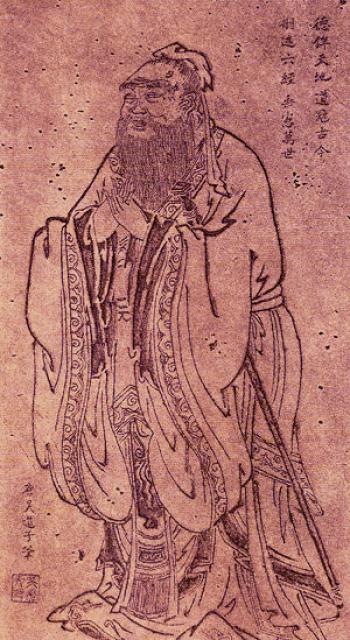
Confucius citations célèbres
Citations sur les hommes et les garçons de Confucius
“L'homme supérieur est vertueux, l'homme inférieur n'a conscience que de l'avantage.”
君子喻於义,小人喻於利。
zh
L'homme de peu ne connaît que le profit.
Confucius Citations
Cette citation provient d'un dossier concernant Confucius coordonné par Minh Tran Huy
Citations le concernant
“Tout le plaisir d'un roi, c'est de n'être jamais contredit.”
Cette seule maxime suffit à détruire un état.
Confucius: Citations en anglais
Book XVII, Chapter VIII.
Source: The Analects, Other chapters
“It is not truth that makes man great, but man that makes truth great.”
As quoted in The Importance of Living (1937) by Lin Yutang, p. v
Attributed
“Men do not stumble over mountains, but over molehills”
Reported in: United States. Congress. House. Committee on Agriculture (1973) Hearings Before the Committee on Agriculture, House of Representatives, Ninety-second Congress. p. 21
Attributed
“If I hear the Way [of truth] in the morning, I am content even to die in that evening.”
Source: The Analects, Chapter IV
“I am not bothered by the fact that I am not understood. I am bothered when I do not know others.”
Source: The Analects, Chapter I
Source: The Doctrine of the Mean
Source: The Analects, Other chapters
君子喻於義,小人喻於利。
James Legge, translation (1893)
The Superior Man is aware of Righteousness, the inferior man is aware of advantage.
The virtuous man is driven by responsibility, the non-virtuous man is driven by profit. [by 朱冀平]
The Analects, Chapter I, Chapter IV
The Analects, A Great Utopia (The World of Da-Tong)
“Honesty and trust are promoted, and good neighborliness cultivated.”
The Analects, A Great Utopia (The World of Da-Tong)
“Virtuous, worthy, wise and capable people are chosen as leaders.”
The Analects, A Great Utopia (The World of Da-Tong)
(zh-TW) 非其鬼而祭之,諂也。見義不為,無勇也。
The Analects, Chapter I, Chapter II
The Analects, A Great Utopia (The World of Da-Tong)
“A man's character is formed by the Odes, developed by the Rites and perfected by music.”
Quoted from Will Durant, Our Oriental Heritage.
The Analects, Chapter I, Chapter VIII


