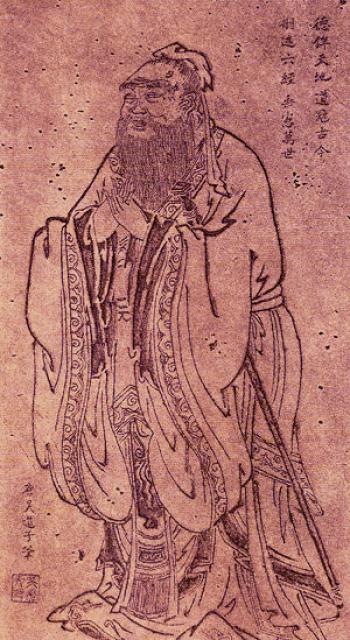
Confucius citations célèbres
Citations sur les hommes et les garçons de Confucius
“L'homme supérieur est vertueux, l'homme inférieur n'a conscience que de l'avantage.”
君子喻於义,小人喻於利。
zh
L'homme de peu ne connaît que le profit.
Confucius Citations
Cette citation provient d'un dossier concernant Confucius coordonné par Minh Tran Huy
Citations le concernant
“Tout le plaisir d'un roi, c'est de n'être jamais contredit.”
Cette seule maxime suffit à détruire un état.
Confucius: Citations en anglais
Variante: The man of virtue makes the difficulty to be overcome his first business, and success only a subsequent consideration: this may be called perfect virtue.
Source: The Analects, Other chapters
“To throw oneself into strange teachings is quite dangerous.”
The word translated "strange teachings" means literally another end [of textile]. There are two different understandings about "strange teachings" or heretical. One possible understanding is "strange from the authentic teaching", another understanding is simply different subjects, just as two authors or two scholastic fields literature and politics.
Source: The Analects, Chapter II
Source: The Analects, Other chapters
The Analects, Chapter I
Bowing is a courtesy for the host who invites him as well drinking a cup.
Source: The Analects, Chapter III
The Analects, Chapter I, Chapter IV
Source: The Doctrine of the Mean
“The more man meditates upon good thoughts, the better will be his world and the world at large.”
Attributed to Confucius in Out of the Blue: Delight Comes Into Our Lives (1996) by Mark Victor Hansen, Barbara Nichols, and Patty Hansen, p. 93
Attributed
Source: The Doctrine of the Mean
The Morals of Confucius http://books.google.pt/books?id=izgCAAAAQAAJ&printsec=frontcover&hl=pt-PT, 2nd edition (London, 1724), Maxim X, p. 114.
Attributed
To keep silently in mind what one has seen and heard, to study hard and never feel contented, to teach others tirelessly; have I done (all of) these things?
Source: The Analects, Other chapters
Source: The Doctrine of the Mean
James Legge, translation (1893)
When you meet someone better than yourself, turn your thoughts to becoming his equal. When you meet someone not as good as you are, look within and examine your own self.
Dim Cheuk Lau translation (1979)
When you see a good person, think of becoming like her/him. When you see someone not so good, reflect on your own weak points.
As quoted in Liberating Faith : Religious Voices for Justice, Peace, and Ecological Wisdom (2003) by Roger S. Gottlieb, p. 24
The Analects, Chapter I, Chapter IV


