“Dont speak of tomorrow. Let the music speak to us tonight, in a happier language than ours.”
Wilkie Collins book The Woman in White
Variant: Let the music speak to us of tonight, in a happier language than our own.
Source: The Woman in White
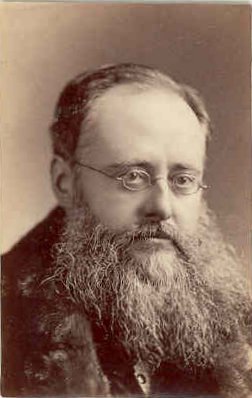
William Wilkie Collins was an English novelist, playwright, and short story writer. His best-known works are The Woman in White , No Name , Armadale and The Moonstone . The last is considered the first modern English detective novel.
Born into the family of painter William Collins in London, he lived with his family in Italy and France as a child and learned French and Italian. He worked as a clerk for a tea merchant. After his first novel, Antonina, was published in 1850, he met Charles Dickens, who became a close friend, mentor and collaborator. Some of Collins's works were first published in Dickens' journals All the Year Round and Household Words and the two collaborated on drama and fiction.
Collins published his best known works in the 1860s and achieved financial stability and an international reputation. During that time he began suffering from gout. After taking opium for the pain, he developed an addiction. During the 1870s and 1880s the quality of his writing declined along with his health.
Collins was critical of the institution of marriage and never married; he split his time between Caroline Graves, except for a two-year separation, and his common-law wife Martha Rudd, with whom he had three children.
“Dont speak of tomorrow. Let the music speak to us tonight, in a happier language than ours.”
Wilkie Collins book The Woman in White
Variant: Let the music speak to us of tonight, in a happier language than our own.
Source: The Woman in White
Wilkie Collins book The Moonstone
[Street, 1868] ( p. 86 https://books.google.com/books?id=sAqXBQAAQBAJ&pg=PA82) <br class="br">Also in Soulsalsa: 17 Surprising Steps for Godly Living in the 21st Century https://books.google.com/books?id=E2S3nWp-lAgC&pg=PT61 by Leonard Sweet [Zondervan, 2009, ISBN 0-310-83380-9] <br class="br">Source: The Moonstone (1868)
“Our words are giants when they do us an injury, and dwarfs when they do us a service.”
Wilkie Collins book The Woman in White
Source: The Woman in White
Wilkie Collins book The Woman in White
Source: Collins explaining what he calls the literary principal guiding him, in the preface of the second edition of The Woman in White. Also in Reality's Dark Light: The Sensational Wilkie Collins by Maria K. Bachman & Don Richard Cox [University of Tennessee Press, 2003, ISBN 1-572-33274-3] ( p. xiv https://books.google.com/books?id=_X8AlmIp0dwC&pg=PR14)
“The best men are not consistent in good—why should the worst men be consistent in evil?”
Wilkie Collins book The Woman in White
Source: The Woman in White
“Men ruin themselves headlong for unworthy women.”
Wilkie Collins book Man and Wife
Man and Wife - Vol. II [Bernhard Tauchnitz, 1870] ( p. 235 https://books.google.com/books?id=Dp-ZFYLTW6QC&pg=PA235) <br class="br">Also in Wilkie Collins: Man of Mystery and Imagination by Alexander Grinstein [International Universities Press, 2003, 0-823-66681-6] (p. 155)
Wilkie Collins book The Law and the Lady
Vol. I [Bernhard Tauchnitz, 1860] ( p. 194 https://books.google.com/books?id=wUN2KP79lhUC&pg=PA194) <br class="br">Also in The Cambridge Companion to Sensation Fiction edited by Andrew Mangham [Cambridge University Press, 2013, ISBN 1-107-51169-0] ( p. 82 https://books.google.com/books?id=rQZCAQAAQBAJ&pg=PA82) <br class="br">The King of Inventors: A Life of Wilkie Collins by Catherine Peters [Princeton University Press, 2014, ISBN 1-400-86345-7] ( p. 224 https://books.google.com/books?id=T0AABAAAQBAJ&pg=PA224) <br class="br">Cemetery of the Murdered Daughters: Feminism, History, and Ingeborg Bachmann by Sara Lennox [University of Massachusetts Press, 2006, ISBN 1-558-49552-5] ( p. 227 https://books.google.com/books?id=_9VjDtk5ss4C&pg=PA227) <br class="br">The Law and the Lady (1875)
“My hour for tea is half-past five, and my buttered toast waits for nobody.”
Wilkie Collins book The Woman in White
Volume II [Tauchnitz, 1860] ( p. 226 https://books.google.com/books?id=xAm2X8YfpJIC&pg=PA226) <br class="br">Also in The Secret Ingredient by Laura Schaefer [Simon & Schuster, 2012, ISBN 1-442-41960-1] ( p. 169 https://books.google.com/books?id=o1ctj37QuikC&pg=PA169) <br class="br">Source: The Woman in White (1859)
Wilkie Collins book The Woman in White
Volume 1 [Bernhard Tauchnitz, 1860] ( p. 336 https://books.google.com/books?id=rszxUvpszaMC&pg=PA336) <br class="br">Also in The King of Inventors: A Life of Wilkie Collins by Catherine Peters ( p. 224 https://books.google.com/books?id=T0AABAAAQBAJ&pg=PA224) <br class="br">Source: The Woman in White (1859)
“No sensible man ever engages, unprepared, in a fencing match of words with a woman.”
Wilkie Collins book The Woman in White
Source: The Woman in White
“Some of us rush through life and some of us saunter through life. Mrs. Vesey sat through life.”
Wilkie Collins book The Woman in White
Source: The Woman in White
Wilkie Collins book The Moonstone
Also in Recipes from an Edwardian Country House: A Stately English Home Shares Its Classic Tastes by Laura Schaefer [Simon & Schuster, 2013, ISBN 1-476-73033-4] ( p. 22 https://books.google.com/books?id=zZPzAQAAQBAJ&pg=PA22) <br class="br">Source: The Moonstone [Street, 1868] ( p. 49 https://books.google.com/books?id=FmsOAAAAQAAJ&pg=PA49).
“I am nothing but a bundle of nerves dressed up to look like a man.”
Wilkie Collins book The Woman in White
Volume II [Tauchnitz,
Source: The Woman in White (1859)
“People who read stories are said to have excitable brains.”
Heart and Science: A Story of the Present Time - Vol. II [Bernhard Tauchnitz] ( p. 57 https://books.google.com/books?id=sKYzAQAAMAAJ&pg=PA57) <br class="br">Also in Wilkie Collins: An Illustrated Guide by Andrew Collins & Catherine Peters [Oxford University Press, 1998] (p. 139)
Wilkie Collins book The Moonstone
[Street, 1868] ( p. 54 https://books.google.com/books?id=FmsOAAAAQAAJ&pg=PA18) <br class="br">Also in Convict Voices: Women, Class, and Writing about Prison in Nineteenth-Century England by Anne Schwan [University of New Hampshire Press, 2014, ISBN 1611686725] ( p. 82 https://books.google.com/books?id=sAqXBQAAQBAJ&pg=PA82) <br class="br">The Moonstone (1868)
Wilkie Collins book The Law and the Lady
The Law and the Lady [Harper & Brothers Publishers, 1875] ( p. 195) <br class="br">Also in Gothic Returns in Collins, Dickens, Zola, and Hitchcock by Eleanor Salotto [Springer, 2016, ISBN 1-137-11770-2 https://books.google.com/books?id=qPmE-w86r0AC&pg=PA195 ( p. 39 https://books.google.com/books?id=recYDAAAQBAJ&pg=PA39) <br class="br">The Law and the Lady (1875)
Wilkie Collins book Armadale
Armadale - Vol. II [Collier, 1886] ( p. 130 https://books.google.com/books?id=v7sBAAAAQAAJ&pg=PA130) <br class="br">Also in Literature and Religion in Mid-Victorian England: From Dickens to Eliot by Carolyn Oulton [Springer, 2002, ISBN 0-230-50464-7] ( p. 136 https://books.google.com/books?id=abuADAAAQBAJ&pg=PA136)
The Works of Wilkie Collins: The Black Robe [P.F. Collier, 1900] (p. 328) <br class="br">Also in Wilkie Collins: A Literary Life by Graham Law & Andrew Maunder [Springer, 2008, ISBN 0-230-22750-3] ( p. 15 https://books.google.com/books?id=kKyHDAAAQBAJ&pg=PA15&f=false)
“The actions of human beings are not invariably governed by the laws of pure reason”
Wilkie Collins book The Law and the Lady
Vol. I [Chatto & Windus, 1875] ( p. v https://books.google.com/books?id=_w83AAAAIAAJ&pg=PR5) <br class="br">Also in Gothic Returns in Collins, Dickens, Zola, and Hitchcock by Eleanor Salotto [Springer, 2016, ISBN 1-137-11770-2] ( p. 32 https://books.google.com/books?id=recYDAAAQBAJ&pg=PA32) <br class="br">The Law and the Lady (1875)
“Ask yourself if there is any explanation of the mystery of your own life and death.”
The Haunted Hotel: A Mystery of Modern Venice [Rose-Belford, 1878] ( p.288 https://books.google.com/books?id=zyFjcZUO3CUC&pg=PA288) <br class="br">Also in The Supernatural And English fiction by Glen Cavaliero [Oxford University Press, 1995, ISBN 0-192-12607-5] (p. 39)
Wilkie Collins book The Moonstone
[Street, 1868] ( p. 50 https://books.google.com/books?id=sAqXBQAAQBAJ&pg=PA50) <br class="br">Also in Plots of Opportunity: Representing Conspiracy in Victorian England by Albert D. Pionke [Ohio State University Press, 2004, 0-814-20948-3] ( p. 98 https://books.google.com/books?id=OH6ml-qUK7sC&pg=PA98) <br class="br">The Moonstone (1868)
Wilkie Collins book The Woman in White
The Woman in White -
The Woman in White (1859)


