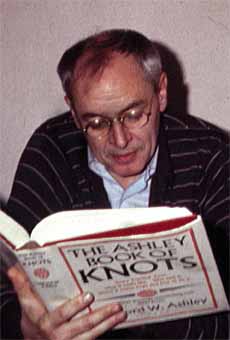
Ronald David Laing Quotes

Ronald David Laing , usually cited as R. D. Laing, was a Scottish psychiatrist who wrote extensively on mental illness – in particular, the experience of psychosis. Laing’s views on the causes and treatment of psychopathological phenomena were influenced by his study of existential philosophy and ran counter to the chemical and electroshock methods that had become psychiatric orthodoxy. Taking the expressed feelings of the individual patient or client as valid descriptions of lived experience rather than simply as symptoms of mental illness, Laing regarded schizophrenia as a theory not a fact. Though associated in the public mind with anti-psychiatry he rejected the label. Politically, he was regarded as a thinker of the New Left. Laing was portrayed by David Tennant in the 2017 film Mad to Be Normal.


Wikipedia  

✵ 7. October 1927 – 23. August 1989  •  Other names R. D. Laing

Works

The Politics of Experience
Ronald David Laing
The Divided Self
The Divided Self
Ronald David Laing
The Politics of Experience
Ronald David Laing
The Divided Self
The Divided Self
Ronald David Laing
Ronald David Laing: 30 quotes6 likes

Famous Ronald David Laing Quotes

“I see you, and you see me. I experience you, and you experience me. I see your behaviour. You see my behaviour. But I do not and never have and never will see your experience of me. Just as you cannot "see" my experience of you.”

Ronald David Laing book The Politics of Experience

Source: The Politics of Experience (1967), Ch. 1 : Experience as evidence
Context: I see you, and you see me. I experience you, and you experience me. I see your behaviour. You see my behaviour. But I do not and never have and never will see your experience of me. Just as you cannot "see" my experience of you. My experience of you is not "inside" me. It is simply you, as I experience you. And I do not experience you as inside me. Similarly, I take it that you do not experience me as inside you.
"My experience of you" is just another form of words for "you-as-l-experience-you", and "your experience of me" equals "me-as-you-experience-me". Your experience of me is not inside you and my experience of you is not inside me, but your experience of me is invisible to me and my experience of you is invisible to you.

“We can see other people's behaviour, but not their experience.”

Ronald David Laing book The Politics of Experience

Ch. 1 : Experience as evidence http://www.marxists.org/reference/subject/philosophy/works/en/laing.htm <br class="br">The Politics of Experience (1967) <br class="br">Context: Even facts become fictions without adequate ways of seeing &quot;the facts&quot;. We do not need theories so much as the experience that is the source of the theory. We are not satisfied with faith, in the sense of an implausible hypothesis irrationally held: we demand to experience the &quot;evidence&quot;.<br>We can see other people&#x27;s behaviour, but not their experience. This has led some people to insist that psychology has nothing to do with the other person&#x27;s experience, but only with his behaviour.<br>The other person&#x27;s behaviour is an experience of mine. My behaviour is an experience of the other. The task of social phenomenology is to relate my experience of the other&#x27;s behaviour to the other&#x27;s experience of my behaviour. Its study is the relation between experience and experience: its true field is inter-experience.

“I shall try to show that there is a comprehensible transition from the sane schizoid way of being-in-the-world to a psychotic way of being-in-the-world.”

Ronald David Laing book The Divided Self

Source: The Divided Self (1960), Ch. 1 : The existential-phenomenological foundations for a science of persons
Context: Existential phenomenology attempts to characterize the nature of a person's experience of his world and himself. It is not so much an attempt to describe particular objects of his experience as to set all particular experiences within the context of his whole being-in-his-world. The mad things said and done by the schizophrenic will remain essentially a closed book if one does not understand their existential context. In describing one way of going mad, I shall try to show that there is a comprehensible transition from the sane schizoid way of being-in-the-world to a psychotic way of being-in-the-world. Although retaining the terms schizoid and schizophrenic for the sane and psychotic positions respectively, I shall not, of course, be using these terms in their usual clinical psychiatric frame of reference, but phenomenologically and existentially.

“There is little conjunction of truth and social "reality"”

Ronald David Laing book The Politics of Experience

Source: The Politics of Experience (1967), p. 1 of Introduction
Context: Few books today are forgivable. Black on canvas, silence on the screen, an empty white sheet of paper are perhaps feasible. There is little conjunction of truth and social "reality". Around us are pseudo-events, to which we adjust with a false consciousness adapted to see these events as true and real, and even as beautiful. In the society of men the truth resides now less in what things are than in what they are not. Our social realities are so ugly if seen in the light of exiled truth, and beauty is almost no longer possible if it is not a lie. What is to be done? We who are still half alive, living in the often fibrillating heartland of a senescent capitalism — can we do more than reflect the decay around and within us? Can we do more than sing our sad and bitter songs of disillusion and defeat? The requirement of the present, the failure of the past, is the same: to provide a thoroughly self-conscious and self-critical human account of man.

“Insanity — a perfectly rational adjustment to an insane world.”

Ronald David Laing

As quoted in Wisdom for the Soul : Five Millennia of Prescriptions for Spiritual Healing (2006) by Larry Chang, p. 412; this might be a paraphrase, as the earliest occurrence of this phrase thus far located is in the form: "Ronald David Laing has shocked many people when he suggested in 1972 that insanity can be a perfectly rational adjustment to an insane world." in Studii de literatură română și comparată (1984), by The Faculty of Philology-History at Universitatea din Timișoara. A clear citation to Laing's own work has not yet been found.
Disputed

Ronald David Laing Quotes about the trip

“Even facts become fictions without adequate ways of seeing "the facts". We do not need theories so much as the experience that is the source of the theory.”

Ronald David Laing book The Politics of Experience

Ch. 1 : Experience as evidence http://www.marxists.org/reference/subject/philosophy/works/en/laing.htm <br class="br">The Politics of Experience (1967) <br class="br">Context: Even facts become fictions without adequate ways of seeing &quot;the facts&quot;. We do not need theories so much as the experience that is the source of the theory. We are not satisfied with faith, in the sense of an implausible hypothesis irrationally held: we demand to experience the &quot;evidence&quot;.<br>We can see other people&#x27;s behaviour, but not their experience. This has led some people to insist that psychology has nothing to do with the other person&#x27;s experience, but only with his behaviour.<br>The other person&#x27;s behaviour is an experience of mine. My behaviour is an experience of the other. The task of social phenomenology is to relate my experience of the other&#x27;s behaviour to the other&#x27;s experience of my behaviour. Its study is the relation between experience and experience: its true field is inter-experience.

Ronald David Laing Quotes about time

“Experience used to be called The Soul. Experience as invisibility of man to man is at the same time more evident than anything.”

Ronald David Laing book The Politics of Experience

Source: The Politics of Experience (1967), Ch. 1 : Experience as evidence
Context: I cannot experience your experience. You cannot experience my experience. We are both invisible men. All men are invisible to one another. Experience used to be called The Soul. Experience as invisibility of man to man is at the same time more evident than anything. Only experience is evident. Experience is the only evidence. Psychology is the logos of experience. Psychology is the structure of the evidence, and hence psychology is the science of sciences.

“Long before a thermonuclear war can come about, we have had to lay waste our own sanity. We begin with the children. It is imperative to catch them in time. Without the most thorough and rapid brainwashing their dirty minds would see through our dirty tricks.”

Ronald David Laing book The Politics of Experience

Source: The Politics of Experience (1967), p. 58
Context: Long before a thermonuclear war can come about, we have had to lay waste our own sanity. We begin with the children. It is imperative to catch them in time. Without the most thorough and rapid brainwashing their dirty minds would see through our dirty tricks. Children are not yet fools, but we shall turn them into imbeciles like ourselves, with high I. Q. s if possible.
From the moment of birth, when the Stone Age baby confronts the twentieth-century mother, the baby is subjected to these forces of violence, called love, as its mother and father, and their parents and their parents before them, have been. These forces are mainly concerned with destroying most of its potentialities, and on the whole this enterprise is successful.

Ronald David Laing Quotes

“We are all murderers and prostitutes — no matter to what culture, society, class, nation, we belong, no matter how normal, moral, or mature we take ourselves to be.
Humanity is estranged from its authentic possibilities.”

Ronald David Laing book The Politics of Experience

Source: The Politics of Experience (1967), p. 2 of Introduction
Context: We are all murderers and prostitutes — no matter to what culture, society, class, nation, we belong, no matter how normal, moral, or mature we take ourselves to be.
Humanity is estranged from its authentic possibilities. This basic vision prevents us from taking any unequivocal view of the sanity of common sense, or of the madness of the so-called madman. … Our alientation goes to the roots. The realisation of this is the essential springboard for any serious reflection on any aspect of present inter-human life.

“Existential phenomenology attempts to characterize the nature of a person's experience of his world and himself.”

Ronald David Laing book The Divided Self

Source: The Divided Self (1960), Ch. 1 : The existential-phenomenological foundations for a science of persons
Context: Existential phenomenology attempts to characterize the nature of a person's experience of his world and himself. It is not so much an attempt to describe particular objects of his experience as to set all particular experiences within the context of his whole being-in-his-world. The mad things said and done by the schizophrenic will remain essentially a closed book if one does not understand their existential context. In describing one way of going mad, I shall try to show that there is a comprehensible transition from the sane schizoid way of being-in-the-world to a psychotic way of being-in-the-world. Although retaining the terms schizoid and schizophrenic for the sane and psychotic positions respectively, I shall not, of course, be using these terms in their usual clinical psychiatric frame of reference, but phenomenologically and existentially.

“Few books today are forgivable.”

Ronald David Laing book The Politics of Experience

Source: The Politics of Experience (1967), p. 1 of Introduction
Context: Few books today are forgivable. Black on canvas, silence on the screen, an empty white sheet of paper are perhaps feasible. There is little conjunction of truth and social "reality". Around us are pseudo-events, to which we adjust with a false consciousness adapted to see these events as true and real, and even as beautiful. In the society of men the truth resides now less in what things are than in what they are not. Our social realities are so ugly if seen in the light of exiled truth, and beauty is almost no longer possible if it is not a lie. What is to be done? We who are still half alive, living in the often fibrillating heartland of a senescent capitalism — can we do more than reflect the decay around and within us? Can we do more than sing our sad and bitter songs of disillusion and defeat? The requirement of the present, the failure of the past, is the same: to provide a thoroughly self-conscious and self-critical human account of man.

“These forces are mainly concerned with destroying most of its potentialities, and on the whole this enterprise is successful.”

Ronald David Laing book The Politics of Experience

Source: The Politics of Experience (1967), p. 58
Context: Long before a thermonuclear war can come about, we have had to lay waste our own sanity. We begin with the children. It is imperative to catch them in time. Without the most thorough and rapid brainwashing their dirty minds would see through our dirty tricks. Children are not yet fools, but we shall turn them into imbeciles like ourselves, with high I. Q. s if possible.
From the moment of birth, when the Stone Age baby confronts the twentieth-century mother, the baby is subjected to these forces of violence, called love, as its mother and father, and their parents and their parents before them, have been. These forces are mainly concerned with destroying most of its potentialities, and on the whole this enterprise is successful.

“Social phenomenology is the science of my own and of others' experience.”

Ronald David Laing book The Politics of Experience

Source: The Politics of Experience (1967), Ch. 1 : Experience as evidence
Context: Social phenomenology is the science of my own and of others' experience. It is concerned with the relation between my experience of you and your experience of me. That is, with inter-experience. It is concerned with your behaviour and my behaviour as I experience it, and your and my behaviour as you experience it.

“We are effectively destroying ourselves by violence masquerading as love.”

Ronald David Laing book The Politics of Experience

Source: The Politics of Experience (1967), p. 58
Context: We are effectively destroying ourselves by violence masquerading as love. I am a specialist, God help me, in events in inner space and time, in experiences called thoughts, images, reveries, dreams, visions, hallucinations, dreams of memories, memories of dreams, memories of visions, dreams of hallucinations, refractions of refractions of refractions of that original Alpha and Omega of experience and reality, that Reality on whose repression, denial, splitting, projection, falsification, and general desecration and profanation our civilisation as much as anything is based.

“What is to be done? We who are still half alive, living in the often fibrillating heartland of a senescent capitalism — can we do more than reflect the decay around and within us? Can we do more than sing our sad and bitter songs of disillusion and defeat?”

Ronald David Laing book The Politics of Experience

Source: The Politics of Experience (1967), p. 1 of Introduction
Context: Few books today are forgivable. Black on canvas, silence on the screen, an empty white sheet of paper are perhaps feasible. There is little conjunction of truth and social "reality". Around us are pseudo-events, to which we adjust with a false consciousness adapted to see these events as true and real, and even as beautiful. In the society of men the truth resides now less in what things are than in what they are not. Our social realities are so ugly if seen in the light of exiled truth, and beauty is almost no longer possible if it is not a lie. What is to be done? We who are still half alive, living in the often fibrillating heartland of a senescent capitalism — can we do more than reflect the decay around and within us? Can we do more than sing our sad and bitter songs of disillusion and defeat? The requirement of the present, the failure of the past, is the same: to provide a thoroughly self-conscious and self-critical human account of man.

“I cannot experience your experience. You cannot experience my experience. We are both invisible men.”

Ronald David Laing book The Politics of Experience

Source: The Politics of Experience (1967), Ch. 1 : Experience as evidence
Context: I cannot experience your experience. You cannot experience my experience. We are both invisible men. All men are invisible to one another. Experience used to be called The Soul. Experience as invisibility of man to man is at the same time more evident than anything. Only experience is evident. Experience is the only evidence. Psychology is the logos of experience. Psychology is the structure of the evidence, and hence psychology is the science of sciences.

“The other person's behaviour is an experience of mine. My behaviour is an experience of the other.”

Ronald David Laing book The Politics of Experience

Ch. 1 : Experience as evidence http://www.marxists.org/reference/subject/philosophy/works/en/laing.htm <br class="br">The Politics of Experience (1967) <br class="br">Context: Even facts become fictions without adequate ways of seeing &quot;the facts&quot;. We do not need theories so much as the experience that is the source of the theory. We are not satisfied with faith, in the sense of an implausible hypothesis irrationally held: we demand to experience the &quot;evidence&quot;.<br>We can see other people&#x27;s behaviour, but not their experience. This has led some people to insist that psychology has nothing to do with the other person&#x27;s experience, but only with his behaviour.<br>The other person&#x27;s behaviour is an experience of mine. My behaviour is an experience of the other. The task of social phenomenology is to relate my experience of the other&#x27;s behaviour to the other&#x27;s experience of my behaviour. Its study is the relation between experience and experience: its true field is inter-experience.

“Psychology is the logos of experience. Psychology is the structure of the evidence, and hence psychology is the science of sciences.”

Ronald David Laing book The Politics of Experience

Source: The Politics of Experience (1967), Ch. 1 : Experience as evidence
Context: I cannot experience your experience. You cannot experience my experience. We are both invisible men. All men are invisible to one another. Experience used to be called The Soul. Experience as invisibility of man to man is at the same time more evident than anything. Only experience is evident. Experience is the only evidence. Psychology is the logos of experience. Psychology is the structure of the evidence, and hence psychology is the science of sciences.

“The range of what we think and do is limited by what we fail to notice. And because we fail to notice there is little we can do to change until we notice how failing to notice shapes our thoughts and deeds.”

Ronald David Laing

Attributed to R.D. Lang in: Jack Lee Seymour, Margaret Ann Crain, Joseph V. Crockett (1993) Educating Christians. p. 53

“It is of fundamental importance not to make the positivist mistake of assuming that because a group’s members are in formation this means that they’re necessarily on course.”

Ronald David Laing book The Politics of Experience

Source: The Politics of Experience (1967), p.82 (of original version see Google Books link here https://books.google.com/books?id=ZGTUlU5E5rAC&amp;dq=politics+of+experience&amp;focus=searchwithinvolume&amp;q=%22positivist+mistake%22)

Similar authors

 M. Scott Peck photo
M. Scott Peck26
American psychiatrist None
A. J. Cronin photo
A. J. Cronin7
Scottish novelist and physician None
Viktor E. Frankl photo
Viktor E. Frankl64
Austrian neurologist and psychiatrist, and Holocaust surviv… None
Bill Shankly photo
Bill Shankly5
Scottish footballer and manager None
C.G. Jung photo
C.G. Jung257
Swiss psychiatrist and psychotherapist who founded analytic… None
Arthur Conan Doyle photo
Arthur Conan Doyle166
Scottish physician and author None
Axel Munthe photo
Axel Munthe15
Swedish physician None
H.P. Lovecraft photo
H.P. Lovecraft203
American author None
Friedrich Dürrenmatt photo
Friedrich Dürrenmatt19
Swiss author and dramatist None
Napoleon Hill photo
Napoleon Hill104
American author None